Main content 1 Menu 2 Search 3 Footer 4
+A
A
-A
High contrast
HOME JOURNAL JOURNAL SELECTION NETWORK HELP ABOUT

Journal Selection Criteria and Standards

WPRIM Journal Selection Criteria (August 2023)

NJSC Philippines Selection Criteria (for Philippine-based journals only)

Minimum standards for the suspension and removal of WPRIM approved journals

Application and Indexing Process

Application and Submission Process for WPRIM Indexing

Journal Content Management

Candidate Journal Selection and Data Creation and Management System

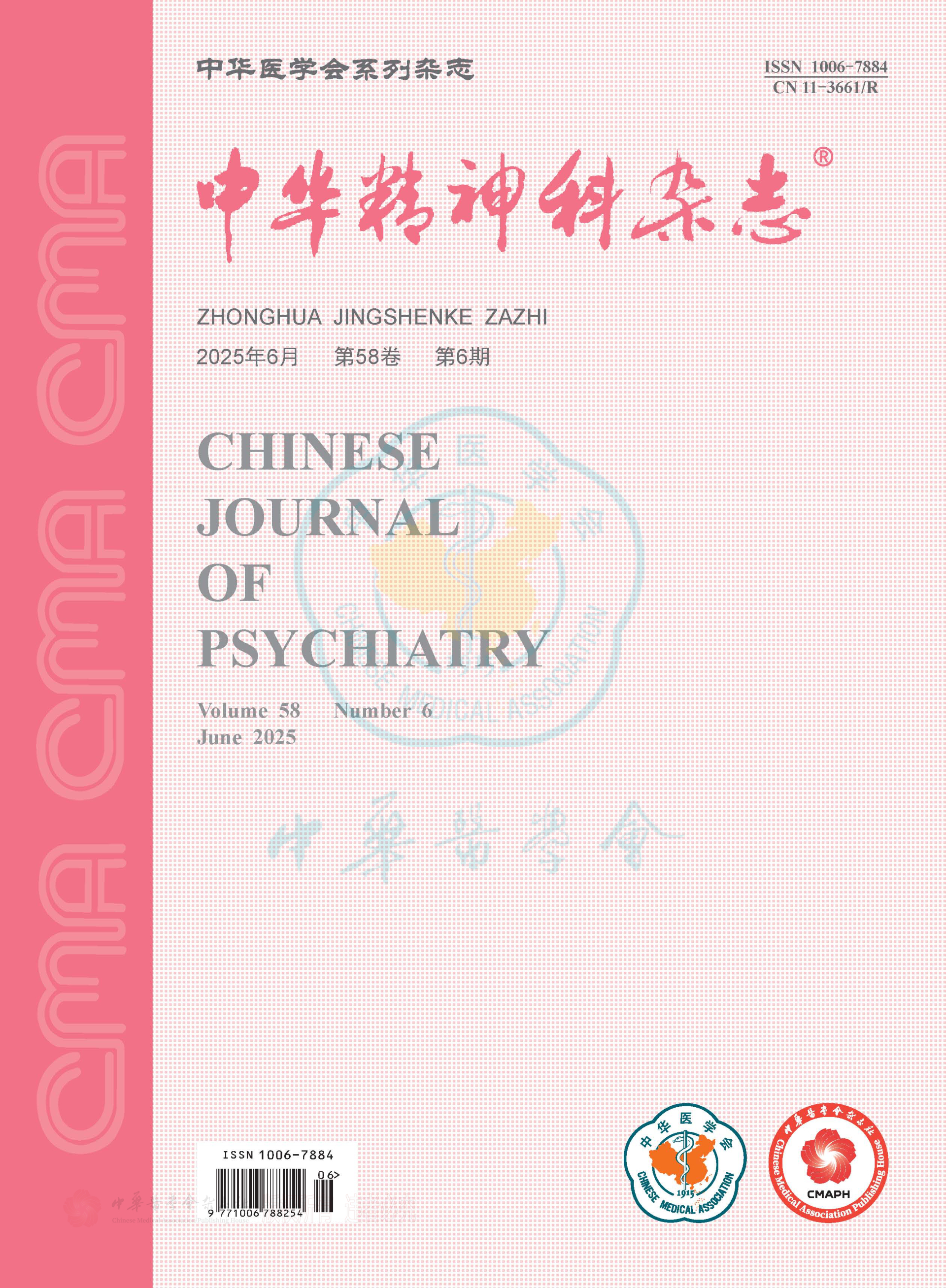
Chinese Journal of Psychiatry

1995  (1,  1)  to  Present  ISSN: 1006-7884

Articles

About

Save Email

Sort by

Best match
Relevance
PubYear
JournalTitle

DISPLAY OPTIONS

Format:

Per page:

Save citations to file

Selection:

Format:

Create file Cancel

Email citations

To:

Please check your email address first!

Selection:

Format:

Send email Cancel

2112

results

page

of 212

1

Cite

Cite

Copy

Share

Share

Copy

Recurrent attack of Kleine-Levin syndrome triggered by influenza A (H1N1): a case report

Sifan HU ; Chen LIU ; Wei SUN ; Hongqiang SUN

Chinese Journal of Psychiatry.2023;56(6):457-460. doi:10.3760/cma.j.cn113661-20231012-00131

Klein-Levin syndrome (KLS) is a rare disease characterized by recurrent episodes of hypersomnia and cognitive and behavioral dysfunction. In addition, all functions remain intact during the intermittent period. Infection is a common risk factor for its onset. In this case, a 17-year-old patient with KLS was admitted to our hospital in March 2023 who first developed KLS symptoms and relapsed after being infected with influenza A Virus (H1N1). Based on the typical symptoms occurred during the patient′s attack, the absence of symptoms and signs during the interval, and the absence of other triggers, the patient was diagnosed with KLS recurrence secondary to influenza A Virus (H1N1). This case report aims to reveal that influenza A Virus (H1N1) may be contribute to the recurrence of KLS and that preventing infection is important in the treatment of KLS to draw the attention of clinical physicians.

2

Cite

Cite

Copy

Share

Share

Copy

The relationship between age at first sexual intercourse and bipolar disorder: a bidirectional two-sample Mendelian randomization analysis

Zheng ZHANG ; Qinghua LUO

Chinese Journal of Psychiatry.2024;57(4):199-206. doi:10.3760/cma.j.cn113661-20230918-00070

Objective:This study aims to explore the potential causal relationship between the age at first sexual intercourse (AFS) and the risk of developing bipolar disorder (BD) using the Mendelian Randomization (MR) approach.Methods:This study leverages Genome-Wide Association Studies (GWAS) data from European ancestries, identifying independent genetic loci associated with AFS and BD as instrumental variables. AFS data came from the Medical Research Council Integrative Epidemiology Unit (MRC-IEU), covering 406 457 individuals (AFS1), and the UK Biobank (UKB), with 397 338 individuals (AFS2). Bipolar disorder GWAS data were sourced from the Psychiatric Genomics Consortium (PGC), featuring 20 352 cases and 31 358 controls in 2019 (BD1), and 41 917 cases with 371 549 controls in 2021 (BD2). The causal effects between AFS and BD were assessed using inverse variance weighting (IVW), supplemented by MR-Egger regression, weighted median (WM), Simple Mode and Weighted Mode to ensure result stability. Effect sizes were determined using odds ratio ( OR) and beta coefficient (β). Results:The forward MR analysis revealed a significant causal relationship between earlier AFS and an increased risk of developing BD (IVW: OR=0.69, 95% CI=0.57-0.82, P<0.001). However, the reverse MR analysis did not find a significant effect of BD on the timing of AFS (IVW: β=0.01, 95% CI=-0.01-0.03, P=0.159). Conclusion:There is a causal relationship between the AFS and the risk of developing BD, while the impact of BD on AFS is not significant.

3

Cite

Cite

Copy

Share

Share

Copy

Role of exosomal miRNA in the pathogenesis of bipolar disorder and its diagnostic and therapeutic potential

Ke FANG ; Meng LIU ; Jinfang GE

Chinese Journal of Psychiatry.2024;57(5):274-281. doi:10.3760/cma.j.cn113661-20230921-00088

Exosomes are a type of membrane-bound vesicles that carry various information molecules such as miRNAs. They are stable in various surrounding body fluids and can cross the blood-brain barrier, making them an ideal source of biomarkers for clinical disease diagnosis and therapeutic evaluation. Bipolar Disorder (BD) is a severe mental disorder characterized by recurrent episodes of mania and depression. Currently, the diagnosis and efficacy assessment of BD mainly rely on clinical interviews and observations, and there is a lack of clear biomarkers and effective laboratory testing methods. In recent years, increasing evidence showed an imbalanced expression pattern of plasma exosomes miRNA in BD patients, with a close correlation with the clinical phenotype, disease progression, and treatment response. Results of the preliminary mechanism research indicated that the extracellular miRNAs may participate in the occurrence and development of BD by regulating target genes and signaling pathways. However, there are still some limitations and challenges in the current research on extracellular miRNAs in BD. Further improvement and standardization are needed. This article reviews the role of extracellular miRNAs in the pathogenesis of BD and their potential as biomarkers for the diagnosis and treatment. By comparing the expression profiles of extracellular miRNAs in BD patients with other mental disorders or neurodegenerative diseases, their potential applications in cross disease diagnosis and treatment are evaluated.

4

Cite

Cite

Copy

Share

Share

Copy

The advancement of brain functional imaging in individuals diagnosed with major depressive disorder and their first-degree relatives

Feng LI ; Zhifang ZHANG ; Qijing BO ; Chuanyue WANG

Chinese Journal of Psychiatry.2023;56(5):395-400. doi:10.3760/cma.j.cn113661-20230613-00128

Major depressive disorder is a prevalent and burdensome mental illness that exhibits a high degree of heritability. Despite this, the underlying neural mechanisms that contribute to its development remain unclear. To enhance our comprehension of the pathology and susceptibility mechanisms of major depressive disorder, this study aims to compare the neuroimaging characteristics of patients diagnosed with major depressive disorder and their first-degree relatives. The objective of this study is to conduct a comprehensive analysis and synthesis of brain functional images of individuals diagnosed with major depressive disorder, including those in the acute and remission stages, as well as their first-degree relatives, utilizing various prevalent neuroimaging modalities. Additionally, this study aims to identify potential avenues for future research in this area. This study shows that abnormalities in local brain functional activity and functional interactions of the cortical-limbic-cerebellar circuits are critical in intrinsic neural mechanisms of depression and their first-degree relatives, and this circuits is also a potential target for antidepressants. Future studies are needed to further clarify the role of unbalanced cortical-limbic-cerebellar circuits in the disease process of depression.

5

Cite

Cite

Copy

Share

Share

Copy

Construction and analysis of a combined discriminative model of random forest and feedforward neural network for peripheral blood RNA sequencing data in bipolar disorder

Xiangwen WANG ; Shunkang FENG ; Hong CHEN ; Shenghai WANG ; Ping SUN

Chinese Journal of Psychiatry.2024;57(4):213-220. doi:10.3760/cma.j.cn113661-20230929-00108

Objective:To identify characteristic genes of bipolar disorder using the random forest method and to construct a discriminative model for bipolar disorder using neural network approaches.Methods:The study utilized gene expression data from individuals with bipolar disorder ( n=20) and healthy controls ( n=15) from the GSE23848 dataset. Background correction was performed using negative control probes, and normalization was done with both negative and positive control probes. Differentially expressed genes were identified through linear model analysis and empirical Bayesian statistical methods. A random forest model was built for feature extraction of differentially expressed genes, and a neural network model was constructed using the characteristic genes identified by the random forest model. The discriminative efficiency of the model was validated on an independent external dataset GSE39653, which included bipolar disorder patients ( n=8) and healthy controls ( n=24). Biological functions of the characteristic genes were explored through gene ontology (GO) and protein-protein interaction networks (PPI). Results:A total of 1 330 differentially expressed genes related to bipolar disorder and 35 characteristic genes were selected for model construction. The final model was a feedforward neural network with four hidden layers and four dropout layers, possessing 50 433 trainable parameters. Bootstrap methods with 1 000 resampling were used to calculate the confidence intervals for sensitivity, specificity, area under the receiver operating characteristic curve (AUC), and accuracy, all of which were 1. In the GSE39653 external validation set, the model′s AUC was 0.72. Enrichment analysis of the characteristic genes suggested that the functions of the genes in the model are related to mitochondrial structure and energy metabolism.Conclusion:The random forest method can identify characteristic genes of bipolar disorder, and a diagnostic model established through the combination of random forests and feedforward neural networks shows good classification performance in bipolar disorder.

6

Cite

Cite

Copy

Share

Share

Copy

Research on the correlation between the abundance of Lachnoclostridium genus in gut microbiome and cognitive impairment in first-episode schizophrenia

Xinyi ZHAO ; Xiuxia YUAN ; Yao SUN ; Lijuan PANG ; Xue LI ; Gangrui HEI ; Xueqin SONG

Chinese Journal of Psychiatry.2024;57(4):221-228. doi:10.3760/cma.j.cn113661-20230930-00115

Objective:This study aims to explore the relationship between the abundance of Lachnoclostridium genus in the gut microbiome and inflammatory markers with cognitive impairment in patients with first-episode schizophrenia. Methods:A total of 87 medication-naive patients with first-episode schizophrenia (patient group) and 87 matched healthy controls (control group) who visited the Department of Psychiatry, the First Affiliated Hospital of Zhengzhou University between January 2020 and December 2022 were selected for this study. A 24-week follow-up was conducted for the patients, and all patients received treatment with risperidone. Venous blood and fecal samples were collected from the subjects at baseline and week 24 to measure the levels of superoxide dismutase-1, erythrocyte sedimentation rate, and the abundance of Lachnoclostridium. The severity of symptoms in patients with schizophrenia was assessed using the Positive and Negative Syndrome Scale, and the cognitive function of all subjects was evaluated using MATRICS Consensus Cognitive Battery tests. The differences in the abundance of Lachnoclostridium, inflammatory markers, and cognitive scores between groups were analyzed using t-tests, and the correlations between Lachnoclostridium abundance, inflammatory markers, and cognitive scores were analyzed using Pearson correlation analysis. Results:(1) At baseline, compared with the control group, patients with first-episode schizophrenia had lower levels of superoxide dismutase-1( t=6.83, P<0.001) and total cognitive function test scores( t=6.35, P<0.001), and higher abundance of Lachnoclostridium( Z=-4.64, P<0.001). (2) At baseline, the levels of superoxide dismutase-1 in patients with first-episode schizophrenia were positively correlated with social cognition( r=0.30, P=0.005), while erythrocyte sedimentation rate was negatively correlated with information processing speed and social cognition( r=-0.23, -0.31, both P<0.050). The abundance of Lachnoclostridium genus was negatively correlated with speed of processing( r=-0.28, P=0.009), working memory( r=-0.22, P=0.040), and visual memory( r=-0.32, P=0.003). (3) After 24 weeks of risperidone treatment, the levels of superoxide dismutase-1( t=-2.07, P=0.045) and total cognitive function test scores( t=-3.47, P=0.001) increased in patients, while erythrocyte sedimentation rate( t=2.21, P=0.033) decreased. The abundance of Lachnoclostridium genus showed a decreasing trend( Z=1.52, P=0.128) and did not differ significantly from the control group( Z=1.68, P=0.094). (4) Among the 39 patients who completed the 24-week follow-up, the baseline abundance of Lachnoclostridium genus was negatively correlated with attention and vigilance( r=-0.39, P=0.014) and total cognitive function test scores( r=-0.34, P=0.032) at week 24. The baseline erythrocyte sedimentation rate was positively correlated with the differences in speed of processing, working memory, social cognition, and total cognitive function test scores between baseline and week 24( r=0.42, 0.32, 0.41, 0.36, all P<0.050). (5) At baseline, the abundance of Lachnoclostridium genus had predictive value for erythrocyte sedimentation rate( r=0.45, P=0.004), attention and vigilance( r=-0.39, P=0.014), and total cognitive function test scores( r=-0.34, P=0.032) at week 24. Conclusion:In first-episode schizophrenia patients, there is a significant correlation between the abundance of gut Lachnoclostridium and inflammation and cognitive function.

7

Cite

Cite

Copy

Share

Share

Copy

A case of catatonia after COVID-19 infection in a patient with bipolar disorder

Wanqi SUN ; Chongze WANG ; Qinyu LYU

Chinese Journal of Psychiatry.2024;57(4):234-238. doi:10.3760/cma.j.cn113661-20230720-00007

Psychiatric symptoms caused by COVID-19 (SARS-CoV-2) infection are common in clinical practice. In addition to the anxiety, depression, and insomnia, which are often seen, COVID-19 infection also leads to new onset of psychotic symptoms or exacerbation of pre-existing psychiatric symptoms. This study reported a case of a patient with a history of bipolar disorder who presented with clinical manifestations of catatonia after COVID-19 infection. Neurological impairments in this patient were confirmed by neurological physical examination, brain imaging, and cerebrospinal fluid examination. After treatment with lorazepam, glucocorticoids, and low-dose antipsychotics, the patient′s catatonia was significantly relieved. Clinicians should pay attention to the neurological damage caused by COVID-19 infection to be providing comprehensive analysis, diagnosis, and integrated treatment for patients who develop psychiatric symptoms after COVID-19 infection.

8

Cite

Cite

Copy

Share

Share

Copy

Characteristics of "not just right experiences" in patients with obsessive-compulsive disorder and the correlation with obsessive-compulsive symptoms

Daning CHEN ; Xiangyun YANG ; Lijuan YANG ; Zhanjiang LI

Chinese Journal of Psychiatry.2024;57(3):155-163. doi:10.3760/cma.j.cn113661-20230930-00112

Objective:To explore the clinical manifestation and characteristics of not just right experiences (NJREs) in Chinese patients with obsessive-compulsive disorder (OCD), and the correlation with obsessive symptoms. The effect of clinical treatment on NJREs was studied.Methods:Clinical data were collected from 91 OCD patients in outpatient care at Beijing Anding Hospital, Capital Medical University, from March 2021 to March 2022. Patients were categorized into an untreated OCD group (40 cases, 24 males and 16 females, aged 29.3±8.1 years) and a treated OCD group (51 cases, 23 males and 28 females, aged 30.5±8.5 years) based on whether they received treatment in the month prior to admission. An age-matched healthy control group ( n=50, 25 males and 25 females, aged 30.8±8.9 years) was recruited simultaneously. The Not Just Right Experiences-Questionnaire-Revised (NJRE-Q-R) was used to evaluate the characteristics and severity of NJREs. The Yale-Brown Obsessive-Compulsive Scale (Y-BOCS), Yale-Brown Obsessive Compulsive Scale Symptoms Checklist (Y-BOCS-SC), Obsessive Belief Questionnaire (OBQ-44), Beck Anxiety Inventory (BAI) and Beck Depression Inventory (BDI) were used to evaluate the severity and types of obsessive-compulsive symptoms, obsessive-compulsive beliefs, anxiety, and depressive emotions. Analysis of variance was used to compare differences in NJREs among the untreated OCD group, treated OCD group and the healthy controls. Pearson correlation analysis was performed to explore the correlation between NJREs and clinical symptoms in OCD patients, and an intermediate effect model was used to analyze the mediation role of NJREs in the course of OCD. A treatment follow-up was conducted for 36 untreated OCD patients over 8 weeks, reassessing the severity of obsessive-compulsive symptoms and NJREs, as well as anxiety and depressive emotions to analyze the impact of treatment on NJREs. Results:The detection rates of NJREs in the untreated OCD group (87.5%) and the treated OCD group (96.8%) were higher than that those in the healthy control group (60%) with the difference statistically significant( χ 2=22.82, P<0.01). However, there was no statistically significant difference in the detection rate of NJREs between the untreated and treated OCD groups (χ 2=2.32, P=0.127). Regarding the severity of obsessive-compulsive symptoms and NJREs, the untreated and treated OCD groups showed statistically significant differences compared to the healthy control group (obsessive-compulsive symptom severity: 21.6±7.2 vs 20.9±7.1 vs 0.24±0.65; NJRE severity: 27.9±12.9 vs 27.7±11.8 vs 11.9±5.5; F=214.14, 37.05, both P<0.01). NJREs severity was positively correlated with the severity of obsessive-compulsive symptoms( r=0.522, P<0.05). Further mediation analysis revealed that NJRE severity significantly positively influenced Y-BOCS, BAI and BDI( β=0.398, 0.371, 0.312, all P<0.01); BDI significantly positively affected Y-BOCS( β=0.313, P<0.01); BAI had no significant impact on Y-BOCS ( β=0.071, P>0.01). After treatment, the severity of NJREs and obsessive-compulsive symptoms significantly reduced compared to the pre-treatment levels ( t=4.87, 2.01, both P<0.05). Changes in Y-BOCS total score were correlated with changes in NJRE-Q-R total score and NJRE-Q-R severity scores ( r=0.727, 0.555, both P<0.001). Conclusion:The detection rate and severity of NJREs in OCD patients are significantly higher than those in healthy controls. NJREs are correlated with obsessive-compulsive symptoms and NJREs can directly induce the development of obsessive-compulsive symptoms. Depressive emotions have a certain positive impact on the relationship between NJREs and obsessive-compulsive symptoms.

9

Cite

Cite

Copy

Share

Share

Copy

Research progress on immune inflammatory mechanism of metabolic syndrome comorbidity of depression

Yangyu WU ; Jianzhao ZHANG ; Xiaodong SONG ; Shuming ZHONG ; Yanbin JIA

Chinese Journal of Psychiatry.2024;57(4):245-250. doi:10.3760/cma.j.cn113661-20230915-00061

The prevalence of metabolic syndrome(MetS) in patients with major depressive disorder (MDD) is significantly higher than that in healthy people. Metabolic disorder has been proven to be closely related to the onset of MDD, adverse treatment outcome and disease recurrence. Therefore, revealing the comorbidity mechanism of both is of great significance for treating MDD. Previous studies have focused on the role of abnormal cortisol levels mediated by hypothalamic-pituitary-adrenal axis disorder, but how this pathway is activated and regulated is still unclear. In recent years, with further research development, systemic inflammation induced by an abnormal immune system is considered the deep molecular mechanism of MetS comorbidity of MDD. This review aims to summarize the similar activation of innate immunity, adaptive immunity and immune signaling pathway between MDD and MetS and to provide a strong theoretical basis for follow-up mechanism exploration, drug research and intervention strategy search.

10

Cite

Cite

Copy

Share

Share

Copy

Research progress on bitter taste receptor agonists in depression

Hailong GE ; Ling XIAO ; Yinping XIE ; Lujia SI ; Limin SUN ; Guohao YUAN ; Chen LI ; Gaohua WANG

Chinese Journal of Psychiatry.2024;57(4):251-256. doi:10.3760/cma.j.cn113661-20230921-00085

Depression is a common debilitating disorder affecting over 300 million individuals worldwide, emphasizing the pressing need to develop novel treatment targets for this disorder. Nevertheless, the pathophysiology of this disorder remains incompletely elucidated, and the currently available antidepressant treatments are suboptimal in terms of their efficacy and delayed onset of action. Thus, identifying and exploring new therapeutic avenues is of paramount importance. Recent clinical and preclinical studies have demonstrated that numerous bitter taste receptor type 2 members (Tas2Rs) agonists, including epigallocatechin gallate (EGCG), resveratrol, caffeine, humulones, and berberine, can significantly alleviate depressive symptoms in both human patients and animal models of depression. However, the precise mechanisms underlying the antidepressant effects of Tas2Rs agonists remain largely unknown. Intriguingly, a growing body of evidence suggests that Tas2Rs agonists may modulate various signaling pathways and systems including neurotransmission, inflammation, brain-gut axis, and the blood-cerebrospinal fluid barrier, all of which are believed to be implicated in the pathophysiology of depression. Therefore, this review aims to provide a comprehensive overview of the potential mechanisms of Tas2Rs agonists in depression, It synthesizes current evidence regarding its involvement in neurotransmission, inflammation, brain-gut communication, blood-cerebrospinal fluid barrier function, and other relevant pathways. This review will not only provide a valuable foundation for future research on the therapeutic potential of Tas2Rs agonists for depressive disorders but also offer new insights into the understanding of the pathophysiology of depression and the development of novel treatment strategies for this disorder.

Country

China

Publisher

Chinese Medical Journals Publishing House Co.,Ltd

ElectronicLinks

http://www.cjop.org.cn/

Editor-in-chief

Lu Lin

E-mail

cjps@cmaph.org

Abbreviation

Chin J Psychiatry

Vernacular Journal Title

中华精神科杂志

ISSN

1006-7884

EISSN

Year Approved

2025

Current Indexing Status

Currently Indexed

Start Year

1995

Description

Chinese Journal of Psychiatry is published monthly in Chinese by the Chinese Medical Association, and is a peer reviewed medical journal for doctors, medical researchers, and health workers in the field of psychiatry. The journal reports the advances and progress in current psychiatric sciences and technology. Chinese Journal of Psychiatry was established in 1955, the predecessor of which is Chinese Journal of Neurology and Psychiatry.Chinese Journal of Neurology and Psychiatry has been indexed by MEDLINE until 1996, when it was divided into two journals,Chinese Journal of Neurology, and Chinese Journal of Psychiatry. The journal is indexed by many indexing tools, such as CA (Chemical Abstracts, USA), ISTIC, PKU, Wanfang Data (China), CSCD (Chinese Science Citation Database, China), etc. The journal covers clinical and basic studies in the field of psychiatry. Articles with clinical interest and implications will be given preference. It is composed of several columns, including editorial, consensus, clinical research, basic research, social psychiatry, case report, hot topic, public mental health, forensic psychiatry, systematic review and meta-analysis, academic discussion. Therefore, it has strong readability and authority. As the advanced psychiatry journal, Chinese Journal of Psychiatry reflects the tendency and development on psychiatry in time and the overall academic level in China.

Related Sites

WHO WPRO GIM

Help Accessibility
DCMS Web Policy
CJSS Privacy Policy

Powered by IMICAMS( 备案号: 11010502037788, 京ICP备10218182号-8)

Successfully copied to clipboard.