Main content 1 Menu 2 Search 3 Footer 4
+A
A
-A
High contrast
HOME JOURNAL CRITERIA NETWORK HELP ABOUT

Current criteria:

Regional:

WPRlM journal selection criteria(2023)

Minimum standards for the suspension and removal of WPRIM approved journals

Countries journal selection criteria:

Philippines

Submit your journal information>

Contact NJSCs>

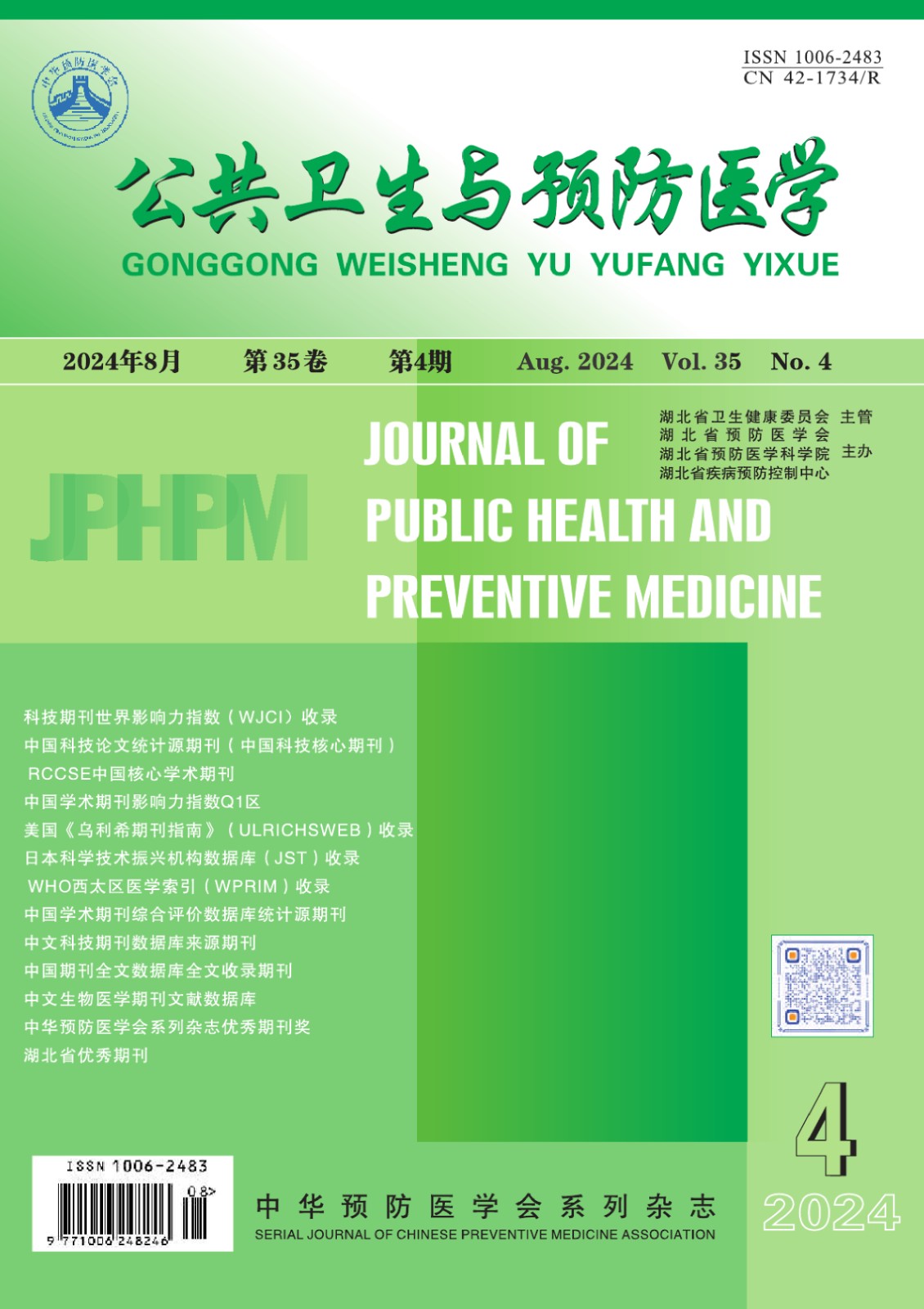
Journal of Public Health and Preventive Medicine

2002 (v1, n1) to Present ISSN: 1671-8925

Articles

About

Year of publication

Save Email

Sort by

Best match
Relevance
PubYear
JournalTitle

DISPLAY OPTIONS

Format:

Per page:

Save citations to file

Selection:

Format:

Create file Cancel

Email citations

To:

Please check your email address first!

Selection:

Format:

Send email Cancel

1284

results

page

of 129

1

Cite

Cite

Copy

Share

Share

Copy

Predicting the risk of cardiovascular and cerebrovascular diseases based on meteorological factors and the analysis of its correlation with incidence rates

Yuanyuan SHANG ; Zhengjing DU ; Ying DUAN ; Yanjing TANG

Journal of Public Health and Preventive Medicine.2024;35(5):1-5. doi:10.3969/j.issn.1006-2483.2024.05.001

Objective Based on meteorological factors, the prediction of the risk of cardiovascular and cerebrovascular diseases(CVD) and the analysis of its correlation with the incidence rate. Methods The research utilizes six years of data on CVD incidence from Xingyi, from 2017 to 2022, as the subject of study. The incidence risk levels are categorized based on the 25%, 50%, 75%, and 95% quantiles of the cumulative probability of the number of cases. The study is conducted based on the relationship between meteorological factors and the risk of incidence of CVD. Results The incidence of CVD shows a significant correlation with temperature, vapor pressure, atmospheric pressure, and relative humidity. It is negatively correlated with temperature and vapor pressure, among which the correlation with the daily minimum temperature is the highest at -0.504 (P < 0.05), and positively correlated with atmospheric pressure and relative humidity. Meteorological factors that have a significant correlation with the incidence rate are selected as input factors for the machine prediction model. It was found that the random forest model performs best in predicting the risk of incidence of CVD, with a comprehensive score of 0.851. Analysis of Relative Risk (RR) values found that there is a lagged association between exposure levels to meteorological factors and the incidence of cardiovascular and cerebrovascular diseases. A temperature drop of more than 11°C and an increase in atmospheric pressure of more than 8 hPa can significantly increase the risk of incidence. Conclusion The study revealed significant correlations between the incidence of CVD and meteorological parameters including temperature, water vapor pressure, atmospheric pressure, and relative humidity. Utilizing machine learning models, the research effectively predicted the risk of these diseases, uncovering that extreme weather conditions significantly elevate the risk of incidence. These findings provide a basis for meteorological risk assessment in public health interventions, emphasizing the importance of taking preventative measures in the context of extreme climate changes.

2

Cite

Cite

Copy

Share

Share

Copy

Application of seasonal ARIMA model in predicting the monthly incidence of foodborne diseases

Xuepei ZHANG ; Lin ZHOU ; Min LIU ; Aiying TENG ; Yanhua LI ; Wei MA

Journal of Public Health and Preventive Medicine.2024;35(5):6-9. doi:10.3969/j.issn.1006-2483.2024.05.002

Objectives To explore the trend characteristics of foodborne diseases in Jinan City and apply the seasonal autoregressive integrated moving average model (SARIMA) for prediction. Methods The incidence data of foodborne diseases from two active monitoring sentinel hospitals in Jinan City from 2014 to 2020 were collected to establish a time series. The SARIMA model was used to fit the incidence situation. The numbers of cases in 2021 were compared with the predicted values to validate the model and evaluate the predictive effect. Results The SARIMA (2, 0, 1) (0, 1, 1)12 model was established and fitted the time series of food borne diseases in Jinan well, with AIC=687.22. Using Ljung Box function, P=0.499 was obtained, indicating that the residual error belonged to the white noise series. The data in 2021 was used to test the model extrapolation effect, and the actual values fell within the 95% confidence interval of the predicted value. The model prediction effect was relatively ideal. Conclusion SARIMA (2, 0, 1) (0, 1, 1)12 model can better fit the temporal change of foodborne diseases, and therefore can be used to fit and predict the monthly incidence of foodborne diseases.

3

Cite

Cite

Copy

Share

Share

Copy

A meta-analysis of the association between green space and dyslipidemia

Chenxi LUO ; Tianjing HE ; Jicheng ZHU ; Yiyi HUANG ; Lu MA ; Yang LI

Journal of Public Health and Preventive Medicine.2024;35(5):10-14. doi:10.3969/j.issn.1006-2483.2024.05.003

Objective To explore the association between green space and the risk of dyslipidemia. Methods “Dyslipidemia” and “ Normalized Difference Vegetation Index (NDVI)” were used as search terms to search PubMed, Embase, and Web of Science databases for studies up to September 2023. ARHQ statistical assessment and review tool and NOS scale were employed to evaluate the quality of the studies. R 4.3.1 software was used for meta-analysis. Results A total of 11 studies were included, of which 5 cross-sectional studies and 5 cohort studies were rated as “high quality”. The results of meta-analysis showed that an increase in NDVI in some buffer zones was associated with reduced risks of hypercholesterolemia, hypertriglyceridemia, low HDL-C, and high LDL-C, while an increase in NDVI in 100m buffer zone was significantly associated with reduced risks of all these four diseases, with hypercholesterolemia (OR=0.87, P<0.05), hypertriglyceridemia (OR=0.94, P<0.05), low HDL-C (OR=0.95, P<0.05), and high LDL-C (OR=0.87, P<0.05). Sensitivity analysis suggested that the results of most meta-analyses were robust. Conclusion With the increase in green space near residential areas, the risk of dyslipidemia may decrease.

4

Cite

Cite

Copy

Share

Share

Copy

Identification of vaccine safety signals based on Apriori and GPS in Gansu Province in 2021 -2022

Xuefeng LIANG ; Jing AN ; Shuyu LIU ; Yongzhuo JIAO ; Na JIN ; Xiaoshu ZHANG

Journal of Public Health and Preventive Medicine.2024;35(5):15-19. doi:10.3969/j.issn.1006-2483.2024.05.004

Objective To identify signals of adverse events associated with vaccines in electronic medical record data. Methods Data cleaning was performed on electronic medical records and vaccination data in Gansu Province from 2020 to 2022. Signal identification was performed using Apriori algorithm and Empirical Bayes Gamma-Poisson Shrinker (GPS) with stratification by gender and age group. Results A total of 33 statistical signals were identified, with 7 signals identified by the Apriori method and 26 signals identified by the GPS method. No overlapping signals were found between the two methods at two different signal thresholds. Conclusion The vaccine safety signals identified by GPS and Apriori in electronic medical records are reliable and accurate, but further research is needed to determine the correlation between the vaccine safety signals recognized by GPS algorithms.

5

Cite

Cite

Copy

Share

Share

Copy

Application of SARIMA model in foodborne diseases prediction in Hubei Province

Xin WANG ; Yanwei LI ; Yuyue ZHAN ; Miaomiao YUE ; Jun LI

Journal of Public Health and Preventive Medicine.2024;35(5):20-23. doi:10.3969/j.issn.1006-2483.2024.05.005

Objective To investigate the feasibility of the autoregressive integrated moving average model (ARIMA) in analyzing foodborne diseases in Hubei Province and predicting the future trend of foodborne diseases in Hubei Province. Methods Based on the number of reported cases of foodborne diseases in Hubei Province for eight consecutive years (2014-2021), an ARIMA model was constructed using Python software to fit the data. The model was validated and parameters were optimized with data from January 2022 to December 2022. The optimal fitting model was used to predict the incidence and trends of foodborne diseases in 2023. Results The incidence of foodborne diseases in Hubei Province showed seasonal periodicity, and the peak of epidemic was usually in July every year. SARIMA (0,1,0) (2,2,1)12 was determined as the best fitting model. The model extrapolation effect was verified with 2022 data, and MAPE was 23.90 %, indicating that the model extrapolation effect was effective. Conclusion The SARIMA model is effective for short-term prediction of foodborne disease incidence trends in Hubei Province, and can provide a scientific basis for the formulation of foodborne disease prevention and control policies in the coming year.

6

Cite

Cite

Copy

Share

Share

Copy

False-positive results of rifampicin resistance in Xpert MTB/RIF testing of samples with extremely low bacterial loads

Youyi RAO ; Chang LIU ; Qiudan XIN ; Jianjian GUO ; Jian YU ; Jun CHEN

Journal of Public Health and Preventive Medicine.2024;35(5):24-27. doi:10.3969/j.issn.1006-2483.2024.05.006

Objective To investigate the causes of false-positive rifampicin resistant results in Xpert MTB/RIF (Xpert) test for samples with extremely low bacterial loads. Methods A total of 346 samples with extremely low bacterial loads and rifampicin-resistance results from Wuhan Pulmonary Hospital between June 2017 and March 2021 were collected. The samples were divided into probe-delayed and probe dropout groups based on amplification results. Mycobacterial culture and proportion method drug susceptibility testing were performed, and Xpert retesting was conducted for strains with discordant drug susceptibility results. Results Out of the 346 samples, 195 samples (56.36%) were positive in culture. Upon Xpert retesting, among the 64 Xpert-resistant but proportion method-sensitive strains, the proportions of samples in the delayed probe group with mutations in the probe D and probe E were 4.55%(1/22) and 13.33%(2/15), respectively. In the probe dropout group, the proportions of samples with mutations in the probe A and probe E were 75.00% (9/12) and 80.00% (8/10), respectively. The false-positive rifampicin resistance rates in the delayed probe and probe dropout groups were 78.26% (36/46) and 3.36% (5/149), respectively. Conclusion The main reasons for false-positive rifampicin resistance results in the Xpert test for samples with extremely low bacterial loads were probe delay in the D and E probes, followed by low-level drug-resistant mutations in the A and E probes.

7

Cite

Cite

Copy

Share

Share

Copy

Latent class analysis of the behavioral lifestyle of diabetic patients in community diabetes based on the perspective of lifestyle medicine

Yixuan ZHANG ; Tianyuan FENG ; Yifei GAO ; Meixiang HUANG ; Luyi GUO

Journal of Public Health and Preventive Medicine.2024;35(5):28-32. doi:10.3969/j.issn.1006-2483.2024.05.007

Objective To explore the latent class and influencing factors between different behavioral lifestyles in community patients with diabetes, to classify the population and reveal the behavioral lifestyle characteristics of different types of diabetes, and to provide a scientific basis for active health management of diabetes, the identification of high-risk groups and maximization of the effect of intervention measures. Methods From June to August 2022, a behavioral and lifestyle follow-up survey was conducted on 1 179 diabetes patients with electronic health records from 18 community health service centers in Pingshan District, Shenzhen. The latent class analysis (LCA) method was used to cluster the life and behavior style of the study subjects, and the disordered multi-classification logistic regression was used to analyze the influencing factors of each class. Results The LCA results showed that there were three latent classes of community diabetes patients: “overweight and obese group” (28.4%), “balanced diet group” (30.8%), and “vegetarian but persistent exercise group” (40.8%). Logistic regression analysis results showed that age, total cholesterol , LDL , fasting blood glucose, comorbidities, and hypertension history affected the latent classes of behavioral lifestyle in diabetic patients in the community (P<0.05). Conclusion The behavioral lifestyle of community diabetes patients has obvious classification characteristics and obvious differentiation in terms of eating behavior. Doctors and health managers can issue corresponding lifestyle medicine prescriptions and formulate corresponding active health management measures to prevent the occurrence of risk factors related to diabetes patients in advance and formulate personalized intervention measures.

8

Cite

Cite

Copy

Share

Share

Copy

HBV infection and risk factors among population aged 15~65 years old in Pudong New Area, Shanghai

Qian WAN ; Zou CHEN ; Hong ZHANG ; Pingan WU ; Xin XIN

Journal of Public Health and Preventive Medicine.2024;35(5):33-36. doi:10.3969/j.issn.1006-2483.2024.05.008

Objective To investigate the HBV infection status among population aged 15-65 years old in Pudong New Area, Shanghai and analyze the risk factors, and to provide a basis for HBV prevention and control. Methods Stratified two-stage cluster random sampling and other methods were used to select people aged 15 to 65 years old in Pudong New Area. Questionnaire surveys and laboratory tests were conducted to describe and compare the HBV infection status of people with different characteristics, and to analyze the risk factors of HBsAg positivity. Results A total of 1 093 people were investigated. The positive rate of HBsAg was 4.94%, the immunization rate of hepatitis B vaccine was 36.96% and the susceptibility rate of HBV was 43.64%. Among them, the HBsAg positive rate among middle-aged and elderly people was 5.10%~10.07%, and the HBsAg positive rate among women aged 15-49 years old was 2.27%. The risk factors of HBsAg positivity were age over 35 years old (35-44 years old/ 15-24 years, OR=4.25, 95% CI= 1.09-16.61; 45-65 years old /15-24 years old , OR=4.59, 95% CI=1.33-15.79), male (OR=2.33, 95% CI=1.27-4.28), family history of hepatitis (OR=5.50, 95% CI=2.10-14.36), intramuscular/intravenous injection (OR=3.22, 95% CI=1.51-6.90), traumatic beauty (OR=7.66, 95% CI=2.23-26.30) and shaving (OR=9.27, 95% CI=2.44-35.23). Conclusion The HBV infection rate among population aged 15-65 years old in Pudong New Area is low. The analysis of the risk factors suggests that effective precautions such as screening for HBV, inoculating hepatitis B vaccine, strengthening the management of public places and promoting safety syringes should be carried out for those who age 35 years old and above , have a family history of hepatitis , or have a history of intramuscular/ intravenous injection , and traumatic beauty or shaving.

9

Cite

Cite

Copy

Share

Share

Copy

Surveillance results of foodborne disease in Liuzhou City in 2018 -2020

Zhenxing YANG ; Yun QIN ; Lian FENG ; Kan FENG ; Dehao LI ; Yiran LI

Journal of Public Health and Preventive Medicine.2024;35(5):37-40. doi:10.3969/j.issn.1006-2483.2024.05.009

Objective To investigate the epidemiological characteristics of foodborne diseases in Liuzhou City, and to provide reference for formulating the prevention and control measures of foodborne diseases. Methods The surveillance data of foodborne diseases in 25 sentinel hospitals in Liuzhou City from 2018 to 2020 were collected for statistical analysis. Results From 2018 to 2020, a total of 9 317 cases of foodborne diseases were reported in Liuzhou City, and 2 158 samples were collected for pathogen detection. A total of 311 cases were detected positive , with a detection rate of 14.41%. Norovirus had the highest detection rate (8.63%), followed by Salmonella (4.08%) and Escherichia coli (3.10%). July to October was a period of high incidence of foodborne disease( 41.17%). The proportion of patients aged 60 and over was the highest (18.49%), followed by the age group of 30-39 (18.03%). Suspicious foods were mainly meat and meat products (22.35%) and aquatic animals and their products (13.89%). The suspicious eating places were mainly families (40.43%) and restaurants (13.63%). Conclusion The high incidence of foodborne diseases in Liuzhou occurs in summer and autumn. The main pathogens are Salmonella and norovirus. Infected patients are concentrated in the age group of 60 years and above and the age group of 30 to 39 years old. The family is the main place of foodborne disease, followed by the restaurants and hotels. Suspicious foods include mainly meat and meat products and aquatic animals and their products. It is necessary to strengthen monitoring ability and food safety education to reduce the occurrence of foodborne diseases.

10

Cite

Cite

Copy

Share

Share

Copy

Epidemiological characteristics and spatial and temporal aggregation analysis of other infectious diarrhea in Songjiang District , Shanghai , 2018-2022

Meng LI ; Jie FENG ; Ning HAN ; Xihong LYU

Journal of Public Health and Preventive Medicine.2024;35(5):41-45. doi:10.3969/j.issn.1006-2483.2024.05.010

Objective To analyze the spatial-temporal aggregation of other infectious diarrhea (OID) in Songjiang District, Shanghai, from 2018 to 2022, and to provide a basis for the formulation of scientific prevention and control measures of intestinal infectious disease. Methods Surveillance data of OID cases in Songjiang District, Shanghai, from 2018 to 2022 were collected from China Information System for Disease Control and Prevention. ArcMap software version 10.7 was applied to detect spatial autocorrelation analysis, and SaTScan software version 10.1.2 was applied in spatial-temporal scan analysis. Results A total of 2 996 OID cases were reported in Songjiang District between 2018 and 2022, with an average annual incidence rate of 29.26/100 000. The sex ratio of OID cases was 1.24:1, and majority of cases occurred in the age group 0-4 years (44.91%). Occupation of OID cases was mainly scattered children (42.36%), students (9.91%) and children in kindergarten or nursery (8.98%). Positive spatial autocorrelation of OID between 2018 and 2021 was identified at the township level in the global spatial autocorrelation analysis. Local spatial autocorrelation analysis indicated that the hot-spot areas of OID incidence were Fangsong Street, Yueyang Street, Zhongshan Street and Yongfeng Street, respectively, which were all distributed in the main urban area of Songjiang District. Three high-risk spatial-temporal clusters of OID incidence were identified through the spatial-temporal scan analysis. The primary spatial-temporal cluster covered 4 streets in the main urban area of Songjiang (RR=4.06, LRR=515.06, P<0.05). The secondary spatial-temporal cluster covered 2 streets/towns in northeastern area of Songjiang (RR=2.59, LRR=12.04, P<0.05). The tertiary spatial-temporal aggregation areas covered 4 streets/towns in both northwestern and main urban area of Songjiang (RR=2.65, LRR=11.51, P<0.05). Conclusion From 2018 to 2022, the overall incidence of other infectious diarrhea in Songjiang District showed a fluctuating downward trend, and there was a certain degree of spatiotemporal clustering. It is necessary to strengthen the prevention and control measures of OID for key populations in the clustering area before epidemic seasons.

Country

China

Publisher

ElectronicLinks

http://mag.hbcdc.com/

Editor-in-chief

SUN CHANGSONG

E-mail

fbyf@chinajournal.net.cn

Abbreviation

Vernacular Journal Title

公共卫生与预防医学

ISSN

1006-2483

EISSN

Year Approved

2019

Current Indexing Status

Currently Indexed

Start Year

1990

Description

The journal of Public Health and Preventive Medicine was first published in 1990. It is a bimonthly publication with publication No. of ISSN 1006-2483 and CN 42-1734/R, in the face of domestic and international public issuance and published six times a year. Its competent unit is the Health Commission of Hubei province, and the journal is co-sponsored by the Hubei Preventive Medicine Association, Hubei Academy of Preventive Medicine and Hubei Center for Disease Control and Prevention. The Public Health and Preventive Medicine is a platform for communication between public health and preventive medicine workers. It promotes the development of public health and preventive medicine by introducing new technologies, new methods, new discoveries and new achievements in the field of public health and clinical diagnosis and treatment of common diseases at home and abroad. The main columns are as follow: expert forum, monographs, lectures and reviews, investigation and research, experimental research, disease prevention and clinical, monitoring, maternal and child health care, health management, health education, information and so on. The journal has a good development trend at present. It was listed as the Statistical Source Journal of Chinese Scientific and Technological Papers (China Science and Technology Core Journal) after comprehensive evaluation of academic indicators and peer review and recommendation in 2009. The Impact Factor was 1.590 in 2018, which is ladder lifting as 1.461 in 2017 and 1.399 in 2016. The core influencing factors of preventive medicine in China ranked the third place. It is an excellent journal of Hubei and the Chinese Society of Preventive Medicine.

Related Sites

WHO WPRO GIM

Help Accessibility
DCMS Web Policy
CJSS Privacy Policy

Powered by IMICAMS( 备案号: 11010502037788, 京ICP备10218182号-8)

Successfully copied to clipboard.