

Main content 1 Menu 2 Search 3 Footer 4
+A
A
-A
High contrast
HOME JOURNAL JOURNAL SELECTION NETWORK HELP ABOUT

Journal Selection Criteria and Standards

WPRIM Journal Selection Criteria (August 2023)

NJSC Philippines Selection Criteria (for Philippine-based journals only)

Minimum standards for the suspension and removal of WPRIM approved journals

Application and Indexing Process

Application and Submission Process for WPRIM Indexing

Journal Content Management

Candidate Journal Selection and Data Creation and Management System

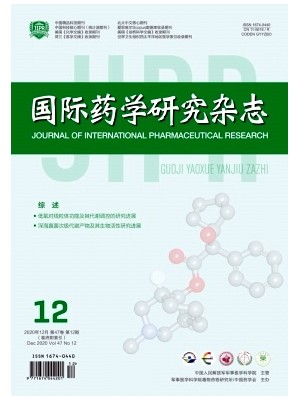
Journal of International Pharmaceutical Research

1958  to  Present  ISSN: 1674-0440

Articles

About

Save Email

Sort by

Best match
Relevance
PubYear
JournalTitle

DISPLAY OPTIONS

Format:

Per page:

Save citations to file

Selection:

Format:

Create file Cancel

Email citations

To:

Please check your email address first!

Selection:

Format:

Send email Cancel

1032

results

page

of 104

1

Cite

Cite

Copy

Share

Share

Copy

Thrombolysis of plasmin and its derivatives:research advances

Rongzeng LIU ; Wei MO ; Min YU

Journal of International Pharmaceutical Research.2014;(3):296-300. doi:10.13220/j.cnki.jipr.2014.03.010

All of the thrombolytic agents currently approved for use in humans are plasminogen activators, the application of which is limited by bleeding complications at vascular injury sites and plasminogen content in the thrombus. Plasmin is rapidly neutral-ized in the circulation by α2-antiplasmin and tolerated without bleeding. With the application of catheter-based delivery, the unique bio-chemical properties of plasmin make it a safe and effective direct fibrinolytics. Plasmin derivatives, including miniplasmin,Δ-plasmin and microplsmin, display more thrombolysis efficacy and better hemostatic safety in preclinical study and clinical trials. This review sum-marizes the current information on plasmin and its derivatives, including the advances on biochemical properties, preclinical and clinical trials.
2

Cite

Cite

Copy

Share

Share

Copy

Competitiveα-amino-3-hydroxyl-5-methyl-4-isoxazole propionic acid receptor antagonists:research advances

Dian XIAO ; Lingxiao WANG ; Xinbo ZHOU ; Song LI

Journal of International Pharmaceutical Research.2014;(4):407-412. doi:10.13220/j.cnki.jipr.2014.04.04

α-Amino-3-hydroxyl-5-methyl-4-isoxazole propionic acid (AMPA) receptor, a subtype of ionotropic glutamate receptors widely distributed in the central nervous system, mediates the fast excitatory neurotransmission. Meanwhile more and more evidence indicates that AMPA receptor plays an important role in synaptic plasticity as well as central sensitization, and it also has close relationships with nervous system diseases. Over stimulation of AMPA receptor would produce excitotoxicity, leading to neuronal damage and finally resulting in a multitude of nervous system diseases, such as epilepsy, amyotrophic lateral scelerosis,Parkinson′s dis-ease. Competitive AMPA receptor antagonists that downregulate AMPA receptor′s function are of great importance in the prevention and treatment of nervous system diseases. This article reviews the research advances of competitive AMPA receptor antagonists.

3

Cite

Cite

Copy

Share

Share

Copy

Overviews and analysis of the U.S. FDA′s new approvals in 2014 first half year

Zhongming TANG

Journal of International Pharmaceutical Research.2014;(4):493-502. doi:10.13220/j.cnki.jipr2014.04.020

In the first half of 2014, the U.S. Food and Drug Administration (FDA) approved 46 new drugs, including 10 new molecular entities and 10 new biologic license applications. According to the prescription information for professionals, this article introduces the description, mechanism of action and clinical studies, briefly describs the box warning, indications and usage, dosage and administration, dosage form and strength, contraindications, warning and precautions, adverse reactions, drug interaction and use in special population of these new drugs. In addition, the “first events” in the history of new drug research, development and approval are also discussed.

4

Cite

Cite

Copy

Share

Share

Copy

Galloyl glucosidic constituents of Choerospondias axillaries and their in vitro anti-tumor, anti-hypoxia and anti-bacteria activities

Changwei LI ; Chengbin CUI ; Bing CAI ; Bing HAN ; Mingming LI ; Ming FAN

Journal of International Pharmaceutical Research.2014;(4):449-455. doi:10.13220/j.cnki.jipr2014.04.012

Objective To investigate gallic acid-derived chemical constituents of Choerospondias axillaries (Roxb.) Burtt. et Hill., and evaluate their in vitro anti-tumor, anti-hypoxia and anti-bacteria activities. Methods The aimed chemical constituents were isolated by various chromatographic means, and their structures were identified by physicochemical and spectroscopic data. MTT method was employed to evaluate anti-tumor and anti-hypoxia activities. Antibacterial activities were tested by paper disc method. Results Seven compounds 1-7 were isolated from the stem barks of Choerospondias axillaries (Roxb.) Burtt. et Hill. and identified as gallic acid(1), gallic acid ethyl ether(2), 1-O-galloyl-β-D-glucose(3), 1,6-di-O-galloyl-β-D-glucose(4), 1,4-di-O-galloyl-β-D-glucose(5), 1,4,6-tri-O-galloyl-β-D-glucose(6), and 1,3,4,6-tetra-O-galloyl-β-D-glucose(7). Compounds 1, 2 and 4-6 significantly inhibited K562 cells with the IC50 values of 2.9, 14.6, 39.1, 40.2, 41.2 μg/ml, respectively, and 3 and 7 also showed a slight inhibition of the K562 cells with the inhibition rate of 20.8% and 30.1% at 100 μg/ml respectively. Compounds 1-7 showed protective effects on anoxia-induced injury in cultured ECV304 and PC12 cells at the concentrations showing no significant cytotoxicity, and 5-7 also showed an antibacterial effect on Staphylococcus aureus ATCC6538 to a certain extent. Conclusion Compounds 2-7 were isolated from the genus Choerospondias for the first time. It was the first time to report 1-7 as anti-tumor and anti-hypoxia constituents of Choerospondias axillaries, and the anti-hypoxia activity for 1-7 was also recorded for the first time in the present study.

5

Cite

Cite

Copy

Share

Share

Copy

Main biologics for anti-autoimmune disease:research advances

Weihua HOU ; Wei MO ; Min YU

Journal of International Pharmaceutical Research.2014;(4):424-428. doi:10.13220/j.cnki.jipr2014.04.007

Immune system is a security guard to help human body repel or remove bacteria, viruses, parasites and other fore-ign invaders .But when some tissue components or the immune system itself become abnormal, it can not distinguish friend from foe accurately and may attack our own tissue then cause some clinical symptoms, leading to autoimmune diseases. Nearly 5 % of the world's population suffer from various autoimmune diseases. By now in addition to control the formation of autoantigens such as infection,tiredness, the main biologics used in clinic are immunoregulators to block pathological autoimmune response and then to create a new proper immune response. Recently, new biologics to treat autoimmune disease come into being one after another, and this article gives a brief overview about research progress in anti-autoimmune disease biologics.

6

Cite

Cite

Copy

Share

Share

Copy

Physicochemical properties of a polysaccharide RAP-B-1 from Rubus amabilis and its immunomodulating effects

Yulin DIAO ; Hao MA ; Jinwei REN ; Guiqiang ZHANG ; Shuai LI ; Junjie SHAN ; Bin LIU

Journal of International Pharmaceutical Research.2014;(4):461-467. doi:10.13220/j.cnki.jipr2014.04.014

Objective To investigate the physicochemica l properties and immunobiological activity of a polysaccharide (RAP-B-1) from stems of Rubus amabilis. Methods The crude polysaccharide (RAP) was obtained successively by boiling, ethanol precipitating and dialyzing. RAP was isolated with DEAE-cellulose and Sephadex G-100 to obtain a polysaccharide RAP-B-1. The physicochemical properties of RAP-B-1 were studied by hydrolysis, periodate oxidation, Smith degradation and methylation, CE, IR, NMR and GC-MS. The immunobiological activities were estimated by the proliferative activity of spleen lymphocytes and phagocytic activity of peritoneal macrophages in mice. Results The molecular weight of RAP-B-1 was 4.80×10⁴ with specific optical rotation value [α] 20D+68.3 (c=1,H2O), and was composed of eight monosaccharides. The molar ratios were as Xyl: Ara: Glc: Rha:Gal: Man: GlcA: GalA = 1.0:6.9:0.8:1.1:6.9:0.3:0.5:3.3. RAP-B-1 was an arabinogalactan. The linkages of arabinose were →1) Ara (2,3→,→1) Ara(5→and→1) Ara, and the linkages of galactose were→1) Gal(4→,→1) Gal(6→and→1) Gal. RAP-B-1 could improve the proliferative activity of spleen T cells(P<0.05) and booste phagocytic activity of peritoneal macrophages at 50μg/ml concentration(P<0.01). Conclusion RAP-B-1 is an arabinogalactan and has immunobiological activity.

7

Cite

Cite

Copy

Share

Share

Copy

Disease briefing:Zika virus infection

Reuters THOMSON

Journal of International Pharmaceutical Research.2016;43(3):466-470. doi:10.13220/j.cnki.jipr.2016.03.012

Zika virus(ZIKA),a member of the Flaviviridae family,was discovered serendipitously in 1947 in the Zika forest of Uganda. In May 2015,the Pan American Health Organization(PAHO)issued an alert regarding the first confirmed Zika virus infec? tion in Brazil. Recently,the virus has been tentatively linked to a severe neurodevelopmental birth defect known as microcephaly in in? fants born to mothers who were infected during pregnancy. The virus has gradually become the hot spot in international medical re? search. The health authorities are calling for the rapid development of diagnostics,vaccines and antiviral drugs.

8

Cite

Cite

Copy

Share

Share

Copy

Content analysis of avicularin,quercitrin and quercetin in Herba Taxilli from different host plants

wei Ben SU ; 535099 钦州,钦州市中医医院 ; Hui WANG ; hua Yong LI ; huan He PEI ; xin Kai ZHU ; Dong LU

Journal of International Pharmaceutical Research.2017;44(7):738-742. doi:10.13220/j.cnki.jipr.2017.07.012

Objective To study the content difference of avicularin,quercitrin and quercetin in Herba Taxilli from different host plants. Methods The contents of avicularin,quercitrin and quercetin in Herba Taxilli were determined by RP-HPLC and the samples were prepared by ultrasonic extraction with methanol. The analytical column was UltImate XB-C18(250 mm×4.6 mm,5μm), the mobile phase was acetonitrile-methanol-0.1%phosphate with gradient elution,at a flow rate of 1.0 ml/min. The column tempera-ture was set at 25℃,the detection wavelength was 254 nm for avicularin and quercitrin,and 365 nm for quercetin. Results The lin-ear range of the above three ingrediets were 0.0992-1.9840(r=0.9999),0.2254-4.4580(r=0.9999)and 0.1258-2.5160μg(r=0.9997) and the average recovery rates(n=5)were 98.39%,97.08%and 98.159%,respectively. Their contents from different host plants were 0.0000-0.0398,0.3977-0.7639 and 0.0068-0.0231 mg/g in branches and 0.0167-0.1704,1.8626-11.0041,and 0.0185-0.1841 mg/g in leaves. Conclusion The method is accurate,simple and reproducible,and can be used for the quality control of Herba Taxilli.

9

Cite

Cite

Copy

Share

Share

Copy

Antidiabetic effect of Acanthopanax senticosus extracts in diabetic mice:a serum metabonomic study by UPLC-MS/MS

xia Jin CHANG ; hu Wen LIU ; wu Jian ZHANG

Journal of International Pharmaceutical Research.2017;44(7):730-737. doi:10.13220/j.cnki.jipr.2017.07.011

Objective To investigate the antidiabetic effect of Acanthopanax senticosus extracts based on metabonomics by UPLC-MS/MS and to explore its mechanisms. Methods The type 2 diabetes mellitus(T2DM)mouse model was established by inject-ing streptozocin(streptozotocin,STZ)in combination with alloxan. The effect of A. senticosus extracts on the fasting blood glucose of mice was observed. Multivariate statistical analysis was employed to analyze serum metabolites. The differential metabolites were iden-tified by online and self-built databases. MetPA Was employed to analyze the corresponding metabolic pathways. Results The T2DM model was established successfully. Compared with the model group,the fasting blood glucose of mice in the A. senticosus extracts groups decreased significantly. Compared with the normal control group,the level of phenylalanine,LysoPC(16:0,18:0),tyrosine, serine,urea andβ-hydroxybutyric acid inecreased,while the level of alanine,glutamine,leucine,valine and lactic acid decreased significantly in the model group. Pathway enrichment displayed that these metabolites were mainly involved in five metabolic pathways. The above-mentioned metabolites reversed to the normal level in varying degrees after administration of A. senticosus glycosides or poly-saccharoses extracts. Conclusion The extracts of A. senticosus display a significant hypoglycemic effect which might be achieved by regulation of amino acid,energy and lipid metabolism.

10

Cite

Cite

Copy

Share

Share

Copy

Synthesis of the related substances of aprepitant

yuan Zu WANG ; 101113 北京,北京澳合药物研究院有限公司 ; xia Cai HUO ; bing Zhi ZHENG

Journal of International Pharmaceutical Research.2017;44(7):707-713. doi:10.13220/j.cnki.jipr.2017.07.008

Objective To synthesize four related substances:1b,1c,1d,and 1e according to the synthetic process of aprepi-tant and its quality standard of USP and EP. Methods The impurities 1b,1c,and 1d were synthesized from 3,5-bis(trifluoromethyl) acetophenone through asymmetrical catalytic reduction reaction,condensation reaction,Grignard reaction ,catalytic hydrogenation and substitution. The impurity 1e was synthesized from(R)-α-methylbenzylamine through 7 reaction steps including esterification,reduc-tion,condensation ect. Results All the four related substances were confirmed by LC-MS and NMR. The results indicated that purity of the product surpassed 95%through HPLC. Conclusion These related substances can be taken as the references for the quality con-trol of aprepitant.

Country

China

Publisher

ElectronicLinks

http://gjyxyjzz.juqk.net/

Editor-in-chief

E-mail

guol@nic.bmi.ac.cn

Abbreviation

Journal of International Pharmaceutical Research

Vernacular Journal Title

国际药学研究杂志

ISSN

1674-0440

EISSN

Year Approved

2013

Current Indexing Status

Suspended(2024)

Start Year

1958

Description

1958-1960:药学文摘; 1963:医学文摘第三分册(药学); 1966-1973:停刊; 1974-1978:国外医学参考资料·药学分册; 1979-2006:国外医学·药学分册; 2007-:国际药学研究杂志

Related Sites

WHO WPRO GIM

Help Accessibility
DCMS Web Policy
CJSS Privacy Policy

Powered by IMICAMS( 备案号: 11010502037788, 京ICP备10218182号-8)

Successfully copied to clipboard.