Main content 1 Menu 2 Search 3 Footer 4
+A
A
-A
High contrast
HOME JOURNAL CRITERIA NETWORK HELP ABOUT

Current criteria:

Regional:

WPRlM journal selection criteria(2023)

Minimum standards for the suspension and removal of WPRIM approved journals

Countries journal selection criteria:

Philippines

Submit your journal information>

Contact NJSCs>

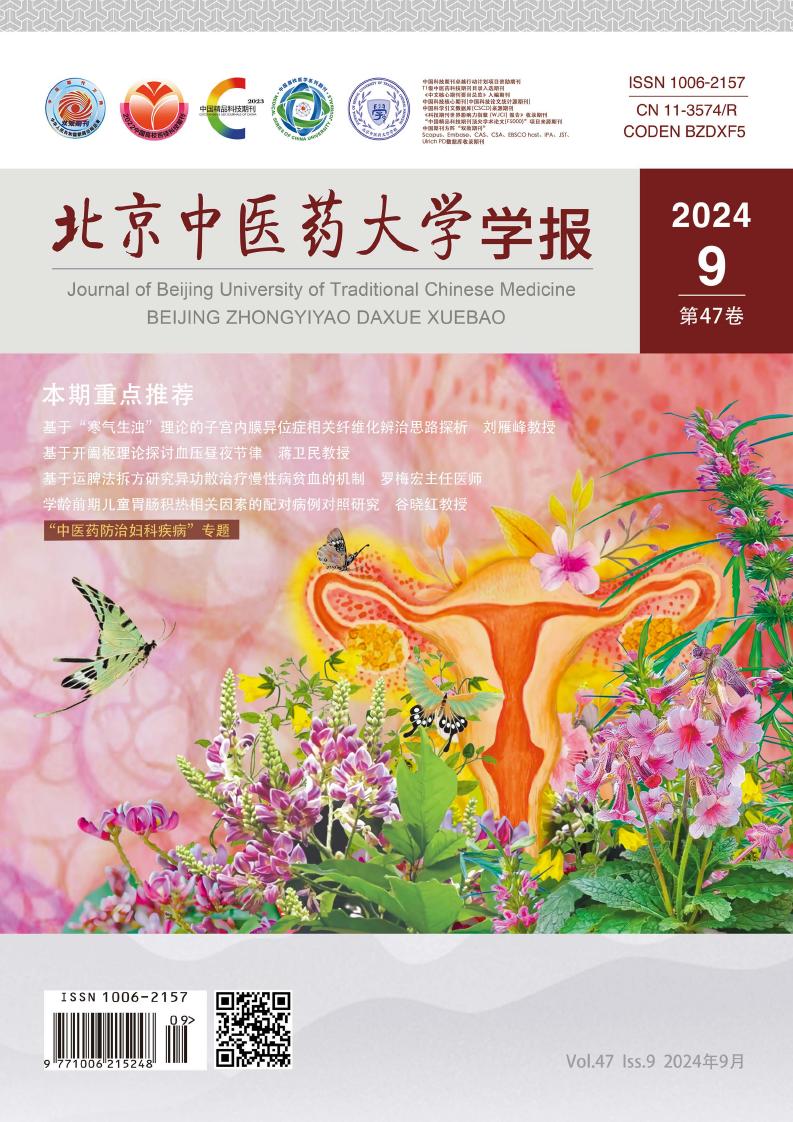
Journal of Beijing University of Traditional Chinese Medicine

2002 (v1, n1) to Present ISSN: 1671-8925

Articles

About

Year of publication

Save Email

Sort by

Best match
Relevance
PubYear
JournalTitle

DISPLAY OPTIONS

Format:

Per page:

Save citations to file

Selection:

Format:

Create file Cancel

Email citations

To:

Please check your email address first!

Selection:

Format:

Send email Cancel

407

results

page

of 41

1

Cite

Cite

Copy

Share

Share

Copy

Exploring the pathogenesis of attention deficit hyperactivity disorder in children from the perspectives of traditional Chinese medicine, the Book of Changes, and the Kan-Li

Kangning ZHOU ; Junhong WANG

Journal of Beijing University of Traditional Chinese Medicine.2025;48(3):297-302. doi:10.3969/j.issn.1006-2157.2025.03.001

Many ancient physicians emphasized the shared origins of traditional Chinese medicine (TCM) and the Book of Changes, which are both deeply rooted in yin and yang transformations. While the Book of Changes explores alterations in yin and yang, TCM focuses on their manifestations in the human body. Based on these shared origins, this paper examines attention deficit hyperactivity disorder (ADHD) treatment in children through the perspectives of TCM, the Book of Changes, and the Kan-Li. This study integrates children′s unique physiological characteristics and emphasizes the pivotal role of the four zang viscera: the heart, kidney, spleen, and liver. In TCM, the kidney governs water metabolism and shares an intricate, interdependent relationship with the heart. Understanding the kidney′s functions and clinical implications necessitates accounting for its connection with the heart. Similarly, therapeutic interventions that nourish the kidney inherently involve heart regulation, reflecting the principle of the mutual rooting of water and fire through the interplay of Kan (water) and Li (fire). This fundamental view of TCM resonates with the natural laws of the universe and the interplay between Heaven and Earth. The heart occupies the upper position, whereas the kidney resides below. Kidney yin ascends to nourish the heart, whereas heart fire descends to warm the kidney, embodying a vital heart-kidney interaction essential for sustaining life. Based on the physiological characteristics of children, the heart qi tends to be hyperactive, kidney qi and spleen qi are frequently insufficient, and liver qi often displays hyperactivity. This study suggests that the pathogenesis of ADHD involves kidney essence insufficiency and spleen yang deficiency. Furthermore, the homogeny of the liver and kidney implies that kidney deficiency can result in upper hyperactivity of liver yang, leading to yin-yang disharmony. Treatment for ADHD in children should focus on invigorating the spleen and kidney, as well as tonifying and replenishing the liver and kidney, to reestablish Kan-Li equilibrium. This approach addresses the underlying pathophysiology, alleviates ADHD symptoms, and facilitates recovery. Ultimately, it promotes a return to the child′s innate state of balance and vitality.

2

Cite

Cite

Copy

Share

Share

Copy

Study on the traditional Chinese medicine syndromes in 757 cases of children with hepatolenticular degeneration based on factor analysis and cluster analysis

Daiping HUA ; Han WANG ; Qiaoyu XUAN ; Lanting SUN ; Ling XIN ; Xin YIN ; Wenming YANG

Journal of Beijing University of Traditional Chinese Medicine.2025;48(3):303-311. doi:10.3969/j.issn.1006-2157.2025.03.002

Objective: To explore the distribution of traditional Chinese medicine (TCM) syndromes in children with hepatolenticular degeneration (Wilson disease, WD) based on factor analysis and cluster analysis. Methods: From November 2018 to November 2023, general information (gender, age of admission, age of onset, course of disease, clinical staging, Western medicine clinical symptoms, and family history) and TCM four-examination informations (symptoms and signs) were retrospectively collected from 757 cases of children with WD at the First Affiliated Hospital of Anhui University of Chinese Medicine, and factor analysis and cluster analysis were used to investigate TCM syndromes in children with WD. Results: A total of 757 children with WD were included, of which 483 were male and 274 were female; the median age at admission was 12.58 years, the median age at onset was 8.33 years, and the median course of disease was 24.37 months; clinical typing result indicated 506 cases of hepatic type, 133 cases of brain type, 99 cases of mixed-type, and 19 cases of other type; 36.46% of the children had no clinical symptoms (elevated aminotransferases or abnormalities in copper biochemistry); a total of 177 cases had a definite family history, and 10 cases had a suspected family history. Forty-three TCM four-examination information were obtained, with the top 10 in descending order being feeling listless and weak, brown urine, slow action, inappetence, dim complexion, slurred speech, angular salivation, body weight loss, hand and foot tremors, and abdominal fullness. In children with WD, the syndrome element of disease location was primarily characterized by the liver, involving the spleen and kidney, and the syndrome elements of disease nature were characterized by dampness, heat, and yin deficiency. Based on factor analysis and cluster analysis, five TCM syndromes were derived, which were, in order, syndrome of dampness-heat accumulation (265 cases, 35.01%), syndrome of yin deficiency of the liver and kidney (202 cases, 26.68%), syndrome of liver hyperactivity with spleen deficiency (185 cases, 24.44%), syndrome of qi and blood deficiency (79 cases, 10.44%), and syndrome of yang deficiency of the spleen and kidney (26 cases, 3.43%). Conclusion The TCM syndromes of children with WD were primarily syndromes of dampness-heat accumulation, yin deficiency of the liver and kidney, and liver hyperactivity with spleen deficiency. The liver was the main disease location, and the disease nature was characterized by deficiency in origin and excess in superficiality, excess and deficiency mixed. These findings suggest that treating children with WD should be based on the liver while also considering the spleen and kidney.

3

Cite

Cite

Copy

Share

Share

Copy

Diagnosis and treatment of pediatric sinusitis based on "the transmission of heat from gallbladder and lung" idea in Huangdi Neijing

Wenqing PAN ; Zhenhua YUAN ; Haolin WANG ; Qiongqiong XING ; Zichao DING ; Yiman DUAN ; Xianqing REN

Journal of Beijing University of Traditional Chinese Medicine.2025;48(3):312-317. doi:10.3969/j.issn.1006-2157.2025.03.003

Sinusitis is a prevalent nasal disease in children, characterized by chronic and difficult-to-treat symptoms. Its onset is related to nasal stagnation, gallbladder and lung dysfunctions. This article explores the root cause based on Huangdi Neijing by considering the physiological and pathological characteristics of children. The core pathogenesis of pediatric sinusitis is the transmission of heat from the gallbladder and lung to the brain and nose, disrupting normal nasal function. Wind and heat pathogens often persist, accumulate, and transform into turbid qi, which are common triggers of the disease. Evil qi retention and yin depletion are internal factors that cause the prolonged and unhealed condition of the disease. This article emphasizes individualized treatment approaches based on disease duration and the severity of pathogenic factors. If external pathogens remain uncleared, treatment should focus on dispelling wind, clearing heat, dispersing with pungent medicinals, and dredging nasal orifices. If internal fire is exuberant, clearing lung qi, inhibiting hyperactive liver yang, and clearing exuberant fire should be used to relieve stagnation. In chronic cases with residual pathogens and liver-kidney yin deficiency, nourishing yin, clearing fire, and moistening the nasal orifices are essential. When exuberant heat has subsided, but the symptom of a persistent runny nose continues, leading to the loss of healthy qi and damage to the lung and spleen, treatments that tonify the spleen, benefit the lung, and reinforce healthy qi should be adopted to relieve stagnation. These treatments aim to restore the balance of the body′s vital qi by addressing both the lingering symptoms and the underlying weakness of the lung and spleen. The diagnosis and treatment of pediatric sinusitis based on the theory of "the transmission of heat from gallbladder and lung" can help reduce the recurrence of sinusitis and alleviate symptoms, with the aim of broadening the approach of traditional Chinese medicine in treating this condition.

4

Cite

Cite

Copy

Share

Share

Copy

Exploring autism spectrum disorder in children from the perspective of "the sovereign fire illuminates, while the ministerial fire occupies its position"

Zilin CHEN ; Xu WANG ; Fei HAN

Journal of Beijing University of Traditional Chinese Medicine.2025;48(3):318-322. doi:10.3969/j.issn.1006-2157.2025.03.004

Autism spectrum disorder in children (hereinafter called "childhood autism") is a prevalent neurodevelopmental condition; however, ancient Chinese medical texts did not provide detailed accounts of it. The concept of "the sovereign fire illuminates, while the ministerial fire occupies its position" was first introduced in the Plain Questions: The Great Treatise on the Origin of Heavenly Influences chapter. Subsequent medical practitioners have elaborated on this idea, identifying the sovereign fire as the master of the spirit and governing life activities, while the ministerial fire is the assisting minister that supports the functions of the zang-fu organs. When these two are in harmony, they complement each other, collectively sustaining the body′s normal physiological functions. In the context of this theory, the pathogenesis of childhood autism is attributed to the imbalance between the sovereign and ministerial fires. The root cause lies in the mutual antagonism of these two fires, resulting in the dysfunction of the spirit. Central to childhood autism onset is the dimming of the sovereign fire and a deficiency in the spirit, while the displacement of the ministerial fire and the impaired function of the five viscera contribute significantly to the progression of the condition. Effective treatment for childhood autism involves restoring these imbalances: dispelling yin-related obstructions to illuminate the sovereign fire, nourishing the spleen and kidney to nourish the ministerial fire, and regulating the liver and lung to harmonize the sovereign and ministerial fires. The ultimate goal is to integrate body and spirit, harmonize the sovereign and ministerial fires, and restore the interconnectedness between spirit and the function of the five zang viscera. This article, based on the "the sovereign fire illuminates, while the ministerial fire occupies its position" theory, provides a novel perspective and insights for understanding and treating childhood autism through the holistic principles of traditional Chinese medicine. Emphasizing the integration of body and spirit offers new insights and approaches for the clinical management of childhood autism in traditional Chinese medicine.

5

Cite

Cite

Copy

Share

Share

Copy

Treatment of pulmonary diseases in children from the lung collaterals′ structure, function and pathogenesis

Zhiyuan LU ; Yuhan WANG ; Qigang DAI ; Lili LIN ; Tong XIE ; Shouchuan WANG

Journal of Beijing University of Traditional Chinese Medicine.2025;48(3):323-329. doi:10.3969/j.issn.1006-2157.2025.03.005

The lung collaterals form a network that branches from the lung meridian, traversing the lung system and extending across the body′s surface. Lung collateral disease refers to the structural alterations or dysfunction in these collaterals caused by external or internal pathogens. Research into the structural and physiological functions of children′s lung collaterals, as well as the pathogenesis and syndrome differentiation for treating lung collateral diseases in children, holds significant value in guiding the prevention and treatment of pediatric respiratory conditions. Drawing on the theory of collateral disease, the clinical insights of both historical and contemporary physicians, and modern research findings—while considering the unique physiological and pathological characteristics of children′s respiratory systems—this study provides a foundational summary of the morphology and spatial distribution of children′s lung collaterals. The characteristics of these collaterals are highlighted as thin, sparse, short, narrow, brittle, and tender. From this structural understanding, the unique physiological functions of children′s lung collaterals are analyzed. The study further explores the interactions between pathogenic factors and lung collaterals, elucidating the pathogenesis and progression of children′s lung collateral diseases. It proposes treatment principles centered on "seeking treatment in the collaterals and employing the method of unblocking collaterals, "which align with the unique features of pediatric lung collaterals. Common treatment approaches, and relevant prescriptions for managing these diseases are summarized. This paper lays the foundation for a theoretical system encompassing the structure, function, pathogenesis, and syndrome differentiation for treating children′s lung collateral diseases. It offers valuable insights for the clinical diagnosis and management of pediatric respiratory diseases linked to collateral dysfunction and serves as a reference for the systematic development of a broader theoretical framework for children′s collateral diseases.

6

Cite

Cite

Copy

Share

Share

Copy

Treating stasis-heat based on the ministerial fire axis of "pericardium-sanjiao-gallbladder"

Nachuan LI ; Kai LYU ; Ziwang LIU ; Hongxiao ZHANG ; Meng ZHANG ; Lu DING

Journal of Beijing University of Traditional Chinese Medicine.2025;48(3):330-335. doi:10.3969/j.issn.1006-2157.2025.03.006

Stasis-heat is a pathological factor associated with numerous exogenous and internal injuries, representing a pivotal mechanism in disease progression. Its primary cause is fire-heat toxicity. Based on the theory of qi and the holistic perspective of traditional Chinese medicine, this concept emphasizes that the biochemistry of all natural phenomena relies on the dynamic movement of qi ascending, descending, exiting, and entering. Within six qi, "fire" includes sovereign and ministerial fires. While physiological ministerial fire is the source power of life, pathological ministerial fire manifests as violent, intense energy that readily interacts with blood, leading to the formation of stasis-heat. Therefore, this article examines the formation and treatment of stasis-heat resulting from ministerial fire dysfunction. From the perspectives of ministerial fire gasification, the shape and quality of meridians, and the elevation of ministerial fire, it elucidates why the "pericardium-sanjiao-gallbladder" axis is regarded as pivotal. Furthermore, when the "pericardium-sanjiao-gallbladder" ministerial fire axis is unfavorable, and the stagnation of ministerial fire elevation and blockage is crucial to stasis-heat formation. Additionally, the depletion of essence and blood in the liver and kidneys, preventing the proper storage of ministerial fire, forms the pathological foundation. Drawing upon The Inner Canon of Yellow Emperor, this article explores therapeutic principles based on the rules of odor treatment: "when fires in the interior, the treatment of salty and cold, accompanied by bitter and pungent, acid to astringe, bitter to disperse." These principles are applied to achieve specific therapeutic goals: tempering the excess of ministerial fire to cool the nutritive level and transform stasis; adjusting the imbalance of elevation and depression to vent heat and unblock stasis; and restoring the misplaced fire by nourishing blood to expel stasis. Through these approaches, the article aims to reestablish the proper circulation of ministerial fire, dissipate blood stasis, and ultimately eliminate stasis-heat, thereby offering an integrated perspective on its pathogenesis and treatment.

7

Cite

Cite

Copy

Share

Share

Copy

Fu′s academic thoughts of promoting conception based on the "qi cycle in round" theory

Yan LIU ; Haoxian WANG ; Xiangyu LI ; Shuo SUN ; Jiuxian LI

Journal of Beijing University of Traditional Chinese Medicine.2025;48(3):336-342. doi:10.3969/j.issn.1006-2157.2025.03.007

FU Qingzhu Nyuke·Zhongzi is a concentrated manifestation of Fu′s academic thoughts of promoting conception (Zhongzi), which affects the treatment of infertility in later generations. However, the Zhongzi chapter is named after "symptoms" and is not divided into chapters according to "syndromes, "limiting the clinical application of Fu′s thoughts of Zhongzi. The "qi circle in round" theory is the crystallization of HUANG Yuanyu′s academic thinking, advocating for qi transformation, emphasizing middle qi, and considering the four phenomena. This theory highlights the role of middle qi in the rise, fall, and circulation of disease development. The "qi cycle in round" theory, a comprehensive view of Fu′s Zhongzi chapter, reveals that FU Qingzhu emphasizes the transformation of visceral qi in diagnosing and treating infertility, focusing on the spleen, liver, and kidneys. His prescription aims to restore the overall qi mechanism of the body, highlighting the circulation of middle earth and the dredging of meridians, aligning perfectly with the theory of the "qi cycle in round." Therefore, this article argues from the perspective of the "qi cycle in round, "deconstructing the pathogenesis of Fu′s infertility based on the dereliction of spleen earth, stagnation of liver wood, and kidney yin and yang deficiency. It reorganizes Fu′s formula system of Zhongzi by mediating middle earth, soothing liver depression, and regulating kidney function, summarizing the characteristics of Fu′s thoughts of Zhongzi with the aid of qi around the waist and navel, simultaneous treatment of conqenital and acquired essence, and restriction and generation of five phases. Based on the "qi cycle in round" theory, this study explores Fu′s academic thoughts of Zhongzi to strengthen the organic integration of Fu′s academic thoughts of Zhongzi with the theory of "qi cycle in round, "providing new perspectives for the study and inheritance of Fu′s academic thoughts of Zhongzi.

8

Cite

Cite

Copy

Share

Share

Copy

The mechanism of Laggerae Herba in improving chronic heart failure by inhibiting ferroptosis through the Nrf2/SLC7A11/GPX4 signaling pathway

Jinling XIAO ; Kai HUANG ; Xiaoqi WEI ; Xinyi FAN ; Wangjing CHAI ; Jing HAN ; Kuo GAO ; Xue YU ; Fanghe LI ; Shuzhen GUO

Journal of Beijing University of Traditional Chinese Medicine.2025;48(3):343-353. doi:10.3969/j.issn.1006-2157.2025.03.008

Objective: To investigate the role and mechanism of the heat-clearing and detoxifying drug Laggerae Herba in regulating the nuclear factor-erythroid 2-related factor-2(Nrf2)/solute carrier family 7 member 11 (SLC7A11)/glutathione peroxidase 4 (GPX4) signaling pathway to inhibit ferroptosis and improve chronic heart failure induced by transverse aortic arch constriction in mice. Methods: Twenty-four male ICR mice were divided into the sham (n=6) and transverse aortic arch constriction groups (n=18) according to the random number table method. The transverse aortic arch constriction group underwent transverse aortic constriction surgery to establish models. After modeling, the transverse aortic arch constriction group was further divided into the model, captopril, and Laggerae Herba groups according to the random number table method, with six mice per group. The captopril (15 mg/kg) and Laggerae Herba groups (1.95 g/kg) received the corresponding drugs by gavage, whereas the sham operation and model groups were administered the same volume of ultrapure water by gavage once a day for four consecutive weeks. After treatment, the cardiac function indexes of mice in each group were detected using ultrasound. The heart mass and tibia length were measured to calculate the ratio of heart weight to tibia length. Hematoxylin and eosin staining were used to observe the pathological changes in myocardial tissue. Masson staining was used to observe the degree of myocardial fibrosis. Wheat germ agglutinin staining was used to observe the degree of myocardial cell hypertrophy. Prussian blue staining was used to observe the iron deposition in myocardial tissue. An enzyme-linked immunosorbent assay was used to detect the amino-terminal pro-brain natriuretic peptide (NT-proBNP) and glutathione (GSH) contents in mice serum. Colorimetry was used to detect the malondialdehyde (MDA) content in mice serum. Western blotting was used to detect the Nrf2, GPX4, SLC7A11, and ferritin heavy chain 1 (FTH1) protein expressions in mice cardiac tissue. Results: Compared with the sham group, in the model group, the ejection fraction (EF) and fractional shortening (FS) of mice decreased, the left ventricular end-systolic volume (LVESV) and left ventricular end-systolic diameter (LVESD) increased, the left ventricular anterior wall end-systolic thickness (LVAWs) and left ventricular posterior wall end-systolic thickness (LVPWs) decreased, the ratio of heart weight to tibia length increased, the myocardial tissue morphology changed, myocardial fibrosis increased, the cross-sectional area of myocardial cells increased, iron deposition appeared in myocardial tissue, the serum NT-proBNP and MDA levels increased, the GSH level decreased, and Nrf2, GPX4, SLC7A11, and FTH1 protein expressions in cardiac tissue decreased (P<0.05). Compared with the model group, in the captopril and Laggerae Herba groups, the EF, FS, and LVAWs increased, the LVESV and LVESD decreased, the ratio of heart weight to tibia length decreased, the myocardial cells were arranged neatly, the degree of myocardial fibrosis decreased, the cross-sectional area of myocardial cells decreased, the serum NT-proBNP level decreased, and the GSH level increased. Compared with the model group, the LVPWs increased, the iron deposition in myocardial tissue decreased, the serum MDA level decreased, and Nrf2, GPX4, SLC7A11, and FTH1 protein expressions in cardiac tissue increased (P<0.05) in the Laggerae Herba group. Conclusion Laggerae Herba improves the cardiac function of mice with chronic heart failure caused by transverse aortic arch constriction, reduces the pathological remodeling of the heart, and reduces fibrosis. Its mechanism may be related to Nrf2/SLC7A11/GPX4 pathway-mediated ferroptosis.

9

Cite

Cite

Copy

Share

Share

Copy

Mechanism of Qishen Yiqi Dropping Pills in regulating gut microbiota and ROS/TXNIP/NLRP3 signaling pathway to improve chronic heart failure in rats

Lifei LYU ; Tingting ZHU ; Fan DING ; Yingdong LU ; Xiangning CUI

Journal of Beijing University of Traditional Chinese Medicine.2025;48(3):354-369. doi:10.3969/j.issn.1006-2157.2025.03.009

Objective: This study explored the regulatory effects of QiShen Yiqi Dropping Pills (QSYQ) on chronic heart failure (CHF) in rats and their related mechanisms based on the gut microbiota and reactive oxygen species (ROS)/thioredoxin interacting protein (TXNIP)/NOD-like receptor protein 3 (NLRP3) signaling pathway. Methods: Sixty-five SPF-grade male SD rats were used to establish a CHF model through subcutaneous multiple injections of isoproterenol (ISO) combined with exhaustion and food control methods. The modeled rats were randomly divided into model, captopril (5.30 mg/kg), and QSYQ low-, medium-, and high-dose groups (0.08, 0.16, and 0.32 g/kg, respectively), with 11 rats per group, plus a blank group of seven rats. The medication groups were given corresponding drugs by gavage, whereas the blank and model groups were administered an equivalent volume of purified water continuously for four weeks. Rat heart function was assessed via transthoracic echocardiography, and myocardial tissue pathology changes were observed through hematoxylin and eosin staining. Serum levels of brain natriuretic peptide (BNP), lipopolysaccharide (LPS), interleukin-18 (IL-18), and interleukin-1β (IL-1β) were measured using an enzyme-linked immunosorbent assay. Automated biochemical analyzers were used to determine creatine kinase (CK), lactate dehydrogenase (LDH), and MB isoenzyme of creatine kinase (CK-MB) content. Myocardial ROS levels were examined using flow cytometry; myocardial TXNIP and NLRP3 expression were detected using immunohistochemistry. Real-time qPCR and Western blotting were used to examine myocardial mRNA and protein expression of TXNIP, NLRP3, apoptosis-related spot-like protein (ASC), caspase-1, and IL-1β, as well as myocardial thioredoxin (Trx) and colonic tight junction proteins (zonula occludens-1, ZO-1), occludin, and claudin-5. Differences in the gut microbiota of the blank, model, and QSYQ high-dose groups were determined using high-throughput 16S rDNA sequencing. Results: Compared to the blank group, the model group exhibited significantly reduced left ventricular ejection fraction (LVEF) and left ventricular fraction shortening (LVFS) (P<0.01); increased serum BNP, LPS, IL-18, and IL-1β (P<0.01) levels; increased CK, LDH, and CK-MB (P<0.01) contents; visible myocardial tissue fibrous edema, wavy appearance, cytoplasmic loosening, round vacuolar degeneration, local tissue fibrous dissolution replaced by proliferative connective tissue, accompanied by inflammatory cell infiltration; significantly increased myocardial ROS levels (P<0.01); and significantly increased myocardial TXNIP and NLRP3 expression (P<0.01). TXNIP, NLRP3, ASC, caspase-1, and IL-1β mRNA and protein expression were significantly increased (P<0.05, P<0.01, respectively), whereas Trx, ZO-1, occludin, and claudin-5 expression was significantly decreased (P<0.01). Compared to the model group, the QSYQ high-dose group showed the most significant changes (P<0.05, P<0.01), with significant increases in LVEF and LVFS (P<0.01); significant decreases in serum BNP, LPS, IL-18, and IL-1β levels (P<0.01); significant reductions in CK, LDH, and CK-MB content (P<0.01); improved myocardial tissue damage; significantly decreased myocardial ROS levels (P<0.01); and significantly reduced myocardial TXNIP and NLRP3 expression (P<0.01). TXNIP, NLRP3, ASC, caspase-1, and IL-1β mRNA and protein expression were significantly decreased (P<0.05, P<0.01), whereas Trx, ZO-1, occludin, and claudin-5 expression was significantly increased (P<0.01). 16S rDNA sequencing results confirmed that the gut microbiota of rats changed after modeling and drug intervention, with significant differences in both α- and β-diversity. Compared to the blank group, at the family level, the abundance of Oscillospiraceae decreased (P<0.05), whereas the abundance of Lactobacillaceae increased. At the species level, the abundance of Segatella copri and Treponema succinifaciens increased, whereas the abundance of Kineothrix alysoides (P<0.05), Ruminococcus callidus, and Prevotellamassilia timonensis decreased. Compared to the model group, at the family level, the abundance of Oscillospiraceae increased (P<0.05) in the QSYQ high-dose group, whereas the abundance of Lactobacillaceae decreased. At the species level, the abundance of Segatella copri and Treponema succinifaciens decreased, whereas the abundance of Kineothrix alysoides increased (P<0.05). Conclusion QSYQ can regulate the relative abundance of symbiotic bacteria Kineothrix alysoides in the intestines, reduce serum LPS levels, inhibit the ROS/TXNIP/NLRP3 signaling pathway, and improve inflammatory responses, thereby exerting therapeutic effects on CHF.

10

Cite

Cite

Copy

Share

Share

Copy

Effects of Zuogui Jiangtang Qingzhi Formula on the cGAS/STING/TBK1 signaling pathway in mice with type 2 diabetes mellitus combined with non-alcoholic fatty liver disease

Yangyang GOU ; Jiahui MA ; Cong CHEN

Journal of Beijing University of Traditional Chinese Medicine.2025;48(3):370-378. doi:10.3969/j.issn.1006-2157.2025.03.010

Objective: To investigate how Zuogui Jiangtang Qingzhi Formula (ZGJTQZF), a traditional Chinese medicine compound for lowering blood glucose levels and clearing lipids based on Zuogui Pill, regulates the cyclic GMP-AMP synthase (cGAS)/stimulator of interferon genes (STING)/TANK-binding kinase 1 (TBK1) signaling pathway to improve type 2 diabetes mellitus combined with non-alcoholic fatty liver disease. Methods: According to fasting blood glucose (FBG) levels, body weight, and sex, 40 MKR mice, with half being male and the other half female, were randomly divided into four groups: blank, model, ZGJTQZF (29.6 g/kg), metformin + simvastatin ([65.0+ 2.6] mg/kg), 10 mice per group, and a normal group consisting of 10 age-matched FVB mice. Mice in all groups, except in the normal and blank groups, were fed a high-fat diet for 8 weeks to induce the disease model. Each group received daily gavage of the respective treatments for 8 weeks after successful modeling. Various parameters were measured, including FBG, liver function (alanine aminotransferase [ALT] and aspartate transaminase [AST]), and blood lipids (triglyceride [TG] and total cholesterol [TC]). Serum levels of tumor necrosis factor-α (TNF-α) and interleukin-6 (IL-6) were determined using enzyme-linked immunosorbent assays. Histological liver changes were examined using transmission electron and optical microscope. cGAS, STING, and TBK1 protein and mRNA expression levels in liver tissues were detected using Western blotting and real-time PCR, respectively. Results: Compared with the normal group, the model group exhibited significant fat accumulation in hepatocytes and liver damage. Additionally, FBG, ALT, AST, serum TNF-α, IL-6, cGAS, STING and TBK1 expression levels in liver tissues were significantly elevated (P<0.05). Treatment with ZGJTQZF and metformin + simvastatin significantly improved FBG, ALT, AST, TG, TC, TNF-α, and IL-6 (P<0.01). Histologically, hepatic steatosis was notably alleviated. Expression of protein and mRNA of cGAS, STING, and TBK1 in liver tissues was significantly reduced (P<0.05). Conclusion ZGJTQZF improves lipid and glucose metabolism, mitigates liver injury, and reduces inflammatory markers in MKR mice. These effects may be mediated through the regulation of the cGAS/STING/TBK1 signaling pathway.

Country

China

Publisher

Beijing University of Traditional Chinese Medicine

ElectronicLinks

http://xb.bucm.edu.cn/

Editor-in-chief

WANG Yongyan

E-mail

jbutcm@126.com

Abbreviation

JBUTCM

Vernacular Journal Title

北京中医药大学学报

ISSN

1006-2157

EISSN

Year Approved

2024

Current Indexing Status

Currently Indexed

Start Year

1959

Description

Journal of Beijing University of Traditional Chinese Medicine (JBUTCM) is a high-level scientific and technological journal of traditional Chinese medicine (TCM), which is supervised by the Ministry of Education of the People’s Republic of China and sponsored by Beijing University of Chinese Medicine. Founded in October 1959, it is a monthly publication. The current chief editor is Professor WANG Yongyan, an academician of Chinese Academy of Engineering. Admitted to the principle of “laying a solid foundation, tracking the frontier and advancing with the times”, JBUTCM takes the dissemination of the academic achievements, advantages and characteristics of TCM research as its own responsibility, focuses on the quality, efficiency and influence, adheres to the guidance of TCM theoretical research, advocates the study on TCM with advanced science and technology methods, and constructs a high-level and high-quality reporting network. It has been included in several significant databases such as Chinese Science Citation Database (CSCD) and A Guide to the Core Journal of China.It has also been included in World Journal Citation Index(WJCI). It has been awarded as “One Hundred Outstanding Chinese Academic Journals”, “Outstanding S&T Journals of China”, “Outstanding S&T Journals of Chinese Universities” and “One Hundred S&T Journals of Chinese Universities”, and has been rated as T1-level in the Catalogue of TCM S&T Journals.

Related Sites

WHO WPRO GIM

Help Accessibility
DCMS Web Policy
CJSS Privacy Policy

Powered by IMICAMS( 备案号: 11010502037788, 京ICP备10218182号-8)

Successfully copied to clipboard.