Main content 1 Menu 2 Search 3 Footer 4
+A
A
-A
High contrast
HOME JOURNAL CRITERIA NETWORK HELP ABOUT

Current criteria:

Regional:

WPRlM journal selection criteria(2023)

Minimum standards for the suspension and removal of WPRIM approved journals

Countries journal selection criteria:

Philippines

Submit your journal information>

Contact NJSCs>

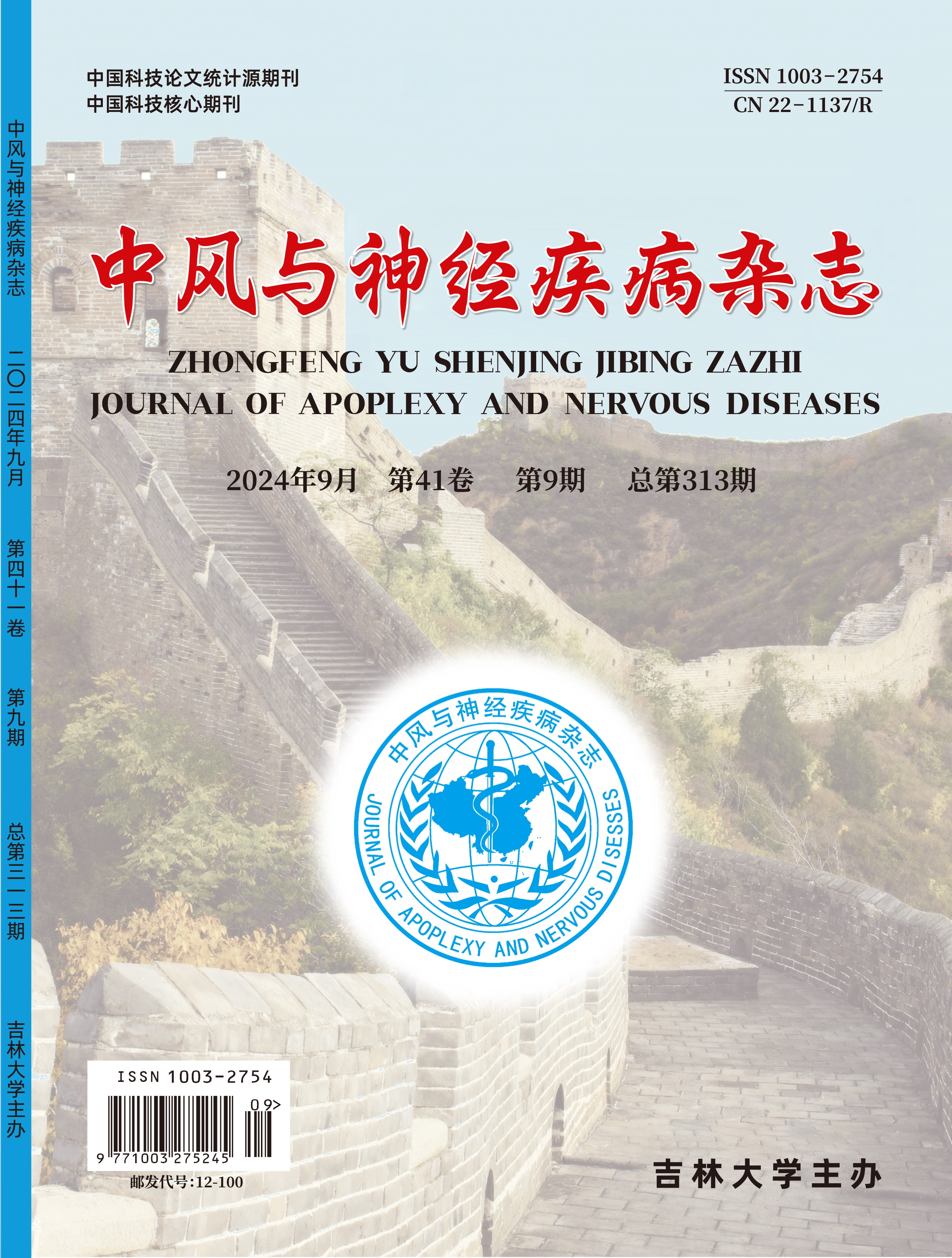
Journal of Apoplexy and Nervous Diseases

2002 (v1, n1) to Present ISSN: 1671-8925

Articles

About

Year of publication

Save Email

Sort by

Best match
Relevance
PubYear
JournalTitle

DISPLAY OPTIONS

Format:

Per page:

Save citations to file

Selection:

Format:

Create file Cancel

Email citations

To:

Please check your email address first!

Selection:

Format:

Send email Cancel

1003

results

page

of 101

1

Cite

Cite

Copy

Share

Share

Copy

Role of neuroplasticity in the recovery of cognitive function after stroke

Rong FANG ; Shengdi CHEN

Journal of Apoplexy and Nervous Diseases.2024;41(5):387-394. doi:10.19845/j.cnki.zfysjjbzz.2024.0076

Post-stroke cognitive impairment(PSCI)has attracted substantial attention in the field of stroke research worldwide due to its high incidence rate and significant morbidity and mortality rates,but there are limited treatment meth-ods since the pathogenesis of PSCI remains unclear.Clinical observational studies have shown that patients achieve vary-ing degrees of cognitive recovery within the first 12 months after stroke,and such recovery is closely associated with the mechanisms of neuroplasticity.Gaining a deeper insight into the mechanisms of neuroplasticity is important for developing optimal strategies for nervous system repair after stroke and compensating for impaired brain functions.This article intro-duces the mechanisms of spontaneous neuroplasticity after stroke,including the plasticity of neuronal cells,synaptic neu-ral circuits,and brain networks,and their association with cognitive function and reveals the dynamic and intricate nature of neuroplasticity and brain function recovery.Subsequently,the article discusses the treatment methods for enhancing neuroplasticity,including pharmacotherapy,rehabilitation training,and noninvasive brain stimulation,and points out that early intervention may help to achieve a good outcome.Although there is a lack of clear clinical evidence for some new methods,inspiring results have been obtained in preliminary studies,which may help to initiate a new era in post-stroke therapy.

2

Cite

Cite

Copy

Share

Share

Copy

Behavioral assessment methods for rodent cognitive impairment models:current status and prospects

Chen SANG ; Jiaqi LIU ; Gaiqing WANG

Journal of Apoplexy and Nervous Diseases.2024;41(5):395-401. doi:10.19845/j.cnki.zfysjjbzz.2024.0077

Objective With the aging of the population and the deepening of research on neuropsychiatric disor-ders,cognitive impairment has become a hot focus in the field of neuroscience in recent years.The successful establish-ment and evaluation of appropriate animal models are crucial for conducting experimental research.At present,rodent models have been widely used in basic and medicine research due to their high genetic homology with humans,fast repro-duction,and easy accessibility.This article provides a systematical summary and preliminary discussions about the evalu-ation methods for rodent cognitive impairment models,aiming to provide a reference for the selection of model evaluation methods.

3

Cite

Cite

Copy

Share

Share

Copy

Screening and diagnostic validity of the comprehensive cognitive domain assessment scale for mild cognitive impair-ment in the Chinese population with Parkinson disease

Xiaofan XUE ; Zhiyue WU ; Anqi HUANG

Journal of Apoplexy and Nervous Diseases.2024;41(5):402-407. doi:10.19845/j.cnki.zfysjjbzz.2024.0078

Objective To develop an appropriate comprehensive scale for mild cognitive impairment in Parkinson dis-ease(PD-MCI)due to various diagnostic methods for PD-MCI and a lack of consensus on the applicable neuropsychological scales for PD-MCI.Methods A total of 92 non-dementia PD patients with a confirmed diagnosis were enrolled in this study,and all patients were assessed using the comprehensive scale of five cognitive domains recommended by the Chinese version of PD-MCI guidelines and Movement Disorder Society(MDS).Based on the norms of healthy controls assessed by the same scale,the patients were divided into non-cognitive impairment PD group and PD-MCI group.The t-test was used to observe the consistency between groups;the receiver operating characteristic(ROC)curve was used to investigate the cut-off value of each scale with the highest sensitivity and specificity in identifying the impairment in each cognitive domain of PD-MCI;a binary lo-gistic regression analysis was used to determine the specific contents of the comprehensive cognitive domain assessment scale for PD-MCI.Results This study showed that the ten-point comprehensive cognitive domain assessment scale based on long-time memory in Brief Visuospatial Memory Test,Clock Drawing Test,digit span backward test,Trail Making Test A,Verbal Flu-ency Test,Trail Making Test B,Similarities,Boston Naming Test,long-time recall memory in Auditory Verbal Learning Test,and short-time recall memory in Wechsler Memory Scale-IV Logical Memory Test had a significant diagnostic validity in predict-ing PD-MCI,with an area under the ROC curve of 0.971(95%CI 0.941?1.000).Conclusion The recommended cut-off value can be used to perform a subtype analysis of PD-MCI and observe the outcome and clinical specificity of different subtypes of PD-MCI,and therefore,it has a certain clinical significance.

4

Cite

Cite

Copy

Share

Share

Copy

Cut-off values of cognitive domain assessment scales for Parkinson disease in Beijing,China

Zhiyue WU ; Xiaofan XUE ; Anqi HUANG

Journal of Apoplexy and Nervous Diseases.2024;41(5):408-412. doi:10.19845/j.cnki.zfysjjbzz.2024.0079

Objective To establish the delimitation norm of cognitive domain assessment scales for Parkinson dis-ease(PD)in Beijing,China,and to investigate the optimal cut-off values for determining abnormal neuropsychological as-sessments.Methods A total of 33 normal middle-aged and elderly individuals in communities and 89 patients with non-dementia PD were included in this study,and all subjects underwent global cognitive function screening and cognitive do-main assessments.According to whether Montreal Cognitive Assessment(MoCA)score was greater than 25 points,the pa-tients with PD were divided into mild cognitive impairment group(PD-MCI group)and normal cognition group(PD-NC group).In order to compare the consistency between PD-related cognitive domain assessment scales and global cognitive function screening in the diagnosis of PD-MCI,different cut-off values below the appropriate norms(i.e.,1.00 standard deviation,1.28 standard deviations,1.64 standard deviations,1.96 standard deviations below the mean)were examined for sensitivity,specificity,positive predictive value,and negative predictive value to obtain the optimal cut-off value.Results The delimitation norm of PD-related cognitive domain assessment scales was established for Beijing,and the re-sults showed that 1.96 standard deviations had the highest consistency in the diagnosis of PD-MCI and PD-NC,with the best sensitivity and specificity.Conclusion This study establishes the delimitation norm of PD-related cognitive domain assess-ment scales and fills the blank of the unbounded value of most domestic PD cognitive impairment assessment scales,and it also proposes the optimal cut-off value of abnormal neuropsychological assessment,which provides a reference standard for the cognitive domain assessment of PD patients in China and helps clinicians to identify cognitive decline in PD patients and adopt intervention measures in the early stage.

5

Cite

Cite

Copy

Share

Share

Copy

Correlation between MnSOD,NfL,and Lp-PLA2 and post-stroke cognitive impairment and significance of com-bined measurement

Yue WANG ; Jiangtao LI ; Jiajia LI

Journal of Apoplexy and Nervous Diseases.2024;41(5):413-419. doi:10.19845/j.cnki.zfysjjbzz.2024.0080

Objective To investigate the correlation between manganese superoxide dismutase(MnSOD),neuro-filament light chain(NfL),and lipoprotein-associated phospholipase A2(Lp-PLA2)and post-stroke cognitive impair-ment(PSCI)and the significance of combined measurement,and to provide a reference for early clinical evaluation and formulation of intervention strategies.Methods One hundred patients with stroke admitted to our hospital from June 2020 to January 2023 were divided into PSCI group and non-PSCI group according to whether PSCI occurred.The two groups were compared in terms of baseline data and MnSOD,NfL,and Lp-PLA2 levels at admission and two and four weeks after admission.Pearson analysis was performed to analyze the correlation between MnSOD,NfL,and Lp-PLA2 and the score of Montreal Cognitive Assessment(MoCA).Multiple linear regression analysis was used to analyze the in-fluencing factors for PSCI.Receiver operating characteristic(ROC)curves were plotted to determine the value of Mn-SOD,NfL,and Lp-PLA2 at admission and two weeks after admission in predicting the occurrence of PSCI.Results The PSCI group showed a significantly higher score of the National Institutes of Health Stroke Scale(NIHSS),a significantly higher percentage of white matter osteoporosis,a significantly higher percentage of cerebral at-rophy,and a significantly lower MoCA score than the non-PSCI group at admission(all P<0.05).MnSOD levels were significantly higher two and four weeks after admission than at admission for both groups;NfL and Lp-PLA2 levels were significantly lower two and four weeks after admission than at admission for both groups;two and four weeks after admis-sion,the PSCI group showed significantly lower MnSOD levels and significantly higher NfL and Lp-PLA2 levels than the non-PSCI group(all P<0.05).At admission and two and four weeks after admission,MnSOD levels were positively cor-related with MoCA scores,while NfL and Lp-PLA2 levels were negatively correlated with MoCA scores(all P<0.05).At admission,NIHSS score,white matter osteoporosis,brain atrophy,MnSOD,NfL,and Lp-PLA2 were all signifi-cantly correlated with MoCA score(all P<0.05).At admission and two weeks after admission,the area under the ROC curve(AUC)of the combination of any two indicators was larger than that of any single index,and the AUC of the com-bination of the three indicators was larger than that of the combination of any two indicators.The AUC of the combina-tion of the three indicators was 0.932 at admission,smaller than 0.944 two weeks after admission,with prediction sen-sitivity of 84.62%and specificity of 93.44%.Conclusion MnSOD,NfL,and Lp-PLA2 are important factors affecting the occurrence of PSCI,which can help early clinical evaluation and prediction of PSCI to facilitate subsequent treat-ment and improve patients prognosis.

6

Cite

Cite

Copy

Share

Share

Copy

Changes in expression of macrophage polarization regulatory factor in stroke rehabilitation and its relationship with cognitive function recovery

Lina YAO ; Shengyan DAI ; Yan MA

Journal of Apoplexy and Nervous Diseases.2024;41(5):420-425. doi:10.19845/j.cnki.zfysjjbzz.2024.0081

Objective To explore the changes in the expression of interferon regulatory factor 8(IRF8),a factor regulating macrophage polarization,in stroke rehabilitation and its relationship with cognitive function recovery.Methods This cross-sectional retrospective study included a cohort of patients with acute ischemic stroke treated in our hospital from January 2021 to January 2023.According to the Mini-Mental State Examination score two weeks after stroke,they were divided into post-stroke cognitive impairment(PSCI)group(n=76)and non-PSCI group(n=42).The expres-sion of the IRF8 gene in peripheral blood mononuclear cell(PBMC)was determined using RT-qPCR.The relationship be-tween IRF8 gene expression and cognitive function was studied by a binary logistic regression analysis.Results The ex-pression of IRF8 mRNA in PBMCs in the PSCI group was significantly higher than that in the non-PSCI group(P<0.001).There were significant differences in the proportions of PSCI and non-PSCI patients in the three groups by IRF8 mRNA ter-tiles[T1:53.8%(21/39),T2:64.1%(25/39),T3:75.0%(30/40),χ2=8.082,P=0.018].The logistic regression analy-sis showed that the IRF8 mRNA level>0.024(OR=1.956,P<0.001),age(OR=1.062,P<0.001),National Institutes of Health Stroke Scale(NIHSS)score(OR=1.145,P=0.014),and hemoglobin(OR=1.194,P=0.024)were significantly associated with a higher risk of PSCI.When the cut-off value was 0.01,the area under the curve(AUC)for IRF8 mRNA predicting PSCI was 0.682,with an accuracy of 71.49%,a specificity of 50.24%,and a sensitivity of 71.42%.Including IRF8 mRNA,age,NIHSS score,and hemoglobin into the nomogram,the AUC for PSCI prediction was 0.862.Conclusion The expression of IRF8 mRNA in PBMCs at admission is associated with the development of PSCI in the acute phase of stroke.

7

Cite

Cite

Copy

Share

Share

Copy

Correlation between slow wave power on quantitative electroencephalography and cognitive dysfunction in pa-tients with cerebral small vessel disease

Shufan XIE ; Guoli LI

Journal of Apoplexy and Nervous Diseases.2024;41(5):426-429. doi:10.19845/j.cnki.zfysjjbzz.2024.0082

Objective To investigate the correlation of slow wave power δ/α ratio(DAR)and δ power value on quantitative electroencephalography(QEEG)with cognitive dysfunction in patients with cerebral small vessel disease(CSVD).Methods A total of 80 patients with CSVD who were treated in Department of Neurology,Affiliated Hospital of Chifeng University,from January 2022 to October 2023 were enrolled and evaluated using Montreal Cognitive Assess-ment(MoCA)scale,and QEEG was performed to calculate DAR and δ power value.Related statistical analyses were per-formed.Results There were 40 CSVD patients in the cognitive dysfunction group,with average education years of(8.50±2.00)and a mean age of(62.38±6.32)years,among whom there were 8 female patients(20%)and 32 male patients(80%).There were 40 CSVD patients in the normal cognitive function in group,with average education years of(8.00±4.00)and a mean age of(63.60±7.14)years,among whom there were 10 female patients(25%)and 30 male patients(75%).There were no significant differences in years of education,age,and sex between the cognitive dysfunction group and the normal cognitive function group(P>0.05),while there was a significant difference in MoCA score between the cog-nitive dysfunction group and the normal cognitive function group[8-24(14±9)points and 26-28(26.00±1.00)points,Z=-7.822,P<0.05].The cognitive dysfunction group had significantly higher DAR and δ wave power values than the nor-mal cognitive function group(P<0.05).Cognitive dysfunction in CSVD was negatively correlated with slow wave power DAR and δ power value on QEEG(P<0.05).Conclusion DAR and δ power values on QEEG are correlated with cogni-tive dysfunction in patients with CSVD,suggesting that DAR and δ power values can be used as indicators for identifying cognitive dysfunction in patients with CSVD.

8

Cite

Cite

Copy

Share

Share

Copy

The mediating role of physical activity and negative psychological state between sleep quality and cognitive func-tion in stroke patients

Beibei ZONG ; Qian LI ; Xiaoyan XU

Journal of Apoplexy and Nervous Diseases.2024;41(5):430-435. doi:10.19845/j.cnki.zfysjjbzz.2024.0083

Objective To investigate the mediating role of physical activity and negative psychological state be-tween sleep quality and cognitive function in stroke patients.Methods A total of 119 patients who were admitted and di-agnosed with acute ischemic stroke(AIS)in Zibo Central Hospital from January 2021 to December 2022 were selected,and a self-made scale was used to conduct a questionnaire survey.A Pearson correlation analysis was used to investigate the correlation of physical activity and negative emotions with sleep quality and cognitive function,and the hierarchical re-gression method was used to investigate the mediating role of physical activity and negative emotions.Results The 117 patients had a Pittsburgh Sleep Quality Index of(8.39±1.20).There were significant differences between the two groups in sex,age,physical activity score,Hospital Anxiety and Depression Scale score,and Montreal Cognitive Assessment Scale score(P<0.05).The Pearson correlation analysis showed that sleep quality score was negatively correlated with physical activity score and cognitive function score(r=-0.677 and-0.750,P<0.001)and was positively correlated with negative emotion score(r=0.585,P<0.001).The hierarchical regression analysis showed that physical activity and nega-tive emotions had a mediating role between sleep quality and cognitive function(P<0.05).Conclusion AIS patients have poor sleep quality after 30 days.There is a good correlation between sleep quality and physical activity/negative emo-tions/cognitive function,and physical activity and negative emotions plays a mediating role between sleep quality and cogni-tive function.

9

Cite

Cite

Copy

Share

Share

Copy

Research advances in cognitive impairment in patients with obstructive sleep apnea syndrome

Xiao WANG ; Lei WANG

Journal of Apoplexy and Nervous Diseases.2024;41(5):436-439. doi:10.19845/j.cnki.zfysjjbzz.2024.0084

Obstructive sleep apnea syndrome(OSAS)causes cognitive impairment mainly through mechanisms such as chronic intermittent hypoxia,sleep structural disorders,and molecular biological changes.The cognitive impair-ment mainly manifests as reduced memory,attention,and execution abilities,accompanied by a deficiency in daily life ac-tivities.With the gradual maturity of the monitoring and evaluation system for OSAS in recent years,research on treatment methods for OSAS has made some progress,but the mechanism of cognitive impairment caused by OSAS still needs further investigation and confirmation.This article reviews the research progress of cognitive impairment in OSAS in recent years.

10

Cite

Cite

Copy

Share

Share

Copy

Impact of the number and distribution of cerebral microinfarction on cognitive function and advances in treat-ment

Yu LIU ; Ming YU

Journal of Apoplexy and Nervous Diseases.2024;41(5):440-444. doi:10.19845/j.cnki.zfysjjbzz.2024.0085

Cerebral microinfarction(CMI)is an extremely small ischemic lesion that can only be found in histopa-thology,and it often occurs in patients with cognitive dysfunction,dementia and stroke.With the improvement in medical imaging technology in recent years,the detection rate of CMI tends to increase gradually.Current studies have shown that the presence of CMI not only affects the prognosis and rehabilitation after stroke,but also increases the incidence rate and risk of cognitive decline.The clinical impact of CMI may be determined by the relatively high number of CMI and its distri-bution in different regions,and therefore,this article reviews the association of the number and distribution of CMI with cognitive impairment and related mechanisms,so as to provide a basis for the in-depth investigation and scientific preven-tion and treatment of CMI.

Country

China

Publisher

Medical Publishing Centre, The First Hospital of Jilin University, Editorial Office of Journal of Apoplexy and Nervous Diseases

ElectronicLinks

http://www.zfysjjbzz.com

Editor-in-chief

崔俐(CUI Li)

E-mail

zf_bjb@126.com

Abbreviation

J Apoplexy Nerv Dis

Vernacular Journal Title

中风与神经疾病杂志

ISSN

1003-2754

EISSN

Year Approved

2023

Current Indexing Status

Currently Indexed

Start Year

1984

Description

Journal of Apoplexy and Nervous Diseases was founded by a famous neurologist, Professor Liu Duosan. It started publication in March 1984 and has been included as one of the Source Journals for Chinese Scientific and Technical Papers and Citations (Chinese Core Journals of Science and Technology), supervised by the Ministry of Education of the People’s Republic of China and sponsored by Jilin University. It mainly features articles on cerebrovascular diseases, and also covers other neurological and neurosurgical diseases as well as neurological complications in various clinical specialties.

Related Sites

WHO WPRO GIM

Help Accessibility
DCMS Web Policy
CJSS Privacy Policy

Powered by IMICAMS( 备案号: 11010502037788, 京ICP备10218182号-8)

Successfully copied to clipboard.