Main content 1 Menu 2 Search 3 Footer 4
+A
A
-A
High contrast
HOME JOURNAL CRITERIA NETWORK HELP ABOUT

Current criteria:

Regional:

WPRlM journal selection criteria(2023)

Minimum standards for the suspension and removal of WPRIM approved journals

Countries journal selection criteria:

Philippines

Submit your journal information>

Contact NJSCs>

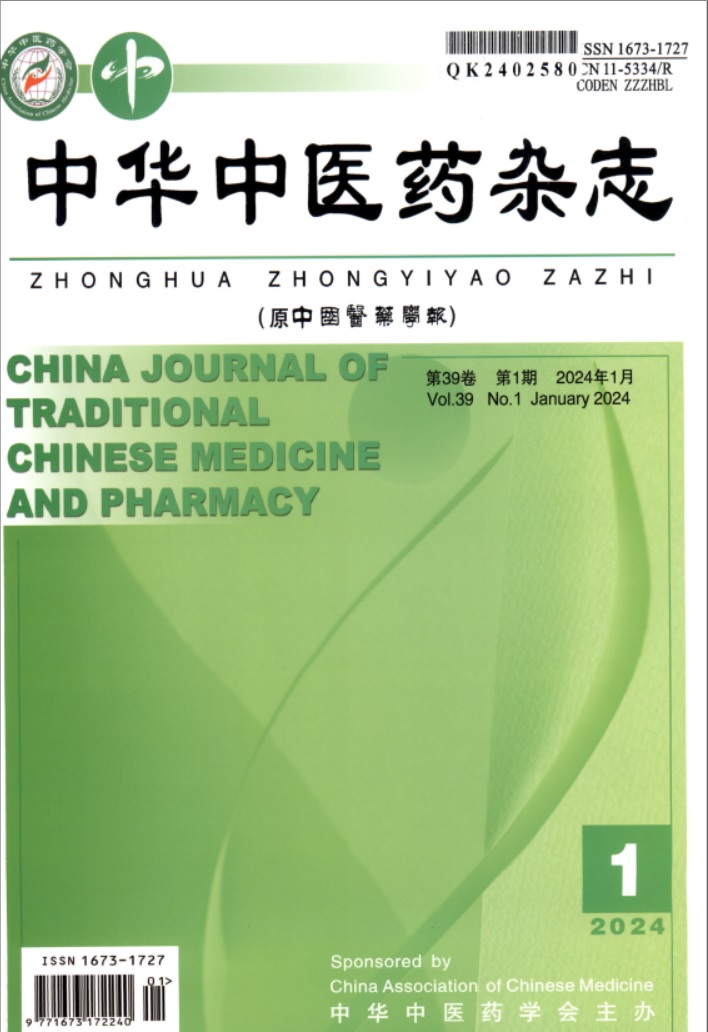
China Journal of Traditional Chinese Medicine and Pharmacy

2002 (v1, n1) to Present ISSN: 1671-8925

Articles

About

Year of publication

Save Email

Sort by

Best match
Relevance
PubYear
JournalTitle

DISPLAY OPTIONS

Format:

Per page:

Save citations to file

Selection:

Format:

Create file Cancel

Email citations

To:

Please check your email address first!

Selection:

Format:

Send email Cancel

1187

results

page

of 119

1

Cite

Cite

Copy

Share

Share

Copy

Onset time of cough variant asthma

Jingdong ZHOU ; Xiaochun FENG ; Jingsong LI ; Liqing LI ; Xinguang ZHANG ; Jianer YU ; Weifu MI

China Journal of Traditional Chinese Medicine and Pharmacy.2005;0(11):-.

The characteristics of onset time of cough variant asthma (CVA) match with the human hypnagogic and arousal time nodes, which are also in accordance with the time of defensive qi entering yin and exiting yang of human body. Reviewing the generation and physiological function of defensive qi, we hold that the onset of CVA is related to the lung, the spleen and the kidney. Deficiency of the three viscera leads to defi ciency of defensive qi defi ciency, and blockade of the circulation pathway of defensive qi on body surface, thus interaction of the two factors results in the special time nods of CVA’s onset, which is also the basic pathomechenism of CVA.

2

Cite

Cite

Copy

Share

Share

Copy

Clinical research on effect of Shenfu Injection in treating vertigo of mild vertebrobasilar stenosis

Zuojun TIAN ; Zhimin ZHANG ; Zhihua YANG ; Lei LIU

China Journal of Traditional Chinese Medicine and Pharmacy.2005;0(11):-.

Objective: To evaluate the effect of Shenfu Injection in treating vertigo of mild vertebrobasilar stenosis. Methods: From January 2005 to July 2008, 66 patients with the primary symptom of vertigo undergoing digital subtraction angiography (DSA) examination were diagnosed as mild vertebrobasilar stenosis (MVS) according to the North American symptomatic carotid endarterectomy trial (NASCET) criteria, and then randomly divided into Shenfu (SF) group (34 cases) and Danshen (DS) group (32 cases), the DS group acting as the control. Degrees of vertigo of the patients were evaluated by the screening version of the dizziness handicap inventory (DHI-S) and scoring system for the dizziness assessment rating scale (DARS) on the admitted day, the third and sixth day after treatment and discharged day respectively. The mean of blood ? ow velocity (Vm), resistance index (RI) of right and left vertebral arterys and basilar artery, hematocrit (Hmc) and fi brinogen (Fbg) level in serum were all examined on both the admitted and discharged days. Results: There was no signifi cant difference on the score of vertigo, the parameter of TCD and the index in serum between SF and DS groups at the admitted time. On the sixth day of treatment and the discharged day, the score of DHI-S and DARS in SF group were lower than those in DS group (P

3

Cite

Cite

Copy

Share

Share

Copy

Study on relationship of Chinese medicine syndrome factors and changes of intracranial blood flow of hypertension patients

Zhichen ZHANG ; Yunling ZHANG

China Journal of Traditional Chinese Medicine and Pharmacy.2005;0(11):-.

Objective :To explore the relationship of Chinese medicine syndrome factors and changes of intracranial blood flow of hypertension patients, as well as the distribution characteristics of hierarchical syndrome factors of hypertension and its impact on the course of hypertension. Methods: Syndrome elements of 312 cases of hypertensive patients with abnormal results detected by transcranial Doppler ultrasound (TCD) were refi ned, and the correlation analysis was used to study the relationship between the elements syndrome, intracranial blood flow and risk-stratifi cation hypertension patients. Results: There was obvious statistic difference of intracranial blood flow velocity between low-risk group and high-risk group (P

4

Cite

Cite

Copy

Share

Share

Copy

Thinking and comprehension of composing prescription by seven principle of treating gastralgia

Jian JIANG

China Journal of Traditional Chinese Medicine and Pharmacy.2005;0(11):-.

‘Seven principle’ of treating gastralgia summarized from clinical practice are ‘huan’ (relieving spasm and pain), ‘bu’(icluding: invigorating qi, invigorating yang, invigorating ying), ‘wen’(warming middle jiao for dispellng cold), ‘qing’ (clearing and releasing stagnant heat of liver and gastric), ‘li’(soothing liver and regulating qi), ‘xiao’ (icluding: promoting digestion and regulating stomach,relieving dyspepsia), ‘hua’ (icluding: activating blood and absorb clots). ‘Seven principle’ basically include the common approach to treating gastralgia. ‘Relieving spasm and pain’can be commonly used as a basic therapeutic method for gastralgia. ‘Wen’ is one of the important principles of treating gastralgia, treating sthenia syndrome by warming middle jiao for dispelling cold, treating deficient syndrome by ‘wen’and ‘bu’. ‘Huan’and‘wen’can be used to treat over half of gastralgia. The clinic appication of‘Qing’, ‘li’, ‘xiao’ and ‘hua’should base on specifi c cases. For common complex pathogenesis and syndromes, ‘seven principle’ can be ? exibly combined to decide the prescription’s ‘jun, chen, zuo, shi’. "Seven principle" of composing prescriptions offers a new approach to syndrome differentiation and treatment of gastralgia.

5

Cite

Cite

Copy

Share

Share

Copy

Discussing effect of regulating wei qi and tonifying brain on insomnia

Xiyan GAO ; Xinji ZHAO ; Shan REN ; Peiyu WANG

China Journal of Traditional Chinese Medicine and Pharmacy.2005;0(11):-.

This article investigates the effect of regulating wei qi and tonifying brain on insomnia from two aspects. It provides theoretical basis for clinical application of regulating wei qi and tonifying brain. First of all, this method regulates the sleep function to keep the body’s yin-yang balance by regulating wei qi. Wei qi is the defense qi in the body and has close relationship with sleep. Wei qi can regulate sleep by the excitement and depression of Yin and Yang Heel Meridians. Then, this method also can improve the brain function for insomnia treatment by dredging Governor Channel and tonifyjng marrow, tonifyjng brain and calming the nerves. On basis of inheriting traditional theory, this article expounds the theory of treating insomnia by regulating wei qi and tonifying brain and verifi es its stable therapeutic effect and safty by clinic study.

6

Cite

Cite

Copy

Share

Share

Copy

Treatment of 3 cases of frequent recurrent intractable nephrotic syndrome by XUE Chang-sen

Enhui LI ; Feng XUE ; Zhi ZHU

China Journal of Traditional Chinese Medicine and Pharmacy.2005;0(11):-.

This article reported the treatment of 3 cases of frequent recurrent intractable nephrotic syndrome by XIE Chang-sen. On basis of the therapeutic method of invigorating the spleen and kidney, other methods should be used according to individual difference and special clinic signs and symptoms, such as other invigorating qi and consolidation of superficies, nourishing blood and dispersing stagnated liver qi, warming kidney qi to invigorate yang, replenishing essence and dispersing turbid and so on. And partner treatment is the key for cure.

7

Cite

Cite

Copy

Share

Share

Copy

Application of Chaihu Guizhi Ganjiang Decoction in treating gynaecological disease

Lishan ZHANG ; Yanyan DAI

China Journal of Traditional Chinese Medicine and Pharmacy.2005;0(11):-.

Chaihu Guizhi Ganjiang Decocotion is a famouse prescription recorded in Treatise on Febrile Diseases. In this article,the application of Chaihu Guizhi Ganjiang Decoction is discussed in treating gynaecological diseases through the cases of dysmenorrhea, climacteric syndrome, hypogalactia and hysteria. The mechanism is also expounded.

8

Cite

Cite

Copy

Share

Share

Copy

Research on TCM standardized terminology of diabetic nephropathy

Fengsheng TIAN ; Xiuhai SU ; Yuansong WANG

China Journal of Traditional Chinese Medicine and Pharmacy.2005;0(11):-.

Objective: To probe the TCM standardized terminology of diabetic nephropathy. Methods: The research was carried by analyzing the previous literature and understanding on diabetic nephropathy of TCM in mordern time. Results: The result indicated that xiaoke nephropathy was the most appropriate TCM standardized terminology of diabetic nephropathy. Conclusion: The TCM standardized terminology of diabetic nephropathy was xiaoke nephropathy

9

Cite

Cite

Copy

Share

Share

Copy

Research on LIU Wan-su’s characteristics on application of han and wen drugs in Xuanming Lunfang by prescription metrology

Yan WANG ; Jie LI ; Mingxin ZHOU

China Journal of Traditional Chinese Medicine and Pharmacy.2005;0(11):-.

Objective: To study the nature and flavour of LIU Wan-su’ drug application and the tendency of cold or warm in his prescription; analyze LIU Wan-su’s medical sect by the index of prescription metrology. Methods: Combining the traditional documents with prescription metrology, selecting three doctors before or after LIU Wan-su in Jin and Yuan Dynasty as comparison to expose the characteristic of prescription metrology in his prescription. Results: Wen tonic frequency of each prescription on average, LI Dong-yuan(1.10),ZHU Dan-xi(0.97), LIU Wan-su (0.77), ZHANG Zi-he(0.65); Han tonic frequency of each prescription, LI Dong-yuan (1.34),ZHANG Zi-he (1.00), LIU Wan-su (0.94), ZHU Dan-xi(0.80);Cool and warm drug ratio of four sects in Jin and Yuan Dyanstay, ZHU Dan-xi (0.97),LI Dong-yuan(0.83), LIU Wan-su (0.82), ZHNAG Zi-he (0.58).Cool and warm prescription ratio, ZHANG Zi-he(1.50), LIU Wan-su (0.87), LI Dong-yuan(0.76), ZHU Dan-xi (0.50).Conclusion: As the exponent of "theory of fi re and hot", it will be better to classify LIU Wan-su as " Hejian sect" since his drug application was not limited within cold and cool. To some extent, it is more important to judge a Chinese traditional doctor by syndrome identifi cation rather than only by his drug frequency.

10

Cite

Cite

Copy

Share

Share

Copy

Correlation of incidence of dysentery in Shaanxi province and Yunqi theory

Zhenlin CHEN ; Jingming ZHANG

China Journal of Traditional Chinese Medicine and Pharmacy.2005;0(11):-.

Dysentery is one of the digestive system diseases, which has a higher incidence rate. The aim of present study was to further explore the incidence of dysentery and get the better prevention of this disease. The data were collected and statistically analyzed from Shaanxi Province for the monthly incidence of dysentery in 22 years. In addition, according to the Yunqi theory and related incidence of diseases, the correlation between the incidences of dysentery and Suiyun, Sitian, Zaiquan and Six-qi were summarized systematically. This study provides a reference for the incidence of dysentery.

Country

China

Publisher

中华中医药学会

ElectronicLinks

http://www.zhzyyzz.com/CN/volumn/home.shtml

Editor-in-chief

E-mail

64216650@vip.163.com

Abbreviation

China Journal of Traditional Chinese Medicine and Pharmacy

Vernacular Journal Title

中华中医药杂志

ISSN

1673-1727

EISSN

Year Approved

2007

Current Indexing Status

Currently Indexed

Start Year

1986

Description

历史沿革【现用刊名:中华中医药杂志;曾用刊名:中国医药学报;创刊时间:1986】,该刊被以下数据库收录【CA 化学文摘(美)(2009);CBST 科学技术文献速报(日)(2009);中国科学引文数据库(CSCD—2008)】,核心期刊【中文核心期刊(2008);中文核心期刊(2004);中文核心期刊(1992)】。

Related Sites

WHO WPRO GIM

Help Accessibility
DCMS Web Policy
CJSS Privacy Policy

Powered by IMICAMS( 备案号: 11010502037788, 京ICP备10218182号-8)

Successfully copied to clipboard.