Main content 1 Menu 2 Search 3 Footer 4
+A
A
-A
High contrast
HOME JOURNAL JOURNAL SELECTION NETWORK HELP ABOUT

Journal Selection Criteria and Standards

WPRIM Journal Selection Criteria (August 2023)

NJSC Philippines Selection Criteria (for Philippine-based journals only)

Minimum standards for the suspension and removal of WPRIM approved journals

Application and Indexing Process

Application and Submission Process for WPRIM Indexing

Journal Content Management

Candidate Journal Selection and Data Creation and Management System

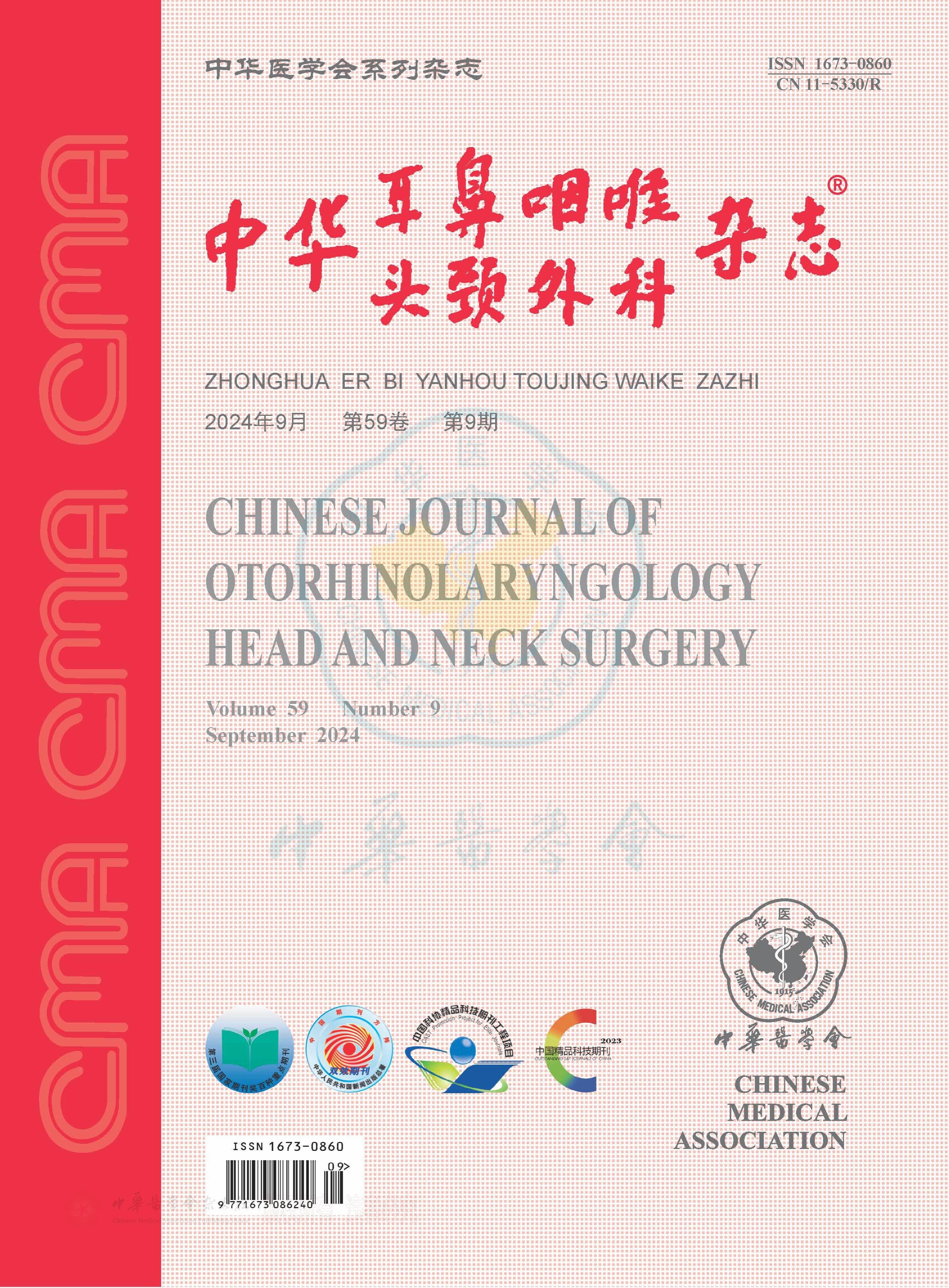
Chinese Journal of Otorhinolaryngology Head and Neck Surgery

1953  to  Present  ISSN: 1673-0860

Articles

About

Save Email

Sort by

Best match
Relevance
PubYear
JournalTitle

DISPLAY OPTIONS

Format:

Per page:

Save citations to file

Selection:

Format:

Create file Cancel

Email citations

To:

Please check your email address first!

Selection:

Format:

Send email Cancel

4997

results

page

of 500

1

Cite

Cite

Copy

Share

Share

Copy

Infants hearing screening in the coastal villages of Shandong province.

Zheng-hua CAI ; Li-hui HUANG ; Hui EN ; Shi-chun PENG ; Yong ZHEN ; Bei-er QI ; Cheng KAN ; Xian-xiang CHENG ; Shu-hong WANG ; Jin-rong LI ; Ting-xiu HOU

Chinese Journal of Otorhinolaryngology Head and Neck Surgery.2006;41(2):104-106.

OBJECTIVETo study how to perform the hearing screening on the infants in the rural area.

METHODSThree thousand nine hundreds and twenty-two infants, about 84% of them from rural, were born in the People Hospital of LaiZhou City from January to December in 2004. The infants were performed fast hearing screening by transient evoked otoacoustic emission (TEOAE) after the birth in 2-7 days. The fail cases were checked again after 4-6 weeks, and then were diagnosed if they still failed after following-up.

RESULTSThe infants (3612/3922, 92.1%) have been checked by TEOAE, and the examination was free in the poverty cases. The rate passed on the first check was 69.96% (2527/3922), but 1085 infants failed (30.4%), while 310 infants have not been checked (7.9%). In the 1085 cases that should be rechecked, there was only 633 cases (58.34%) accepted the check on time, while 452 cases (41.66%) missed. In the 163 cases with high-risk infants in 2004, 114 infants (69.96%) were checked, but 49 infants (29.04%) were not checked. Fourteen cases failed in the recheck, and 11 of them were checked by ABR. Two cases were found to be moderate and severe hearing loss in binaural respectively and 4 cases with mild hearing loss in monaural while 3 cases were normal.

CONCLUSIONSIt is necessary and viable for the infants on hearing screening in the rural area It should be set up and perfected the model for infants on hearing screening in rural area as soon as possible; it should be free for the poor infants to make sure everyone enjoy the health care.


China ; Hearing Tests ; Humans ; Infant, Newborn ; Neonatal Screening ; methods ; Otoacoustic Emissions, Spontaneous ; Rural Population

China ; Hearing Tests ; Humans ; Infant, Newborn ; Neonatal Screening ; methods ; Otoacoustic Emissions, Spontaneous ; Rural Population

2

Cite

Cite

Copy

Share

Share

Copy

Perioperative management of modified uvulopalatopharyngoplasty.

Zhi-hong LUO ; Shi-ming CHEN ; Ze-zhang TAO ; Yong-mao CAO

Chinese Journal of Otorhinolaryngology Head and Neck Surgery.2006;41(2):100-103.

OBJECTIVEExperiences and lessons of uvulopalatopharyngoplasty (UPPP ) perioperative management, especially causes of postoperative tracheotomy, were analyzed, and related strategy was raised to have a better perioperative management and to avoid tracheotomy.

METHODSTwo hundred and fifty eight cases of obstructive sleep apnea hypopnea syndromes (OSAHS) diagnosed with polysomnography (PSG) were treated with modified uvulopalatopharyngoplasty (UPPP). The perioperative management was summarized. Patients were divided into two groups according to the perioperative management: without or with perioperative comprehensive management. In group A, there were 32 patients, without comprehensive management, and in group B there were 226 cases with comprehensive management. Sixty eight cases in group B whose apnea hypopnea index over 50 times per hour and the lowest arterial oxygen saturation was less than 0.5 were treated with continuous positive airway pressure (CPAP) for 1 to 3 weeks. For all the 258 cases, perioperative management includes treatment of medical complications, treatment with antibiotics 2 or 3 days before the operation. None of these cases had tracheotomy before surgery.

RESULTSIn group A, three of 32 patients had postoperative tracheotomy, two because of bleeding, and another one because of laryngeal spasm. In group B, none of 226 patients underwent tracheotomy, which owing to modified operative apparatus and effective perioperative and postoperative treatment (chi2 = 21.35, P < 0.001). In group A, 5 of 32 patients had oral pharynx bleeding after 24 hours of the operation. While 26 of 226 patients in group B did so (chi2 = 0.15, P > 0.05).

CONCLUSIONComprehensive perioperative management can effectively lower down the complication rate for patients receiving uvulopalatopharyngoplasty.


Adult ; Cleft Palate ; surgery ; Female ; Humans ; Male ; Middle Aged ; Otorhinolaryngologic Surgical Procedures ; adverse effects ; Palate ; surgery ; Pharynx ; surgery ; Postoperative Complications ; surgery ; Retrospective Studies ; Sleep Apnea, Obstructive ; surgery ; Tracheotomy ; adverse effects ; Treatment Outcome ; Uvula ; surgery

Adult ; Cleft Palate ; surgery ; Female ; Humans ; Male ; Middle Aged ; Otorhinolaryngologic Surgical Procedures ; adverse effects ; Palate ; surgery ; Pharynx ; surgery ; Postoperative Complications ; surgery ; Retrospective Studies ; Sleep Apnea, Obstructive ; surgery ; Tracheotomy ; adverse effects ; Treatment Outcome ; Uvula ; surgery

3

Cite

Cite

Copy

Share

Share

Copy

Clinical application of uvulopalatopharyngoplasty with uvula preservation and tongue base radiofrequency reduction.

Yong ZENG ; Yue-jian WANG ; Wei-xiong CHEN ; Shan LIAO

Chinese Journal of Otorhinolaryngology Head and Neck Surgery.2006;41(2):95-99.

OBJECTIVETo explore the effect of uvulopalatopharyngoplasty with uvula preservation and radiofrequency tongue base reduction for obstructive sleep apnea hypopnea syndrome (OSAHS).

METHODSForty six patients with OSAHS were enrolled. One group (n = 22) of patients only received uvulopalatopharyngoplasty with uvula preservation, while the other group (n = 24) had both uvulopalatopharyngoplasty with uvula preservation and radiofrequency tongue base reduction. Polysomnography and distance between anterior pillars (DBAP), distance between posterior pillars (DBPP), length of roft palate, distance between tongue base and posterior pharyngeal wall (DBTP) were measured before and 6 months after surgery.

RESULTSThe pre-operation apnea hypopnea index (AHI), x +/- s, lowest SaO2 (LSaO2) of first group were (56. 5 +/- 6. 0)/h, and 0.626 +/- 0.060 respectively, and 6 months after surgery, AHI was (23.7 +/- 2.7)/h, LSaO2 was 0.797 +/- 0.053. The pre-operation AHI, LSaO2 of second group were (58.4 +/- 5.1)/h, and 0.650 +/- 0.057 respectively, and 6 months after surgery, AHI was (15.5 +/- 3.2)/h, LSaO2 was 0.864 +/- 0.064. After surgery AHI and LSaO2 have changed in both groups (P<0.001). Six months after operation, DBAP and DBPP became withy, length of soft palate became short (P<0. 001). In one group the validity ratio is 72.7% (16/22), the other group the validity ratio is 87.5% (21/24) (P< 0.05), and pharyngeal posterior airway width (PPAW) became withy (P <0.001).

CONCLUSIONSFor OSAHS patients, the obstructive regions should be evaluated. The combined surgery of uvulopalatopharyngoplasty with uvula preservation and radiofrequency tongue base reduction could have a better result.


Adult ; Catheter Ablation ; Cleft Palate ; surgery ; Female ; Humans ; Male ; Middle Aged ; Otorhinolaryngologic Surgical Procedures ; methods ; Palate, Soft ; surgery ; Polysomnography ; Sleep Apnea, Obstructive ; surgery ; Tongue ; surgery ; Uvula ; surgery

Adult ; Catheter Ablation ; Cleft Palate ; surgery ; Female ; Humans ; Male ; Middle Aged ; Otorhinolaryngologic Surgical Procedures ; methods ; Palate, Soft ; surgery ; Polysomnography ; Sleep Apnea, Obstructive ; surgery ; Tongue ; surgery ; Uvula ; surgery

4

Cite

Cite

Copy

Share

Share

Copy

Effectiveness of combined surgery for treating severe obstructive sleep apnea hypopnea syndrome.

Hong-liang YI ; Shan-kai YIN ; Wen-ying LU ; Hong-min WU ; Jian GUAN ; Zhen-yu CAO ; Ting CHEN

Chinese Journal of Otorhinolaryngology Head and Neck Surgery.2006;41(2):89-94.

OBJECTIVETo explore the efficiency of a comprehensive surgical approach of genioglossus advancement and hyoid suspension (GAHM) plus uvulopalatopharyngoplasty (UPPP) for treating severe obstructive sleep apnea hypopnea syndrome (OSAHS) and to evaluate related factors on surgery outcomes.

METHODSEighteen patients with severe OSAHS (apnea hypopnea index, AHI > 40/h) confirmed with polysomnography received genioglossus advancement and hyoid suspension plus uvulopalatopharyngoplasty. The obstruction in both the oropharynx and the hypopharynx were evaluated by preoperative physical examination, fiberoptic pharyngolaryngoscopy, cephalometry, and computed tomography of the upper airway. The follow up was at least 6 months postoperatively. The Wilcoxon signed rank test was used to compare the preoperative and postoperative results by SPSS 11.0 for windows. The Mann-Whitney test was used to analyze the difference between responders and nonresponders.

RESULTSThe follow up time ranges from 6 to 24 months, there were statistically significance in all but body mass index (BMI) between preoperative and postoperative measurements. Mean AHI was reduced from preoperative (x +/- s, 63.8 +/- 16.3)/h to postoperative (23.6 +/- 19.5)/h, lowest mean oxygen saturation increased from 0.72 +/- 0.07 to 0.81 +/- 0.13(x +/- s). According to criterion at home, the 6-month rate of responder is 83%, if AHI <20/h and decreased by at least 50% as success, the rate of success is 67%. The age, posterior airway space (PAS) and percentage of time with oxyhemoglobin saturation below 0.90 (CT90) were (39.1 +/- 7.4) years, (8.3 +/- 0.9) mm, (18.5 +/- 10.9)% in responder, while (52.5 +/- 9.4) years, (6.8 +/- 1.3) mm, (37.7 +/- 23.6) % in nonresponder, and there are statistically significant between responder and nonresponder.

CONCLUSIONSGAHM plus UPPP is effective surgical approach for patients with severe OSAHS who suffer from oropharyngeal and hypopharyngeal obstruction. Age, PAS and CT90 were possible affective factors on surgical outcomes.


Adult ; Aged ; Humans ; Hyoid Bone ; surgery ; Male ; Middle Aged ; Otorhinolaryngologic Surgical Procedures ; methods ; Palate, Soft ; surgery ; Polysomnography ; Sleep Apnea, Obstructive ; surgery ; Treatment Outcome ; Uvula ; surgery

Adult ; Aged ; Humans ; Hyoid Bone ; surgery ; Male ; Middle Aged ; Otorhinolaryngologic Surgical Procedures ; methods ; Palate, Soft ; surgery ; Polysomnography ; Sleep Apnea, Obstructive ; surgery ; Treatment Outcome ; Uvula ; surgery

5

Cite

Cite

Copy

Share

Share

Copy

Noninvasive ventilation for obstructive sleep apnea hypopnea syndrome in children.

Jing ZHAO ; Ya-mei ZHANG ; Kun-ling SHEN

Chinese Journal of Otorhinolaryngology Head and Neck Surgery.2006;41(2):85-88.

OBJECTIVETo study the efficacy and safety of noninvasive ventilation (NV) for treating children with obstructive sleep apnea.

METHODSTwenty-one children confirmed obstructive sleep apnea hypopnea syndrome (OSAHS) with full-night polysomnography (PSG) or ambulatory screening device were enrolled in the study. The NV treatment was carried out successfully for all cases. Nasal continuous positive airway pressure (nCPAP) compliance data were gathered via clinical follow-up examination, telephone interview, or mailed questionnaire. The statistical analysis was performed with SPSS 11.0 statistical software. Pre- and on-nCPAP parameters were compared with paired t-test. Twenty-one OSAHS children (17 boys, 4 girls) were enrolled into the study. The mean age of the children was 4. 5 years; ranging from 40 days to 11 years.

RESULTSnCPAP pressure was increased from 4 cm H2O by (1 cm H2O = 0.098 kPa) 0.2 cm H2O each time to the treating pressure which was between 4.8 and 16 cm H2O. Before nCPAP treatment, apnea hypopnea index (AHI) was (80.8 +/- 45.1)/h, the lowest pulse oxygen saturation (SPO2) 0.557 +/- 0.135 and SPO2 <0.90 time during sleep (42.9 +/- 31.9) %, which were much worse compared to that with nCPAP treatment, the above parameters decreased to (6.7 +/- 12.4)/h, 0.862 +/- 0.082, (1.1 +/- 2.5) % respectively(P <0.01).

CONCLUSIONSNoninvasive ventilation is a safe and effective treatment for OSAHS children. It is possible to use nCPAP as a short-term treatment or as a long-term treatment at home.


Child ; Child, Preschool ; Continuous Positive Airway Pressure ; Female ; Humans ; Infant ; Male ; Polysomnography ; Sleep Apnea, Obstructive ; therapy

Child ; Child, Preschool ; Continuous Positive Airway Pressure ; Female ; Humans ; Infant ; Male ; Polysomnography ; Sleep Apnea, Obstructive ; therapy

6

Cite

Cite

Copy

Share

Share

Copy

Surgery strategy on obstructive sleep apnea hypopnea syndrome.

Jing-ying YE

Chinese Journal of Otorhinolaryngology Head and Neck Surgery.2006;41(2):81-84.


Humans ; Sleep Apnea, Obstructive ; surgery

Humans ; Sleep Apnea, Obstructive ; surgery

7

Cite

Cite

Copy

Share

Share

Copy

Application of survival analysis in the follow-up study.

Liang-ping HU ; Chang-ping LI

Chinese Journal of Otorhinolaryngology Head and Neck Surgery.2006;41(1):73-76.


Follow-Up Studies ; Survival Analysis

Follow-Up Studies ; Survival Analysis

8

Cite

Cite

Copy

Share

Share

Copy

Current study of mesenchymal stem cells in nervous system.

Zhi-qiang GAO ; Hui WANG

Chinese Journal of Otorhinolaryngology Head and Neck Surgery.2006;41(1):70-72.


Mesenchymal Stem Cell Transplantation ; Mesenchymal Stromal Cells ; cytology ; Nervous System Diseases ; surgery

Mesenchymal Stem Cell Transplantation ; Mesenchymal Stromal Cells ; cytology ; Nervous System Diseases ; surgery

9

Cite

Cite

Copy

Share

Share

Copy

Transnasal endoscopic repair of nasal septal perforation with pedicled muscle-periosteum flap from anterior wall of the maxillary sinus.

Xiang-ling WEN ; Xian-long LI ; Chen-gang WANG ; Hongliang YANG ; Linling ZHU ; Yongfu LI ; Li LU ; Ping CHEN ; Zhufen ZHAO

Chinese Journal of Otorhinolaryngology Head and Neck Surgery.2006;41(1):68-69.


Adult ; Endoscopy ; Female ; Humans ; Male ; Maxillary Sinus ; surgery ; Nasal Septum ; injuries ; surgery ; Periosteum ; transplantation

Adult ; Endoscopy ; Female ; Humans ; Male ; Maxillary Sinus ; surgery ; Nasal Septum ; injuries ; surgery ; Periosteum ; transplantation

10

Cite

Cite

Copy

Share

Share

Copy

Monopolar electrosurgery for pediatric tonsillectomy comparison with conventional technique.

Yue-feng SUN ; Yuan-yuan ZHOU

Chinese Journal of Otorhinolaryngology Head and Neck Surgery.2006;41(1):66-68.


Adolescent ; Child ; Child, Preschool ; Electrosurgery ; Female ; Humans ; Male ; Tonsillectomy ; instrumentation ; methods

Adolescent ; Child ; Child, Preschool ; Electrosurgery ; Female ; Humans ; Male ; Tonsillectomy ; instrumentation ; methods

Country

China

Publisher

中华医学会

ElectronicLinks

https://www.entnet.org.cn/

Editor-in-chief

E-mail

cjorl@cma.org.cn

Abbreviation

Chinese Journal of Otorhinolaryngology Head and Neck Surgery

Vernacular Journal Title

中华耳鼻咽喉头颈外科杂志

ISSN

1673-0860

EISSN

Year Approved

2007

Current Indexing Status

Currently Indexed

Start Year

1953

Description

历史沿革【现用刊名:中华耳鼻咽喉头颈外科杂志;曾用刊名:中华耳鼻咽喉科杂志;创刊时间:1953】,该刊被以下数据库收录【CA 化学文摘(美)(2009);CBST 科学技术文献速报(日)(2009);中国科学引文数据库(CSCD—2008)】,核心期刊【中文核心期刊(2008);中文核心期刊(2004);中文核心期刊(2000);中文核心期刊(1996);中文核心期刊(1992)】,期刊荣誉【中科双效期刊】。

Related Sites

WHO WPRO GIM

Help Accessibility
DCMS Web Policy
CJSS Privacy Policy

Powered by IMICAMS( 备案号: 11010502037788, 京ICP备10218182号-8)

Successfully copied to clipboard.