Main content 1 Menu 2 Search 3 Footer 4
+A
A
-A
High contrast
HOME JOURNAL JOURNAL SELECTION NETWORK HELP ABOUT

Journal Selection Criteria and Standards

WPRIM Journal Selection Criteria (August 2023)

NJSC Philippines Selection Criteria (for Philippine-based journals only)

Minimum standards for the suspension and removal of WPRIM approved journals

Application and Indexing Process

Application and Submission Process for WPRIM Indexing

Journal Content Management

Candidate Journal Selection and Data Creation and Management System

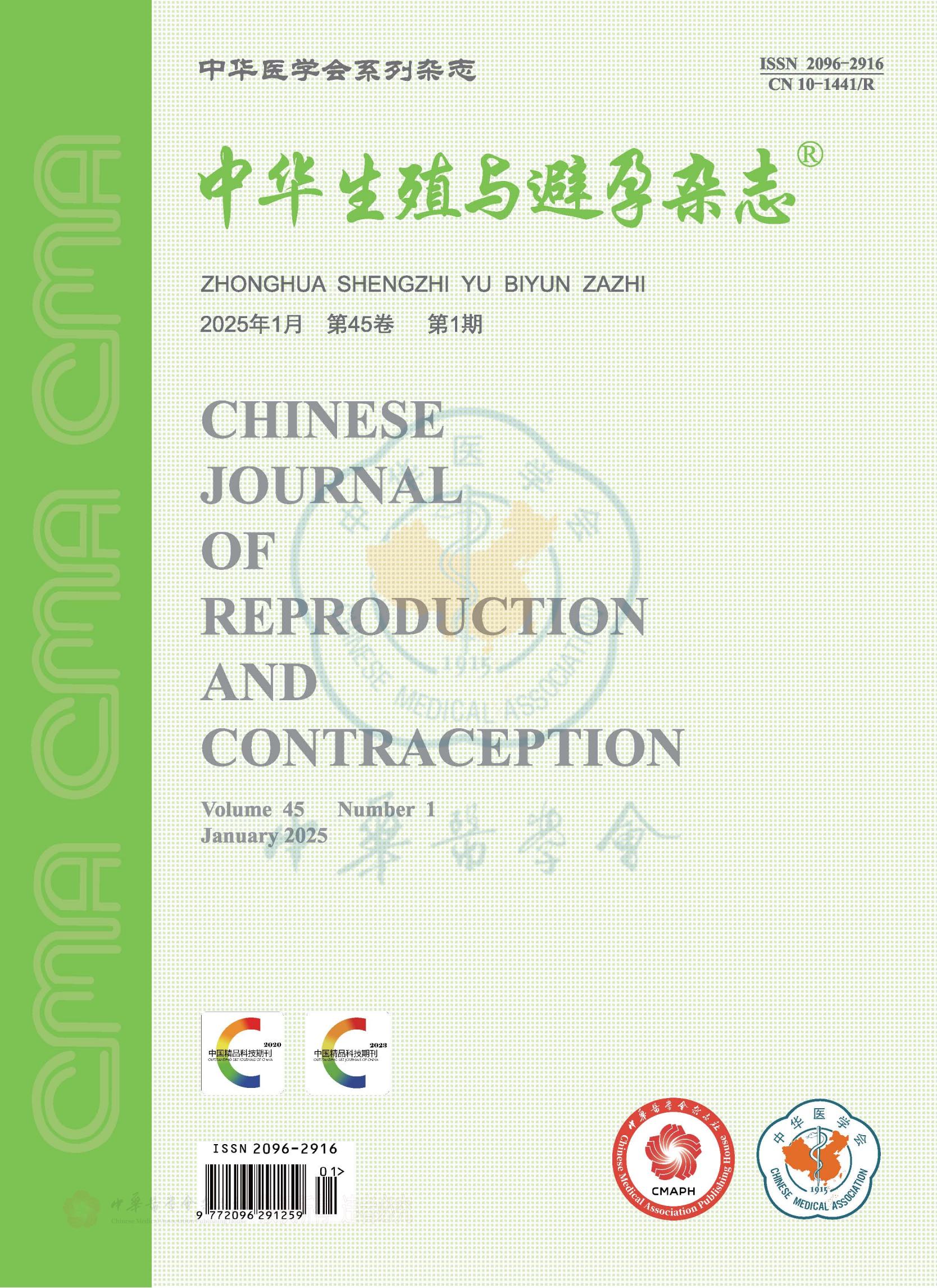
Chinese Journal of Reproduction and Contraception

1980  (1,  1)  to  Present  ISSN: 2096-2916

Articles

About

Save Email

Sort by

Best match
Relevance
PubYear
JournalTitle

DISPLAY OPTIONS

Format:

Per page:

Save citations to file

Selection:

Format:

Create file Cancel

Email citations

To:

Please check your email address first!

Selection:

Format:

Send email Cancel

2110

results

page

of 211

1

Cite

Cite

Copy

Share

Share

Copy

Modified double-armed suture technique for microsurgical vasoepididymostomy and its clinical efficacy

Xiaobo ZHU ; Xiangsheng ZHANG ; Shilong ZHANG ; Xin CHEN ; Guoxiao CHEN

Chinese Journal of Reproduction and Contraception.2020;40(3):230-233. doi:10.3760/cma.j.cn101441-20190528-00212

Objective:To explore the clinical efficacy of modified double-armed suture technique for microsurgical vasoepididymostomy in patients with epididymal obstructive azoospermia (EOA).Methods:The retrospective study included 118 cases with EOA who underwent microsurgical vasoepididymostomy by using modified double-armed suture technique from November 2013 to November 2017, the perioperative complication, the patency rate and the pregnancy rate were analyzed.Results:The operating time was (217±56) min. No severe adverse events or complications like spermatocele were observed. Semen analyses were preformed 3 months, 6 months, 9 months, 12 months and 18 months after operation. The density of sperm was (25.1±11.5)×10 6/mL on 18 months after operation, the sperm motility was (38.2±16.4)%, the patency rate was 70.9% (73/103), the pregnancy rate was 38.8% (40/103). Ten couples had healthy babies birth by natural pregnancy. Conclusion:Modified double-armed suture technique is an efficacy and safety technique in treating EOA. It's a practical alternative in the areas without the specialized double-armed sutures.

2

Cite

Cite

Copy

Share

Share

Copy

Endometrial receptivity and endometriosis-associated infertility

Jingwen ZHU ; Qing XUE

Chinese Journal of Reproduction and Contraception.2020;40(3):246-249. doi:10.3760/cma.j.cn101441-20190414-00153

Endometriosis (EMS) is a common disease in women of reproductive age and one of the causes of female infertility. Infertility in women caused by EMS is affected by many factors, among which the loss of endometrial receptivity leads to embryo implantation disorder is an important reason. This article reviews the endometrial receptivity changes in patients with EMS from the aspects of endometrial morphological changes, aberrant expression of receptivity-related factors, and abnormal expression of non-coding RNA. It aims at providing evidence for facilitating clinical therapy of EMS-related infertility.

3

Cite

Cite

Copy

Share

Share

Copy

Analysis of related factors for polycystic ovary syndrome patients complicated non-alcoholic fatty liver disease

Yikun LI ; Shanmei SHEN ; Jiamiao YANG ; Chengcheng QIAO ; Fei SHAO ; Bingjie ZHANG ; Jing WANG ; Yan BI ; Dalong ZHU

Chinese Journal of Reproduction and Contraception.2020;40(3):201-206. doi:10.3760/cma.j.cn101441-20190320-00116

Objective:To compare the prevalence of non-alcoholic fatty liver disease (NAFLD) in women with or without polycystic ovary syndrome (PCOS), and to evaluate association between PCOS and NAFLD.Methods:A cross-sectional study was performed including 122 PCOS patients (PCOS group) and 107 age, and body mass index (BMI)-matched women (control group). Anthropometric parameters, liver enzyme, lipid profile, glucose and insulin levels, sex hormones and hepatic ultrasonography were measured in all subjects. The clinical features, laboratory parameters and prevalence of NAFLD were compared between PCOS group and control group. The related factors were evaluated between PCOS and NAFLD, finally the role of insulin resistance (IR) and hyperandrogenism (HA) was analysed.Results:Women with PCOS had a significantly higher prevalence of NAFLD than those without PCOS (62.6% vs. 76.2%, P=0.025). Logistic regression found that HOMA-IR and FAI were associated with NAFLD in PCOS women ( OR=1.686, 95% CI=1.279-2.223; OR=1.167, 95% CI=1.039-1.311), however, there was no significant correlation between FAI and NAFLD after adjustment for HOMA-IR ( P>0.05). Conclusion:NAFLD is more prevalent in women with PCOS than in those without. Insulin resistance and HA drive risk of NAFLD in young female with PCOS. IR may be an independent risk factor for NAFLD, and the association between HA and NAFLD is not independent but is mediated by IR.

4

Cite

Cite

Copy

Share

Share

Copy

Application progress of recombinant human growth hormone in assisted reproductive technology

Xiaolin WU ; Lingling HUANG ; Lei LIANG ; Ping LI

Chinese Journal of Reproduction and Contraception.2020;40(3):241-245. doi:10.3760/cma.j.cn101441-20190315-00099

In order to improve the outcome of in vitro fertilization-embryo transfer (IVF-ET) treatment, recombinant human growth hormone (rhGH) has been widely used in assisted reproductive technology (ART), and has obvious improvement in patients with ovarian dysfunc-tion, such as diminished ovarian reserve (DOR), poor ovarian response (POR), polycystic ovary syndrome (PCOS), and abnormal endometrium patients such as repeated implantation failed (RIF), thin endometrium and intrauterine adhesions (IUA). But there is no unified standard about the target patients and application protocol of rhGH. This paper summarizes the mechanism and usage of rhGH in the above patients.

5

Cite

Cite

Copy

Share

Share

Copy

Study on the status quo and influencing factors of medication adherence in female infertility patients during in vitro fertilization and embryo transfer cycles

Jingbo GUO ; Junping HU ; Yuan YANG ; Jie SHAO ; Lin LIU

Chinese Journal of Reproduction and Contraception.2020;40(3):207-213. doi:10.3760/cma.j.cn101441-20190411-00151

Objective:To analyze the current status of medication adherence and its influencing factors in infertility patients during in vitro fertilization and embryo transfer (IVF-ET) cycles, and to provide evidence and ideas for improving medication adherence and formulating relevant intervention measures in the future. Methods:A cross-sectional survey was conducted to investigate 120 patients who underwent IVF-ET using the patient's basic situation questionnaire, MMAS-8, general self-efficacy scale (GSES), social support rating scale (SSRS) and medical coping models questionnaire (MCMQ). And the SPSS25.0 software was used to analyze the results.Results:The compliance score of IVF-ET patients was 6.70±1.42, and 69.6% patients had low medication adherence. Multivariate regression analysis showed that the main factors affecting patient compliance were patient self-efficacy and medical response to the disease.Conclusion:The current status of IVF-ET assisted patient’s medication adherence need to be further improved. Nursing staff need to not only build on traditional measures such as education, but also strengthen the self-efficacy, guide their choice to face. And when the psychological pressure is too great to be faced, the patient should be guided to adopt an “avoidance” coping style to alleviate the pressure brought by the disease. We should develop effective interventions to improve medication adherence.

6

Cite

Cite

Copy

Share

Share

Copy

Overview of promoting strategy of assisted reproductive technology service in the perspective of social capital

Danni WANG ; Qianhua XU ; Qin ZHANG ; Jie LI

Chinese Journal of Reproduction and Contraception.2020;40(3):259-263. doi:10.3760/cma.j.cn101441-20190401-00131

As an important treatment method of infertility, assisted reproductive technology (ART) has lower treatment success rate and service satisfaction. The advantage of ART service is far from being activated. From the perspective of social capital, this study reviewed the research progress of quality improvement of ART and pointed out the ideas and directions of follow-up service improvement.

7

Cite

Cite

Copy

Share

Share

Copy

Effects of cervical insufficiency combined with insulin resistance on pregnancy prognosis

Lei WANG ; Min REN ; Xiangli HONG ; Huimin KONG

Chinese Journal of Reproduction and Contraception.2020;40(3):225-229. doi:10.3760/cma.j.cn101441-20190212-00046

Objective:To investigate the incidence of insulin resistance (IR) in patients with cervical insufficiency and the risk factors of cervical incompetence.Methods:The clinical data of patients from Reproductive Immunology Department (former Recurrent Spontaneous Abortion Clinic) and the department of cervical miscarriage and preterm delivery with cervical insufficiency in Shanghai First Maternal and Infant Hospital, Tongji University School of Medicine from September 2015 to September 2018 were retrospectively analyzed. The general conditions of the patients were compared, and the pregnancy outcomes of patients with IR were observed.Results:A total of 212 single pregnancy patients with cervical insufficiency were collected, the onset gestational age was (22.0±3.21) weeks, the termination gestational age was (32.62±4.36) weeks. Among them, 41 cases (19.3%) were ended in miscarriage, 104 cases (49.1%) were ended in preterm birth, and 67 cases (31.6%) were ended in term birth. In 92 patients (43.4%) with IR, the onset gestational age was (20.7±2.4) weeks and the termination gestational age was (30.5±4.2) weeks, which were significantly different from non-IR group [the onset gestational age was (23.8±3.3) weeks and the termination gestational age was (34.9±3.6) weeks ( P<0.001, P<0.001)]. Compared with 120 cases in non-IR group (7.5% abortion, 50.8% preterm birth, 41.7% preterm birth), the pregnancy outcome in IR group was worse (34.8% abortion, 47.7% preterm birth, 18.5% preterm birth) ( P=0.001, P=0.269, P=0.001). Multivariate logistic regression model showed that IR was significantly correlated with abortion ( OR=3.240, 95% CI=2.569-4.089, P=0.001). In addition, body mass index (BMI) and polycystic ovary syndrome (PCOS) were also risk factors for miscarriage in patients with cervical insufficiency ( OR=1.108, 95% CI=1.11-1.22, P=0.001; OR=1.507, 95% CI=1.191-1.906, P=0.001). Conclusion:Patients with cervical incompetence combined with IR had earlier onset gestational ages, earlier termination gestational ages and the risk of miscarriage is increased.

8

Cite

Cite

Copy

Share

Share

Copy

Research progress of regulatory T cells in female reproductive process

Yunian ZHANG ; Haiqing TIAN ; Xiaolin LA

Chinese Journal of Reproduction and Contraception.2020;40(3):250-254. doi:10.3760/cma.j.cn101441-20190404-00137

Regulatory T (Treg) cells are a subtype of lymphocytes with immune suppressive function, and are abundantly expressed on ovarian and endometrium. They have the functions of regulating follicular development, suppressing immune response, promoting maternal-fetal immune tolerance and maintaining early pregnancy during reproduction. The abnormal expressing of Tregs is closely related to the occurrence and development of female reproductive diseases, and it is expected to become a new diagnostic marker and therapeutic target in reproductive medicine.

9

Cite

Cite

Copy

Share

Share

Copy

Emerging questions and challenges of COVID-19 on reproductive health

Rong LI ; Jing YANG ; Honggang LI ; Yuanyuan WANG ; Dan CHENG ; Peng DUAN ; Gengxiang WU ; Tailang YIN ; Chengliang XIONG ; Jie QIAO

Chinese Journal of Reproduction and Contraception.2020;40(3):177-181. doi:10.3760/cma.j.cn101441-20200228-00094

During the outbreak of COVID-19, this paper aimed to discuss its potential risks on reproductive health, which was underpinned by the virus, drugs, disinfectants and psychological problems. The literatures review on previous and latest studies showed that COVID-19 may have potential effects on both men’s and women’s reproductive systems; that contraception should be recommended during antiviral treatment and for at least eight months after the end of antiviral treatment, but there is no evidence to support the termination of pregnancy without medical indicators during early pregnancy; and that chlorine disinfectants are not recommended for assisted reproduction laboratories. Medical professionals should make a comprehensive assessment according to the patient’s fertility needs, disease status and psychological level, in order to provide reasonable fertility guidance and counselling.

10

Cite

Cite

Copy

Share

Share

Copy

Effect of di-2-ethylhexyl phthalate on oocyte development potential

Jingjing WANG ; Hua ZHAO ; Xingling WANG ; Chenchen CUI ; Hui LIU ; Yayi GAO ; Lijun ZHANG

Chinese Journal of Reproduction and Contraception.2020;40(3):219-224. doi:10.3760/cma.j.cn101441-20190622-00269

Objective:To investigate the effect of di-2-ethylhexyl phthalate (DEHP) on oocyte development potential and its mechanism.Methods:Forty 3-week old female KM mice were randomly divided into 4 groups ( n=10, each), including control group (corn oil), the low-, medium-, and high-dose DEHP groups (300 mg/kg, 600 mg/kg, 1200 mg/kg). Mice of 4 groups were orally administered with corn oil (control) or DEHP daily for 6 weeks (5 d per week), respectively. After the treatment, female mice in each group were given ovulation induction and cooped up with male mice. The fertilized eggs were collected to observe the cleavage rate and blastocyst formation rate. Meanwhile, the levels of Ca 2+ and reactive oxygen species (ROS) of oocytes in each group were detected with the Ca 2+ fluorescence probe (Fluo-4 AM) and ROS assay kit, then the differences were compared. Results:Compared with control group, the cleavage rate and blastocyst formation rate of the low-, medium- and high-dose DEHP groups decreased, and the differences were statistically significant ( P all<0.05). The levels of Ca 2+ and ROS in oocytes increased with the increase of DEHP dosage. Compared with control group and the low-dose DEHP group, the levels of Ca 2+ and ROS in oocytes of the medium- and high-dose DEHP groups were significantly higher, and the differences were statistically significant ( P all<0.05). Conclusion:DEHP can increase the levels of Ca 2+ and ROS in mouse oocytes, reduce the quality of oocytes, and affect the early embryonic development.

Country

China

Publisher

Chinese Medical Journals Publishing House Co., Ltd

ElectronicLinks

https://zhszybyzz.yiigle.com/CN311344R202504/index.jhtml?tplReset=qikan&lang=En

Editor-in-chief

Qiao Jie

E-mail

randc@sibpt.cn

Abbreviation

Chin J Reprod Contracep

Vernacular Journal Title

中华生殖与避孕杂志

ISSN

2096-2916

EISSN

Year Approved

2025

Current Indexing Status

Currently Indexed

Start Year

1980

Description

The Chinese Journal of Reproduction and Contraception is supervised by the China Association for Science and Technology and is co-sponsored by the Chinese Medical Association, Shanghai Institute for Biomedical and Pharmaceutical Technologies, and Obstetrics and Gynecology Hospital of Fudan University. It is a monthly publication, available both domestically and internationally. The journal primarily publishes research findings related to reproductive medicine, reproductive biology, andrology, and family planning, focusing on basic and clinical application studies in the field of reproductive health.

Related Sites

WHO WPRO GIM

Help Accessibility
DCMS Web Policy
CJSS Privacy Policy

Powered by IMICAMS( 备案号: 11010502037788, 京ICP备10218182号-8)

Successfully copied to clipboard.