Main content 1 Menu 2 Search 3 Footer 4
+A
A
-A
High contrast
HOME JOURNAL JOURNAL SELECTION NETWORK HELP ABOUT

Journal Selection Criteria and Standards

WPRIM Journal Selection Criteria (August 2023)

NJSC Philippines Selection Criteria (for Philippine-based journals only)

Minimum standards for the suspension and removal of WPRIM approved journals

Application and Indexing Process

Application and Submission Process for WPRIM Indexing

Journal Content Management

Candidate Journal Selection and Data Creation and Management System

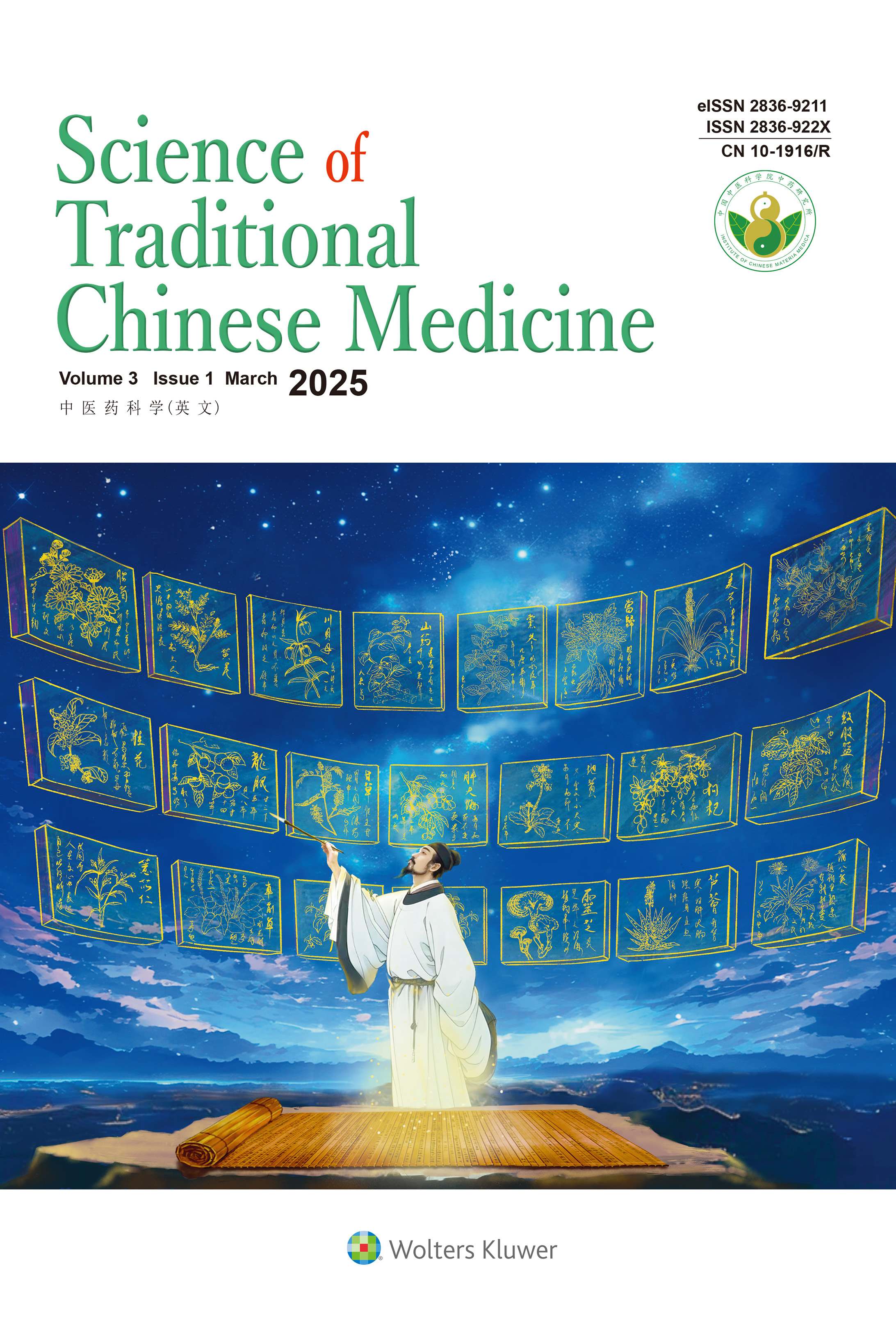
Science of Traditional Chinese Medicine

2023  (1,  1)  to  Present  ISSN: 2836-922X

Articles

About

Save Email

Sort by

Best match
Relevance
PubYear
JournalTitle

DISPLAY OPTIONS

Format:

Per page:

Save citations to file

Selection:

Format:

Create file Cancel

Email citations

To:

Please check your email address first!

Selection:

Format:

Send email Cancel

146

results

page

of 15

1

Cite

Cite

Copy

Share

Share

Copy

Bushen Zhuanggu Formula promotes bone repair in nontraumatic osteonecrosis of the femoral head via regulating PKC-RAS-ERK-ETS1-RANKL signaling axis

Zhang CHU ; Ma ZHAOCHEN ; Li TAO ; Liu YUDONG ; Jia YAN ; Li QUN ; Liu CHUNFANG ; Lin YA ; Gong CHUNZHU ; Lin NA ; Chen WEIHENG ; Zhang YANQIONG

Science of Traditional Chinese Medicine.2025;3(3):239-249. doi:10.1097/st9.0000000000000076

Background:Bushen Zhuanggu Formula(BZF),derived from the classic Yougui Pills,has shown favorable clinical efficacy in treating advanced nontraumatic osteonecrosis of the femoral head(NONFH),particularly by promoting bone repair.However,its underlying mechanisms remain unclear.Objective:This study aimed to explore the mechanisms by which BZF promotes bone repair in advanced NONFH.Materials and methods:A total of 518 potential BZF targets were identified from the ETCM v2.0 database.Transcriptomic profiling of clinical cohorts revealed 485 differentially expressed genes in advanced NONFH patients compared to healthy controls.A drug target-disease gene interaction network was constructed to identify candidate BZF targets involved in NONFH pathogenesis.In vivo experiments were conducted to validate the effects of BZF in a rat model of advanced NONFH.Results:Network analysis identified key pathways associated with blood circulation obstruction,immune-inflammatory imbalance,and abnormal bone metabolism.Protein kinase C alpha(PKCA),Ras proto-oncogene(RAS),mitogen-activated protein kinase 3(ERK),ETS proto-oncogene 1(ETS1),and receptor activator of nuclear factor-κB ligand(RANKL)formed a signaling axis implicated in NONFH pathogenesis.BZF treatment alleviated joint inflammation,preserved trabecular bone morphology,reduced bone loss,and promoted bone repair.Mechanistically,BZF significantly downregulated the expression of PKCA,RAS,ERK,ETS1,and RANKL,improved blood circulation,and inhibited osteoclast activation while promoting osteoblast activation.Conclusion:BZF may promote bone repair in advanced NONFH by enhancing blood circulation and modulating the PKC-RAS-ERK-ETS1-RANKL signaling axis,thereby reversing dysregulated bone metabolism.

2

Cite

Cite

Copy

Share

Share

Copy

Deep learning-based fusion of color and spectral features from hyperspectral imaging for the origin identification of Salvia miltiorrhiza

Bai RUIBIN ; Xiong FENG ; Wang HUI ; Luan MEIQI ; Zhou JUNHUI ; Wan XIUFU ; Zhao ZIHAN ; Zhang XIAOBO ; Zhang CHU ; Yang JIAN

Science of Traditional Chinese Medicine.2025;3(3):250-258. doi:10.1097/st9.0000000000000079

Background:Salvia miltiorrhiza Bunge,commonly known as"Danshen"in China due to the distinctive red color of its roots,is one of the most widely used traditional Chinese medicines.It is cultivated in various regions across China,and environmental differences among these regions can affect the secondary metabolites of plants,thereby influencing the quality of S.miltiorrhiza.In recent years,increasing demand for S.miltiorrhiza has exacerbated the problem of origin fraud.Therefore,ensuring the authenticity of its geo-graphical origin is crucial for the sustainable development of the industry.Objective:The red coloration of S.miltiorrhiza is closely associated with the content of its primary active compounds,particularly tanshinones.Therefore,both its internal chemical composition and external color characteristics serve as key indicators for quality assessment.This study utilized hyperspectral imaging technology to evaluate its potential in classifying the geographical origin of S.miltiorrhiza.Methods:Spectral data reflecting the internal chemical properties of S.miltiorrhiza were integrated with color information represent-ing its external features through 3 levels of data fusion.These fused datasets were then combined with deep learning algorithms to achieve accurate origin classification.Results:The results demonstrated that the Transformer model combined with soft-voting decision-level fusion achieved the highest classification accuracy of 98.72%by integrating image color and short-wave infrared spectral data.Conclusion:This study demonstrates that integrating hyperspectral imaging spectral data with color information provides a reliable and innovative approach for verifying the authenticity and traceability of S.miltiorrhiza.

3

Cite

Cite

Copy

Share

Share

Copy

Pharmacokinetics,tissue distribution,and excretion of anthraquinones and their glucuronide metabolites from raw and steamed pieces of Rhei Radix et Rhizoma extract in constipation rats

Zhang JING ; Zou JIE ; Zhang PENG ; Zhou PING ; Xu YUDI ; Tian JIAXIN ; Xiao YONGQING ; Cao GANG ; Liu YING

Science of Traditional Chinese Medicine.2025;3(3):259-269. doi:10.1097/st9.0000000000000077

Background:Rhei Radix et Rhizoma has been traditionally used as a potent laxative for centuries due to its remarkable efficacy.Raw pieces of Rhei Radix et Rhizoma(RP)are known for their strong laxative effects,often accompanied by side effects,while steamed Rhei Radix et Rhizoma pieces(SP)possess a milder laxative effect and are widely used clinically.However,there is a lack of comprehensive evidence examining the mechanisms underlying SP's effectiveness,particularly from a bioavailability perspective.Objective:This study aimed to investigate the impact of the steaming process on the in vivo disposition of RP and SP through pharmacokinetics,tissue distribution,and excretion assays.Methods:An ultra-performance liquid chromatography-tandem mass spectrometry method was developed for the simultaneous quantitative analysis of prototype anthraquinones and their glucuronide metabolites.Pharmacokinetic,tissue distribution,and excre-tion assays were conducted in constipation rats following oral administration of RP and SP.Blood,tissue,urine,and fecal samples were collected and analyzed to compare the absorption,distribution,metabolism,and excretion profiles of anthraquinones,high-lighting differences in bioavailability and safety between RP and SP.Results:Compared with the RP group,the SP group showed significantly reduced area under the plasma concentration-time curve,mean residence time,and half-life time values for rhein-8-O-β-D-glucopyranoside,rhein,emodin,aloe-emodin,and their glucuronide metabolites.The clearance values were significantly increased in the SP group.These results demonstrate that SP led to lower exposure levels and higher elimination rates of these components compared with RP.Additionally,these compo-nents were primarily distributed in the large intestine,where they exerted their laxative effects.Glucuronide metabolites were mainly excreted through urination,while prototype components were excreted in both urine and feces.Notably,the cumulative excretion of aloe-emodin,emodin,rhein,and their glucuronide metabolites was significantly higher in both urine and feces after SP administra-tion,indicating that SP enhances the excretion of these components compared with RP.Conclusion:The findings suggest that SP reduced anthraquinone exposure levels while enhancing their excretion,demonstrating that the steaming process significantly promotes the elimination of key components.This study provides a comprehensive analysis of how steaming alters the in vivo disposition of Rhei Radix et Rhizoma,offering a scientific basis for the improved safety and clinical use of SP.These insights not only clarify the mechanistic differences between RP and SP but also contribute to a broader understanding of processing-induced modifications in Chinese medicines.This research paves the way for optimizing Chinese medicine processing techniques to enhance the safety and efficacy of herbal therapies.

4

Cite

Cite

Copy

Share

Share

Copy

The role of pulmonary vascular endothelial cell injury in COPD and its targeted therapeutic strategies

Xin JINGJING ; Han NINGXIN ; Chang LIPING ; Jia ZHENHUA

Science of Traditional Chinese Medicine.2025;3(3):199-209. doi:10.1097/st9.0000000000000080

Chronic obstructive pulmonary disease(COPD)is a common disease with a high global incidence and mortality rate.It is charac-terized by chronic inflammation and structural airway obstruction that is not fully reversible,leading to shortness of breath caused by air trapping and increased physical exertion.Over the past few decades,the incidence of COPD has continued to rise.Although commonly used therapeutic agents,such as glucocorticoids and bronchodilators,have demonstrated significant symptomatic relief,they primarily target symptoms rather than halting disease progression.Therefore,further research is needed to better understand the underlying mechanisms of COPD and to develop novel therapeutic strategies for its prevention and management.Early studies on the pathogenesis of COPD primarily focused on airway epithelial cell injury,while relatively less attention was given to pulmonary vascular endothelial cells(PVECs).However,recent evidence indicates that COPD is not only an airway and systemic inflammatory disorder but also a vascular disease,with PVECs playing a critical role in its pathogenesis.PVECs are among the main cellular targets damaged in COPD and are involved in mediating its initiation and progression.In this review,we summarize emerging evidence that highlights the close association between PVEC injury and COPD pathogenesis.We also explore the roles and mechanisms of various therapeutic interventions targeting PVECs,including chemical agents and traditional Chinese medicine,in the treatment of COPD.

5

Cite

Cite

Copy

Share

Share

Copy

Development and challenges of mass spectrometry database for traditional Chinese medicine:A review

Wang YIJUN ; Yang ZHIMING ; Wu JUNXIAN ; Ma XIAOLI ; Zhou LI ; Li XIANG ; Ma BAIPING ; Qiu ZIDONG ; Kang LIPING

Science of Traditional Chinese Medicine.2025;3(3):210-221. doi:10.1097/st9.0000000000000082

Accurate characterization of the chemical composition of complex traditional Chinese medicine(TCM)is an essential foundation for the modern scientific interpretation of TCM principles.Mass spectrometry is the most dominant technique in current research on the material basis of TCM,offering the highest sensitivity and the richest information provision.Establishing mass spectrometry databases represents the most effective approach to facilitating the structural analysis of TCM chemical components.This paper systematically searches and reviews literature published from January 2005 to January 2025 through online databases such as China National Knowledge Infrastructure,PubMed,and Web of Science,using"mass spectrometry database"and"traditional Chinese medicine"as keywords.It reviews the current status of seven TCM chemical component mass spectrometry databases and seven natural product mass spectrometry databases.The key advancements of these mass spectrometry databases for natural products are summarized,detailing their characteristics,search methodologies,included information,and data sources.Additionally,challenges related to data quality,standardization,timely updates,database interaction,retrieval functionality,and data sharing and security are discussed in depth.Furthermore,the paper explores prospective development directions for TCM mass spectrometry databases,emphasizing the importance of open data sharing,technological innovation,and data security.Through this analysis,the paper aims to offer theoretical guidance and practical recommendations for the precise identification of TCM components,as well as for the construction and application of these databases.

6

Cite

Cite

Copy

Share

Share

Copy

Advances of Chinese herbal medicine and its active ingredients in the treatment of antibiotic-resistant Klebsiella pneumoniae infections:Therapeutic efficacy,mechanisms,and combination strategies

Yang SHUO ; Su PING ; Liu SHUANG ; Wang YI

Science of Traditional Chinese Medicine.2025;3(3):222-238. doi:10.1097/st9.0000000000000081

Klebsiella pneumoniae is a widespread Gram-negative bacterium in Asia,and the emergence of antibiotic-resistant strains has sig-nificantly complicated treatment strategies.Traditional Chinese medicine,which has made remarkable contributions to public health in Asia for thousands of years,may offer promising antibacterial strategies.Chinese herbal medicine(CHM),the primary therapeutic modality of traditional Chinese medicine,exhibits antimicrobial activity,modulates the immune system,and has the potential to reverse antibiotic resistance through various mechanisms.However,no review has comprehensively summarized the efficacy and underlying mechanisms of CHM in treating antibiotic-resistant K.pneumoniae infections.In this study,we conducted a comprehen-sive review of relevant literatures published up to 2025,using the keywords"Klebsiella pneumoniae,""traditional Chinese medicine,"and"Chinese herbal medicine"across databases including PubMed,Web of Science,ScienceDirect,and China National Knowledge Infrastructure.This review first introduces the taxonomy,virulence factors,and antibiotic resistance profile of K.pneumoniae.We then summarize CHM formulas,extracts,and active ingredients with reported antibacterial effects against K.pneumoniae,including their minimum inhibitory concentrations and mechanisms.Additionally,we highlight CHM interventions that enhance host immune responses and alleviate symptoms associated with K.pneumoniae infections.Furthermore,combining CHM with antibiotics rep-resents a novel strategy to enhance antibiotic efficacy and combat resistance.We therefore summarize the synergistic effects and mechanisms of CHM-antibiotic combinations.Overall,this review underscores the multifaceted therapeutic potential of CHM and its active ingredients,including direct antibacterial action,immune modulation,and synergy with conventional antibiotics,providing an integrative approach to address the global challenge of antimicrobial resistance.

7

Cite

Cite

Copy

Share

Share

Copy

Use of acupuncture in sepsis with gastrointestinal dysfunction:A systematic review and meta-analysis

Shi JIAHENG ; Hu YANGE ; Zhu YIBING ; Huang HUIBIN ; Yu DAXING

Science of Traditional Chinese Medicine.2025;3(3):282-291. doi:10.1097/st9.0000000000000075

Background:Acupuncture(AP)is widely used in hospitalized patients.However,high-quality evidence supporting its use in patients with sepsis-induced gastrointestinal dysfunction remains limited.Objective:This study aims to conduct a systematic review and meta-analysis to evaluate the effects of AP in patients with sepsis-induced gastrointestinal dysfunction.Methods:PubMed,Embase,Web of Science,SinoMed,VIP Database,Wanfang Data Knowledge Service Platform,China National Knowledge Infrastructure,and the Cochrane Library were searched from inception to March 10,2024.We included randomized controlled trials(RCTs)that focused on adult patients with sepsis receiving AP and compared them with a control group.The primary outcome was gastrointestinal indicators.Sensitivity analysis,subgroup analysis,and assessment of publication bias were conducted to explore the potential heterogeneity among the included studies.Results:A total of 23 RCTs involving 1603 patients were included.Overall,AP significantly improved gastrointestinal indicators,including intra-abdominal pressure(mean difference[MD]=-1.97cm H2O;95%confidence interval[CI]:-2.77,-1.16;P<0.00001),bowel sounds(MD=0.91 per minute;95%CI:0.66,1.16;P<0.00001),and gastric residual volume(MD=-46.94mL;95%CI:-83.45,-10.43;P=0.01).These findings were corroborated by subgroup and sensitivity analyses.AP also showed significant benefits in inflammation indicators(procalcitonin,tumor necrosis factor-α,and interleukin-6),gastrointestinal function indicators(D-lactate,diamine oxidase,intestinal fatty acid-binding protein,and motilin),disease severity scores(Acute Physiology and Chronic Health Evaluation Ⅱ score and gastrointestinal dysfunction score),clinical prognosis,and other critical clinical outcomes(total effective rate and time to achieve target enteral nutrition)(all P values<0.05).Additionally,the mortality rate in the AP group was comparable to that of the control group.Conclusion:Our findings suggest that AP significantly improves gastrointestinal indicators and other clinical outcomes in patients with sepsis and gastrointestinal dysfunction,indicating its potential as a promising therapeutic option.However,due to the small sample sizes and substantial heterogeneity among the included studies,further high-quality,multicenter RCTs are needed to validate these results.

8

Cite

Cite

Copy

Share

Share

Copy

Microbial community mediated by microbial agents improves the quality of Epimedium pubescens Maxim.

Lai KUNYANG ; Wan XIUFU ; Xiao JIANCAI ; Wang HONGYANG ; Shi SHANGXUAN ; Yan BINBIN ; Lyu CHAOGENG ; Zhang CHENGCAI ; Zhang YUFEI ; Yuan FENG ; Zhao ZHE ; Zhu SHOUDONG ; Kang CHUANZHI ; Zhang YAN

Science of Traditional Chinese Medicine.2025;3(3):270-281. doi:10.1097/st9.0000000000000078

Background:Optimizing cultivation techniques for traditional Chinese medicine has become a crucial means to improve the quality of medicinal materials.Microbial agents,as environmentally friendly and efficient plant growth promoters and soil conditioners,have increasingly attracted attention in eco-agriculture research.Objective:Our understanding remains limited regarding how the application of microbial agents,alone or in combination,affects changes in the rhizosphere microbiome and its association with the bioactive components of medicinal materials.Methods:In this study,Epimedium pubescens Maxim.was employed as a model plant to examine the effects of 2 microbial agents(Paenibacillus mucilaginosus and Bacillus subtilis)applied individually and in combination on plant growth and the accumulation of bioactive components.Additionally,this study explored the relationship between the rhizosphere microbiome and plant development.Results:The application of microbial agents increased the yield of E.pubescens leaves by 20.30%to 33.66%and enhanced the total flavonol glycosides content by 11.40%to 29.94%.Meanwhile,microbial treatments reshaped the rhizosphere microbiome,promoted the enrichment of beneficial microorganisms(e.g.,Frankia and Paenibacillus),suppressed phytopathogenic fungi such as Didymella and Scytalidium,and enhanced the stability of the soil microbial co-occurrence network.The partial least squares path model suggested that microbial agents not only directly impact the quality of medicinal herbs but also indirectly alter the accumula-tion of bioactive components by modulating the soil microbiome.Conclusion:These findings deepen our understanding of the relationship between medicinal plant quality and rhizosphere micro-biomes as mediated by microbial agents.They also provide a basis for designing and manipulating synthetic microbial communities to promote sustainable development in eco-agriculture.

9

Cite

Cite

Copy

Share

Share

Copy

Promoting international acceptance of clinical studies about traditional Chinese medicine interventions

Ling LI ; Xiaochao LUO ; Jiali LIU ; Minghong YAO ; Yanmei LIU ; Yu MA ; Luqi HUANG ; Xin SUN

Science of Traditional Chinese Medicine.2025;3(1):1-7. doi:10.1097/st9.0000000000000062

Promoting the international acceptance of clinical studies about traditional Chinese medicine (TCM) interventions is a key strategy for internationalization of TCM. However, the complexities of TCM interventions—in terms of the theories, practice patterns, and components—pose challenges to the design and implementation of clinical studies that are well accepted by the international community. This article summarized the current status of clinical studies about TCM interventions that were published in international journals, explored underlying barriers hindering the international acceptance, and discussed potential strategies for future development.

10

Cite

Cite

Copy

Share

Share

Copy

Challenges of continuous cropping obstacles in Panax ginseng: Formation and response mechanisms

Kang CHEN ; Yuru TONG ; Tielin WANG ; Xiuteng ZHOU ; Junhui ZHOU ; Yang GE ; Han ZHENG ; Muyao YU ; Yunfeng LUO ; Ruifeng JI

Science of Traditional Chinese Medicine.2025;3(1):8-14. doi:10.1097/st9.0000000000000058

Panax ginseng, a perennial herbaceous plant and a representative of the Panax genus, is renowned for its exceptional medicinal value and economic benefits, often referred to as the “King of Herbs.” With the increasing market demand and the limited availability of suitable cultivation land, the issue of continuous cropping obstacles for P. ginseng has become increasingly prominent, directly hindering the sustainable development of the ginseng industry. This article summarizes the concept and hazards of continuous cropping obstacles and, drawing on the latest research, provides an in-depth analysis of the causes and response mechanisms. This work aims to establish a solid foundation for future research into the mechanisms of continuous cropping obstacles in P. ginseng.

Country

China

Publisher

Wolters Kluwer

ElectronicLinks

https://journals.lww.com/stcm/

Editor-in-chief

Luqi Huang; Ronald Lam

E-mail

machaoyi15@163.com

Abbreviation

Sci Tradit Chin Med

Vernacular Journal Title

中医药科学(英文)

ISSN

2836-922X

EISSN

2836-9211

Year Approved

2025

Current Indexing Status

Currently Indexed

Start Year

2023

Description

Under the administration of Institute of Chinese Materia Medica, China Academy of Chinese Medical Sciences, Science of Traditional Chinese Medicine (STCM) is a quarterly open access journal established in September 2023 and published by Wolters Kluwer. The journal is supported by the "Excellence Action Plan of 2022 China Science and Technology Journal-- High Starting Point New Journal Project". Science of Traditional Chinese Medicine aims at reporting the latest scientific research of traditional Chinese medicine (TCM) and evidence-based medicine. The journal covers all areas of the TCM including chemistry, pharmacology, processing, preparation of Chinese materia medica (natural products) and clinical, evidence-based medicine research of TCM as well as the reports of botany, chemistry, pharmacology, pharmacy, engineering, clinical applications and socioeconomic related to TCM in China and around the world. The main columns are research articles, review articles, experts forum, guidelines & consensus, editorials, etc. It aims to become one of the most internationally influential academic journals in the field of TCM and integrative & complementary medicine. The journal is registered with the following abstracting partners:AI2,British Library, CCC_DocDel, CLOCKSS, CNKI (China National Knowledge Infrastructure), CNPIEC, DeepDyve, EBSCO Discovery, FiZ, GALE (Cengage), GNM, Ingenta, Meta (Sciencescape), OCLC, Portico, ProQuest Summons, Readcube, Semper Tool, TDNet, Wanfang. The journal is indexed with, or included in, the following:CAS, Ovid, DOAJ, Scopus.

Related Sites

WHO WPRO GIM

Help Accessibility
DCMS Web Policy
CJSS Privacy Policy

Powered by IMICAMS( 备案号: 11010502037788, 京ICP备10218182号-8)

Successfully copied to clipboard.