Main content 1 Menu 2 Search 3 Footer 4
+A
A
-A
High contrast
HOME JOURNAL JOURNAL SELECTION NETWORK HELP ABOUT

Journal Selection Criteria and Standards

WPRIM Journal Selection Criteria (August 2023)

NJSC Philippines Selection Criteria (for Philippine-based journals only)

Minimum standards for the suspension and removal of WPRIM approved journals

Application and Indexing Process

Application and Submission Process for WPRIM Indexing

Journal Content Management

Candidate Journal Selection and Data Creation and Management System

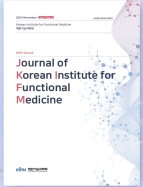
Journal of Korean Institute for Functional Medicine

2018  (1,  1)  to  Present  ISSN: 2635-5876

Articles

About

Save Email

Sort by

Best match
Relevance
PubYear
JournalTitle

DISPLAY OPTIONS

Format:

Per page:

Save citations to file

Selection:

Format:

Create file Cancel

Email citations

To:

Please check your email address first!

Selection:

Format:

Send email Cancel

32

results

page

of 4

1

Cite

Cite

Copy

Share

Share

Copy

Clinical evaluation and treatment of hypercortisolism that functional medicine practitioners should consider

Susie JUNG

Journal of Korean Institute for Functional Medicine.2024;7(1):40-52. doi:10.32581/jkifm.2024.7.1.40

Hypercortisolism is a phenomenon identified in traditional medicine for Cushing's syndrome, an endocrine disease, but is commonly discovered during clinical evaluation in functional medicine. Endogenous Cushing's syndrome itself is an uncommon disease, but if not properly evaluated, it can cause various complications in patients, so early detection and treatment are important. Additionally, pseudo-Cushing's syndrome, which may appear to be Cushing's syndrome, is often closely related to mental illness and stress reactions. As a functional medicine physician, it is important to understand cortisol metabolism and testing methods to evaluate hypercortisolism, and it is necessary to consider various patient’s conditions and solutions when hypercortisolism is confirmed.

2

Cite

Cite

Copy

Share

Share

Copy

Understanding the detoxification system and functional approach

Yon Chul PARK

Journal of Korean Institute for Functional Medicine.2024;7(1):34-39. doi:10.32581/jkifm.2024.7.1.34

The detoxification system is a complex network comprised of various organs, including the liver, kidneys, skin, gastrointestinal tract, and lymphatic system. It plays a vital role in maintaining health by processing and eliminating toxins from the body. The functional medicine approach to detoxification focuses on addressing the root cause by considering individual characteristics. This personalized approach can help maintain a healthy detoxification system and promote overall health through strategies like normalizing liver function, implementing a nutritional approach, utilizing intestinal microbiota, and managing sleep and stress.

3

Cite

Cite

Copy

Share

Share

Copy

Rationale and application of 5R treatment in functional medicine

Kyu-Nam KIM

Journal of Korean Institute for Functional Medicine.2024;7(1):1-8. doi:10.32581/jkifm.2024.7.1.1

Simply defined, gut dysbiosis refers to a condition in which the ratio of beneficial and harmful bacteria present in the small or large intestine is disrupted and the ratio of harmful bacteria increases. Because an increase in pathogenic bacteria leads to damage to intestinal mucosal cells, it is important to provide functional medical treatment that not only removes harmful bacteria and supplies beneficial bacteria, but also helps restore damaged intestinal mucosal cells when treating patients with intestinal bacterial imbalance. In addition, the intestinal environment where intestinal bacterial imbalance can occur must be corrected, and further education on lifestyle habits and environments where gut dysbiosis can occur must be provided. In these ways, various approaches are needed to treat patients with gut dysbiosis, and in this review, the author will describe functional medical approaches using the 5R (remove, replace, reinoculate, repair and rebalance) program in these patients.

4

Cite

Cite

Copy

Share

Share

Copy

Functional medical integration for chronic migraine management

Sang-Hoon LEE ; Sang Man KIM

Journal of Korean Institute for Functional Medicine.2024;7(1):17-25. doi:10.32581/jkifm.2024.7.1.17

Chronic migraine, affecting approximately 2% of the global population, markedly diminishes quality of life and imposes significant societal costs, surpassing the impacts of episodic migraine. Conventional medical treatments leave about 30% of patients with persistent chronic migraine, some of whom fluctuate between episodic and chronic migraine states. A holistic, functional medicine approach may provide supplementary benefits for these individuals. Clinical imbalances often identified in chronic migraine patients—such as mitochondrial dysfunction, oxidative stress, gut microbiota dysbiosis, leaky gut syndrome, food intolerance, histamine syndrome, vitamin D deficiency, and autonomic nervous system imbalances—can be detected through specific functional medical assessments, including urine organic acid profiles, hair tissue mineral analysis, hydrogen breath tests, comprehensive blood tests, and heart rate variability tests. Integrative functional medical interventions, encompassing lifestyle modifications, oral and intravenous nutrition therapies, and the comprehensive 5R program (remove, replace, reinoculate, repair, rebalance) for gut health, could offer therapeutic benefits. This review delves into the functional medicine paradigm and its potential role in managing chronic migraine.

5

Cite

Cite

Copy

Share

Share

Copy

Case report of functional medicine a case of long COVID with adrenal fatigue

Sang-Hoon LEE ; Sang Man KIM

Journal of Korean Institute for Functional Medicine.2024;7(1):68-77. doi:10.32581/jkifm.2024.7.1.68

Long COVID, also known as post-acute sequelae of SARS-CoV-2 infection or post-acute COVID-19 syndrome, refers to a range of symptoms and complications that persist more than four weeks after diagnosis. Typical symptoms include fatigue, headache, anosmia, ageusia, chronic cough, shortness of breath, impaired concentration and memory (brain fog), sleep disturbances, depression, anxiety, and hair loss. The incidence of long COVID varies according to the data, but it has been reported in approximately 20-60% of acute COVID-19 patients. However, despite its high incidence and significant medical and societal burden, there is currently no clear definition or objective diagnostic criteria for long COVID. Its diagnosis and treatment options are also limited and not established due to insufficient evidence. Nevertheless, a functional medicine approach, especially focused on adrenal functional and adrenal fatigue, can help long COVID patients. Relevant blood tests and urinary organic acid profile can be utilized, and lifestyle modification, oral or intravenous nutrition therapies can be implemented. In this article, we report a clinical case of long COVID with adrenal fatigue, demonstrating significant improvement after functional medical approach and management.

6

Cite

Cite

Copy

Share

Share

Copy

Functional perspectives of aspirin and metformin history

Byoungjin PARK

Journal of Korean Institute for Functional Medicine.2024;7(1):26-33. doi:10.32581/jkifm.2024.7.1.26

The origin of many medicines have been initially developed from herbal ingredients, and after they are settled as drugs through several steps of improvement, new pharmacokinetic effects are often additionally found with the potential for other therapeutic applications. Aspirin and metformin are representative drugs with this historical background. Since cardiovascular disease and cancer development share a common mechanism of chronic inflammation, it is worth exploring the possibility and scope of aspirin functionally. In particular, it is worth noting that it promotes the production of resolvins and lipoxins, potent anti-inflammatory substances, through switched catalytic activity for cyclooxygenase-2. Metformin is the most commonly prescribed drug in treating diabetes, and several beneficial effects have begun to be known through molecular and epidemiological studies. It is estimated that various roles still have not been identified, having much room for application to various diseases beyond diabetes.

7

Cite

Cite

Copy

Share

Share

Copy

Assessment and management of epicardial adipose tissue and coronary arterial calcification

Nam-Seok JOO

Journal of Korean Institute for Functional Medicine.2024;7(1):9-16. doi:10.32581/jkifm.2024.7.1.9

Although epicardial adipose tissue and coronary artery calcification are not traditional metabolic risk factors, recent research results have reported that they are also related to decreased cardiac function, occurrence of cardiovascular diseases, and increased metabolic risks. In the case of epicardial adipose tissue, there is morphological and functional similarity to abdominal visceral fat, and an increase in epicardial fat is associated with an increase of risk of heart disease. In addition, coronary artery calcification is also caused by an imbalance in the normal calcification process and causes atherosclerosis and coronary artery stenosis. Epicardial fat and coronary artery calcification require periodic evaluation in people at risk through coronary artery computed tomography and traditional management methods such as smoking cessation, exercise, weight loss, and use of statins, as well as vitamin D and vitamin K to prevent calcification, are used to reduce risk. It may be an additional consideration for those who have the risks.

8

Cite

Cite

Copy

Share

Share

Copy

Case report of functional medicine: improvement of alopecia areata after 5R program

Sang-Hoon LEE ; Sang Man KIM

Journal of Korean Institute for Functional Medicine.2024;7(1):78-86. doi:10.32581/jkifm.2024.7.1.78

The gut and skin health are closely related, defined as gut-skin axis. In particular, gut microbiome has been revealed as major factor of gut-skin axis (gut-microbiome-skin axis). Psoriasis, atopic dermatitis, acne vulgaris, rosacea, hidradenitis suppurativa, and alopecia areata are elucidated as skin disease related with gut microbiome. However, in most clinical situations, skin diseases did not show significant improvement with probiotics alone. Because, various factors are involved in gut-microbiome-skin axis, including intestinal permeability, detoxification, brain function, neurotransmitter, immune and inflammatory imbalance. Also, probiotics alone cannot induce significant changes in whole intestinal microbiome. Functional medicine suggests 5R program (or 5R treatment) as a method to restore overall intestinal health. 5R program consists of five steps: remove, replace, reinoculate, repair, and rebalance. In the remove stage, antibiotics such as rifaximin are used to reduce intestinal microorganisms. In the replace stage, digestive enzyme or supplements for gastric or bile acid secretion are used. In the reinoculate stage, probiotics and prebiotics are supplied. In the repair stage, the intestinal barrier is restored by glutamine, lactoferrin or zinc. In the rebalance stage, lifestyle modification is emphasized to maintain balance between gut and whole-body health. It is thought that 5R program is more effective than probiotics alone in skin diseases, but the evidence is still lacking. We present a case of alopecia areata who did not response to conventional treatment but cured after 5R program and nutrition therapy, to explore the effectiveness of 5R program on skin disease with literature review.

9

Cite

Cite

Copy

Share

Share

Copy

Functional medicine aspect understanding of altered metabolic adaptation in obesity

Simon Sangyup SUNG ; Justin Yoonsug SUNG

Journal of Korean Institute for Functional Medicine.2024;7(1):53-61. doi:10.32581/jkifm.2024.7.1.53

The World Health Organization describes obesity as “a chronic complex disease defined by excessive fat deposits that can impair health,” declaring obesity as a major health concern and disease in 1997. In 2013, the American Medical Association recognized the obesity disease condition as one associated with various pathophysiological problems requiring intervention. The global obese population continues to increase, calculated to be greater than 1 billion in 2024, or about 1 in every 8 persons. Likewise, the prevalence of obesity among Korean adults continues to increase. As a significant health risk factor and one of the main causes of chronic disease, obesity is caused by the increased intake of ultra-processed food, excessive nutritional intake, inadequate physical activity, smoking, heavy drinking, sleep disorders, particular chemicals and drugs, environmental toxins, endocrine disruptors, stress and mental illness, genetic and congenital disorders, et cetera. Obesity has detrimental effects on physical, mental, psychological, and sociological well-being, leading to body dysmorphia and image disfiguration, discomfort, disability, disease, and death. Obesity is not simply a risk factor for chronic diseases, rather, it is an epidemic of a complex chronic illness that is difficult to be cured. Obesity is exacerbated in the modern era due to rapidly changing societal lifestyles and its associated multifaceted effects. Due to the difficulty in the management of obesity, the individual causes and societal influence on lifestyle must be tightly controlled. The most decisive pathological process of obesity is inflammatory changes of adipose tissue. Produced by adipose tissue, various hormones and inflammatory agents affect normal tissue to induce an inflammatory response, leading to insulin resistance and a disruption of neuroendocrine homeostasis, particularly the reduction in thyroid hormone and the imbalance of adrenal hormones. In this article, the author will review the functional medicine aspect of altered metabolic adaptation in obesity.

10

Cite

Cite

Copy

Share

Share

Copy

Case report on effect of the trigeminal ganglion block and thymosin alpha 1 for intractable postherpetic itch

Kyung Ream HAN

Journal of Korean Institute for Functional Medicine.2024;7(1):62-67. doi:10.32581/jkifm.2024.7.1.62

Postherpetic itch (PHI), a common condition in neuropathic itch is not as well studied as postherpetic neuralgia. Intractable PHI is thought to be hyperexcitability of itch-transmission nervous system caused by neural injury from herpes zoster. In some cases, PHI is very severe to compromise patient’s quality of life and refractory to conventional treatments. Here, it is reported that a case of severe chronic PHI was reduced with trigeminal ganglion blocks and thymosin alpha 1 injections. A 74-year-old man complained of severe itching with hypoesthesia in his left eyebrow and scalp for 5 years after the initial onset of herpes zoster at the same site, despite treatment with two types of antihistamines, gabapentin, and amitriptyline. He developed ulcers on his forehead and scalp because of his scratching. Trigeminal ganglion blocks and thymosin alpha 1 injections reduced itching, with the ulcers disappearing within 1 month. In this case, it is suggested that trigeminal ganglion blocks and thymosin alpha 1 injection may be a useful treatment option for PHI.

Country

Republic of Korea

Publisher

The Korean Institute for Functional Medicine

ElectronicLinks

https://jkifm.kr/index.ink

Editor-in-chief

Sang-Hoon Lee

E-mail

shlee0612@gccorp.com

Abbreviation

J Korean Inst Funct Med

Vernacular Journal Title

ISSN

2635-5876

EISSN

2635-5876

Year Approved

2025

Current Indexing Status

Currently Indexed

Start Year

2018

Description

Functional medicine focuses on finding the root cause, core clinical imbalances and web-like interconnections of disease and symptom in the patient’s point of view, with an individualized and scientific approach. it is not only to help in treatment of disease, but also to maintain optimum health condition and function of the patient. Journal of Korean Institute for Functional Medicine (JKIFM) is the official journal of the Korean Institute for Functional Medicine (KIFM), issued in the purpose of publishing clinical studies, research and education papers associated with functional medicine, thus helping researchers and doctors in patient treatment and study. This is the first medical journal focused and named with functional medicine. The journal is a peer-reviewed, open-access medical journal which is published two times a year in the last day of May and November. The contribution regulations for the journal have been based on the ‘Uniform Requirements for Manuscripts Submitted to Biomedical Journals (http://www.icmje.org)’ and all submitted manuscripts must follow the journal’s editing direction and the contribution regulations.

Related Sites

WHO WPRO GIM

Help Accessibility
DCMS Web Policy
CJSS Privacy Policy

Powered by IMICAMS( 备案号: 11010502037788, 京ICP备10218182号-8)

Successfully copied to clipboard.