Main content 1 Menu 2 Search 3 Footer 4
+A
A
-A
High contrast
HOME JOURNAL CRITERIA NETWORK HELP ABOUT

Current criteria:

Regional:

WPRlM journal selection criteria(2023)

Minimum standards for the suspension and removal of WPRIM approved journals

Countries journal selection criteria:

Philippines

Submit your journal information>

Contact NJSCs>

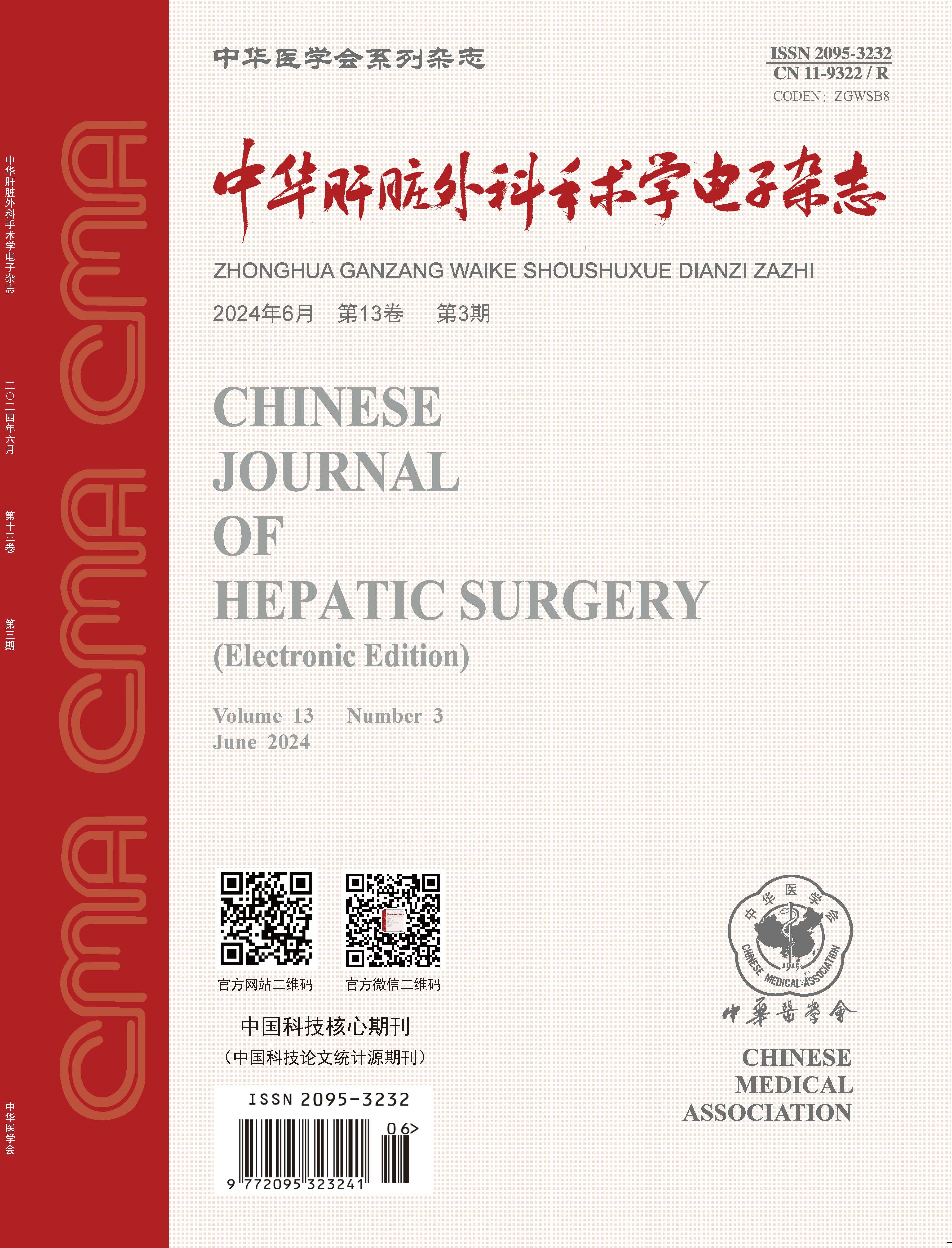
Chinese Journal of Hepatic Surgery(Electronic Edition)

2002 (v1, n1) to Present ISSN: 1671-8925

Articles

About

Year of publication

Save Email

Sort by

Best match
Relevance
PubYear
JournalTitle

DISPLAY OPTIONS

Format:

Per page:

Save citations to file

Selection:

Format:

Create file Cancel

Email citations

To:

Please check your email address first!

Selection:

Format:

Send email Cancel

479

results

page

of 48

1

Cite

Cite

Copy

Share

Share

Copy

Association between tumor size and prognosis of patients with hepatocellular carcinoma after hepatectomy

Yanyan ZHOU ; Xinsen XU ; Zhixin WANG ; Runchen MIAO ; Wei CHEN ; Yong WAN ; Yi LYU ; Chang LIU

Chinese Journal of Hepatic Surgery(Electronic Edition).2015;(4):227-231. doi:10.3877/cma.j.issn.2095-3232.2015.04.009

ObjectiveTo investigate the association between tumor size and prognosis of patients with hepatocellular carcinoma (HCC) after hepatectomy.MethodsClinical data of 172 patients undergoing radical hepatectomy and diagnosed as HCC by pathological examination in the First Afifliated Hospital of Xi'an Jiaotong University between December 2002 and December 2011 were retrospectively studied. The informed consents of all patients were obtained and the local ethical committee approval had been received. Among the 172 patients, 139 were males and 33 were females; 98 were with age≤55 years old and 74 were with age >55 years old. The receiver operating characteristic (ROC) curve of the relationship between postoperative survival time and tumor size was drawn, and the cut-off value for tumor size was determined at 5.75 cm. According to the best cut-off value, the patients were divided into the small HCC group (tumor size < 5.75 cm,n=85) and huge HCC group (tumor size≥5.75 cm,n=87). The relationship between tumor size and clinicopathologic parameters was analyzed, and the median survival time, cumulative survival rate and disease free survival rate of two groups were compared. The clinicopathologic parameters were included as the factors inlfuencing the survival and prognosis of patients, and independent risk factor analysis was performed. The relationship between tumor size and clinicopathologic parameters was analyzed using Chi-square test. Kaplan-Meier method and Log-rank test were used for survival and prognosis analysis. Cox proportional hazard model was used for univariate analysis and multivariate analysis.ResultsTumor size was associated with the preoperative AFP, number of tumors and TNM staging (χ2=13.272, 9.378, 7.311;P<0.05). The median survival time and the median recurrence time for the huge HCC group were 24 months and 9 months respectively and were 39 months and 37 months for the small HCC group. The 1-, 3-, 5-year cumulative survival rate for the huge HCC group were 65.5%, 36.0%, 22.9% respectively and were 89.5%, 76.3%, 72.5% respectively for the small HCC group. The overall survival of the huge HCC group was lower than that of small HCC group (χ2=33.644,P<0.05). The 1-, 3-, 5-year disease free survival rate for the huge HCC group were 44.7%, 25.5%, 21.9% respectively and were 84.8%, 67.8%, 66.3% respectively for the small HCC group. The disease free survival rate of huge HCC group was lower than that of small HCC group (χ2=38.908,P<0.05). Preoperative platelets count (Plt)≥155×109/L, tumor size > 5.75 cm and advanced stage of TNM were the independent risk factors inlfuencing the postoperative prognosis of HCC patients (HR=1.588, 3.066, 2.029;P<0.05).ConclusionsTumor size is the independent risk factor inlfuencing the prognosis of HCC patients after hepatectomy. The prognosis of patients with tumor size > 5.75 cm is poor.

2

Cite

Cite

Copy

Share

Share

Copy

Effect of splenectomy on cellular immune function of patients with hepatitis C virus related cirrhotic portal hypertensionJ

Fanpu I ; Na HUANG ; Shu ZHANG ; Zhifang CAI ; An JIANG ; Rui ZHOU ; Baohua LI ; Song REN ; Zongfang LI

Chinese Journal of Hepatic Surgery(Electronic Edition).2015;(4):232-236. doi:10.3877/cma.j.issn.2095-3232.2015.04.010

ObjectiveTo investigate the effect of splenectomy on cellular immune function of patients with hepatitis C virus (HCV) related cirrhotic portal hypertension.MethodsTwelve patients with HCV-related cirrhotic portal hypertension undergoing splenectomy + pericardial devascularization in the Second Affiliated Hospital of Xi'an Jiaotong University between December 2011 and December 2013 were enrolled in this prospective study. Among the 12 patients, 4 were males and 8 were females withthe average age of (55±8) years old. Moreover, 12 healthy people were enrolled in the control group. The informed consents of all patients were obtained and the local ethical committee approval had been received. Percentage of natural killer (NK) cell, natural killer T (NKT) cell, CD4+ cell, CD8+T cell and CD4+/CD8+ ratio in peripheral blood before and 2, 6 weeks after splenectomy were observed. The comparison on different lymphocyte subsets was conducted using Wilcoxon rank-sum test.ResultsThe percentage of CD3-CD56+CD16+ NK cell 6 weeks after splenectomy was 7.7%, which was signiifcantly higher than 6.2% before splenectomy (T=1.992,P<0.05). And the percentage of CD56dim NK cell 2 and 6 weeks after splenectomy was respectively 94.9% and 96.4%, which was signiifcantly higher than 87.9%before splenectomy (T=2.747, 2.201;P<0.05). The percentage of CD56bright NK cell 2 and 6 weeks after splenectomy was respectively 3.8% and 2.4%, which was signiifcantly lower than 9.2% before splenectomy (T=2.747, 2.201;P<0.05). The percentage of CD3+CD56+ NKT cell 2 and 6 weeks after splenectomy was respectively 7.3% and 7.0%, which was significantly higher than 6.5% before splenectomy (T=2.275, 1.572;P<0.05). Percentage of CD4+ T cell 2 weeks after splenectomy was 41.7%, which was signiifcantly lower than 45.7% before splenectomy (T=3.059,P<0.05), and further decreased to 26.7% 6 weeks after splenectomy (T=2.201,P<0.05), while percentage of CD8+ T cell increased from 21.1% before splenectomy to 24.8% 2 weeks after splenectomy (T=2.432,P<0.05), and further increased to 35.3% 6 weeks after splenectomy (T=1.992,P<0.05). The CD4+/CD8+ ratio before splenectomy was 2.0 and decreased to 1.4 and 0.8 respectively 2 and 6 weeks after splenectomy (T=2.981, 1.992;P<0.05).ConclusionThe cellular immune function of patients with HCV related cirrhotic portal hypertension after splenectomy improves signiifcantly.

3

Cite

Cite

Copy

Share

Share

Copy

Application value of ultrasonography in biliary complications after liver transplantation

Yongjiang MAO ; Jie ZENG ; Rongqin ZHENG ; Jie REN ; Mei LIAO

Chinese Journal of Hepatic Surgery(Electronic Edition).2015;(4):237-241. doi:10.3877/cma.j.issn.2095-3232.2015.04.011

ObjectiveTo investigate the application value of ultrasonography in biliary complications after liver transplantation.MethodsClinical data of 52 patients who developed biliary complications after liver transplantation and treated in the Third Afifliated Hospital of Sun Yat-sen University between October 2003 and January 2010 were retrospectively studied. The informed consents of all patients were obtained and the local ethical committee approval had been received. Among the 52 patients, 49 were males and 3 were females with the average age of (48±18) years old. Liver grafts were thoroughly examined with color Doppler ultrasound (CDUS). The observation indexes included dilationof bile duct, thickening of bile duct wall, echo enhancement of bile duct wall, narrowing of hilar biliary duct lumen, intraductal echo and acoustic shadow as well as intrahepatic and extrahepatic local dark areas.ResultsThe major ultrasonographic manifestations of biliary complications after liver transplantation were 96% (50/52) dilation of bile duct, 75% (39/52) echo enhancement of bile duct wall,62% (32/52) thickening of bile duct wall, 54%(28/52) narrowing of biliary duct lumen and 37% (19/52) formation of intrahepatic biliary sludge and biliary calculus. The direct ultrasonographic sign of biliary stricture was the narrowing of biliary duct lumen and the indirect signs included dilation of bile duct, thickening of bile duct wall and echo enhancement of bile duct wall. Formation of intrahepatic biliary sludge and biliary calculus manifested a local or diffuse acoustic shadow behind the medium or high echo mass. Bile leakage manifested a local dark space in portal hepatis or subhepatic space. Biloma manifested a dispersed intrahepatic patchy high-echo area or low-echo dark area.ConclusionsBiliary complications after liver transplantation have typical ultrasonographic signs. Ultrasonography may provide diagnostic evidence for biliary complications after liver transplantation.

4

Cite

Cite

Copy

Share

Share

Copy

Experimental study on siRNA silencing human cervical cancer oncogene 2 inhibits proliferation of cholangiocarcinoma cells

Jing WANG ; Jie BAO ; Peng GUO ; Di YAO ; Hao HUANG ; Ke HE

Chinese Journal of Hepatic Surgery(Electronic Edition).2015;(4):242-245. doi:10.3877/cma.j.issn.2095-3232.2015.04.012

ObjectiveTo investigate the influence of human cervical cancer gene 2 (HCCR-2) expression inhibited by siRNA on the proliferation of cholangiocarcinoma cells.MethodsPcmv6-AC-GFP/HCCR-2-siRNA lentiviral vector and Pcmv6-AC-GFP control vector were used to infect RBE human cholangiocarcinoma cells to establish the siRNA group and the control group. HCCR-2 protein expression was detected by Western blot.In vitro proliferation of cholangiocarcinoma cells was detected by MTT method andIn vivoproliferation of cholangiocarcinoma cells was detected by mice subcutaneous implanted tumor model. The experimental data of two groups were compared usingt test.ResultsThe average relative expression of HCCR-2 protein in RBE human cholangiocarcinoma cells of the siRNA group and the controlgroup was respectively 0.21±0.03 and 0.70±0.02. Compared with the control group, the relative expression of HCCR-2 protein of the siRNA group was signiifcantly reduced (t=-8.06,P<0.05). After 24 h and 48 h infection, the absorbance (A) measured in human cholangiocarcinoma cells of the siRNA group was respectively 0.05±0.01 and 0.16±0.01, which were signiifcantly lower than 0.11±0.02 and 0.39±0.06 of the control group (t=-8.80,-11.31;P<0.05). By the 30th day of subcutaneous implanted tumor grew, the tumor volume of the mice in the siRNA group was (106±28) mm3, which was signiifcantly smaller than (516±24) mm3 of the mice in the control group (t=-29.80,P<0.05).ConclusionExpression of HCCR-2 silenced by siRNA may inhibit the proliferation of cholangiocarcinoma cells.

5

Cite

Cite

Copy

Share

Share

Copy

Inhibition of ENAH gene silenced by siRNA on growth of liver cancer cell

Qunai HUANG ; Kunpeng HU ; Bo LIU ; Zhicheng YAO ; Zhiyong XIONG

Chinese Journal of Hepatic Surgery(Electronic Edition).2015;(4):246-249. doi:10.3877/cma.j.issn.2095-3232.2015.04.013

ObjectiveTo investigate the inhibition of ENAH gene silenced by siRNA on the growth of liver cancer cell.MethodsENAH-siRNA and control-siRNA were transfected to human liver cancer cell HCCLM3 using liposome Lipofectamine 2000 and ENAH-siRNA group and control-siRNA group were established. The expression of ENAH protein was detected by Western blot. Tumorigenic ability of the liver cancer cell was observed through nude mice tumorigenicity assay. Tumor volume was recorded, growth curve was drawn and survival analysis was conducted. The experimental data of two groups were compared usingt test, and the survival analysis was conducted using Kaplan-Meier method and Log-rank test.ResultsThe expression of ENAH protein in ENAH-siRNA group was significantly less than that in control-siRNA group. The formation time of solid tumor after inoculation in nude mice in ENAH-siRNA group was (24±3) d, which was significantly longer than (8±2) d in control-siRNA group (t=12.55,P<0.05). The median survival time of the nude micewas 64 (48~81) d in ENAH-siRNA group and was 34 (21~48) d in control-siRNA group. There was significant difference in the overall survival rate between two groups (χ2=14.33,P<0.05).Conclusion ENAH gene silenced by siRNA may obviously weaken the tumorigenic ability of liver cancer cell and inhibit the growth of tumor.

6

Cite

Cite

Copy

Share

Share

Copy

Expression of c-Jun in hepatocellular carcinoma and its significance

Yuewu YANG ; Zhiqiang YE ; Qinglei KONG ; Gangjian LUO

Chinese Journal of Hepatic Surgery(Electronic Edition).2015;(4):250-253. doi:10.3877/cma.j.issn.2095-3232.2015.04.014

ObjectiveTo investigate the expression of c-Jun in hepatocellular carcinoma (HCC) and its correlation with prognosis.MethodsClinical data of 137 patients with HCC undergoing hepatectomy in the Third Affiliated Hospital of Sun Yat-sen University between Janunary 2010 and December 2013 were retrospectively studied. Among the 137 patients, 112 were males and 25 were females with the age ranging from 26 to 73 years old and the median of 45 years old. The informed consents of all patients were obtained and the local ethical committee approval had been received. The expression of c-Jun in HCC tissues was detected by immunohistochemistry. The patients were divided into the high-expression group (n=75) and low-expression group (n=62) according to the scores of immunohistochemical staining. The clinicopathological parameters and the correlation between c-Jun expression and prognosis of the two groups were analyzed. Comparison on clinicopathological parameters was conducted using Chi-square test and survival analysis was conducted using Kaplan-Meier and Log-rank test.ResultsThe expression of c-Jun in HCC was correlated with HBsAg, alpha-fetoprotein (AFP), tumor size, tumor capsule and tumor vascular invasion (χ2=5.27, 32.68, 4.86, 1.04, 4.62;P<0.05). The 3-, 5-year cumulative survival rate of the high-expression group was respectively 64.14% and 41.20% and those of the low-expression group was respectively 72.04% and 61.21%. The overall survival of the high-expression group was signiifcantly lower than that of the low-expression group (χ2=5.19,P<0.05).Conclusionc-Jun may play an important role in the occurrence and development of HCC and high expression of c-Jun indicates poor prognosis.

7

Cite

Cite

Copy

Share

Share

Copy

Mechanism of ischemia-reperfusion injury-induced gastric oxidative damage during perioperative period of liver transplantation

Hanbin XIE ; Mian GE ; Xinjin CHI ; Gangjian LUO ; Ziqing HEI ; Huiqiong LU

Chinese Journal of Hepatic Surgery(Electronic Edition).2015;(4):254-258. doi:10.3877/cma.j.issn.2095-3232.2015.04.015

ObjectiveTo investigate the occurrence rule and mechanism of ischemia-reperfusion injury (IRI)-induced gastric oxidative damage during perioperative period of liver transplantation.Methods Twenty-eight SD rats were randomized into 4 groups according to the random number table. The modelof orthotopic autologous liver transplantation was established in 3 groups, which were 4 h, 8 h, 16 h group according to the reperfusion time of the liver grafts. The other group was set as Sham group. Gastric tissues were stained with HE to observe pathological changes of gastric mucosal injury. Superoxide anion (O2-), malondialdehyde (MDA), glutathione (GSH) and glutathione peroxidase (GSH-PX) in gastric tissues were detected. The expression of thioredoxin (Trx)-2 in gastric tissues was detected by Western blot. The comparison on experimental data was conducted using one-way analysis of variance and LSD-t test.Results In 4 h group, congestion, edema and hemorrhage were observed in deep stratum and submucous stratum of stomach, as well as disorganized glands, regional hemorrhage and necrosis, and erosion was observed deep to the muscularis mucosa. In 8 h group and 16 h group, gastric mucosal injury was alleviated, and only congestion and edema in superifcial and deep layer were observed. In Sham group, the epithelium structure of most gastric mucosa was intact. The O2- and MDA of 4 h group were respectively (185±26) U/mg and (0.4±0.1) nmol/mg and those of 8 h group were respectively (192±59) U/mg and (0.5±0.1) nmol/mg, which were signiifcantly higher than (102±34) U/mg and (0.2±0.1) nmol/mg of Sham group (LSD-t=4.99, 4.23 and 6.37, 4.52;P<0.05). GSH and GSH-PX of 4 h group were respectively (17±6) mg/g and (781±174) U/mg and those of 8 h group were respectively (15±4) mg/g and (750±160) U/mg, which were signiifcantly lower than (30±6) mg/g and (1 162±215) U/mg of Sham group (LSD-t=-3.26,-4.01 and-3.78,-4.36;P<0.05). The O2-, MDA, GSH and GSH-PX of 16 h group were respectively (169±27) U/mg, (0.3±0.1) nmol/mg, (25±8) mg/g and (1 108±183) U/mg, and signiifcant difference was observed comparing with 8 h group (LSD-t=-2.85,-3.46, 2.66, 3.69;P<0.05). The relative expression of Trx-2 in 4 h group and 8 h group were respectively 52±10 and 43±8, which were signiifcantly lower than 125±16 of Sham group (LSD-t=-5.34,-6.23;P<0.05). The expression of Trx-2 in 16 h group was 160±18, which was signiifcantly higher than that of 8 h group (LSD-t=4.75,P<0.05). ConclusionIRI causes gastric oxidative damage in the early phase after liver transplantation in rats, which may be associated with the decrease of Trx-2 expression, increase of active oxygen and decrease in organic antioxidative ability.

8

Cite

Cite

Copy

Share

Share

Copy

Construction and clinical application of three-dimensional visualization platform in diagnosis and treatment of primary liver cancer

Wen ZHU ; Chihua FANG ; Yingfang FAN ; Jian YANG ; Nan XIANG ; Ning ZENG ; Zhaoshan FANG ; Qingshan CHEN

Chinese Journal of Hepatic Surgery(Electronic Edition).2015;(5):268-273. doi:10.3877/cma.j.issn.2095-3232.2015.05.004

ObjectiveTo investigate the construction and clinical application of three-dimensional visualization platform in diagnosis and treatment of primary liver cancer.MethodsFifty-six patients with liver cancer diagnosed and treated in Zhujiang Hospital of Southern Medical University between January 2012 and December 2014 were enrolled in this prospective study. The informed consents of all patients were obtained and the local ethical committee approval had been received. Among the 56 patients, 49 were males and 7 were females with the average age of (47±7) years old. The 256-slice spiral CT scan was performed on the patients to collect plain scan data and thin-layer CT data of arterial phase, portal venous phase and hepatic venous phase. The data were imported into the Medical Image Three-dimensional Visualization System (MI-3DVS) to perform image segmentation and three-dimensional visualization analysis of the liver, tumor tissues, portal venous system, hepatic venous system, hepatic arterial system and organs around the liver. The individualized liver segmentation, classification of the vascular and middle lobe tumor was performed and individualized volume was calculated. The surgical planning was formulated through simulating multiple surgery and the rational surgical procedure was selected. For patients undergoing complex hepatectomy, three-dimensional liver model was printed.ResultsThe construction of three-dimensional visualization model of all 56 patients was completed, which could clearly display the anatomical morphology of each vascular system, the location and size of tumor, and perform individual liver segmentation as well as vascular, middle lobe tumor classification. According to individualized volume calculation, the median total liver volume was 1 215 (1 025-1 856) ml, the liver tumor volume was 368 (25-653) ml and the virtual removal liver volume was 478 (125-854) ml. All the 56 patients received radical resection of tumor. The actual operation was in accordant with the preoperative surgical plan. The 3D printing model of 11 patients undergoing complex hepatectomy was exactly the same with that observed during the operation. The operations of all patients were completed successfully and no death was observed during the perioperative period. Six patients developed pleural effusion and one developed bile leakage on the liver cutting surface after operation. These patients were cured after symptomatic treatments.Conclusion Three-dimensional visualization platform for diagnosis and treatment of primary liver cancer can realize the precise preoperative diagnosis and intraoperative manipulation, thus enhances the success rate of surgery.

9

Cite

Cite

Copy

Share

Share

Copy

Application of 3D visualization technology in precise hepatectomy for complex liver tumors in infants

Lin SU ; Qian DONG ; Hong ZHANG ; Wenjian XU ; Xianjun ZHOU ; Yongjian CHEN ; Xiwei HAO ; Yusheng LIU ; Xiaofei LI

Chinese Journal of Hepatic Surgery(Electronic Edition).2015;(5):274-278. doi:10.3877/cma.j.issn.2095-3232.2015.05.005

ObjectiveTo investigate the application value of 3D visualization technology in precise hepatectomy for complex liver tumors in infants.MethodsClinical data of 16 infants undergoing precise hepatectomy for complex liver tumors with 3D visualization technology in the Afifliated Hospital of Qingdao University between June 2012 and January 2015 were retrospectively studied. Among the 16 infants, 10 were boys and 6 were girls with the age ranging from 22 d to 3 years old and the median of 1 year and 2 months old. Twelve patients were with giant tumors involving the corresponding porta hepatis and four patients were with primary tumor at porta hepatis. The informed consents of all infants were obtained from their parents and the local ethical committee approval had been received. The infants were examined by 64-slice spiral CT. The scanning data were imported into the computer-aided surgery system (Higemi) to perform 3D reconstruction and to compute remnant liver volume and remnant-standard liver volume ratio (RSLVR). The preoperative plan of precise hepatectomy was formulated according to the 3D reconstruction images.ResultsAfter Higemi 3D reconstruction, the intrahepatic vasculature, including the distribution, branching and spatial conformation of portal vein, hepatic artery and hepatic veins were clearly displayed. The anatomic spatial relationships between the lesions and the surrounding vascular structures could be observed at any angle, and lesions could be located and assessed accurately. The preoperative 3D reconstruction results were in accordance with the intraoperative ifndings. Sixteen infants underwent hepatectomy successfully according to the preoperative plan. The median RSLVR was 44.7% (21.1%-78.4%), the duration of operation was 145 (90-230) min, the intraoperative blood loss was 60 (3-100) ml and the rate of blood transfusion was 38% (6/16). One infant with giant tumor in the right liver lobe developed disseminated intravascular coagulation and died although active treatment. The other 15 infants had no complication and were discharged successfully.ConclusionFor complex liver tumors of infants, 3D visualization technology can assess the tumors accurately before surgery and help to make the optimum surgical plan, which makes hepatectomy for complex liver tumors of infants more precise, safe and effective.

10

Cite

Cite

Copy

Share

Share

Copy

Application of digital three-dimensional reconstruction in liver transplantation for hepatic alveolar echinocoecosis

Yibiao HE ; Lei BAI ; Aji TUERGANAILI ; Xuewen JI ; Yi JIANG ; Jinming ZHAO ; Jinhui ZHANG ; Wenya LIU ; Yingmei SHAO ; Hao WEN

Chinese Journal of Hepatic Surgery(Electronic Edition).2015;(5):279-283. doi:10.3877/cma.j.issn.2095-3232.2015.05.006

ObjectiveTo investigate the application value of digital three-dimensional reconstruction in liver transplantation for hepatic alveolar echinocoecosis (HAE).MethodsClinical data of 21 patients with end-stage HAE undergoing liver transplantation (LT) and 6 living donors in the First Affiliated Hospital of Xinjiang Medical University between April 2012 and December 2014 were retrospectively studied. Among the 21 patients, 13 were males and 8 were females with the average age of (43±13) years old. Among the 6 donors, 4 were males and 2 were females with the average age of (40±9) years old. Fifteen cases underwent extracorporeal hepatectomy and autotransplantation and 6 cases underwent living donor LT. The informed consents of all patients and 6 living donors were obtained and the local ethical committee approval had been received. All patients and donors received computer tomography (CT) plain scan, 3-phase (arterial phase, portal venous phase and delayed phase) enhancement scan and computed tomography angiography (CTA). The total liver volume and the liver graft volume were measured according to the two-dimensional liver image. The digital three-dimensional liver reconstruction software was used to perform three-dimensional model reconstruction. The total liver volume and the liver graft volume were measured a second time. The liver section was designed and the individualized virtual surgery was performed. The actual total liver volume and the liver graft volume were measured during LT to assess the error rate of liver volume predicted before operation. The comparison of liver volume data was conducted usingt test and the comparison of the error rate of liver graft volume was conducted using Chi-square test.Results The intrahepatic anatomical relationship was clearly displayed by the three-dimensional model, which was in accordance with that observed during operation. The liver graft volume of 15 patients undergoing extracorporeal hepatectomy and autotransplantation and 6 patients undergoing living donor LT calculated by the digital three-dimensional reconstruction technology was (766±197) ml, which was signiifcantly smaller than (833±243) ml calculated by the two-dimensional measurement (t=-3.674,P<0.05). Compared with the actual liver graft volume of (955±194) ml measured during operation, the average error rate of the liver graft volume calculated by the three-dimensional reconstruction technology was (6±1) %, which was signiifcantly smaller than (13±2) % of that calculated by two-dimensional measurement (t=-14.346,P<0.05). The liver graft volume measured by the three-dimensional measurement was positively correlated with the actual liver graft volume measured during operation (r=0.967,P<0.05). All the operations were completed successfully. One patient died of acute renal failure 12 d after LT. No case was observed developing liver failure or hemorrhage or other severe complications. The growth of the liver graft was good and the anastomotic stoma of intrahepatic vessels was clear by CT reexamination and three-dimensional reconstruction after operation. ConclusionThe application of three-dimensional reconstruction technology in preoperative assessment and operation planning of LT for end-stage HAE can improve the precision and success rate and achieve good curative effect.

Country

China

Publisher

ElectronicLinks

http://zhgzwkssxdzzz.cma-cmc.com.cn

Editor-in-chief

Chen Guihua

E-mail

chinaliver@126.com

Abbreviation

Chin J Hepat Surg(Electronic Edition)

Vernacular Journal Title

中华肝脏外科手术学电子杂志

ISSN

2095-3232

EISSN

Year Approved

2024

Current Indexing Status

Currently Indexed

Start Year

2012

Description

Chinese Journal of Hepatic Surgery (Electronic Edition) is an international academic journal approved by General Administration of Press and Publication with the responsible institution of Ministry of Health People’s Republic of China, the sponsor of Chinese Medical Association, the organizer of the Third Affiliated Hospital of Sun Yat-sen University, and the publisher of Chinese Medical Multimedia Press Co., Ltd. The journal was established on August 2012 and published on line. It covers the development of clinical and experimental research in the field of hepatic surgery. The contents of this journal include editorial, expert opinion, clinical research, basic research, review, case report, surgery video, et.al. The editorial board of Chinese Journal of Hepatic Surgery (Electronic Edition) is composed of over 100 distinguished experts in the field of hepatobiliary surgery in China including Joseph Lau (Academician of Chinese Academy of Science), Jieshou LI (Academician of Chinese Academy of Engineering), Yupei ZHAO (Academician of Chinese Academy of Science and Honor Academician of the Royal College of surgeons), Shusen ZHENG (Academician of Chinese Academy of Engineering), and Kefeng DOU(Academician of Chinese Academy of Science), Jiahong DONG, Jia FAN, Xiaoping CHEN, et al, which ensure the high quality of articles and academic level of the journal. The chief editor of this journal is Professor Guihua CHEN, who is the dean emeritus of the Third Affiliated Hospital of Sun Yat-sen University and notable for research in hepatic surgery. He hosted and participated in over 50 projects, such as Natural Science Foundation of China, 973 Project, 863 Project, National Major Science and Technology Project during the 11th, 12th Five Year Plan, et al. The organizer of this journal, the Third Affiliated Hospital of Sun Yat-sen University is a 3A Grade general hospital in China. Its general surgery department has developed for years to be specialized in liver transplantation, comprehensive treatments of hepatocellular carcinoma, laparoscopic surgery for hepatobiliary and gastrointestinal diseases and so on. It is the largest liver transplant center in South China and the national key clinical discipline (General surgery) of the Ministry of Education. The articles published in this journal are mostly come from doctors of 3A Grade hospitals nationwide and most are sponsored by national or provincial research funds. All the articles are edited according to the International Organization for Standardization. The journal has the copyright information, contents page and abstracts in English and has been included in the major databases of China (CNKI, WANFANG DATA, Chongqing VIP).

Related Sites

WHO WPRO GIM

Help Accessibility
DCMS Web Policy
CJSS Privacy Policy

Powered by IMICAMS( 备案号: 11010502037788, 京ICP备10218182号-8)

Successfully copied to clipboard.