Main content 1 Menu 2 Search 3 Footer 4
+A
A
-A
High contrast
HOME JOURNAL CRITERIA NETWORK HELP ABOUT

Current criteria:

Regional:

WPRlM journal selection criteria(2023)

Minimum standards for the suspension and removal of WPRIM approved journals

Countries journal selection criteria:

Philippines

Submit your journal information>

Contact NJSCs>

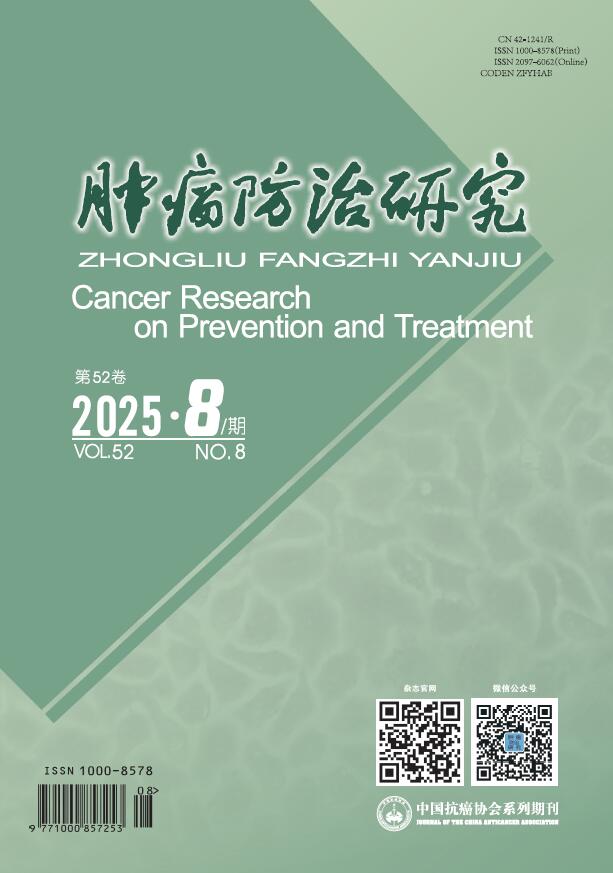
Cancer Research on Prevention and Treatment

2002 (v1, n1) to Present ISSN: 1671-8925

Articles

About

Year of publication

Save Email

Sort by

Best match
Relevance
PubYear
JournalTitle

DISPLAY OPTIONS

Format:

Per page:

Save citations to file

Selection:

Format:

Create file Cancel

Email citations

To:

Please check your email address first!

Selection:

Format:

Send email Cancel

860

results

page

of 86

1

Cite

Cite

Copy

Share

Share

Copy

New Insight on Tumor Microenvironment Remodelling and Augmented Therapeutic Efficacy of Immunotherapy by Radiotherapy

Qiang ZHANG ; Shaoya WU ; Jing ZHANG

Cancer Research on Prevention and Treatment.2021;48(1):1-6. doi:10.3971/j.issn.1000-8578.2021.20.0836

Immune checkpoint inhibitors (ICIs)-based tumor immunotherapy has changed the traditional cancer treatment. However, ICI treatment benefits small percentage of patients in most types of cancer (10%-30%), and is basically ineffective in some cancers (such as pancreatic cancer and glioma). Combining ICIs with existing and potential therapies to overcome tumor innate and acquired resistance is of great significance for improving the treatment efficacy, increasing the durability of the therapeutic effect and prolonging patients' survival. Radiotherapy can not only kill tumor cells, but also cause the release of pro-inflammatory molecules and immune cell infiltration in tumors. In addition, radiotherapy can induce micronuclei in tumor cells, thereby activating cytosolic DNA/RNA sensors, the most important of which is the cyclic GMP-AMP synthase (cGAS)-STING pathway. Radiotherapy can also regulate immune surveillance through the expression of tumor neoantigens. In this review, we will discuss in depth the immunomodulatory effect of radiotherapy on the tumor microenvironment and its combination with ICI as a potential cancer treatment, and focus on the effects of radiotherapy on non-tumor cells in the tumor microenvironment, including dendritic cells, T cell infiltration, as well as myeloid-derived suppressor cells.

2

Cite

Cite

Copy

Share

Share

Copy

Research Progress on Antitumor Mechanism of Apatinib

Lingying ZHAO ; Wenqing ZHANG ; Cunxi LI ; Tianhui HU

Cancer Research on Prevention and Treatment.2021;48(1):7-11. doi:10.3971/j.issn.1000-8578.2021.20.0302

In recent years, antiangiogenic drugs based on VEGF and VEGFRs signaling pathway have been widely used in the treatment of malignant tumors. Apatinib is an orally bioavailable small-molecule antiangiogenic agent and can specifically inhibit the tyrosine kinase activity of VEGFR, thereby inhibiting tumor angiogenesis. Apatinib is the first-level recommendation of third-line treatment of gastric cancer in CSCO Guidelines for the Diagnosis and Treatment of Gastric Cancer published in 2018. Apatinib has been proved to be effective and safe in gastric, lung and breast cancers. In addition, the drug shows great potential in the treatment of a variety of solid tumors. This article reviews the recent progress on the mechanism, clinical efficacy, related efficacy predictors of apatinib and its combination with other antitumor drugs.

3

Cite

Cite

Copy

Share

Share

Copy

MiR-128-3p Regulates Proliferation, Migration and Apoptosis of Glioblastoma Multiforme by Targeting HOXA5

Jipeng YANG ; Xiang QIU ; Chen LI ; Jiankai YANG ; Hongjiang LIU ; Baohua JIAO

Cancer Research on Prevention and Treatment.2021;48(1):12-18. doi:10.3971/j.issn.1000-8578.2021.20.0595

Objective To investigate the reasons of HOXA5 overexpression in GBM and the molecular mechanism of miR-128-3p regulating the proliferation, invasion and apoptosis of glioblastoma multiforme. Methods After increasing and decreasing miR-128-3p expression in U87 cell lines by lentivirus transfection, the changes of HOXA5 expression were detected by Western blot, to explore the correlation between miR-128-3p and HOXA5 in GBM. The dual-luciferase reporter tests were performed to detect the target interaction of miR-128-3p with HOXA5. Through CCK-8 test, Transwell test, flow cytometric assay and tumor cell xenograft in nude mice, we verified molecular mechanism of miR-128-3p regulating the proliferation, invasion and apoptosis of GBM in vitro and in vivo. Results The expression level of HOXA5 was decreased in U87 cell line after miR-128-3p upregulation. In addition, the expression level of HOXA5 was increased in U87 cell line after miR-128-3p downregulation (P < 0.05). The expression level of HOXA5 was correlated negatively with the expression of miR-128-3p in U87 cell lines. MiR-128-3p targetedly interacted with 3'UTR of HOXA5 and inhibited the expression of HOXA5. The proliferation, invasion and anti-apoptosis of U87 cells were significantly decreased in the miR-128-3p+control group. Conclusion MiR-128-3p regulates negatively the proliferation, invasion and anti-apoptosis of GBM cells by targeting HOXA5. The overexpression of HOXA5 is induced by downregulation of miR-128-3p in GBM.

4

Cite

Cite

Copy

Share

Share

Copy

Synergistic Antitumor Activity and Mechanism of Lapatinib and Paclitaxel in Esophageal Cancer Cells

Tao CHEN ; Xiongwei LI ; Xiaodong SUN

Cancer Research on Prevention and Treatment.2021;48(1):19-23. doi:10.3971/j.issn.1000-8578.2021.20.0579

Objective To investigate the anti-tumor activity and mechanism of lapatinib, paclitaxel and their combination on esophageal cancer cells EC109. Methods MTT assay was used to detect the effects of lapatinib (1, 2, 4, 8 μmol/L), paclitaxel (5, 10, 20, 40 μg/L) and their combination on the proliferation of esophageal cancer cells EC109. We tested the effects of 2 μmol/L lapatinib, 10 μg/L paclitaxel and their combination on the invasion, cell cycle, apoptosis and EGFR, HER2 and downstream signaling pathways of EC109 cells. Results Lapatinib combined with paclitaxel synergistically inhibited the proliferation of EC109 cells, and the combined action index was greater than 1.15. The number of invaded cells in the combination group (62.0±9.5) was significantly less than those in the lapatinib group (152.4±16.1) and the paclitaxel group (103.6±12.7) (P < 0.05). G2/M cells in the combination group ((43.4±3.1)%) was higher than those in lapatinib group ((20.3±2.5)%) and paclitaxel group ((26.6±2.8)%) (P < 0.05). The apoptosis rate of the combination group was (47.3±8.4)%, higher than those of lapatinib ((12.7±2.3)%) and paclitaxel group ((21.4±5.2)%) (P < 0.05). Lapatinib combined with paclitaxel could synergistically inhibit the expression of phosphorylated EGFR, HER2 and AKT proteins. Conclusion Lapatinib combined with paclitaxel exert synergistic antitumor activity by synergistically inhibiting the proliferation and invasion of esophageal cancer cell line EC109, arresting cell cycle, inducing apoptosis and inhibiting the transduction of EGFR/HER downstream signaling pathway.

5

Cite

Cite

Copy

Share

Share

Copy

Specificity and Targeting of Optical Molecular Probe FITC-CSPLNTRFC on Breast Cancer Cells Bcap-37

Chao GUO ; Qi ZUO ; Xiaofeng YANG ; Fan ZHANG

Cancer Research on Prevention and Treatment.2021;48(1):24-30. doi:10.3971/j.issn.1000-8578.2021.20.0590

Objective To investigate the specificity and targeting abilities of FITC-CSPLNTRFC peptide FITC-BCSP1 optical molecular probe on breast cancer cells Bcap-37. Methods Probe FITC-BCSP1 and negative control probe FITC-svBCSP1 were prepared by solid phase synthesis. MTT assay was used to determine the toxicity of the two probes on breast cancer cells Bcap-37. The specificity of the binding of FITC-BCSP1 probe to Bcap-37 cells was identified by flow cytometry and fluorescent inversed microscopy. The specificity and targeting abilities of FITC-BCSP1 probe for transplantation tumor in Bcap-37 cells tumor-bearing nude mice model were tested by optical molecular imager. Results The purity of the synthesized probe was more than 98%, identified by mass spectrometry and high performance liquid chromatography. FITC-BCSP1 and FITC-svBCSP1 probes had no effect on proliferation and activity of Bcap-37 cells at the concentrations of 50-300 mol/L (IR%≤30%). FCM results showed that the percentage of FITC-BCSP1-labeled cells in Bcap-37 cells was significantly higher than that in other cells (all P < 0.001), and the percentage of FITC-BCSP1-labeled Bcap-37 cells was significantly higher than that of the control group (P < 0.001). It was observed under inverted fluorescence microscope that there were a large number of fluorescent cells in FITC-BCSP1-labeled Bcap-37 cells, with a positive rate of 100%, while the positive rate of FITC-svBCSP1 group was only 1%. In vivo assay with Bcap-37 cells tumor-bearing nude mice model showed that FITC-BCSP1 probe could be specifically enriched in the transplantation tumor tissue. Conclusion The optical molecular probe FITC-BCSP1 has good specificity and targeting abilities on breast cancer cells and can be used in the early diagnosis of breast cancer.

6

Cite

Cite

Copy

Share

Share

Copy

Prognostic Analysis and Risk Prediction Model Establishment of Extremity Osteosarcoma Based on Vasculogenic Mimicry-related Molecule MIG-7

Ke REN ; Nan YAO ; Sujia WU ; Xin SHI ; Chao LI ; Jun LU

Cancer Research on Prevention and Treatment.2021;48(1):31-37. doi:10.3971/j.issn.1000-8578.2021.20.0521

Objective To investigate the relation between vasculogenic mimicry (VM) and MIG-7 in osteosarcoma, as well as their roles in the prognosis, and to establish a model for predicting the prognosis of osteosarcoma. Methods VM was identified by CD31/PAS double-staining in 156 cases of AJCC stage Ⅱ extremity osteosarcoma. Tumor samples were also immunohistochemically stained for MIG-7 to determine whether it was associated with the occurrence of VM. Univariate and multivariate Cox regression analyses were used to identify prognostic factors and a prognostic nomogram for predicting 3- and 5-year OS and MFS was constructed. C-index and calibration curves were used to verify the predictive accuracy of the model. Results The MIG-7 expression in osteosarcoma tissues was associated with VM formation, but MIG-7 expression was not associated with gender, age, AJCCⅡA/ⅡB stage, tumor location, surgical type or histological response to pre-operative chemotherapy. Survival analysis showed that MIG-7 expression, VM and pre-operative chemotherapy were identified as three independent prognostic factors. The value of C-index in nomogram was greater than 0.7. The predicted calibration curve was similar to the standard curve. Conclusion MIG-7 accelerates the progression of osteosarcoma by promoting VM formation, and may also affect prognosis through other mechanisms. The nomogram could afford accurate prognosis prediction and individualized diagnosis and treatment for osteosarcoma patients.

7

Cite

Cite

Copy

Share

Share

Copy

Diagnostic Value of Bcl-2, miR-451 and Th17 Cells in Esophageal Cancer and Their Relation with Recurrence

Lianlian CHEN ; Chunkai ZHU ; Peiming ZHENG

Cancer Research on Prevention and Treatment.2021;48(1):38-42. doi:10.3971/j.issn.1000-8578.2021.20.0292

Objective To investigate the diagnostic value of Bcl-2, miR-451 and Th17 cells in esophageal cancer and their relation with recurrence. Methods We selected 101 patients with esophageal cancer as the experimental group and 95 healthy patients as the control group. The correlation between the clinicopathological characteristics and the level of each peripheral blood index was analyzed. The ROC curve was used to analyze the diagnostic value of each peripheral blood index. Multiple linear regression analysis was used to analyze the relation between each index and tumor recurrence. Results Peripheral blood Bcl-2, miR-451 and Th17 cells in the experimental group were higher than those in the control group (all P < 0.05); differentiation degree, clinical stage, tumor diameter and lymph node metastasis were positively correlated with the levels of Bcl-2, miR-451, and Th17 cells (all P < 0.05). Bcl-2, miR-451 and Th17 cells in relapsed patients were higher than those in non-relapsed patients (all P < 0.05); after controlling other factors such as differentiation degree, clinical stage, tumor size and lymph node metastasis, the levels of Bcl-2, miR-451 and Th17 cells were significantly correlated with recurrence (all P < 0.05). Conclusion Bcl-2, miR-451 and Th17 cells in peripheral blood of esophageal cancer patients are abnormally expressed and their expression are closely related to differentiation degree, clinical stage and recurrence. The combined detection could provide an objective basis for clinical diagnosis and prognosis assessment.

8

Cite

Cite

Copy

Share

Share

Copy

Expression of Circular RNA Hsa_circ_0026352 in Breast Cancer and Its Clinical Significance

Xu ZHANG ; Fang MA ; Wei NA ; Xiaohan LI ; Qi HUANG ; Jingjing YU ; Jia WANG ; Libin WANG

Cancer Research on Prevention and Treatment.2021;48(1):43-48. doi:10.3971/j.issn.1000-8578.2021.20.0310

Objective To investigate the correlation between the expression of Hsa_circ_0026352 and the clinical characteristics of breast cancer(BC) patients, to evaluate the value of Hsa_circ_0026352 as a diagnostic marker of breast cancer. Methods Human circRNA microarray was used to screen the different expression of circRNAs in BC tissues. qRT-PCR was used to verify the expression of Hsa_circ_0026352 in BC tissue and peripheral blood. CircRNA structure were performed by circPrimer1.2 software. T-test, ANOVA analysis, curve regression analysis and ROC curve analysis were performed to determine the diagnostic values of Hsa_circ_0026352. Results Hsa_circ_0026352 was significantly down-regulated in both breast cancer tissues and peripheral blood (P < 0.01). The AUC of Hsa_circ_0026352 were 0.881 in tissues and 0.826 in peripheral blood (both P < 0.01). The relative expression of Hsa_circ_0026352 in peripheral blood of BC cancer patients was negatively correlated with CA153 level (P < 0.05). The AUC of Hsa_circ_0026352 in peripheral blood of patients with ER positive, early stage breast cancer and breast neoplasm metastasis were 0.710, 0.771 and 0.722 (all P < 0.01), respectively. Conclusion Hsa_circ_0026352 could be a novel predictive biomarker for diagnosis of BC.

9

Cite

Cite

Copy

Share

Share

Copy

Prognosis Analysis of Non-small Cell Lung Cancer with Diameter over 7.0 cm Based on SEER Database

Tingting FENG ; Zhongzhong CHEN ; Wenjin YAN ; Yuxiu WANG ; Jun ZHANG ; Xingxiang XU ; Yong CHEN ; Junjun YANG ; Lingfeng MIN

Cancer Research on Prevention and Treatment.2021;48(1):49-54. doi:10.3971/j.issn.1000-8578.2021.19.1587

Objective To analyze the mortality risk and evaluate the curative effects of surgery and non-surgery on NSCLC with diameter > 7.0 cm. Methods We collected the data of NSCLC patients with diameter > 7.0 cm from 2010 to 2015 from the SEER database. The 1, 2, 3-year survival rates were analyzed by life table method. Overall survival curve was estimated by Kaplan-Meier method. Univariate and multivariate Cox regression models were used to analyze the independent prognostic factors. Results The 1, 2, 3-year survival rates were 51.8%, 33.0% and 25.0%, respectively. In univariate and multivariate analyses, tumor size, N stage and treatment were the independent prognostic factors (P < 0.001). Conclusion Surgery is benefited for the prognosis of stage N0-N1 NSCLC patients with diameter > 7.0 cm. And for stage N2 NSCLC patients with diameter 7.0-9.0 cm, surgical treatment has advantages in improving the prognosis. Surgical and non-surgical patients with tumor diameter ≥9.0 cm or lymph node N3 stage have no statistically significant differences in prognosis. In addition, palliative treatment does not improve the prognosis of patients.

10

Cite

Cite

Copy

Share

Share

Copy

A Neural Network Model Based on Enhanced CT for Distinguishing ISUP Grade of Clear Cell Renal Cell Carcinoma

Dong HAN ; Xirong ZHANG ; Yongjun JIA ; Ge REN ; Ruihua LYU ; Linna SHI ; Taiping HE

Cancer Research on Prevention and Treatment.2021;48(1):55-59. doi:10.3971/j.issn.1000-8578.2021.20.0440

Objective To establish a neural network model based on enhanced CT for distinguishing ISUP grade of clear cell renal cell carcinoma (ccRCC). Methods We collected 131 cases of ccRCC, with 92 cases of low ISUP grade and 39 cases of high ISUP grade. Patients were divided into training set and validation set according to 5:5 stratified sampling. The enhanced CT images of each ccRCC patient were evaluated by the radiologist. Recursive feature elimination (RFE) was used to reduce the dimension of patients' general features and enhanced CT features, which was used for neural network modeling and validation. Results Patients' general features and enhanced CT features were verified by RFE method and then reduced to 14 features. The top 5 features were growth pattern, necrosis, enlargement of lymph nodes, tumor size and capsule. The AUC of the neural network model based on these 5 features in training set was 0.8844 (95%CI: 0.8062-0.9626), sensitivity was 89.47% and specificity was 82.61%; and those in validation set were 0.7924 (95%CI: 0.6567-0.9280), 75.00% and 86.96%, respectively. Conclusion The neural network model of ccRCC ISUP grade based on enhanced CT has relatively high diagnostic efficiency.

Country

China

Publisher

Magazine Office of Cancer Research On Prevention and Treatment

ElectronicLinks

http://www.zlfzyj.com/EN/1000-8578/home.shtml

Editor-in-chief

Shaozhong WEI

E-mail

zlfzyjzz@vip.163.com

Abbreviation

CRPT

Vernacular Journal Title

肿瘤防治研究

ISSN

1000-8578

EISSN

Year Approved

2023

Current Indexing Status

Currently Indexed

Start Year

1973

Description

"Cancer Research on Prevention and Treatment" was created in 1973, as the first independent national professional academic journal about cancer research. It was in charged by Health Commission of Hubei Province, and hosted by Hubei Cancer Hospital and Chinese Anti-cancer Association. This journal is a Chinese Papers and Statistics Science and Technology Source journal, a best medical journal of Hubei Province, and China Anti-cancer Association series. It is indexed by Scopus (Netherland), DOAJ (Sweden), EBSCO (the United States), ProQuest (the United States), CA (the United States), Ulrichweb (the United States), CABI (Britain), JSTChina (Japan), IC (Poland), HINARI (Switzerland) and all major databases. The Editorial Board includes academicians of Chinese Academy of Sciences and academicians of Chinese Academy of Engineering Lu Shixin, Liu Xinyuan, Sun Yan HAO Xishan and other tumor scientists in China, more than 70 authoritative experts. And more than 200 domestic and foreign scholars with edge-cutting knowledge and broad impacts on various fields of cancer research compose expert team of reviewers, who play an unparalleled role to ensure the quality of this journal. "Cancer Research On Prevention and Treatment” mainly report national and international latest research results and new progress, facing research-oriented readers and professional medical staff in Cancer research. The main sections include: thematic forums, basic research, clinical research, clinical diagnosis, clinical, epidemiological, research briefings, technical communications, abstracts, review, short case, and communications. It is a mirror and window for the field of cancer research on prevention and treatment.

Related Sites

WHO WPRO GIM

Help Accessibility
DCMS Web Policy
CJSS Privacy Policy

Powered by IMICAMS( 备案号: 11010502037788, 京ICP备10218182号-8)

Successfully copied to clipboard.