Main content 1 Menu 2 Search 3 Footer 4
+A
A
-A
High contrast
HOME JOURNAL CRITERIA NETWORK HELP ABOUT

Current criteria:

Regional:

WPRlM journal selection criteria(2023)

Minimum standards for the suspension and removal of WPRIM approved journals

Countries journal selection criteria:

Philippines

Submit your journal information>

Contact NJSCs>

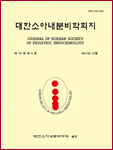
Journal of Korean Society of Pediatric Endocrinology

2002 (v1, n1) to Present ISSN: 1671-8925

Articles

About

Year of publication

Save Email

Sort by

Best match
Relevance
PubYear
JournalTitle

DISPLAY OPTIONS

Format:

Per page:

Save citations to file

Selection:

Format:

Create file Cancel

Email citations

To:

Please check your email address first!

Selection:

Format:

Send email Cancel

479

results

page

of 48

1

Cite

Cite

Copy

Share

Share

Copy

Pamidronate Treatment in Vertebral Fracture after Off-therapy of Medulloblastoma.

Youn Jung LEE ; Hyun Jae LEE ; Dong Ho KIM ; Jun A LEE ; Kyung Duk PARK ; Jung Sub LIM

Journal of Korean Society of Pediatric Endocrinology.2007;12(1):87-89.

A twenty-one year old man, who had been treated for medulloblastoma 6 years ago, complained progressive right knee joints pain and back pain. Multiple thoracic vertebral compression fracture was detected in radiography. The bone mineral density(BMD) was in osteoporotic range in duel energy X-ray absorpometry. Growth hormone deficiency and primary hypothyroidism were detected after endocrine function test. We treated him by cyclic intravenous pamidronate because he had complained severe back pain and difficulty to walk. After pamidronate therapy, the pain was decreased and the BMD was increased. No severe adverse effect was noted. This is the first case report of pamidronate therapy in patient who had osteoporotic vertebral compression fracture due to a sequela of childhood medulloblastoma.
Back Pain ; Bone Density ; Fractures, Compression ; Growth Hormone ; Humans ; Hypothyroidism ; Knee Joint ; Medulloblastoma* ; Radiography

Back Pain ; Bone Density ; Fractures, Compression ; Growth Hormone ; Humans ; Hypothyroidism ; Knee Joint ; Medulloblastoma* ; Radiography

2

Cite

Cite

Copy

Share

Share

Copy

A Case of Pseudohypoaldosteronism Type l Diagnosed after Infancy.

Seung Beom HAN ; Chang Hwan LIM ; Kyung Yeon LEE ; Jung Sue KIM ; Woong Heum KIM ; Meeryung UHM

Journal of Korean Society of Pediatric Endocrinology.2007;12(1):82-86.

Pseudohypoaldosteronism (PHA) type l is a rare neonatal disease characterized by salt wasting, dehydration, hyperkalemia and metabolic acidosis. It is unresponsive to mineralocorticoid treatment with elevated aldosterone concentration. The three different modes of inheritance has been described. The autosomal dominant form has a mild clinical course and gradually improves with age. In this form, resistance to aldosterone seems to be restricted to the kidney. The autosomal recessive form displays generalized aldosterone resistance including kidney, colon, lung, sweat and salivary gland system. This form is more severe and requires life-long supplement with high-dose salt. The sporadic form is mild and resembles the autosomal dominant form. In this paper, we describe a male patient diagnosed as PHA type l at the age of 19 months. He presented with recurrent vomiting, diaphoresis accompanying hyponatremia, hyperkalemia, metabolic acidosis, elevated plasma renin activity and aldosterone level. Ultimately he has improved with treatment by oral sodium bicarbonate.
Acidosis ; Aldosterone ; Colon ; Dehydration ; Humans ; Hyperkalemia ; Hyponatremia ; Kidney ; Lung ; Male ; Plasma ; Pseudohypoaldosteronism* ; Renin ; Salivary Glands ; Sodium Bicarbonate ; Sweat ; Vomiting ; Wills

Acidosis ; Aldosterone ; Colon ; Dehydration ; Humans ; Hyperkalemia ; Hyponatremia ; Kidney ; Lung ; Male ; Plasma ; Pseudohypoaldosteronism* ; Renin ; Salivary Glands ; Sodium Bicarbonate ; Sweat ; Vomiting ; Wills

3

Cite

Cite

Copy

Share

Share

Copy

Growth Hormone Therapy in Russell-Silver Syndrome.

Sang Woo PARK ; In Kug BANG ; Byung Kyu CHOE ; Heung Sik KIM

Journal of Korean Society of Pediatric Endocrinology.2007;12(1):77-81.

Russell-Silver syndrome is characterized by low birth weight, growth retardation, delayed bone age, asymmetry, abnormal sexual development, cranio-facial disproportion, short little finger and clinodactyly. Short stature is the major concern, so there have been interests treating Russell-Silver syndrome with human growth hormone. However, there are no large-scale controlled studies to confirm the effectiveness of growth hormone therapy until now because of the rarity of this disorder. In Korea, we cannot find reports dealing with growth hormone treatment in Russell-Silver syndrome. We present three children with Russell-Silver syndrome who showed accelerated growth with growth hormone treatment.
Child ; Fingers ; Growth Hormone* ; Human Growth Hormone ; Humans ; Infant, Low Birth Weight ; Infant, Newborn ; Korea ; Sexual Development ; Silver-Russell Syndrome*

Child ; Fingers ; Growth Hormone* ; Human Growth Hormone ; Humans ; Infant, Low Birth Weight ; Infant, Newborn ; Korea ; Sexual Development ; Silver-Russell Syndrome*

4

Cite

Cite

Copy

Share

Share

Copy

Evaluation of Growth Information in Height on the Internet Web-sites.

So Hyun AHN ; Hae Sun SHIM ; Dong Hyun KIM ; Soon Gi KIM ; Byung Kwan SON ; Ja Kyoung KIM ; Ji Eun LEE

Journal of Korean Society of Pediatric Endocrinology.2007;12(1):71-76.

PURPOSE: The purpose of this study was to evaluate the problems and the quality of the Internet Web-sites for management of short stature in childhood and adolescent. METHODS: We evaluated 105 Web-sites identified from 5 search engines, Naver, Daum, Korean Yahoo, Nate and Empas, using the word of 'height and/or short stature'. According to Web-site author, total Web-sites were classified as academy & society, physician, commercials, portal site, oriental medicine, and unidentified. We accessed how well the Web-sites informed people about the diseases by of short stature. RESULTS: Of the 105 Web-sites, 98 were accessible. 45 Web-sites (46%) were operated by oriental medicine group. Difference in IS between oriental medicine group and non-oriental medicine groups was significant (P<0.001). CONCLUSION: A great portion of Web-sites on short stature was operating by oriental medicine group. Oriental medicine Web-sites had a tendency to be omitted essential information on short stature and occasionally even had unhealthy information. This investigation could have a adverse influence that internet navigators for short stature might miss a chance of managing in time and there were huge increasing medical expense. There was strongly demand for reliable national certification system to certify to exellent quality for medical and health Web-sites.
Adolescent ; Certification ; Humans ; Internet* ; Medicine, East Asian Traditional ; Search Engine

Adolescent ; Certification ; Humans ; Internet* ; Medicine, East Asian Traditional ; Search Engine

5

Cite

Cite

Copy

Share

Share

Copy

A Study of Serum Adiponectin and Insulin Resistance in Children and Adolescents.

Sung Hwan BYUN ; Je Deok JEON ; Hyun Soo KIM ; Se Young KIM

Journal of Korean Society of Pediatric Endocrinology.2007;12(1):63-70.

PURPOSE: Currently many studies have confirmed the relationship between serum adiponectin and its influence on insulin resistance in adults. But physiologic insulin resistance due to changes in sex hormones exists during puberty, which prohibits us from knowing the influence of adiponectin to insulin resistance in this population. In this study, we investigated the influence of adiponectin on insulin resistance in children and adolescents. METHODS: 18 obese children, from the OPD were selected. From All subjects, blood was sampled after overnight fasting, adiponectin, lipid profiles, AST, ALT, fasting glucose and insulin levels were measured to evaluate correlations with adiponectin. The group were divided into subgroups by BMI, sex and HOMA-IR values. All variables were compared for differences and relationships. RESULTS: Obese groups showed decrease in adiponectin and showed increased insulin. HOMA-IR values were increased in the obese group. In all study participants, adiponectin showed significant correlation with triglyceride and HDL. But adiponectin showed no significant correlation with HOMA-IR, insulin and glucose. In the obese group adiponectin showed no correlation with HOMA-IR, insulin and glucose. HOMA-IR showed significant correlation with BMI, body weight and age. There were no sexual differences in adiponectin, insulin and HOMA-IR values. Insulin resistant group showed decrease in adiponectin but had no statistical significance. CONCLUSION: Decreased adiponectin levels and increased insulin resistance were observed in obese children but adiponectin showed no correlation with insulin resistance in children and adolescence. Factors other than adiponectin may play a more significant role in insulin resistance in this age group.
Adiponectin* ; Adolescent* ; Adult ; Body Weight ; Child* ; Fasting ; Glucose ; Gonadal Steroid Hormones ; Humans ; Insulin Resistance* ; Insulin* ; Puberty ; Triglycerides

Adiponectin* ; Adolescent* ; Adult ; Body Weight ; Child* ; Fasting ; Glucose ; Gonadal Steroid Hormones ; Humans ; Insulin Resistance* ; Insulin* ; Puberty ; Triglycerides

6

Cite

Cite

Copy

Share

Share

Copy

The Prevalence of Metabolic Syndrome in Children and Adolescents Born Small for Gestational Age.

Hong Kyu PARK ; Me Jin KIM ; Young Ho KIM ; Ji A JUNG ; Seung YANG ; Il Tae HWANG ; Hae Ran LEE ; Jae Seok KIM

Journal of Korean Society of Pediatric Endocrinology.2007;12(1):55-62.

PURPOSE: Type 2 diabetes mellitus, dyslipidemia, hypertension, cardiovascular disease, called metabolic syndrome (MS), occur more frequently among individuals who were born small for gestational age (SGA). SGA children with catch-up growth in height and high BMI are the most insulin resistant. We investigated the prevalence of MS and evaluated the risk factors affecting the development of MS in children and adolescents born SGA. METHODS: The study population (n=65) were born less than 10th percentile in body weight for their gestational age and the body weights of the control group (n=34) were more than 10th percentile at birth. The SGA and control subjects divided into prepubertal and pubertal groups. We measured serum lipid levels (total cholesterol, triglyceride, HDL cholesterol, LDL cholesterol), fasting sugar levels and insulin levels. Insulin resistance was determined by homeostasis model assessment, fasting insulin glucose ratio and quantitative insulin sensitivity check index. RESULTS: Systolic blood pressure was significantly higher in the pubertal SGA group than in the control group (113.2+/-0.3 vs. 98.7+/-6.4, P=0.001). The prevalence of high triglyceride and high fasting glucose levels were significantly increased in pubertal SGA group than prepubertal SGA group (P<0.05). Insulin resistance was correlated to systolic blood pressure, triglyceride levels, HDL-cholesterol levels, fasting glucose, insulin levels at fasting and 2 hours after oral glucose tolerance test and body fat mass in SGA group (P<0.05). CONCLUSION: We suggest that the monitoring of these risk factors including systolic blood pressure, triglyceride, HDL-cholesterol levels and body fat mass is important for the prevention of MS in children and adolescents born SGA.
Adipose Tissue ; Adolescent* ; Blood Pressure ; Body Weight ; Cardiovascular Diseases ; Child* ; Cholesterol ; Cholesterol, HDL ; Diabetes Mellitus, Type 2 ; Dyslipidemias ; Fasting ; Gestational Age* ; Glucose ; Glucose Tolerance Test ; Homeostasis ; Humans ; Hypertension ; Insulin ; Insulin Resistance ; Parturition ; Prevalence* ; Risk Factors ; Triglycerides

Adipose Tissue ; Adolescent* ; Blood Pressure ; Body Weight ; Cardiovascular Diseases ; Child* ; Cholesterol ; Cholesterol, HDL ; Diabetes Mellitus, Type 2 ; Dyslipidemias ; Fasting ; Gestational Age* ; Glucose ; Glucose Tolerance Test ; Homeostasis ; Humans ; Hypertension ; Insulin ; Insulin Resistance ; Parturition ; Prevalence* ; Risk Factors ; Triglycerides

7

Cite

Cite

Copy

Share

Share

Copy

The Long Term Follow up Study of Newborns with TSH Elevation without Low T4.

Sang In BAE ; Su Yung KIM

Journal of Korean Society of Pediatric Endocrinology.2007;12(1):49-54.

PURPOSE: In this study, we aimed to find useful methods for diagnosis and treatment of hyperthyrotropinemia in neonates showing normal T4 and elevated TSH levels in neonatal screening test. METHODS: We retrospectively reviewed the medical records of 16 male and 26 female neonates whose T4 were normal and TSH were elevated in the neonatal screening test from 1994 to 2006. The clinical data, including perinatal history, thyroid function test and radionuclide scannig was analysed. RESULTS: Of the forty-two patients, male was 38.1% and female was 61.9%. Mean T4 and TSH level were 8.61+/-1.55 ug/dL, 49.66+/-36.56 uU/mL respectively. At the recheck, when recalled, TSH were normalized in 8 patients (19.1%), still elevated in 34 patients (80.9%). (99m)TC thyroid scan was performed in 36 cases. The results were normal in 18 cases (50.0%), diffuse enlargement in 11 cases (30.5%), ectopic thyroid, poor visualization, hypoplasia respectly in 11.2%, 5.5%, 2.8%. Fourteen patients (33.3%) had histories of povidone use for umbilical care. Of the 42 patients, 27 (64.0%) cases were treated by thyroid hormone, 15 cases (36.0%) were followed up without treatment. Among 15 cases without treatment, 8 patients showed TSH normalization at 1.5 months, 5 patients at 3 months, one patient at 6 months and one patient at 9 months. Among 27 cases with treatment, 18 cases (66.7%) are being treated, 5 cases (18.6%) are being treated more than 3 years, the 3-years treatment was ended in 6 cases (22.2%), follow up loss was 3 cases (11.1%). CONCLUSION: At long term follow up, TSH was normalized in many patients who showed normal T4 and elevated TSH levels in neonatal screening test. Imaging study such as (99m)TC thyroid scanning was helpful to decide whether to treat with thyroid hormone replacement. To predict longer term prognosis of cases without thyroid hormone replacement, long term follow up of large number of patients is needed.
Diagnosis ; Female ; Follow-Up Studies* ; Humans ; Infant, Newborn* ; Male ; Medical Records ; Neonatal Screening ; Povidone ; Prognosis ; Retrospective Studies ; Thyroid Dysgenesis ; Thyroid Function Tests ; Thyroid Gland

Diagnosis ; Female ; Follow-Up Studies* ; Humans ; Infant, Newborn* ; Male ; Medical Records ; Neonatal Screening ; Povidone ; Prognosis ; Retrospective Studies ; Thyroid Dysgenesis ; Thyroid Function Tests ; Thyroid Gland

8

Cite

Cite

Copy

Share

Share

Copy

Molecular Genetic Analysis and Endocriological Evaluation of Isolated Hypogonadotropic Hypogonadism Presented with Delayed Puberty.

Jung Min KO ; Gu Hwan KIM ; Han Wook YOO

Journal of Korean Society of Pediatric Endocrinology.2007;12(1):41-48.

PURPOSE: Isolated hypogonadotropic hypogonadism (HH) is a disorder of the hypothalamic-pituitary axis causing gonadotrophin releasing hormone or gonadotrophin deficiency. Kallman syndrome has a constellation of features, characterized by HH, hyposomia, deafness and congenital heart defects, whereas a normal sense of smell indicates idiopathic HH. Defects in some genes such as KAL-1, FGFR1, GNRHR and GPR54, have been described. The study was undertaken to identify the molecular defects of aforementioned genes and to evaluate clinical profiles in patients with HH. METHODS: Among the patients who visited the hospital due to delayed puberty from March 1995 to March 2006, seven male patients were suspected of having HH and included in this study. Clinical characteristics at diagnosis and endocrinological data including gonadotropin-releasing hormone (GnRH) agonist stimulation test were investigated. For molecular genetic evaluation, routine karyotyping in all patients and mutation analyses of the KAL, FGFR-1, GNRHR and GPR54 genes in six patients were performed. RESULTS: The study included 7 patients diagnosed as HH by GnRH stimulation; 4 with Kallman syndrome and 3 with idiopathic HH. No mutation was identified by DNA sequence analysis of KAL-1, FGFR1, GNRHR and GPR54 genes in 7 patients with HH. At diagnosis, chronologic age was 16.88+/-.90 years; height SDS, -0.36+/-.43; mean volume of the testis, 1.79+/-.76 mL. Of the patients with Kallman syndrome, 3 had sensory neural hearing loss, 2 congenital heart disease and 1 bilateral cryptorchidism. The olfactory bulb or sulci hypoplasia was found in all Kallman syndrome patients on the brain MRI. No abnormal finding was found in the brain MRI of the patients with idiopathic HH. Peak LH and FSH levels were 1.27+/-.60 IU/L and 1.15+/-.65 IU/L after GnRH stimulation. Baseline total testosterone level was 0.41+/-.24 ng/mL. The patients were treated with testosterone enanthate every 3-4 weeks for the mean duration of 40.60+/-8.61 months. During the follow-up period, 5 patients reached the final adult height with the mean height of 175.00+/-.47 cm (0.28+/-.14 SDS). CONCLUSION: For differential diagnosis of delayed puberty, physical, radiological, hormonal evaluations are all necessary. Many genes associated with Isolated HH were founded until now. But, mutations in these genes account for small proportion of Isolated HH yet. Further study of genes that regulate secondary sexual development and function will give important information regarding the development of normal puberty in humans.
Adolescent ; Adult ; Axis, Cervical Vertebra ; Brain ; Cryptorchidism ; Deafness ; Diagnosis ; Diagnosis, Differential ; Follow-Up Studies ; Gonadotropin-Releasing Hormone ; Hearing Loss ; Heart Defects, Congenital ; Humans ; Hypogonadism* ; Kallmann Syndrome ; Karyotyping ; Magnetic Resonance Imaging ; Male ; Molecular Biology* ; Olfaction Disorders ; Olfactory Bulb ; Puberty ; Puberty, Delayed* ; Sequence Analysis, DNA ; Sexual Development ; Smell ; Testis ; Testosterone

Adolescent ; Adult ; Axis, Cervical Vertebra ; Brain ; Cryptorchidism ; Deafness ; Diagnosis ; Diagnosis, Differential ; Follow-Up Studies ; Gonadotropin-Releasing Hormone ; Hearing Loss ; Heart Defects, Congenital ; Humans ; Hypogonadism* ; Kallmann Syndrome ; Karyotyping ; Magnetic Resonance Imaging ; Male ; Molecular Biology* ; Olfaction Disorders ; Olfactory Bulb ; Puberty ; Puberty, Delayed* ; Sequence Analysis, DNA ; Sexual Development ; Smell ; Testis ; Testosterone

9

Cite

Cite

Copy

Share

Share

Copy

Clinical Manifestation and Effect of Corn Starch on Height Growth in Korean Patients with Glycogen Storage Disease Type Ia.

Jungi CHOI ; Jung Min KO ; Gu Hwan KIM ; Han Wook YOO

Journal of Korean Society of Pediatric Endocrinology.2007;12(1):35-40.

PURPOSE: Glycogen storage disease type Ia (GSD Ia) is an autosomal recessive disease characterized by hepatosplenomegaly, short stature, hypoglycemia, hyperuricemia and lactic academia. It is caused by mutations of glucose-6-phosphatase (G6Pase) gene located on chromosome 17q21. The study were undertaken to investigate clinical manifestations and genotype as well as to evaluate the effects of uncooked corn starch (UCCS) on height growth of pubertal and prepubertal subjects with GSD Ia. METHODS: We analyzed clinical data from 24 GSD Ia patients retrospectively by medical record review. Height standard deviation score (Ht-SDS) was calculated from 13 GSD Ia patients under age 15 treated with UCCS and followed-up over 1 year. DNA isolation, PCR reaction and DNA sequencing analysis were performed in all studied patients. RESULTS: Hypertriglyceridemia (100%), elevated liver enzyme (85%), hyperuricemia (48%), hypercholesterolemia (45%), anemia (45%) were major laboratory findings in studied population. Four different mutations of G6Pase gene in 48 alleles were identified. C.648G>T mutation was the predominant mutation, allele frequency of which was 78.6% (33 alleles). The other mutations were p.Phe51Ser, p.Gly222Arg, p.Gly122Asp. The p.Phe51Ser was a novel mutation. Mean Ht-SDS at diagnosis and two years after UCCS treatment were -2.04+/-1.69 and -0.72+/-1.12 respectively, which were statistically significant (P=0.036). CONCLUSION: The genotype of the G6Pase gene was nearly homogeneous in Korean patients with GSD Ia. Molecular analysis of the G6Pase gene will be the diagnosis of choice since the c.648G>T mutation accounts for 78.6% of mutations in Korean patients with GSD Ia. UCCS treatment has a beneficial effect on height growth of children and adolescents with GSD Ia.
Adolescent ; Alleles ; Anemia ; Child ; Diagnosis ; DNA ; Gene Frequency ; Genotype ; Glucose-6-Phosphatase ; Glycogen Storage Disease* ; Glycogen* ; Humans ; Hypercholesterolemia ; Hypertriglyceridemia ; Hyperuricemia ; Hypoglycemia ; Liver ; Medical Records ; Polymerase Chain Reaction ; Retrospective Studies ; Sequence Analysis, DNA ; Starch* ; Zea mays*

Adolescent ; Alleles ; Anemia ; Child ; Diagnosis ; DNA ; Gene Frequency ; Genotype ; Glucose-6-Phosphatase ; Glycogen Storage Disease* ; Glycogen* ; Humans ; Hypercholesterolemia ; Hypertriglyceridemia ; Hyperuricemia ; Hypoglycemia ; Liver ; Medical Records ; Polymerase Chain Reaction ; Retrospective Studies ; Sequence Analysis, DNA ; Starch* ; Zea mays*

10

Cite

Cite

Copy

Share

Share

Copy

The Effect of Gonadotropin Releasing Hormone Analogue and Growth Hormone on Final Height in Children with Advanced Puberty.

Ji Young SEO ; Hye Lim JUNG ; Choong Ho SHIN ; Sei Won YANG

Journal of Korean Society of Pediatric Endocrinology.2007;12(1):26-34.

PURPOSE: Gonadotropin releasing hormone analogue (GnRHa) or growth hormone (GH) improve final height in girls with central precocious puberty. We studied the effect of these agents on adult height in children with advanced puberty. METHODS: We analysed height, bone age, growth velocity, predicted adult height (PAH), and final adult height (FAH) in 61 girls and 19 boys with advanced puberty, who were treated with GnRHa combined GH or GH. RESULTS: In Girls 1) FAH (SDS) of combination group (GnRHa+GH, n=7) was similar to their pretreatment PAH (SDS) [153.9+/-6.0 cm (-1.3+/-1.2) vs 152.8+/-4.7 cm (-1.5+/-0.9)]. In GH group (n=18), FAH was significantly increased [155.7+/-4.9 cm (-0.9+/-1.0) vs 149.9+/-4.6 cm (-2.1+/-0.9)] (P<0.001). 2) PAH (SDS) of combination group increased from 151.5+/-5.9 cm (-1.8+/-1.2) to 157.8+/-7.1 cm (-0.5+/-1.4) and that of GH group increased from 149.5+/-5.9 cm (-2.2+/-1.2) to 155.8+/-5.8 cm (-0.9+/-1.2) (P<0.001). During first year of treatment, growth velocity of GH group was significantly higher than that of combination group (6.6+/-2.1 cm/year vs 9.4+/-2.5 cm/year, P=0.001) In boys 1) In both group (7 boys of combination group and 8 boys of GH group), FAH was similar to their pretreatment PAH and their growth velocity during first year of treatment had no significant difference (7.6+/-2.3 cm/year vs 9.2+/-2.9 cm/year). CONCLUSION: In girls with advanced puberty, GnRHa delayed bone maturation but had no significant effect on FAH. In contrast, GH increased FAH through increment of growth velociy. In boys with advanced puberty, no significant effect of GnRHa or GH.
Adolescent ; Adult ; Child* ; Female ; Gonadotropin-Releasing Hormone* ; Gonadotropins* ; Growth Hormone* ; Humans ; Puberty* ; Puberty, Precocious

Adolescent ; Adult ; Child* ; Female ; Gonadotropin-Releasing Hormone* ; Gonadotropins* ; Growth Hormone* ; Humans ; Puberty* ; Puberty, Precocious

Country

Republic of Korea

Publisher

Korean Society of Pediatric Endocrinology

ElectronicLinks

http://synapse.koreamed.org/LinkX.php?code=1113APEM

Editor-in-chief

E-mail

Abbreviation

J Korean Soc Pediatr Endocrinol

Vernacular Journal Title

대한소아내분비학회지

ISSN

1226-2242

EISSN

Year Approved

2007

Current Indexing Status

Currently Indexed

Start Year

1996

Description

Vol. 1, no. 1 (1996) - Vol. 16, no. 3 (2011)

Current Title

Annals of Pediatric Endocrinology & Metabolism

Related Sites

WHO WPRO GIM

Help Accessibility
DCMS Web Policy
CJSS Privacy Policy

Powered by IMICAMS( 备案号: 11010502037788, 京ICP备10218182号-8)

Successfully copied to clipboard.