

Main content 1 Menu 2 Search 3 Footer 4
+A
A
-A
High contrast
HOME JOURNAL CRITERIA NETWORK HELP ABOUT

Current criteria:

Regional:

WPRlM journal selection criteria(2023)

Minimum standards for the suspension and removal of WPRIM approved journals

Countries journal selection criteria:

Philippines

Submit your journal information>

Contact NJSCs>

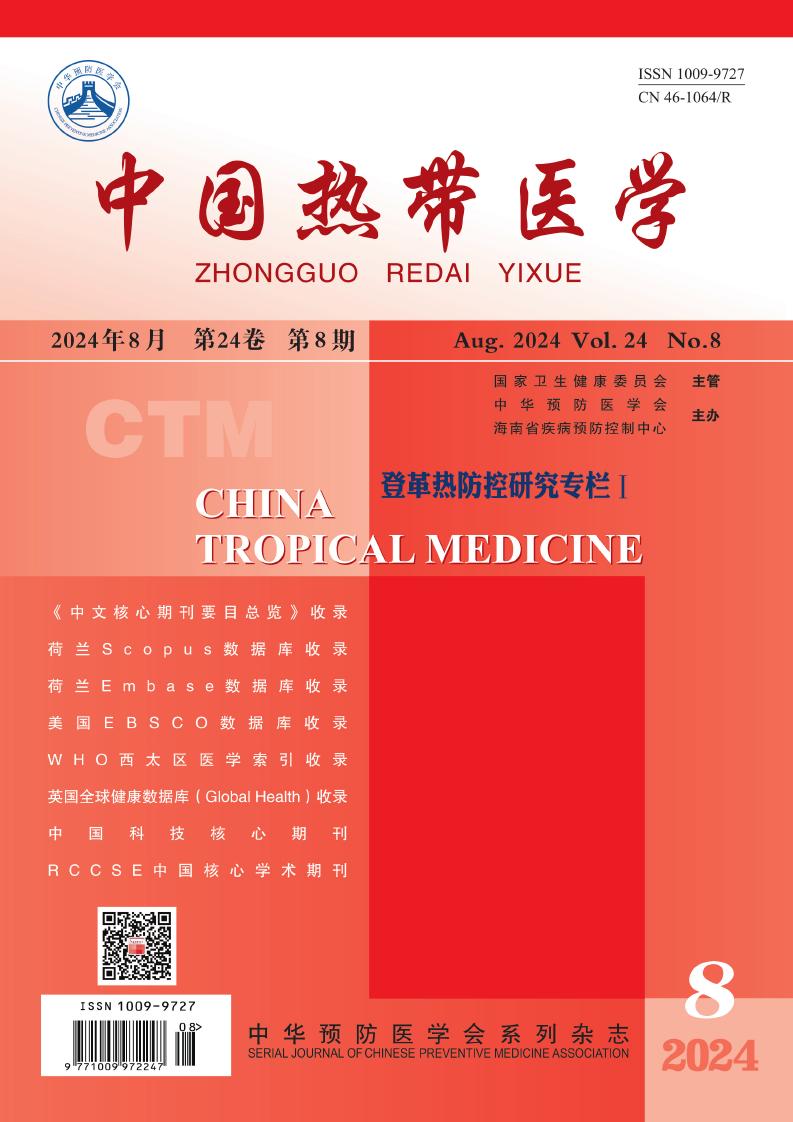
China Tropical Medicine

2002 (v1, n1) to Present ISSN: 1671-8925

Articles

About

Year of publication

Save Email

Sort by

Best match
Relevance
PubYear
JournalTitle

DISPLAY OPTIONS

Format:

Per page:

Save citations to file

Selection:

Format:

Create file Cancel

Email citations

To:

Please check your email address first!

Selection:

Format:

Send email Cancel

652

results

page

of 66

1

Cite

Cite

Copy

Share

Share

Copy

Application effect of rapid diagnostic techniques in pulmonary tuberculosis in Shaanxi, 2016-2020

DENG Ya-li ; ZHANG Tian-hua ; ZHENG Xiao

China Tropical Medicine.2023;23(1):49-. doi:10.13604/j.cnki.46-1064/r.2023.01.09

Abstract: Objective To analyze the application effect of rapid diagnostic techniques in Shaanxi from 2016 to 2020,and to provide basis for further optimizing the process of tuberculosis detection and formulating prevention and control strategies. Methods A total of 104 437 cases of tuberculosis patients registered in Shaanxi Province from 2016-2020 were exported from the Tuberculosis Information Management System (The subsystem of China Disease Prevention and Control Information System) according to first management unit, and the laboratory test results of sputum smear, sputum culture and molecular tests were collected to statistically analyzed the positive rate of etiology, sputum smear, sputum culture, molecular biology testing rate, and indicators of positive testing rate of tuberculosis patients. Results From 2016 to 2020, the etiology�positive rate of tuberculosis in Shaanxi province were 13.49% (2 664/19 754), 22.68% (5 081/22 401), 35.99% (8 232/22 876), 48.14% (10 438 / 21 682), 52.65% (9 332 / 17 724), respectively, with an increasing trend (χ2 trend=9 473.12, P<0.001) year by year; the proportion of molecular tests positive only in etiology-positive pulmonary tuberculosis (PTB) were 0 (0/2 664), 0.16% (8/5 081), 15.44% (1 271/8 232), 27.58% (2 879/10 438), 31.52% (2 941/9 332), respectively, with an increasing trend year by year (χ2 trend=2 971.44, P<0.001); the molecular test rates of the 5 years were 0.01% (2 / 19 754), 0.38%(85 / 22 401), 21.11% (4 828/22 876), 52.42%(11 365/21 682), 55.18%(9 780/17 724), respectively, with an increasing trend year by year (χ2 trend = 28 269.23, P<0.001). The rate of molecular test in sputum smear-negative was 22.72%(17 976 / 79 130). The proportion of patients with only molecular test-positive was 33.43% (4 032/12 062) in municipal designated hospitals, and 11.99%(2 279/ 19 014) in county-level designated hospitals, the difference was statistically significant (χ2 =2 096.46, P<0.001). Conclusions The rate of molecular biology testing in Shaanxi Province from 2016 to 2020 showed a year-on-year increase. Through the application of rapid molecular tests, the etiology-positive rates of tuberculosis have been increased significantly,but the current molecular test detection rate is not high compared with other provinces, especially in county-level designated hospitals and smear-negative patients, so we should make a big promotion in application of rapid molecular technique.

2

Cite

Cite

Copy

Share

Share

Copy

Screening for malaria infection in residents on the China-Myanmar border: RDT, microscopy and PCR

ZHOU Yaowu ; SUN Weijiang ; TIAN Guangqiang ; XU Jianwei ; YANG Shiman ; DING Chunli ; DUAN Kaixia ; TAIN Peng ; SUN Xiaodong ; LIN Zurui

China Tropical Medicine.2023;23(9):897-.

Abstract: Objective To compare the screening effects of RDT, microscopy and PCR for malaria among residents in low malaria areas and elimination areas, and to investigate the presence of malaria in residents of border Villages in Cangyuan Va County and asymptomatic infections in surrounding areas, providing a basis for preventing re-introduction of malaria after elimination. Methods From August 2020 to March 2021, the fingertip blood of the investigated subjects was collected from three survey sites in the border area between China and Myanmar, namely Banlao Township in Cangyuan Va Autonomous County of Lincang City, Banwai District, Mengmao County, the Second Special Zone of Shan State, Myanmar, Yongmo and Dayan Township, Nandeng Special Zone, the Second Special Zone of Shan State, Myanmar. The malaria parasite antigen detection test kit, malaria parasite microscopic examination, fluorescent quantitative PCR and nested PCR were used to detect the asymptomatic infection of malaria parasites. Results A total of 1 040 blood samples were collected, including 606 from China and 434 from Myanmar, with 506 males and 534 females. Among them, , there were 51 individuals aged 0 to <5 years, 283 aged 5 to < years, 187 aged 15 to < years, 232 aged 30 to <45 years, 205 aged 45 to < years, and 82 aged ≥60 years. All 1 040 people tested negative for plasmodium antigen detection kit. One case of Plasmodium vivax detected by plasmodium microscopic etiology, with a detection rate of 0.10%. One case of P. vivax was also detected by fluorescent quantitative PCR and nested PCR, with a detection rate of 0.10%. Among them, one case of P. vivax was detected in Banwai District, Mengmao County, the Second Special Zone of Shan State, Myanmar, with a detection rate of 0.35%. The detection rates of malaria parasites in Banlao Township in Cangyuan Va Autonomous County of Lincang City, Yunnan Province and Yongmo Township and Dayan Township, Nandeng Special District, the Second Special Zone of Shan State, Myanmar were both 0. The difference in the detection rate of malaria parasites among the three survey sites was not statistically significant (χ2 =2.682, P>0.05). The asymptomatic P. vivax infection was detected in a 6-year-old girl from Banwai District, Mengmao County, the Second Special Zone of Shan State, Myanmar. Conclusions RDT is not suitable for malaria screening in low malaria area and elimination area. Microscopic examination and PCR can be used for malaria screening, but PCR operation is complex and costly. In surrounding areas outside of China, malaria is still prevalent, while there is no source of malaria infection in border villages of Cangyuan Va County. However, there is a risk of importation, and timely and effective measures should be taken to prevent reintroduction and transmission.
3

Cite

Cite

Copy

Share

Share

Copy

Epidemiological characteristics of viral hepatitis E in Fujian Province from 2012 to 2021

QI Xiaoqi ; OU Jianming ; CHEN Wu ; CAI Shaojian ; XIE Zhonghang ; WU Shenggen ; ZHENG Kuicheng

China Tropical Medicine.2023;23(9):902-.

Abstract: Objective To analyze the epidemiological characteristics of viral hepatitis E in Fujian Province from 2012-2021, and to provide scientific evidence for the prevention and control of hepatitis E in the future. Methods Descriptive epidemiological method was used to analyze hepatitis E cases in Fujian Province from 2012 to 2021. Results From 2012 to 2021, a total of 8 877 cases of hepatitis E were reported in Fujian Province from 2012-2021. The overall incidence rate showed a decreasing trend (χ2trend =458.14, P<0.001), with the lowest incidence rate of 1.32/100 000 in 2020 and an annual average incidence rate of 2.29/100 000 per year. The incidence was higher in winter and spring, with the months of March and April having the highest number of reported cases (2 146, 24.17%) and the fewest cases were reported in September (571, 6.43%). The difference in reported incidence rates between cities was statistically significant (χ2=1 877.75, P<0.01). The comprehensive experimental zone of Pingtan had the highest average reported incidence rate of 6.03/100 000, while Zhangzhou had the lowest at 0.94/100 000. The number of male cases was higher than the number of female cases, with a male to female ratio of 2.04∶1. The disease was most prevalent among middle-aged and elderly individuals, with the age group of 40-<65 years having the highest number of reported cases, accounting for 57.44% (5 099/8 877) of all cases. The age group of 50-<55 years had the highest reported incidence, with the number of reported cases increasing with age below 50 years, but decreasing with age over 50 years. As for occupational distribution, peasants had the highest proportion of the disease, accounting for 34.49% (3 062 cases) of the total cases. Conclusions The reported incidence rate of hepatitis E in Fujian showed a downward from 2012 to 2021. Due to the impact of COVID-19, incidence of the lowest was 2020, but it did not reflect the true situation of the disease, which may have affected trend of hepatitis E. In order to control and reduce the incidence of hepatitis E, efforts should be made to increase publicity and education on health knowledge and vaccination among key areas and populations, strengthen monitoring and diagnostic capability, and implement comprehensive prevention and control measures.

4

Cite

Cite

Copy

Share

Share

Copy

Analysis on the technical results of tuberculosis laboratory testing in Liaoning Province from 2016 to 2022

LIANG Shuang ; JIANG Yiwen ; YANG Guiling ; ZHANG Qi ; TANG Shimiao ; CAO Hongwei ; QI Wei

China Tropical Medicine.2023;23(9):906-.

Abstract: Objective To evaluate the application of TB laboratory detection technology in Liaoning Province from 2016 to 2022, and to provide scientific basis for further improving the detection rate of Mycobacterium tuberculosis in the province. Methods The medical records of registered tuberculosis patients in Liaoning Province from 2016 to 2022 were collected from the "Tuberculosis Information Management System" in the "China Disease Prevention and Control Information System" subsystem. Statistical analysis was performed for sputum coating, sputum culture, and molecular biology testing. Results From 2016 to 2022, a total of 152 778 patients with pulmonary tuberculosis were registered in Liaoning Province. The detection rate of sputum smear microscopy was 98.03% (149 775/152 778), the detection rate of sputum culture was 20.72% (31 661/152 778), and the detection rate of molecular biology testing was 20.21% (30 737/152 778). From 2018 to 2022, the rate of molecular biological detection showed an increasing trend (χ2trend=7 104.466, P<0.01), while from 2016 to 2021, the detection rate of sputum culture showed an increasing trend, with statistical significance (χ2trend=3,068.701, P<0.01). The sputum smear detection rate showed a downward trend(χ2trend=689.913, P<0.01). . There were significant differences in the results of sputum smear microscopy, sputum culture, and molecular biology testing, as confirmed by the McNemar test (P<0.01). The positive rate of pathogenic academics increased from 26.27% in 2016 to 51.55% in 2022, showing a yearly upward trend (χ2trend=5 262.863, P<0.01), with significant differences between each year (χ2=5 686.935, P<0.01). Among pulmonary tuberculosis patients with positive pathogenic microorganisms, the proportion of sputum smear-positive cases decreased from 94.32% to 52.36%, showing a downward trend (χ2trend=5 010.104, P<0.01). The proportion of culture-positive cases increased from 5.68% in 2016 to 12.83% in 2022, showing an upward trend (χ2trend=122.501, P<0.01). In Liaoning Province, molecular biology testing has been carried out since 2018, and the proportion of molecular biology-positive cases increased from 11.51% to 34.81%, showing an increasing trend (χ2trend=1 969.326, P<0.01). The number of positive patients in molecular biological tests in municipal hospitals accounted for 18.69% (8 386/44 778) of etiological positive patients, while the number of positive patients in county-level hospitals accounted for 13.61% (2 439/17 924) of etiological positive patients, with significant differences (χ2=231.594, P<0.01). Conclusions The implementation of molecular biology testing for tuberculosis in Liaoning Province is one of the main measures to improve the positive rate of etiology, and it helps to diagnose tuberculosis patients timely and accurately

5

Cite

Cite

Copy

Share

Share

Copy

Changes in stigma characteristics of HIV infectionAIDS patients treated with antiviral therapy in Guangxi

HUANG Jinping ; LI Yanjun ; LI Xiangqing ; LU Xiaoyan ; LIU Shuaifeng ; QIAO Shan ; DONG Wenyi ; SHEN Zhiyong

China Tropical Medicine.2023;23(9):911-.

Abstract: Objective To explore the dynamic characteristics of stigmatization in HIV/AIDS patients and provide scientific evidence for psychological care. Methods HIV/AIDS patients receiving antiretroviral therapy (ART) treatment in Nanning Fourth People's Hospital were randomly selected for baseline and 1 year follow-up questionnaire survey including internalized HIV stigma, anticipated HIV stigma, exposure to HIV stigma. The differences between the two groups at different time points were dynamically compared to analyze the changing characteristics of stigma in HIV/AIDS patients. Results After one year of ART treatment, among the eight items of internalizing stigma, five items including the proportion of feeling ashamed of being infected with HIV/AIDS, feeling unclean because of being infected with HIV/AIDS, feeling inferior to others because of having HIV/AIDS, feeling guilty because of having HIV/AIDS, and having a poorer self-perception due to how others view HIV/AIDS decreased significantly from 34.0% to 43.5% at the baseline to 19.5% to 29.5%, showing significant improvement with statistical significance (χ2=18.586, 14.277, 10.473, 12.219, 9.934, P<0.05); among the nine items of anticipated stigma, four items including the proportion of community/community workers not taking my needs seriously, discriminating against me, refusing to provide services for me, and healthcare workers avoiding contact with me decreased significantly from 16.0% to 27.5% at the baseline to 7.0% to 15.5%, respectively, showing significant improvement with statistical significance (χ2=13.690, 15.787, 12.034, 12.593, P<0.05); among the 16 items of exposure to HIV stigma, six items including the proportion of experiencing physical attacks, psychological pressure from spouses/partners, being refused sexual relationships, losing jobs or other economic sources, being rejected or losing a job opportunity due to HIV/AIDS, changing job nature due to HIV/AIDS, or being refused medical services decreased significantly from 2.5% to 15.0% at the baseline to 1.0% to 8.0%, respectively, showing significant improvement with statistical significance (χ2=8.619, 15.558, 6.061, 9.049, 5.432, 8.156, P<0.05). Physical assaults on people with HIV/AIDS increased by 5.5 percent(χ2=5.368, P<0.05). Conclusions Through 1-year dynamic monitoring, 48.48% of the three dimensions of stigma of HIV/AIDS patients were alleviated. Treatment intervention, self-acceptance and the creation of a good non-discriminatory social environment have an important impact on the stigma of HIV/AIDS patients and deserve the attention of society as a whole.

6

Cite

Cite

Copy

Share

Share

Copy

Genetic study of Yersinia pestis strains isolated from the Himalayan marmot natural focus area and domestic rat plague focus area in southern China

LI Sheng ; JIN Juan ; HE Jian ; XIN Youquan ; BAI Jixiang ; ZHANG Qi ; ZHAO Haihong ; ZHANG Xiaolu ; YANG Xiaoyan ; DAI Ruixia

China Tropical Medicine.2023;23(9):916-.

Abstract: Objective To understand the phenotypic and genetic characteristics of Yersinia pestis strains isolated from Himalayan marmot natural focus area and domestic rat plague focus area in southern China, and provide reference for mastering the pathogenic characteristics of Yersinia pestis of two plague foci. Methods A total of 412 of Yersinia pestis strains isolated from Himalayan marmot plague focus and domestic rat plague focus of southern China were subjected to to sorbitol fermentation assays, virulence factor, different region (DFR) typing, and clustered regularly interspaced palindromic repeats (CRISPR) typing. Results The biochemical types of Y. pestis from the two plague foci showed distinct regional distribution features. Five biochemical phenotypes were identified in Yersinia pestis isolated from Himalayan marmot natural focus area, while only one biochemical phenotype was identified in strains isolated from the domestic rat plague focus of Southern China. Most of the Yersinia pestis isolated from the two plague foci were capable of producing the virulence factors of Fl and PstI. Among the strains from Himalayan marmot focus, 70.53% (201/285) were VW-positive, 75.09% (214/285) were Pgm-positive, 20.00% (57/285) of the strains were Pgm-negative, and 5.26% (15/285) were Pgm mixed-type strains. Among strains from domestic rat plague focus of southern China, 37.80% (48/127) were VW-positive, 29.13% (37/127) were Pgm-positive, 58.27% (74/127) were Pgm-negative, and 12.60% (16/127) were Pgm mixed-type strains. DFR typing revealed 22 genotypes of Y. pestis from the Himalayan marmot plague focus, with the main genotypes being type 5, 7, 8, 10, 19, 32 and 49. All strains from domestic rat plague focus area in southern China belonged to type 9. CRISPR typing revealed that all strains from the Himalayan marmot natural focus were classified into 7 CRISPR gene clusters and 14 CRISPR genotypes, with the main genotypes being G7, G22, G26-a1'and G22-A1'. All strains from domestic rat plague focus area in southern China belonged to CRISPR genotype G30, with the gene cluster being Ca8. Conclusions The phenotypes and genotypes of the Yersinia pestis of Himalayan marmot plague focus are diverse, with an obvious characteristics of geographical distribution. The phenotype and genotype of the Yersinia pestis of domestic rat plague focus of Southern China are single. DFR and CRISPR genotyping methods with phenotypic characteristics can effectively identify the Yersinia pestis isolated from the two plague foci, thereby meeting the needs of identification and traceability research.

7

Cite

Cite

Copy

Share

Share

Copy

Analysis of drug resistance and its influencing factors in different infection sites of patients

WANG Ting ; WANG Jieying ; WANG Yanshuang ; CHEN Xiaojuan ; CHEN Lin ; CHEN Shaowen ; LIAO Yan ; LIN Chong

China Tropical Medicine.2023;23(9):922-.

Abstract: Objective To analyze the characteristics and corresponding drug resistance of pathogenic bacterial spectrum in eight major infection sites of hospitalized patients, and to provide epidemiological data for the rational selection of antibiotics in clinical practice. Methods A total of 396 bacterial strains isolated from clinical specimens of hospitalized patients in member institutions of the Hainan Provincial Bacterial Resistance Monitoring Network from September 1, 2020, to September 30, 2022, were included in this study. Data were screened and filtered from the database of MH120 Microbial Identification and Drug Sensitivity Analysis System based on the technical scheme of the National Bacterial Drug Resistance Surveillance Network and Science and Technology Basic Resources Investigation Project research plan in 2020. The testing data were integrated, summarized, and analyzed using EXCEL and WHONET 5.6 software, and statistical analysis was conducted using SPSS 26.0 software. Results Among of 396 strains of bacteria, 78 (19.7%) were isolated from respiratory tract specimens, 74 (18.7%) from urinary tract specimens, 72 (18.2%) from blood specimens, 54 (13.6%) from abdominal cavity specimens, 48 (12.1%) from skin and soft tissue specimens 48 strains (12.1%), 30 (7.6%) from reproductive tract specimens, 22 (5.6%) from central nervous system specimens, 18 (4.5%) from digestive tract specimens. Gram-negative bacteria accounted for 69.4% of the isolates, while gram-positive bacteria accounted for 30.6%. The top five gram-negative bacteria isolated were Klebsiella pneumoniae (14.9%), Escherichia coli (14.4%), Pseudomonas aeruginosa (10.4%), Acinetobacter baumannii (5.3%), and Salmonella species (4.5%). The top five gram-positive bacteria were Staphylococcus aureus (11.1%), Streptococcus agalactis (7.8%), Enterococcus faecalis (3.0%), Enterococcus faecium (2.8%), and Streptococcus suis (1.8%). Respiratory failure and bloodstream infection were independent influencing factors of treatment response (P<0.01). The resistance rate of Escherichia coli to ampicillin was 81.4%, and the resistance rate of Staphylococcus aureus to gentamicin and levofloxacin were both below 7%. Conclusions The pathogen spectra vary with different infection sites of patients, and rational selection of antibiotics based on drug susceptibility testing is crucial to shorten the treatment time of patients and avoid the unnecessary emergence of drug-resistant strains caused by drug abuse.

8

Cite

Cite

Copy

Share

Share

Copy

Scanning electron microscopic observation of morphology of Rhipicephalus sanguineus at different developmental stages in Hainan Province

LIANG Dejuan ; AN Liping ; LI Yao ; ZHAO Peizhen ; GUAN Qingfeng ; ZHAO Jianguo

China Tropical Medicine.2023;23(9):930-.

Abstract: Objective To understand the morphological characteristics and ultrastructure of the dominant species of Rhipicephalus sanguineus in Hainan at different developmental stages, and provide theoretical basis for the identification of the lineage and control of Rhipicephalus sanguineus. Methods The external morphology of different developmental stages of the dominant species of Rhipicephalus sanguineus, including larva, nymph and adult tick in Hainan were observed by scanning electron microscope. Results The division between each segment of larva pedipalps was not obvious, and setae was serrated; dental formula type 2 | 2; 3 pairs of podomere; a pair of setae on the anal valve; none of anal groove, spiracular plate, porous area and genital aperture. There was a clear boundary at the beginning of each segment of nymph pedipalps; dental formula type 2 | 2; 4 pairs of podomere; 3 pairs of setae on the anal valve; anal groove; none of porous area and genital aperture. The male adult tick's trichotheca are covered by the pedipalps, and the whole bristles are conical; dental formula type 3 | 3; 4 pairs of podomere; anal groove and paraprocts; 7 setae on the anal valve; genital aperture was oval. The female of adult tick can be distinguished by dental formula 3 | 3; pairs of podomere; porous areas with 3 short setae; anal groove; 4 pairs of setae and 2 pores on the anal valve; genital pore was broadly U-shaped. In addition, the male adult's scutum occupies almost the entire dorsal surface, the basis capituli of larva, nymph and adult tick all were hexagonal, and the existence of Haller's organ was found on the first pair of legs. Conclusions Scanning electron microscopy observation of the different developmental stages of R.sanguineus revealed clear morphological features, preliminarily suggesting that R.sanguineus in Hainan Province may belong to the tropical lineage, which provide a certain experimental basis for the identification of the tick and the comprehensive prevention and control of local tick-borne diseases.

9

Cite

Cite

Copy

Share

Share

Copy

Research on the contamination, drug resistance and molecular typing of Vibrio parahaemolyticus isolated from aquatic products in Nanchang City market

LONG Yongyan ; LONG Hui ; FAN Guoyin ; XUE Lin ; SHUAI Shufen ; WANG Wei ; WU Kai

China Tropical Medicine.2023;23(9):936-.

Abstract: Objective To understand the contamination status, drug resistance, virulence gene carrying status, and molecular typing characteristics of Vibrio parahaemolyticus (VP) in aquatic products sold in Nanchang City. Methods A total of 170 commercial crayfishes, freshwater fish frogs and related smears samples were collected from various farmers' markets in Nanchang from March to September 2021. The strains of V. parahaemolyticus were detected and isolated from the samples. Antibiotic resistance test, virulence gene test, and pulsed-field gel electrophoresis (PFGE) molecular typing analysis were carried out. Results Among the collected samples, V.parahaemolyticus was only isolated from crayfish and crayfish smear samples, with a total of 35 strains of VP isolated. No V.parahaemolyticus strain was isolated from other freshwater fish, frogs, and their smear samples. Among the 17 common antibiotics tested, only two trains showed resistance to ampicillin, and one strain to streptomycin, , and all were sensitive to other antibiotics; all 35 strains of V. parahaemolyticus carried the gene, but only one strain carried the heat-resistant related hemolysin gene trh, and no direct heat-resistant hemolysin gene tdh positive strain was found; PFGE pattern clustering showed that there was no strain with the same PFGE pattern, and there was no obvious dominant cluster among these strains, and their genetic relationship was relatively distant. Conclusions The contamination of V. parahaemolyticus in small and medium-sized crayfish sold in the market in Nanchang City is relatively serious. The V. parahaemolyticus isolates in these polluted crayfish generally do not carry key virulence genes such as tdh, are sensitive to common antibiotics, and only have low-level resistance to ampicillin and streptomycin. PFGE pattern clustering showed that V. parahaemolyticus does not have no obvious dominant cluster, and these strains have rich genetic diversity, indicating that they may have different sources.

10

Cite

Cite

Copy

Share

Share

Copy

Analysis of thrombus risk factors for routine blood test indicators in outpatients during the large-scale SARS-CoV-2 outbreak period

WEI Ling ; SHAO Lingli ; CHEN Ting ; REN Juan ; LIU Qingjun

China Tropical Medicine.2023;23(9):941-.

Abstract: Objective To investigate the impact of SARS-CoV-2 virus infection on the risk of thrombosis in COVID-19 outpatient patients with mild and regular symptoms. Methods Outpatient patients during the SARS-CoV-2 large-scale infection period after the policy adjustment for COVID-19 in Beijing in 2022 were selected as the observation group, and the dynamic zero-clearing period before the policy adjustment and outpatient patients during the 2022/2021/2020 period were taken as the three control groups. The patients with physiological factors that may increase the risk of coagulation, such as thrombotic diseases, malignant tumors, female pregnancy and other physiological factors, were excluded. Pediatric patients under 14 years old were also excluded. Age was expressed as median (interquartile). The changes in blood routine, fibrin/fibrinogen degradation products, and D-Dimer in Beijing outpatient patients were studied with statistical method and data analysis techniques. Results Compared with the control groups, the observation group showed a statistically significant decrease in red blood cells (RBC), hemoglobin (Hb), and hematocrit (HCT) levels, and an increase in monocytes (MONO) and platelet (PLT) counts, all showed statistically significant differences (P<0.0001). The proportion of fibrinogen degradation product (FDP) and D-Dimer of observation group exceeding the range increased significantly. Compared with the three control groups, the number of outpatient fibrinogen degradation products (FDP) in the observation group of patients aged 50 years and verage number of patients under 50 years old in the observation group with D-Dimer exceeding the threshold increased by more than 48.98%, and the monthly average number of patients with D-Dimer exceeding the threshold in patients aged 50 or older increased by 346%-998%. Conclusions The results of this study suggest that outpatient patients with mild or regular SARS-CoV-2 infection are also at risk for thrombotic events, and monitoring blood coagulation indicators such as D-dimer is recommended to avoid the sudden onset of thrombosis-related fatal complications .

Country

China

Publisher

Editorial Department of China Tropical Medicine

ElectronicLinks

http://www.cntropmed.com

Editor-in-chief

WANG Shan-qing

E-mail

ctmffff@vip.163.com

Abbreviation

China Trop Med

Vernacular Journal Title

中国热带医学

ISSN

1009-9727

EISSN

Year Approved

2022

Current Indexing Status

Currently Indexed

Start Year

2001

Description

China Tropical Medicine, was approved by the Ministry of Science and Technology in 2001, is the only tropical medicine periodical under the charge of the National Health Commission of China. It’s organized by Hainan Provincial Center for Disease Prevention and Control, and Chinese Preventive Medicine Association, monthly, 96 pages. In 2001, it was published as a quarterly magazine, with a total of 64 pages. In 2003, it was changed to a bimonthly magazine with 80 pages. In 2005, it was changed to a monthly magazine with 128 pages. In 2016, it was changed to 96 pages (excluding advertising pages, interstitials and catalogue covers). The journal is indexed by the following database: Scopus, EBSCO, China Science and Technology Core Journals, US EBSCO Database; American Chemical Abstracts (CA); UK International Centre for Agricultural and Biological Sciences Research Database (CABI); UK Global Health Database; Database of the Ulrich's Periodicals Directory; China Core Journals (Selection) Database; Database of Chinese Biomedical Literature; Comprehensive Evaluation Database of Chinese Academic Journals; CAJCD Code of Conduct Excellent Journal; Database of Chinese SCI-Tech Periodicals; China Journal Full Text Database. The journal mainly reports on the prevention and treatment of tropical diseases such as parasitic disease, virus and bacterial diseases, endemic disease, skin and sexually transmitted diseases, food and nutrition, poisoning, health education, public health emergencies, and material and child hygiene etc., it introduces the new technology, progress and development trend of tropical diseases prevention and control in China and abroad, and tries to promote the academic exchanges and cooperation of tropical medicine. The columns in our journal include expert comments, special articles, works (including experimental research, disease monitoring, clinical research), short essays, reviews, case reports, and experience exchanges, etc.

Related Sites

WHO WPRO GIM

Help Accessibility
DCMS Web Policy
CJSS Privacy Policy

Powered by IMICAMS( 备案号: 11010502037788, 京ICP备10218182号-8)

Successfully copied to clipboard.