Main content 1 Menu 2 Search 3 Footer 4
+A
A
-A
High contrast
HOME JOURNAL CRITERIA NETWORK HELP ABOUT

Current criteria:

Regional:

WPRlM journal selection criteria(2023)

Minimum standards for the suspension and removal of WPRIM approved journals

Countries journal selection criteria:

Philippines

Submit your journal information>

Contact NJSCs>

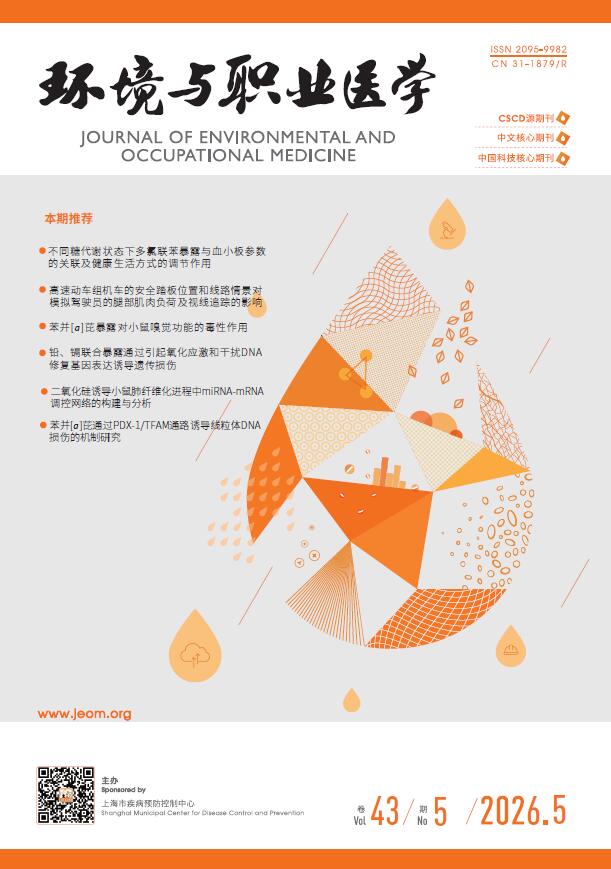
Journal of Environmental and Occupational Medicine

2002 (v1, n1) to Present ISSN: 1671-8925

Articles

About

Year of publication

Save Email

Sort by

Best match
Relevance
PubYear
JournalTitle

DISPLAY OPTIONS

Format:

Per page:

Save citations to file

Selection:

Format:

Create file Cancel

Email citations

To:

Please check your email address first!

Selection:

Format:

Send email Cancel

810

results

page

of 81

1

Cite

Cite

Copy

Share

Share

Copy

Effects of noise exposure on structure and functional prediction of intestinal microbiota in rats

Yanan CUI ; Xiaojun SHE ; Ningning LI ; Xiuzhi ZHANG ; Bo CUI ; Shanfa YU

Journal of Environmental and Occupational Medicine.2022;39(2):179-185. doi:10.11836/JEOM21278

Background Noise has multiple negative effects on the organism, and gut microbes are influenced by the environment and are closely associated with the development of diseases. Currently, the effects of chronic noise exposure on intestinal microbiota are poorly understood. Objective To investigate the effects of noise exposure on the structure of rat gut microbiota and to make predictions of gut microbiota function. Methods Male Wistar rats (6 weeks old, 160-180 g) were randomly divided into control, NE_95dB, and NE_105dB groups, 10 rats in each group. Rats in the NE_95dB and the NE_105dB groups were exposed to noise at 95 dB sound pressure level (SPL) and 105 dB SPL, respectively, 4 h per day for consecutive 30 d, while the control group was exposed to background noise. Feces were collected after the last noise exposure for intestinal microbiota detection. Based on the 16S ribosomal RNA (rRNA) gene sequencing method, the diversity and structure of microbiota in rat intestinal contents were analyzed and compared. Phylogenetic Investigation of Communities by Reconstruction of Unobserved States (PICRUSt) was applied to predict functions of the identified intestinal microbiota genes. Results Significant differences were found in the microbial structure of the rat gut after the designed noise exposure. In the α diversity results, there was a statistically significant difference in the Chao1 index between the NE_95dB group and the NE_105dB group (P=0.02), while there were no statistically significant differences in the Shannon and Simpson indexes between the noise exposure groups and the control group (P>0.05). The β diversity analysis results showed significant differences in species abundance between the control group and the noise exposure groups (P=0.001). Further species analysis results showed that the relative abundances of the Ruminococcaceae_NK4A214_group (P<0.05) and Peptococcaceae_unclassified (P<0.01) at the genus level were significantly higher in the NE_105dB group, and the relative abundance of Parasutterella (P<0.05) was significantly higher in the NE_95dB group compared to the control group. In addition, the Ruminococcaceae_NK4A214_group (P<0.05) was also significantly higher in the NE_105dB group compared to the NE_95dB group. The PICRUSt functional prediction analysis results showed that there were eight differential pathways between the control group and the NE_95dB group, in which D-arginine and D-ornithine metabolism, ascorbate and aldarate metabolism, carotenoid biosynthesis, glycerophospholipid metabolism, mineral absorption, NOD-like receptor signaling pathway and non-homologous end-joining were significantly down-regulated, and nucleotide metabolism was significantly up-regulated. There were 38 differential pathways between the control group and the NE_105dB group. Among them, D-arginine and D-ornithine metabolism, and mineral absorption were the differential metabolic pathways in both noise exposure groups, and both were down-regulated relative to the control group. Conclusion Chronic noise exposure could alter structure of rat gut microbiota and may affect metabolic functions of multiple microbiota genes.

2

Cite

Cite

Copy

Share

Share

Copy

Expression of retinoic acid signaling pathway in mouse damaged testes induced by procymidone during adolescence

Bingyan XIN ; Rui LI ; Qing WANG ; Erjin ZUO ; Hu FU ; Zhengli YAN ; Yongfei ZHU

Journal of Environmental and Occupational Medicine.2022;39(2):186-192. doi:10.11836/JEOM21319

Background Procymidone (PCM) exposure can cause damage to reproductive organs of male mice, but whether its mechanism is related to the retinoic acid (RA) signaling pathway is unclear. Objective To explore the possible mechanism of PCM-induced testes damage in adolescent mice. Methods Three-week-old ICR mice (n=64) were randomly divided into a control group and three dose groups (low, medium, and high), with 16 mice in each group. PCM was administered orally at 0, 50, 100, and 200 mg·kg−1·d−1 for 21 consecutive days. Serum and bilateral testes in each mouse were collected to detect content of testosterone in serum and to observe histological changes in testis section after the mice were sacrificed one week after cessation of drug administration. Real-time fluorescence quantitative PCR and Western blotting were used to detect the mRNA expression abundances of genes related to the RA signaling pathway and apoptosis genes Casp9 and Casp12, and the protein expression levels of CYP26A1, ALDH2, and CASP9 respectively. Results Compared with the control group, there was no significant change in the overall appearance and testicular appearance of mice in each dose group after the PCM exposure. According to pathological section observation, the testicular seminiferous tubules of mice in the low-dose group showed slight atrophy and reduced sperm production; the testes of mice in the medium- and the high-dose groups showed obvious pathological damage (e.g. dilated lumen of seminiferous tubules, damaged spermatogenic epithelium, decreased number of spermatogonia, and partial absence of sertoli cells); as the concentration of PCM increased, the degree of spermatogenic epithelial damage in mice gradually increased and the number of spermatozoa in the seminiferous tubules decreased. There were no significant differences in the distance between the anus and the genitals, testicular mass, testicular volume, and testicular organ coefficient among the four groups of mice (P>0.05). The body weights of the mice in the low-, medium-, and high-dose groups were (34.91±1.89), (34.88±1.75), and (32.94±1.37) g respectively, and that in the high-dose group was lower than that in the control group, (35.93±1.99) g, (P<0.05); the serum testosterone concentrations were (313.77±5.32), (305.31±3.47), and (304.80±5.28) pg·mL−1 respectively, which were lower than that in the control group, (319.05±1.92) pg·mL−1 (P<0.05); as the dose of PCM increased, the body weight and serum testosterone concentration showed decreasing trends. The mRNA expression levels of Stra6 and Rbp1 in the high-dose group were higher than those in the control group (P<0.05); the mRNA expression levels of Aldh2, Aldh1a1, Aldh1a3, Rarα, Rar\begin{document}$\beta $\end{document}, Rxrα and Rxr\begin{document}$\beta $\end{document} in the medium-and the high-dose groups were higher than those in the control group (P<0.05); the mRNA expression levels of Cyp26a1 and Cyp26b1 in the medium- and high-dose groups were lower than those in the control group(P<0.05); the mRNA expression levels of apoptosis genes Casp9 and Casp12 in the medium-and the high-dose groups were higher than those in the control group (P<0.05). The protein expression level of CYP26A1 in each exposure group was lower than that in the control group (P<0.05), and the expression level decreased with increasing concentration of PCM; the expression level of ALDH2 protein in the medium- and the high-dose groups and the protein expression level of CASP9 in each exposure group were higher than those in the control group (P<0.05), and the levels increased with increasing concentration of PCM. Conclusion PCM can damage the testis tissues of adolescent mice, where RA signaling pathway, Casp9 and Casp12 genes, and CASP9 protein are activated.

3

Cite

Cite

Copy

Share

Share

Copy

Temporal dependence of neuronal alpha-synuclein oligomerization and nuclear translocation induced by paraquat

Baofu ZHANG ; Kaidong WANG ; Bingyang ZHANG ; Min HUANG

Journal of Environmental and Occupational Medicine.2022;39(2):193-199. doi:10.11836/JEOM21422

Background Paraquat (PQ), one of the environmental poisons associated with sporadic Parkinson's disease (PD), can cause abnormal aggregation of alpha-synuclein (α-syn), but the research on its conformational changes and subcellular localization is limited. Objective To investigate the effect of PQ on α-syn conformation and subcellular localization in dopaminergic neurons. Methods Forty-eight SPF C57BL/6 male mice were selected and randomly divided into a control group and a model group. The model group was intraperitoneally injected with PQ (15 mg·kg−1), and the control group was intraperitoneally injected with 0.9% normal saline, twice a week for eight weeks to construct a PD-like mouse model. The changes of neurobehavior (by open field test and pole climbing test) were observed to evaluate motor ability of mice. Immunohistochemical staining (IHC) was used to detect the expression levels of tyrosine hydroxylase (TH) and α-syn in the midbrain. Western blotting (WB) was used to measure the protein expression levels of TH and α-syn in midbrain. Human neuroblastoma SH-SY5Y cells were used as dopaminergic neuron in vitro models. After the cells were treated with PQ (100 μmol·L−1) for 0, 12, 24, 36 and 48 h, the expressions of α-syn in whole cell, cytoplasm, and nucleus were detected by WB; the expression level of extracellular α-syn was detected by enzyme-linked immunosorbent assay (ELISA); the change of α-syn location was observed by immunofluorescence assay (IFA). Results The neurobehavioral tests' results showed that compared with the control group, the residence time in peripheral area of mice in the PQ model group increased with the increase of exposure time (P<0.05), the residence time and moving distance in the central region decreased (P<0.05), and the pole climbing time increased (P<0.05). The mouse IHC results showed that compared with the control group, the number of TH positive cells in the midbrain decreased in the model group at week 6 and 8 (P<0.05), while the expression level of α-syn increased at week 4, 6, and 8 (P<0.05). The WB results of mouse showed that the relative expression of TH decreased significantly after 6 and 8 weeks of PQ exposure (P<0.05), and the relative expression of oligomer α-syn increased after 4, 6, and 8 weeks of PQ exposure (P<0.05). The WB of in vitro models results showed that the relative expression of α-syn in cells increased with time (R2=0.7440, P<0.05); the relative expression of α-syn in cytoplasm increased firstly and then decreased with time (P<0.05); the relative expression of α-syn in nucleus increased with time (R2=0.7913, P<0.05). The IFA results of in vitro models showed that the expression of oligomerized α-syn increased and translocated to the nucleus (P<0.05). The ELISA results of in vitro models showed that α-syn increased with the increase of PQ exposure time (P<0.05). Conclusion PQ can increase the expression of α-syn in dopaminergic neurons, induce oligomerization and translocation to the nucleus.

4

Cite

Cite

Copy

Share

Share

Copy

Role of mitogen-inducible gene 6 in the activation of human hepatic stellate cells and deposition of extracellular matrix induced by sodium arsenite

Wenli RUAN ; Lili FAN ; Huifen XU ; Qian SONG ; Rui HE ; Heng DIAO ; Yuqiong ZHANG ; Aihua ZHANG ; Dapeng WANG

Journal of Environmental and Occupational Medicine.2022;39(2):200-205. doi:10.11836/JEOM21293

Background Arsenic is a well-known environmental toxicant. Hepatic fibrosis could occur dueto excessive or long-term exposure to arsenic, while associated molecular mechanisms remain undefined. Mitogen-inducible gene 6 (Mig-6) exhibits a protective effect on numerous diseases or cancers. However, the specific role of Mig-6 in the mechanisms of arsenite-induced hepatic fibrosis remains indistinct. Objective To investigate the specific role of Mig-6 in the activation of hepatic stellate cells (HSC) and the deposition of extracellular matrix (ECM) induced by sodium arsenite (NaAsO2). Methods Human hepatic stellate cells (Lx-2) were treated with 0, 1.875, 3.75, 7.5, and 15 μmol·L−1 of NaAsO2 for 24 h, or with 7.5 μmol·L−1 NaAsO2 for 0, 12, 24, 48, and 72 h. Additionally, Lx-2 cells were transfected by pcDNA3.1(+)/Mig-6, then treated with 7.5 μmol·L−1 NaAsO2 for 24 h; a blank control group, a pcDNA3.1(+)-control group, a pcDNA3.1(+)/Mig-6 group, and an arsenic (7.5 μmol·L−1 NaAsO2) group were also set up. After transfection, the cells and culture supernatants were collected, and the protein levels of Mig-6, α-smooth muscle actin (α-SMA), and transforming growth factor-β1 (TGF-β1) in Lx-2 cells were identified by Western blotting analysis; moreover, the secretion levels of main ECM components in supernatants such as hyaluronic acid (HA), laminin (LN), collagens IV (COL-IV), and procollagen-III (PIIINP) were tested by ELISA. Results The Mig-6 expression decreased in the 3.75, 7.5, and 15 μmol·L−1 NaAsO2 groups (0.561±0.095, 0.695±0.048, and 0.401±0.030) compared to the control group (1.000±0.000) in Lx-2 cells (P<0.05). After administration with 7.5 μmol·L−1 of NaAsO2 for 24, 48, and 72 h, the Mig-6 expression (0.856±0.036, 0.515±0.077, 0.491±0.060) decreased compared with the 0 h group (1.000±0.000) (P<0.05). After over-expression of Mig-6, the results of Lx-2 activation related protein levels showed that compared to the control group, the α-SMA and TGF-β1 expression were up-regulated in the arsenic group (P<0.05); meanwhile, the α-SMA and TGF-β1 in the Mig-6 over-expression combined arsenic exposure group reduced compared to the arsenic (7.5 μmol·L−1) group (P<0.05). The results of ELISA showed that compared with the control group, the HA, LN, PIIINP, COL-IV in the arsenic group were up-regulated (P<0.05); while compared to the arsenic group, the HA, LN, PIIINP, and COL-IV in the Mig-6 over-expression combined with arsenic exposure group were decreased (P<0.05). Conclusion Arsenic down-regulates Mig-6 expression in HSC, and over-expression of Mig-6 can reverse the activation of HSC and ECM deposition induced by arsenic exposure. It suggests that Mig-6 plays a protective role in arsenic-induced HSC activation and ECM deposition.

5

Cite

Cite

Copy

Share

Share

Copy

Mechanism of miR-21 targeting Smad7 in pulmonary fibrosis of A549 cells induced by beryllium sulfate

Faqiu QI ; Xiaohui CHEN ; Hongya LIU ; Feng ZHAO ; Youjuan FU ; Suzhen GUAN ; Kai WANG

Journal of Environmental and Occupational Medicine.2022;39(2):206-211. doi:10.11836/JEOM21312

Background The pathogenesis of beryllium-induced pulmonary fibrosis is unknown and there is no specific treatment for the disease as yet. MicroRNA (miRNA) may play a role in the process of beryllium-induced pulmonary fibrosis. Objective To construct a microRNA-21 (miR-21) interfering cell line, and to investigate the effect of miR-21 on beryllium sulfate (BeSO4)-induced fibrosis in human lung adenocarcinoma alveolar basal epithelial cells (A549 cells) and its potential mechanism. Methods The miR-21 target genes were predicted by the online database miRBase and verified by experiments using dual luciferase reporter gene. After transfecting A549 with miR-21interference lentivirus, puromycin was used to select a stable cell line. An in vitro model of pulmonary fibrosis was established using BeSO4 infecting A549 cells with a concentration of 10 μmol·L−1 and an exposure time of 48 h. Then the treated cells were divided into control group, model group, miR-21 interference group, and miR-21 interference control group. Real-time fluorescent quantitative PCR (RT-qPCR) was used to detect the relative expression level of miR-21 gene. Western blotting was used to detect the relative expression levels of TGF-β1/Smads pathway related proteins [Smad2, Smad3, p-Smad2, p-Smad3, Smad7, and transforming growth factor-β1 (TGF-β1)], myofibrosis cell marker α-smooth muscle actin (α-SMA), andextracellular matrix collagen-I (COL-I) and collagen-Ⅲ (COL-Ⅲ). Results The miRBase predicted that miR-21 had a binding site with Smad7, and the results of the dual luciferase reporter gene experiment showed that the target gene of miR-21 was Smad7. The construction of miR-21 interfered with A549 cell line was successful. Compared with the control group, the relative expression of miR-21 gene in the model group increased by 97.57%; the relative expression of Smad7 protein in the model group decreased by 15.48%; the relative protein expression of Smad2, Smad3, p-Smad2, p-Smad3, TGF-β1, α-SMA, COL-I, and COL-Ⅲ increased by 13.55%, 35.72%, 18.35%, 35.75%, 25.52%, 31.58%, 24.61%, and 11.66% respectively (P<0.05). Compared with the interference control group, the miR-21 gene expression level in the interference group decreased by 28.96%; the relative expression of Smad7 protein increased by 19.07%; the relative protein expression of Smad2, Smad3, p-Smad2, p-Smad3, TGF-β1, α-SMA, COL-I, and COL-Ⅲ decreased by 8.01%, 19.95%, 14.56%, 19.37%, 11.95%, 10.96%, 18.81%, and 31.36% repectively (P<0.05). There was no statistically significant difference in the gene abd protein expression levels of each gene between the model group and the interference control group (P>0.05). Conclusion In an in vitro model of pulmonary fibrosis induced by beryllium compounds, miR-21 may promote fibrosis by targeting Smad7 to regulate the TGF-β1/Smad signaling pathway.

6

Cite

Cite

Copy

Share

Share

Copy

Research progress on relationship between environmental exposure and autism spectrum disorder in children

Chutian SHI ; Yiping GONG ; Like HUANG ; Xingkun FAN ; Guodong DING

Journal of Environmental and Occupational Medicine.2022;39(2):212-217. doi:10.11836/JEOM21164

Autism spectrum disorder (ASD) is a neurodevelopmental disorder, and its prevalence has been increasing during the recent years, which has posed a great impact on the families of the patients and society. Epidemiological studies have found that environmental exposure factors have an important impact on the occurrence and development of ASD, including pesticides, heavy metals, poly- and perfluoroalkyl substances, phenols, and air pollution. This paper focused on the relationship between environmental exposure to the above mentioned typical environmental exposure factors and the occurrence of ASD, in order to provide reference for related research of ASD.

7

Cite

Cite

Copy

Share

Share

Copy

Research progress on intestinal probiotics alleviating chronic heavy metal toxicity

Yuanyuan LI ; Xiaohong PENG

Journal of Environmental and Occupational Medicine.2022;39(2):218-222. doi:10.11836/JEOM21296

Human activities, especially industrial production, have aggravated the pollution of heavy metals in the environment, and especially after disrupting the food chain, such pollution can cause varying degrees of heavy metal poisoning in human beings. Studies have shown that exposure to heavy metals tends to upset the balance of the flora and further aggravate organ toxicity. Intestinal probiotics represented by Lactobacillus can actively adsorb heavy metal ions, promote their excretion, and reduce their induced oxidative stress injury and inflammatory response. Focusing on the chronic toxicity induced by long-term low-dose exposure to heavy metals, this article reviewed current pollution status of several common heavy metals (lead, cadmium, and mercury), analyzed the interaction between heavy metals, intestinal flora, and probiotics, and summarized proposed mechanisms of probiotics in mitigating chronic heavy metal toxicity, aiming to provide new ideas for effective prevention and treatment of organ toxicity induced by heavy metals.

8

Cite

Cite

Copy

Share

Share

Copy

Advances on immunotoxicities induced by per- and polyfluoroalkylated substances

Minyan CHEN ; Zixia WANG ; Ying TIAN ; Yu GAO

Journal of Environmental and Occupational Medicine.2022;39(2):223-228. doi:10.11836/JEOM21237

Per-and polyfluoroalkylated substances (PFASs) are a group of persistent organic pollutants that are widespread in the environment and organisms. Given their unique hydrophobicity, oil-repellence, and chemical stability, PFASs are widely used in various industrial and commercial products. PFASs can accumulate and be biomagnified through the food chain, and its toxic effects have posed a certain threat to human health. The response of the immune system to PFASs exposure is one of the most sensitive human health effects, and has attracted remarkable attention from related scientists and organizations. We summarized international and domestic epidemiological studies on the associations between exposure to PFASs and immune system, including immunosuppression and immunoenhancement. We also reviewed experimental evidence of PFASs on immune system from perspectives of immune organs, immune cells, and cytokines. Furthermore, the possible mechanisms of peroxisome proliferator-activated receptor-α (PPAR-α)-dependent, nuclear factor-κB (NF-κB)-activated, and mitochondrial apoptosis pathways were summarized. While the relationships between PFASs and immune-related diseases in human are not yet conclusive, accumulative epidemiological studies provide evidence for associations between PFASs and reduced immune response to vaccination in children. In addition, previous studies mainly focus on the immunotoxicity of traditional PFASs, and our understanding of the molecular mechanism of the effects of PFASs on immune system is still in its infancy. Therefore, it is necessary to further explore the immunotoxicity of new PFASs and associated mechanism.

9

Cite

Cite

Copy

Share

Share

Copy

Research progress of traditional Chinese medicine extracts in intervention of fibrosis caused by silicosis

Wenlu HANG ; Qi WU ; Ying ZHAO ; Xianmei ZHOU

Journal of Environmental and Occupational Medicine.2022;39(2):229-235. doi:10.11836/JEOM21248

Silicotic nodules and pulmonary fibrosis are histopathological appearance in silicosis patients after long-term inhalation of crystalline silica particles, and are difficult to reverse and recover. Research on the pathogenesis and treatment strategies of silicosis has significantly lagged behind medical progress and clinical needs, resulting in the disease remaining a thorny clinical problem. Traditional Chinese medicine extracts or compound preparations have become a hot issue in exploring silicosis treatment strategies in recent years. This paper described the main pathological processes of pulmonary fibrosis caused by silicosis, followed by introducing its main pathogenesis mechanisms, including transforming growth factor-β1 (TGF-β1)/Smad signaling pathway, oxidative stress reaction, apoptosis, and autophagy. In addition, it briefly described the research progress, targets, and intervention effects of selected traditional Chinese medicine extracts, which provides a scientific basis for the theoretical and clinical research of traditional Chinese medicine extracts in inhibiting pulmonary fibrosis. To change the clinical status quo of silicosis fibrosis which is difficult to control and reverse, the paper proposed that we can further explore the pathogenesis and progression mechanisms of silicosis and drug treatment strategy, and focus on the transformation of basic research into clinical practice.

10

Cite

Cite

Copy

Share

Share

Copy

Strengthen mechanistic research on health impact of climate change and improve ability to address and adapt to climate change

Wenjun MA ; Tao LIU ; Cunrui HUANG

Journal of Environmental and Occupational Medicine.2022;39(3):237-239. doi:10.11836/JEOM21544

The threats to human health caused by climate change have become a global public health issue. However, at present, most studies regarding the health-related mechanisms of climate change are limited to biological mechanisms, and most of these mechanisms are not totally clear. In this special column: Mechanisms underlying human health effects of climate change, we offered several papers which investigated the effects of different meteorological factors (temperature and rainfall) on various health outcomes (preterm birth, death, diarrhea, infectious diseases, etc.), and also elaborated associated potential biological mechanisms, vulnerability mechanisms, social driving process and transmission dynamics mechanisms. These studies can deepen our understanding of the health effects of climate change, provide references to make targeted adaptative measures, and also provide scientific and technological supports for improving ability to address the health risks of climate change in China.

Country

China

Publisher

Shanghai Municipal Center for Disease Control and Prevention

ElectronicLinks

http://www.jeom.org

Editor-in-chief

WU Fan

E-mail

jeom@scdc.sh.cn

Abbreviation

J Environ Occup Med

Vernacular Journal Title

环境与职业医学

ISSN

2095-9982

EISSN

Year Approved

2022

Current Indexing Status

Currently Indexed

Start Year

1984

Description

Journal of Environmental & Occupational Medicine (JEOM), which was started in 1984, is a monthly, peer-reviewed journal with support from Shanghai Municipal Center for Disease Control and Prevention. JEOM publishes academic research mainly in Chinese with English abstracts and is distributed both domestically (CN 31-1879/R) and internationally (ISSN 2095-9982). The JEOM print edition is published on the 25th of every month. Visit JEOM at www.jeom.org. 【Aims and scope】JEOM is dedicated to report epidemiological and toxicological research on environmental (both natural and social) and occupational factors and human health. 【Abstracting and indexing】 Chinese Science Citation Database-Core; A Guide to the Core Journals of China (Preventive Medicine and Hygiene); China Scientific and Technical Papers and Citations Database (CSTPCD); Research Center for China Science Evaluation (RCCSE) ; Chinese Core Academic Journals; Chemical Abstracts (CA) ; Scopus; EBSCO; DOAJ; Ulrich’s International Periodicals Directory; Centre for Agriculture and Bioscience International (CABI); Cambridge Scientific Abstracts: Nature Science (CSA: NS)

Related Sites

WHO WPRO GIM

Help Accessibility
DCMS Web Policy
CJSS Privacy Policy

Powered by IMICAMS( 备案号: 11010502037788, 京ICP备10218182号-8)

Successfully copied to clipboard.