Main content 1 Menu 2 Search 3 Footer 4
+A
A
-A
High contrast
HOME JOURNAL CRITERIA NETWORK HELP ABOUT

Current criteria:

Regional:

WPRlM journal selection criteria(2023)

Minimum standards for the suspension and removal of WPRIM approved journals

Countries journal selection criteria:

Philippines

Submit your journal information>

Contact NJSCs>

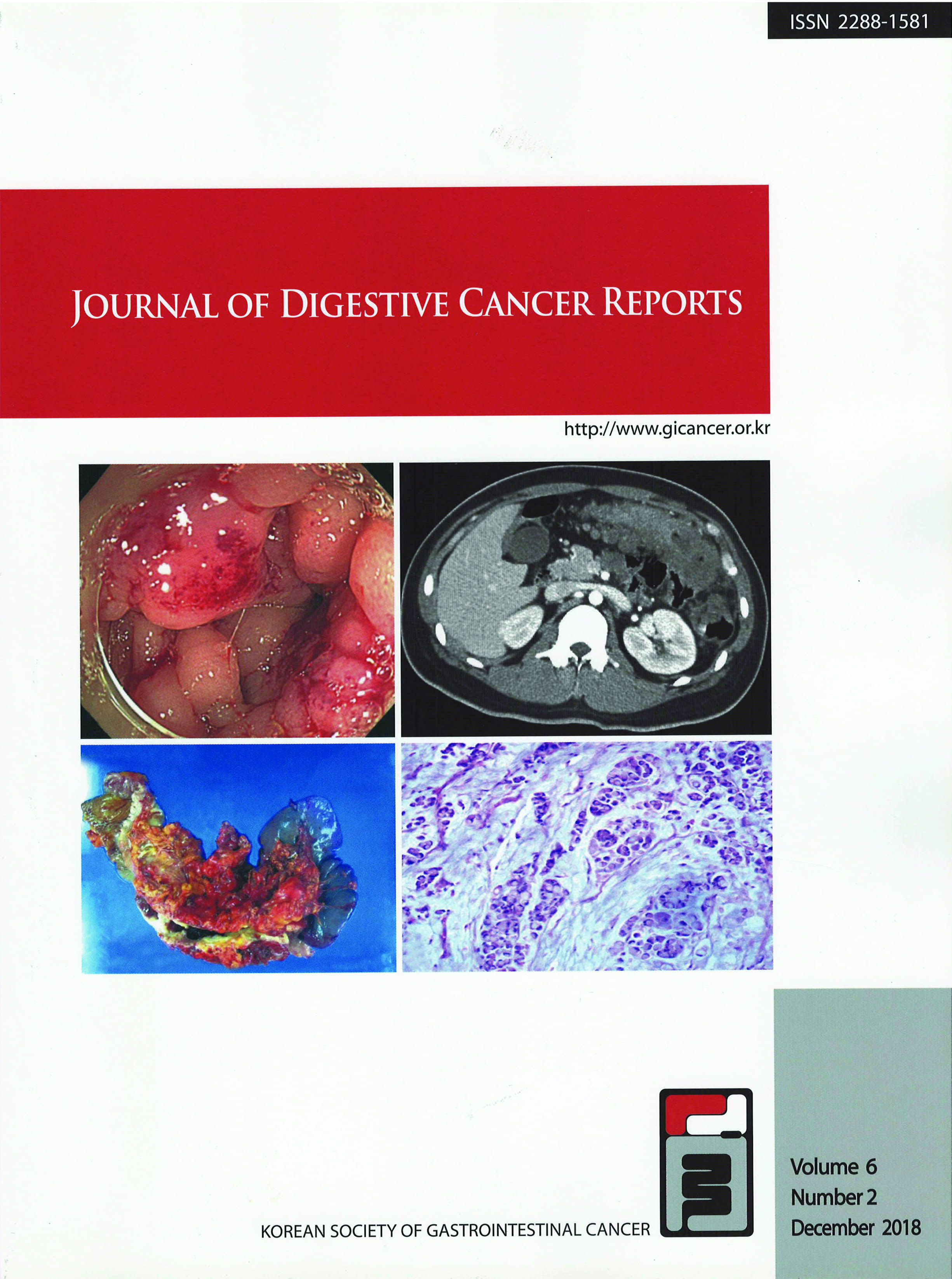
Journal of Digestive Cancer Report

2002 (v1, n1) to Present ISSN: 1671-8925

Articles

About

Year of publication

Save Email

Sort by

Best match
Relevance
PubYear
JournalTitle

DISPLAY OPTIONS

Format:

Per page:

Save citations to file

Selection:

Format:

Create file Cancel

Email citations

To:

Please check your email address first!

Selection:

Format:

Send email Cancel

58

results

page

of 6

1

Cite

Cite

Copy

Share

Share

Copy

Appendiceal Mucinous Neoplasm Detected due to the Protrusion of Mucin, in the Absence of Appendiceal Distension: A Case Report

Jin Woo PARK ; Min Geun PARK ; Ji-Sun SONG ; Hyeon Je CHO ; Yu Jin KIM

Journal of Digestive Cancer Report.2020;8(2):109-111.

A mucocele is a cystic dilatation of the vermiform appendix that contains mucous material. The symptoms associated with it are not specific and the diagnosis is seldom made prior to surgery. The reported prevalence in appendectomy specimens procured during surgery is 0.2-0.3%. Recently, we experienced a case of patient with appendiceal mucocele detected by colonoscopic examination. This case did not show typical colonoscopic features of a mucocele, demonstrating protrusion of mucin, in the absence of a smooth mound with normal overlying mucosa surrounding the appendiceal orifice. The case involved a 64-year-old woman who underwent a colonoscopy. An abdominopelvic computed tomography scan suggested a normal appendix. Subsequently, we performed an appendectomy. The pathologic finding was a low-grade appendiceal mucinous neoplasm.

2

Cite

Cite

Copy

Share

Share

Copy

Effect of Gastric Cancer Screening on Patients with Gastric Cancer:A Nationwide Population-based Study

Young Suk CHO ; Sang Hoon LEE ; Hyun Ju SO ; Dong Wook KIM ; Yoon Jung CHOI ; Han Ho JEON

Journal of Digestive Cancer Report.2020;8(2):102-108.

Background: This study was performed to evaluate the effect of gastric cancer screening through analysis of screening-related data. Methods: We investigated claims data of gastric cancer from 2009 to 2015. We evaluated whether the screening was performed to prior to registration as patients with gastric cancer. The effect of gastric cancer screening was also analyzed by gender. Results: We collected total 196,293 patients with gastric cancer. 74% of them had previous experience of gastric cancer screening. In patients with screening, early gastric cancer was 33.4% and advanced gastric cancer was 17.3%. 22,548 (15.5%) patients were diagnosed with gastric cancer within 2 years after screening. In the case of patients without screening, early gastric cancer was 15.1% and advanced gastric cancer was 25.3%. In case of men, 76% of them confirmed gastric cancer through screening, and 70.2% of women confirmed the gastric cancer. In both men and women, the rate of early gastric cancer was higher among those with screening than those without screening. Conclusion In this study, we were able to indirectly confirm the stage shift of gastric cancer screening. However, within 2 years after screening, not a few patients with gastric cancer were diagnosed. Therefore, more studies are warranted to in the future.

3

Cite

Cite

Copy

Share

Share

Copy

The Metformin Use and Gastric Cancer Risk

Young-Il KIM

Journal of Digestive Cancer Report.2020;8(2):97-101.

Metformin is a widely used first-line anti-diabetic drug worldwide. Epidemiologic studies using the large population-based cohort database have shown the association between metformin uses and reduced risk of various type cancers including gastric cancer. In the gastric cancer prevention, metformin use was associated with the significant reduction of gastric cancer risk, especially for long-term metformin users. However, there is no well-designed randomized controlled clinical trial investigating the effect of metformin as a chemopreventive drug for gastric cancer. Therefore, further well-designed clinical trials will be needed to implement metformin for chemoprevention of gastric cancer.

4

Cite

Cite

Copy

Share

Share

Copy

Helicobacter pylori Eradication and Risks of Metachronous Recurrence after Endoscopic Resection of Gastric Adenoma: A Systematic Review and Meta-Analysis

Jie-Hyun KIM ; Su Youn NAM ; Jaeyoung CHUN ; Young Hoon YOUN ; Hyojin PARK

Journal of Digestive Cancer Report.2020;8(2):91-96.

The effect of Helicobacter pylori (H. pylori) eradication on the development of metachronous recurrence after endoscopic resection (ER) of gastric adenoma is not well defined. The aim of this study was to assess the efficacy of H. pylori eradication after ER of gastric adenoma for the prevention of metachronous recurrence. A systematic literature review and meta-analysis were conducted using the databases Ovid-MEDLINE, EMBASE, Cochrane Library, KoreaMed, and KMBASE. Thus, a systematic review and meta-analysis was performed to investigate this relationship. Pooled risk ratio for metachronous gastric lesions with regard to H. pylori eradication was calculated, and heterogeneity was also measured. Five eligible studies were finally identified in systematic review, and included in meta-analysis. H. pylori eradication was associated with overall 55% lower odds of metachronous events (RR=0.55; 95 % CI 0.34-0.92). Based on the best available evidence, eradication of H. pylori can also provide protection against metachronous recurrence after ER of gastric adenoma.

5

Cite

Cite

Copy

Share

Share

Copy

Effect of Helicobacter pylori Eradication on the Prevention of Gastric Cancer in the General Population with or without Precancerous Lesions: A Meta-analysis

Soo Jin KANG ; Cheol Min SHIN ; Seung Joo KANG

Journal of Digestive Cancer Report.2020;8(2):81-90.

We performed a comprehensive meta-analysis on whether Helicobacter pylori (H. pylori) eradication can prevent gastric cancer in individuals with precancerous lesions (chronic atrophic gastritis, intestinal metaplasia, and dysplasia). The studies evaluating the effect of H. pylori eradication on gastric cancer were searched from PubMed, KoreaMed, EMBASE, and Cochrane Library. Subgroup analyses by precancerous lesions, regions and follow-up time were performed. Six randomized clinical trials were included. In the overall population, H. pylori eradication significantly decreased the risk of gastric cancer (risk ratio [RR]=0.56; 95% confidence interval [CI]: 0.41-0.77, p<0.01). Eradication therapy significantly reduced the risk of gastric cancer in Asian and group who followed up more than 10 years (RR=0.51; 95% CI: 0.35-0.73, p<0.01; I2 =0%, p=0.46). However, subgroup analysis according to the precancerous lesions did not show any significant results (p>0.05). In the general population especially in Asian population, H. pylori eradication can reduce the risk of gastric cancer. The effect of the eradication treatment is remarkable upon the long-term follow-up. In contrast, there is insufficient evidence whether the eradication should be recommended for the individuals with precancerous lesions.

6

Cite

Cite

Copy

Share

Share

Copy

Aspirin and Non-steroidal Anti-inflammatory Drugs in Prevention of Gastric Cancer

Yeon-Ji KIM ; Woo Chul CHUNG

Journal of Digestive Cancer Report.2020;8(2):77-80.

Gastric cancer is one of the leading causes of cancer-related deaths worldwide. The increased expression of cyclooxygenase (COX)-2 has been implicated in the development and progression of gastric cancers. A number of recent studies have been published evaluating the chemopreventive effect of aspirin and non steroidal anti inflammatory drungs (NSAIDs) against gastric cancer. Aspirin and NSAIDs use may reduce the risk of gastric cancer incidence and death, whereas other studies have reported contradictory results. Therefore, further study should be needed to clarify the role of aspirin and NSAIDs in the chemoprevention of gastric cancer.

7

Cite

Cite

Copy

Share

Share

Copy

Superficial Esophageal Cancer Treated with Multidisciplinary Care: A Case Report

Gyu Man OH ; Moo In PARK ; Kyoung Won JUNG ; Sung Min KANG ; Min Young SON ; Jae Hyun KIM ; Won MOON ; Seun Ja PARK

Journal of Digestive Cancer Report.2020;8(1):71-75.

Esophageal cancer is easy to infiltrate and metastasize because esophagus does not have serosa, and is difficult to remove it because esophagus is in the middle of the chest. Because of this, treatments of esophageal cancer do not always follow the guideline. In this situation, efforts to increase treatment efficiency and improve survival rate through multidisciplinary treatment are increasing. In this case, we report the patient with three superficial esophageal cancers (one in cervical esophagus and two in thoracic esophagus). The patient was treated with concurrent chemoradiotherapy instead of surgery through multidisciplinary discussion. The patient reached a complete remission through this discussion. This case is intended to inform the usefulness of multidisciplinary treatment in patients with esophageal cancer.

8

Cite

Cite

Copy

Share

Share

Copy

Current Status of Systemic Therapy in Hepatocellular Carcinoma

Han Ah LEE ; Yeon Seok SEO

Journal of Digestive Cancer Report.2020;8(1):65-70.

Although being one of the major causes of malignancy related death globally, hepatocellular carcinoma (HCC) has not received much attention in respect of novel drug development. Fortunately, several new drugs were found to be effective and tolerable in patients with advanced HCC from a number of phase 3 studies during the recent several years. Novel multi‐targeted kinase inhibitors and immune checkpoint inhibitors were approved for clinical use, and combination strategies to maximize the potent of drugs demonstrated promising antitumor activity and safety with high response rate and improved safety profile. The increased number of available agents for HCC will contribute to change of treatment strategies and prognosis of patients with advanced HCC. Still, there is a many critical questions remain unanswered. Currently ongoing trials and future studies will provide better understanding of tumor biology and optimized criteria for patient selection and combination therapies.

9

Cite

Cite

Copy

Share

Share

Copy

Current Research Status of Irreversible Electroporation for Hollow Viscus Organ of Gastrointestinal Tract

Bora KEUM ; Hyuk Soon CHOI ; Han Jo JEON

Journal of Digestive Cancer Report.2020;8(1):61-64.

Ablative therapy has drawn attention for cancer treatment as minimally invasive therapy. Recently, irreversible electroporation which has a different concept from the existing ablation method has emerged. Although gastrointestinal tract cancer is commonly managed by ablation such as liver, pancreas cancer, hollow viscus cancer is extremely challenging for applying ablative therapy because of its high perforation risk. Therefore, several studies about hollow viscus irreversible electroporation will be introduced in this review regarding its pre‐clinical relevance.

10

Cite

Cite

Copy

Share

Share

Copy

Role of Liquid Biopsies in Colorectal Cancer

Sang Hyun KIM ; Bora KEUM

Journal of Digestive Cancer Report.2020;8(1):56-60.

In recent years, liquid biopsy has received immense attention. Liquid biopsy is a minimally invasive method used for obtaining biological fluids including urine, pleural fluid and, mostly, peripheral blood. Liquid biopsy involves various targets including circulating tumors cells (CTCs), circulating cell‐free tumor DNA (ctDNA), and microRNA (miRNA). Colorectal cancer (CRC), like other solid tumors, shed tumor cells into the bloodstream. Analysis of these CTCs, as well as ctDNA is the primary objective of the liquid biopsy. Evaluation of CTC or ctDNA offers information about early tumor release, development of tumor metastasis and also about mechanisms involved in tumor resistance to treatment.

Country

Republic of Korea

Publisher

Korean Society of Gastrointestinal Cancer

ElectronicLinks

http://gicancer.or.kr

Editor-in-chief

Geum, Bora

E-mail

gicancer@gicancer.or.kr

Abbreviation

J Dig Cancer Rep

Vernacular Journal Title

대한소화기암학회지

ISSN

2288-1581

EISSN

Year Approved

2019

Current Indexing Status

Currently Indexed

Start Year

2013

Description

The Journal of digestive cancer reports publishes original articles of clinical and fundamental researches on gastrointestinal tract, liver, and pancreatobiliary tract, to contribute further development of gastroenterology.

Current Title

Journal of Digestive Cancer Research

Related Sites

WHO WPRO GIM

Help Accessibility
DCMS Web Policy
CJSS Privacy Policy

Powered by IMICAMS( 备案号: 11010502037788, 京ICP备10218182号-8)

Successfully copied to clipboard.