Main content 1 Menu 2 Search 3 Footer 4
+A
A
-A
High contrast
HOME JOURNAL CRITERIA NETWORK HELP ABOUT

Current criteria:

Regional:

WPRlM journal selection criteria(2023)

Minimum standards for the suspension and removal of WPRIM approved journals

Countries journal selection criteria:

Philippines

Submit your journal information>

Contact NJSCs>

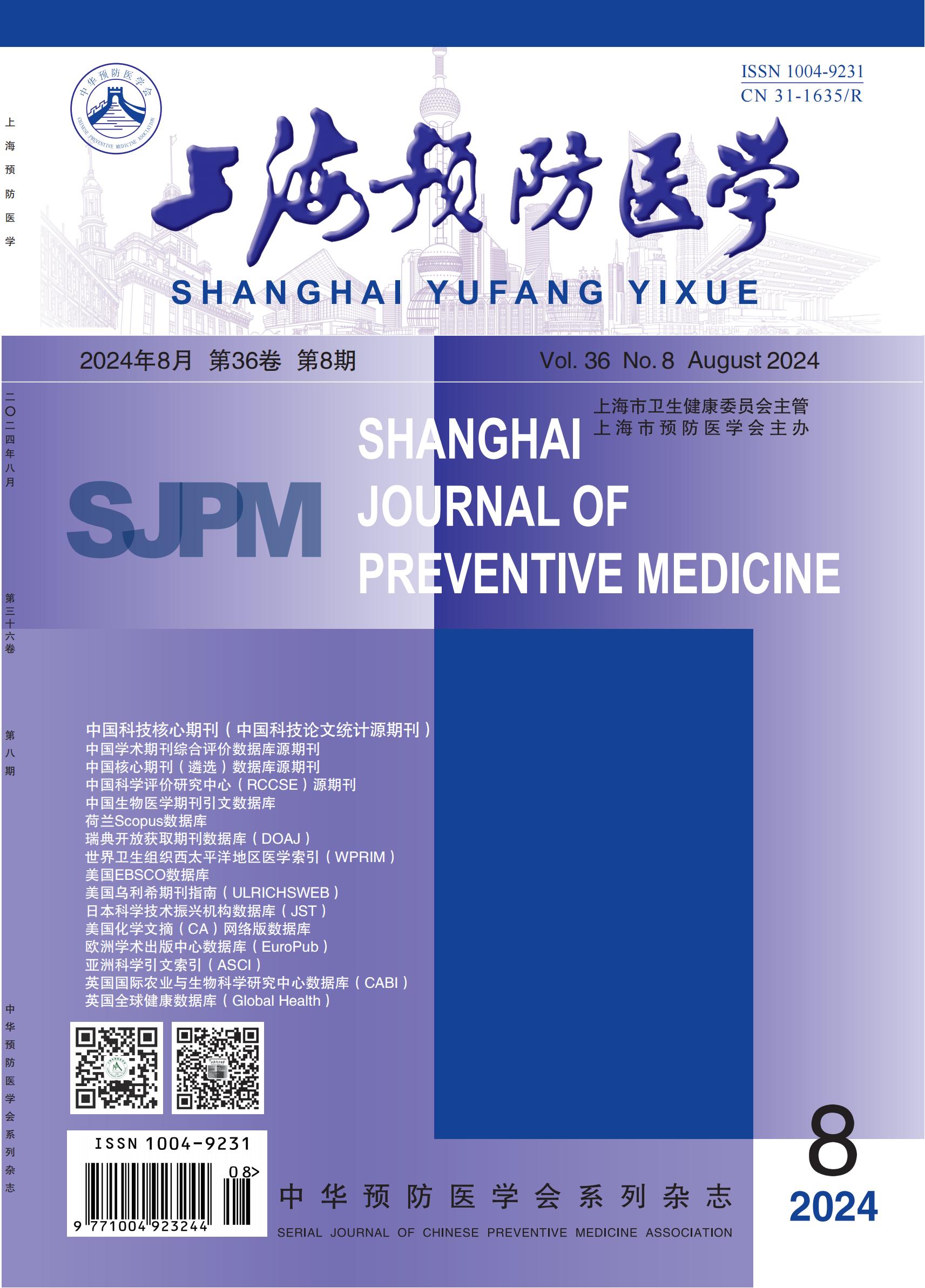
Shanghai Journal of Preventive Medicine

1989  (1,  1)  to  Present  ISSN: 1004-9231

Articles

About

Year of publication

Save Email

Sort by

Best match
Relevance
PubYear
JournalTitle

DISPLAY OPTIONS

Format:

Per page:

Save citations to file

Selection:

Format:

Create file Cancel

Email citations

To:

Please check your email address first!

Selection:

Format:

Send email Cancel

1472

results

page

of 148

1

Cite

Cite

Copy

Share

Share

Copy

Comparing the process of early control of government between H7N9 avian influenza in Shanghai in 2013 and COVID-19 in Wuhan in 2019

Li LUO ; Ge BAI ; Rui ming DAI ; Qian WANG ; Huan huan ZHU ; Xin LIU ; Ping WU ; Tian Tian ZHANG

Shanghai Journal of Preventive Medicine.2020;32(0):E069-E069. doi:10.19428/j.cnki.sjpm.2020.20122

[Objective] To analyze and judge the possibility of early control in Shanghai if COVID-19 begins in Shanghai. [Methods] Compare the process of early control of H7N9 avian influenza in Shanghai in 2013 and Wuhan COVID-19 in 2019. The early incidence data of Korean COVID-19 was simulated and analyzed to predict whether the medical resources needed in Shanghai were available. [Results] (1) It would take 22 days from the first case to the government's emergency response in terms of Shanghai. (2) It is estimated that there would be 602-763 patients with cumulative onset and onset after incubation period. (3) At least 500 beds of infectious diseases can be allocated in Shanghai in case of emergency. Through adding beds and resources reallocation in the whole city, patients can be fully admitted and treated. [Conclusion] If COVID-19 epidemic occurs in Shanghai, early control is possible.

2

Cite

Cite

Copy

Share

Share

Copy

Cure and mortality trend in the early outbreak of Coronavirus Disease 2019 (COVID-19) in China

Xiao jie TAN ; Zhi jun QIAN ; Hong wei ZHANG

Shanghai Journal of Preventive Medicine.2020;32(0):E068-E068. doi:10.19428/j.cnki.sjpm.2020.20081

[Objective] To investigate the cure and mortality trend in the early outbreak of Coronavirus Disease 2019 (COVID-19) in China, enhance the entire epidemiological knowledge about COVID-19, screen the more effective evaluation indicators, and supply the solid evidence for assessing the prevention and control measures and input-output. [Methods] The daily new confirmed cases, the cumulative cure and death cases in China and Hubei Province and outside Hubei Province, which were reported officially from January 20, 2020 to February 20, 2020, were collected to calculate the fatality rate, the ratio of the numbers of cumulative cure cases to cumulative death cases, et al, and to make the epidemiological description. [Results] Till Feb 20, 2020, the fatality rate of COVID-19 in Hubei Province was 3.42%, which was a little higher than that of the global country (2.96%). The fatality rate of COVID-19 outside Hubei Province in China was 0.71%. The trends on the indexes, including the daily new cure cases, daily new death and the ratio of cumulative cure cases to cumulative death, in Hubei Province and the whole country was highly consistent, while the significant difference existed between Hubei Province and outside Hubei Province in China. The daily ratio of cumulative cure cases to cumulative death in Hubei Province (the global country) exhibited the U trend, which reached to the lowest point on Jan 27 and subsequently grew more rapidly after Feb 5. [Conclusion] The ratio of cumulative cure cases to cumulative death was easier and effective to reflect the outbreak situation than other absolute indexes like the daily new cure cases or death. Since Feb 5, 2020, the daily cure status of COVID-19 was superior to the daily death, which indicated the effectiveness of series of the joint defense and control measures from our government and society. However, plenty of challenges exist when recovering the normal production and life if the epidemic reaches to be sustainably defensed and controlled.

3

Cite

Cite

Copy

Share

Share

Copy

Effect evaluation on mobile medical APP for treatment of outpatients with type 2 diabetes

Chenyu Han

Shanghai Journal of Preventive Medicine.2019;31(1):64-69. doi:10.19428/j.cnki.sjpm.2019.18994

Objective: The study aims to assess the effectiveness of mobile medical App in the management of outpatients with type 2 diabetes(T2DM). Methods: A total of 114 patients with T2DM were randomly divided into mobile medical group (trial group) and traditional face-to-face follow-up group (control group).Every patient received an electronic blood glucose meter, an electronic sphygmomanometer and an electronic weight scale.Patients in the trial group were treated with a telemedicine system and patients in the control group with a conventional outpatient follow-up model.The study was conducted for 6 months. Results: A total of 114 patients were eligible for inclusion and participated in the study voluntarily.At the end of the study, with 1 patient lost and 3 patients withdrawing from the study, 53 patients completed the study in the trial group, while there were 2 patients lost and 55 patients completing the study in the control group. At the end of the study (6 months), the ratio of HbA1c < 7.0% in the trial group was higher than that in the control group (45% vs 29%, P < 0.001), and the difference in HbA1c levels between the two groups was obvious(P=0.032).Compared with the control group, the trial group had better control of BMI, SBP, TG and ALT (P=0.026, P=0.043, P=0.001, P=0.048).Other clinical indicators had no significant difference. The numbers of self-monitoring blood glucose, blood pressure and body weight were higher in the trial group than those in the control group (P=0.009, P=0.033, P=0.045).In terms of safety, the numbers of hypoglycemia in the trial group was lower than those in the control group (2.0% vs 6.4%, P=0.044). A lower number of specialist visits was reported in the telemedicine group (53 vs 87, P=0.031), while the number of emergency and hospitalizations did not show significant differences between the two groups. Conclusion This study confirms that telemedicine systems can improve the awareness of self-management in patients with T2DM and enhances the communication between doctors and patients.

4

Cite

Cite

Copy

Share

Share

Copy

Impacts and strategies for the construction of the disease control and prevention system in the COVID-19 outbreak

Cheng yue LI ; Xiang GAO ; Li LI ; Qing yu ZHOU ; Chuan PU ; Pei wu SHI ; Chao HAO ; Zheng CHEN ; Qun hong SHEN ; Ling zhong XU ; Zhi HU ; Mo HAO

Shanghai Journal of Preventive Medicine.2020;32(4):E036-E036. doi:10.19428/j.cnki.sjpm.2020.20110

The outbreak of COVID-19 has exposed many shortcomings in disease control and prevention system (DCPS) of China. Resolving the problems and strengthening the DCPS became the top priority in China’s public policy agenda. This paper revealed the problems of the system regarding policy-making, regulations, operation mechanism and staff, and proposed several strategies from three aspects of legal construction, management system, and operation mechanism, including: 'Prevention first' should be incorporated into the national legal system, all the departments should be engaged in 'Healthy China 2030' initiative, laws and regulations should be amended, new disease prevention and control management institutions should be set up, a high-quality professional team should be retained, the regional health information exchange channels should be strengthened, the coordinated mechanism for disease prevention and control should be normalized, the long-term investment mechanism should be established, and the equipment renewal and reserve system should be improved.

5

Cite

Cite

Copy

Share

Share

Copy

Suitability survey on N95 filter masks for public health emergency personnel

Chuan qi LI ; Yan YIN

Shanghai Journal of Preventive Medicine.2020;32(4):E041-E041. doi:10.19428/j.cnki.sjpm.2020.19945

Objective To assess the suitability of N95 masks for public health emergency personnel. To compare the consistency between mask fit test result and subjective evaluation of mask-wearing air tightness so as to guide scientific selection and use of protection masks for emergency personnel. Methods By ambient aerosol condensation nuclear counter method, the quantitative fit test was done among 235 public health emergency personnel from both Municipal and District disease control centers. Questionnaires were conducted among them for investigation and comparison of their subjective evaluation of mask-wearing air tightness and mask fit test results. Results Of the 235 subjects , 160 passed the fittest with the pass rate being 68.1%. With various wearing actions for the test, the subjective evaluation for mask-wearing air tightness was compared with the fit test pass rate in terms of consistence, the kappa value range being from −0.09 to 0.43. K value of the action 5 (loudly speaking) was above 0.4, while the k values of other 6 actions were all below 0.4. Both Kappa value (0.09) and consistency rate (49.7%) were the lowest for action 8 (normal breathing) among all test actions. Conclusion The accuracy of the subjective evaluation for mask-wearing air tightness proves to be poor, unable to reflect the true protective effect and substitute for the fit test. It is advised that the public health personnel should rely on the fit test results to correctly choose and use suitable respiratory protective products.

6

Cite

Cite

Copy

Share

Share

Copy

Prevalence of novel coronavirus pneumonia in the early stage of transmission and responding strategies in Japan

Ji wei WANG ; Tetsuya TANIMOTO ; Tian chen ZHAO ; Kenji TSUDA ; Erika YAMASHITA ; Masahiro KAMI ; Qing wu JIANG

Shanghai Journal of Preventive Medicine.2020;32(4):E042-E042. doi:10.19428/j.cnki.sjpm.2020.20107

Novel coronavirus pneumonia disease (COVID-19) caused by SARS-CoV-2 began to emerge in Wuhan, Hubei, China in December 2019. It is currently spreading globally including Japan. The COVID-19 case in Japan began to appear in middle January 2020 and continued to increase over time. The period from middle January to the end of February is considered to be the initial stage of domestic transmission in Japan. This article described the spread of 935 COVID-19 cases related to Japan by the end of February 2020, including the 15 infected Japanese returned from Wuhan, the 696 infected individuals in the large-scale cruise ship 'Diamond Princess' and the 224 infected individuals in Japan. This paper summarizes the measures to control the spread of SARS-CoV-2 in Japan, such as limiting RT-PCR detection for SARS-CoV-2, reducing the number of patients with mild illness who go to medical institutions unnecessarily, formulating guidelines for SARS-CoV-2 infection consultation, canceling large gatherings and temporarily closing schools. This paper further points out the problems encountered in the prevention and control of the spread of SARS-CoV-2 in Japan, such as the slow detection of RT-PCR, the risk of infection faced by medical staff, the regional differences in the domestic health care service system, the confusion of information disclosure and management. The above introduction as allows us to acquire a better understanding of the new coronavirus pneumonia in Japan and the world and may provide reference for the control the epidemic of COVID-19 in worldwide.

7

Cite

Cite

Copy

Share

Share

Copy

Dietary exposure assessment of chlorate in infant formula

Shenghao YU ; Yiqi LI ; Lujing ZHANG ; Changchang YAN ; Shaojie PENG

Shanghai Journal of Preventive Medicine.2022;34(5):401-406. doi:10.19428/j.cnki.sjpm.2022.22041

ObjectiveTo investigate chlorate contamination level in infant formula sold in Shanghai, and to evaluate the dietary exposure risk to infants in Shanghai. MethodsWith the risk monitoring data of chlorate in infant formula sold in Shanghai in 2020, combined with the dietary consumption data of infants, the dietary exposure of chlorate in infant formula was assessed via the point assessment method. ResultsIn 2020, the overall detection rate of chlorate in 120 infant formula samples was 98.3% (118/120), the mean content was 124.5 μg⋅kg-1, the 50 percentile value was 64.6 μg⋅kg-1, and the maximum value was 1 475.0 μg⋅kg-1. The mean and 95 percentile value of daily chlorate intake from infant formula for infants aged 0‒36 months in Shanghai were 1.10 and 1.84 μg⋅kg-1, accounting for 36.7% and 61.3% of the tolerable daily intake (TDI) of chlorate (3μg⋅kg-1), respectively. The mean, 50 percentile value and 95 percentile value of daily chlorate exposure of infants in different month-age groups (0‒6 months, 6‒12 months, 12‒36 months) through infant formula were lower than the TDI value. ConclusionThe health risk of daily chlorate intake from infant formula for infants and young children aged 0‒36 months in Shanghai is at an acceptable level.

8

Cite

Cite

Copy

Share

Share

Copy

Epidemiological features of foodborne disease outbreaks in Shanghai 2010 to 2020

Donglei LU ; Shenggang DUAN ; Chen QI ; Yue YU ; Hong LIU

Shanghai Journal of Preventive Medicine.2022;34(5):407-410. doi:10.19428/j.cnki.sjpm.2022.21624

ObjectiveTo analyze the epidemiological features of foodborne disease outbreaks in Shanghai and to find the risk factors. MethodsWe collected the data of foodborne disease outbreaks occurred in Shanghai between 2010 and 2020, analyzed the characteristics of outbreaks, including time and geographic distribution, pathogenic factors and possible reasons caused outbreaks. ResultsBetween 2010 and 2020, there were 108 foodborne disease outbreaks with 1 736 cases, 45 inpatient cases and 1 death. May to September was the epidemic period, with about 64.81% of the outbreak occurrence. 39.81% outbreaks occurred in Pudong, Songjiang and Chongming Districts. Most outbreaks occurred in small restaurants (25%) and most foodborne cases were in staff canteen outbreaks (27.53%). The main possible reasons caused outbreaks were improper food storage (19.44%), cross-contamination (14.81%) and improper cooking (12.04%). The major pathogenic factor was biological, caused 75.92% outbreaks and 77.59% cases. Methanol poisoning caused 1 death. The main contaminated food caused outbreaks was meat (17.59%), multiple food (12.04%) and aquatic products (11.11%). ConclusionThe foodborne disease outbreaks in Shanghai caused inpatient cases and death. We should pay more attention to foodborne disease outbreaks and we can control the risk factors by strengthening supervision and carrying out health education to reduce foodborne disease outbreaks.

9

Cite

Cite

Copy

Share

Share

Copy

Analysis of salmonella drug resistance in poultry sold in Jiading District from 2019 to 2020

Peichao CHEN ; Qiang HUANG ; Pan SUN ; Yuting DONG ; Qian PENG

Shanghai Journal of Preventive Medicine.2022;34(5):411-416. doi:10.19428/j.cnki.sjpm.2022.21510

ObjectiveTo investigate the contamination situation, serotype distribution and drug resistance of salmonella in poultry sold in Jiading District, Shanghai. MethodsBetween 2019 and 2020, four types of poultry meat (chicken, duck, goose and pigeon) were sampled from markets, and potential salmonella contamination was isolated and identified via serotyping. Furthermore, resistance detection of isolated salmonella to 13 commonly-used antibiotics was conducted. ResultsA total of 32 salmonella strains were isolated from 156 commercial poultry samples. No salmonella was identified in pigeon samples, while the most severe contamination was detected in goose samples, with a detection rate of 28.00%. Contamination situation was categorized with different storage conditions. The lowest detection rate of 12.90% was noted under cold storage, while the highest rate of 26.67% was detected under frozen condition. The major serotypes of salmonella were Salmonella typhimurium, Salmonella enteritidis and Salmonella Argonne. Relatively higher drug resistance was detected with nalidixic acid and tetracycline, with drug resistance rate of 59.38% and 40.63%, respectively. Low drug resistance was detected with cephalosporins, and no drug resistance was detected with imipenem. Significant difference in drug resistance was noted in the serotype of Salmonella isolated from meat of chicken, duck and goose. Three major salmonella strains had different drug resistance. 21.88% (7/32) of salmonella strains were non-resistant to any tested drugs. Multi-drug resistant strains accounted for 31.25% (10/32) of the isolated strains. At most, salmonella was resistant to 11 kinds of different antibiotics. ConclusionThere is a significant difference in the contamination situation and drug resistance of Salmonella isolated from four types of poultry meat sold in Jiading District, Shanghai. It is strongly recommended that different supervision strategies and management upon classification be implemented.

10

Cite

Cite

Copy

Share

Share

Copy

Analysis of dietary intake in the residents aged 15 years and above in Shanghai

Baozhang LUO ; Chunfeng WU ; Zhenni ZHU ; Ming MI ; Huiting YU ; Hua CAI ; Hong LIU

Shanghai Journal of Preventive Medicine.2022;34(5):417-424. doi:10.19428/j.cnki.sjpm.2022.22001

ObjectiveTo provide basic data of daily dietary intake from various food categories as well as in different regions, seasons, genders, and age groups in Shanghai residents aged 15 and over. MethodsMultistage stratified proportional probability sampling (PPS) was used to extract the samples, and food frequency questionnaire (FFQ) was used to investigate the dietary intake of the subjects in four seasons from 2012 to 2013. The weighted statistical analysis of the samples comprehensively considered the sampling design weights, the stratified adjustment weights, and the non-response adjustment weights. ResultsThe total daily dietary intake (excluding drinking water) of residents aged 15 years and above was 1 174.71 g, and the highest three daily dietary intake categories were cereals (252.31 g), vegetables (205.36 g) and fruits (141.00 g). The total daily dietary intake of the residents in the urban area, the suburban area and the rural area was 1 209.15 g,1 172.27 g and 948.50 g, respectively, and the total daily dietary intake in the outer suburb area was significantly lower than that in other areas (F=74.12,P<0.001). The total daily dietary intake in different seasons was 1 232.47 g in spring, 1 166.80 g in summer, 1 241.15 g in autumn and 1 088.83 g in winter, respectively. The total daily dietary intake in winter was lower than that in other seasons (F=15.96,P<0.001). Fruits and beverages intake showed apparent seasonality. The total daily dietary intake in male and female residents was 1 234.03 g and 1 112.32 g, respectively, and the total daily dietary intake of male was higher than that of female (F=78.59,P<0.001). The total daily dietary intake of residents in different age groups was 1 218.64 g for 15‒44 years old, 1 141.27 g for 45‒59 years old, and 1 064.54 g for 60 years old and above (F=20.28,P<0.001). ConclusionThe daily intake of cereals, livestock and poultry meat, aquatic products, eggs and edible oil is relatively balanced, but the daily intake of vegetables, fruits and milk is relatively insufficient for the residents aged 15 years and above in Shanghai. The daily intake of different food types shows distinguishable characteristics in urban and rural areas, seasons, age groups and genders.

Country

China

Publisher

Editorial Office of SJPM

ElectronicLinks

http://www.sjpm.org.cn/

Editor-in-chief

PENG Jing

E-mail

zazhi@scdc.sh.cn

Abbreviation

SJPM

Vernacular Journal Title

上海预防医学

ISSN

1004-9231

EISSN

Year Approved

2019

Current Indexing Status

Currently Indexed

Start Year

1989

Description

Initiating in 1989, Shanghai Journal of Preventive Medicine (SJPM) is an only official journal of Shanghai Preventive Medicine Association and belongs to the series of journals of Chinese Preventive Medicine Association. SJPM publishes monthly original investigation papers, reviews and experts’opinions. Its readers are preventive health care professionals. Its authors are from all over China. All manuscripts accepted will be reviewed by at least 2 peer reviewers. The publication period is less than 6 monthes. SJPM is a nationally influential journal indexed by the Chinese academic journal comprehensive evaluation database, the Chinese core journal (selection) database, the Chinese periodical full-text database (CJFD), Chinese science and technology periodical database, Chemical Abstracts (CA) database, Japan Science and Technology Agency (JST) database, Wanfang data-digital journal group, China Zhiwang(CNKI), etc.

Related Sites

WHO WPRO GIM

Help Accessibility
DCMS Web Policy
CJSS Privacy Policy

Powered by IMICAMS( 备案号: 11010502037788, 京ICP备10218182号-8)

Successfully copied to clipboard.