Main content 1 Menu 2 Search 3 Footer 4
+A
A
-A
High contrast
HOME JOURNAL JOURNAL SELECTION NETWORK HELP ABOUT

Journal Selection Criteria and Standards

WPRIM Journal Selection Criteria (August 2023)

NJSC Philippines Selection Criteria (for Philippine-based journals only)

Minimum standards for the suspension and removal of WPRIM approved journals

Application and Indexing Process

Application and Submission Process for WPRIM Indexing

Journal Content Management

Candidate Journal Selection and Data Creation and Management System

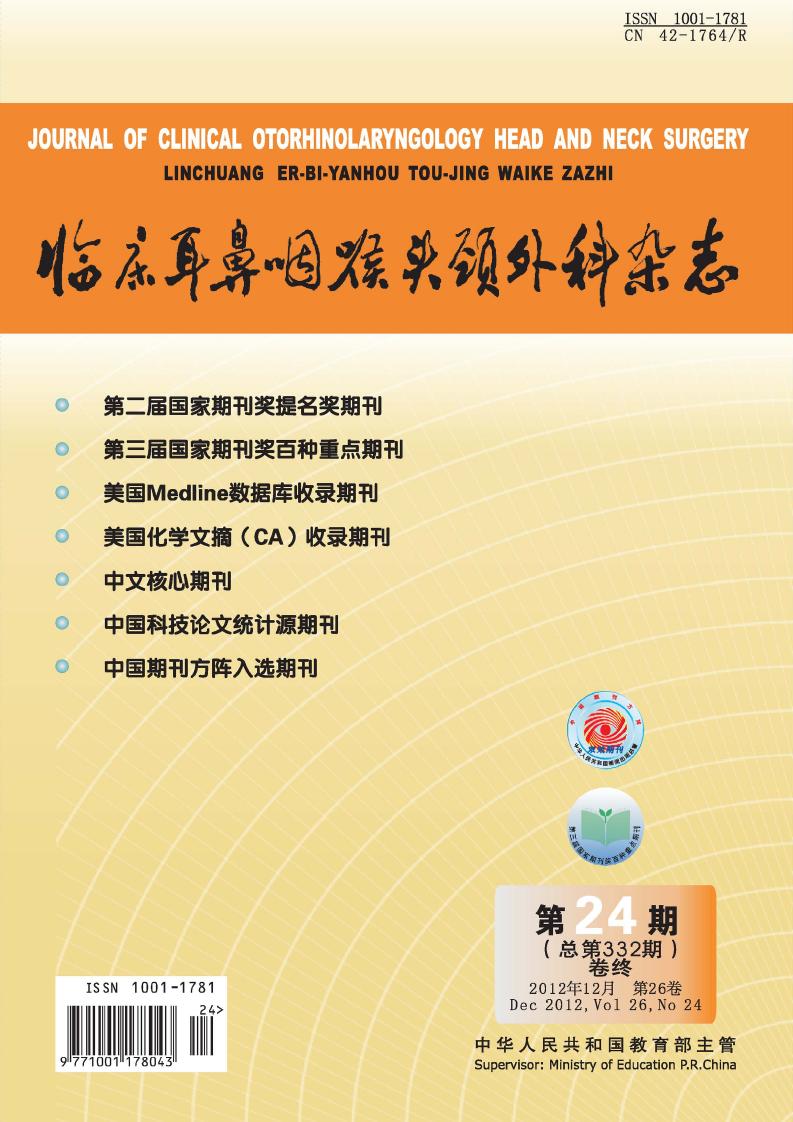
Journal of Clinical Otorhinolaryngology Head and Neck Surgery

1987  to  Present  ISSN: 1001-1781

Articles

About

Save Email

Sort by

Best match
Relevance
PubYear
JournalTitle

DISPLAY OPTIONS

Format:

Per page:

Save citations to file

Selection:

Format:

Create file Cancel

Email citations

To:

Please check your email address first!

Selection:

Format:

Send email Cancel

3753

results

page

of 376

1

Cite

Cite

Copy

Share

Share

Copy

The expression of mucins gene in the human nasal polyps and allergic rhinitis

Chenqi JI ; Yongqing GUO

Journal of Clinical Otorhinolaryngology Head and Neck Surgery.2009;(20):923-925,929. doi:10.3969/j.issn.1001-1781.2009.20.004

Objective:To detect the mucin gene (MUC2,MUC5AC,MUC5B,MUC18 and MUC19)expression in the nasal polyps, allergic rhinitis (AR)and the normal nasal mucosa in human. To investigate the role and clinical significance of mucin gene in the pathogenesis of nasal polyps and AR patients .Method:We obtained samples from 35 cases of nasal polyps,18 cases of AR inferior turbinate and 18 cases of simple nasal septum deviation inferior turbinate. Specimens were analyzed with RT-PCR and Real-time FQ-RT-PCR.Result:The results of RT-PCR and FQ-RT-PCR showed that the expression of MUC5AC,MUC5B in nasal polyps and AR patients was significantly higher than that in normal mucosa(P<0.05). The expression of MUC5AC,MUC5B in nasal polyps was not significantly different from that in AR patients(P>0.05). The expression of MUC2, MUC18 in nasal polyps and AR was not significantly different from that in normal mucosa(P>0.05). And the results of RT-PCR for MUC19 expression in AR was higher than that in nasal polyps group and normal group(P<0.05 or P<0.01).Conclusion:MUC5AC and MUC5B are highly expressed in epithelium of human nasal polyps and AR, and they take part in mucus over-secretion in nasal polyps and AR.The expression of MUC19 in AR was higher than that in nasal polyps group and normal group. It indicates that the secretion of MUC19 in allergic rhinitis was on high level. There was no difference of the expression of MUC2 and MUC18 in nasal polyps group, AR group and in normal group.

2

Cite

Cite

Copy

Share

Share

Copy

Non-distinctive features on CT scan of fungal sinusitis

Jin QIAN ; Houen LI ; Liang LIU ; Danheng ZHAO ; Jianjun SUN

Journal of Clinical Otorhinolaryngology Head and Neck Surgery.2009;(23):1069-1070,1073. doi:10.3969/j.issn.1001-1781.2009.23.005

Objective:This article was a retrospective analysis on the preoperative CT scan of fungal sinusitis patients.The non-distinctive clinic feature was suggested to improve the accuracy of preoperative diagnosis.Method:A retrospective analysis was made for 176 patients with fungal sinusitis,which were confirmed by postoperative pathologic disanosis from January 2000 to January 2008.Every patient was performed both CT examination and nasalendoscopy preoperatively. All patients underwent endoscopic sinus surgery and the lesions in sinus were cleared and confirmed fungal infection by pathology.Thirty-five cases fungal infection located in sphenoid sinus,84 cases in maxillary sinus,49 cases in both maxillary and ethmoid sinus,3 cases in all sinus,5 cases in both ethmoid and sphenoid sinus.There were 179 sinuses in 176 patients were infected. Result:This group totally had 175 cases(179 sides). One hundred and seventy-three cases had unibilateral lesion,3 cases had bilateral lesion. The CT scan showed non-distinctive features including unifom dense,uneven dense in the sinus and bone resorption of the inner side bone wall. Five cases in sphenoid sinus lesion were found calcification in CT scan but 8 cases didn't show such features.Among these cases. 5 cases showed uniforra.dense and 3 cases showed uneven dense. In 84 cases maxillary sinus lesion,there were 12 cases without distinctive change,among these cases,8 cases showed uniform derise,4 cases showed uneven dense and 5 cases had boRe resorption. In 49 cases both ethmoid and maxillary sinus lesion,13 cases didn't show distinctive change,among these cases,9 cases showed uniform dense,4 cases showed uneven dense and 6 cases had bone resorption. Five cases had calcification in the both sphenoid and ethmoid sinus. Totally 81.56% of these patients had calcification feature in the CT scan.Conclusion:The calcification in the lesion of sinus is usually featured as characteristic manifestation of fungal sinusitis. But in clinic,the calcification does not exit in some patient's CT scan. When being absent of the featured sign in CT scan,the fungal sinusitis have to be diagnozed by other detecting means,even postoperative pathology.

3

Cite

Cite

Copy

Share

Share

Copy

The study of correlation between allergen and chronic rhinosinusitis

Chao YANG ; Hong XU

Journal of Clinical Otorhinolaryngology Head and Neck Surgery.2009;(14):633-635,638. doi:10.3969/j.issn.1001-1781.2009.14.004

Objective:To explore the effects of allergic factors in chronic sinusitis . Method:Skin prick test and specific serum IgE of 194 patients with chronic sinusitis were performed in our department before endoscopic sinus surgery from October,2007 to October,2008, and correla- tion between test results and clinical classification was analyzed retrospectively. Result: ① Result of skin prick test was analyzed. Positive rate of house dust was 20.6% (40/194),of dust mites 16.0%(30/194),of house dust mites 14.9%(29/194). ② Positive rate of allergic specific serum IgE and skin prick test in experimental group was compared with that of control group. Positive rate of house dust mites,dust mites and house dust between groups were significantly different(P<0.05).③ Clinical classification of chronic sinusitis had a negative correlation with the specific serum IgE (house dust mites ,house dust and dust mites)about experimental group(P<0.05). Conclusion: Allergic factors was associated with etiopathoge-nisis and course of disease of chronic sinusitis.

4

Cite

Cite

Copy

Share

Share

Copy

Effects of fluticasone on expression of basic fibroblast growth factor and mRNA in allergic rhinitis rats

Jianguo LIU ; Yuehui LIU ; Bingbi XIE

Journal of Clinical Otorhinolaryngology Head and Neck Surgery.2009;(14):649-651,655. doi:10.3969/j.issn.1001-1781.2009.14.009

Objective:To investigate the effects of fluticasone on expression of basic fibroblast growth factor and mRNA in allergic rhinitis rats. Method:Ninety Sprague-Dawley rats were randomly divided into three groups(n = 30 for each) , including AR group, control group and fluticasone treatment group. In this experiment , the rat model of AR was established by the ovalbumin challenge methods. The expression of the protein of basic fibroblast growth factor and mRNA were detected with immunohistochemistry methods and in RT-PCR methods. Result:The protein and mRNA expression of basic fibroblast growth factor in nasal tissue was significantly higher in the AR group than that in control group(P<0.01),and it was much lower in the treatment group than that in the AR group(P<0.01) ibut still higher than that in the control group(P<0.01). The epithelial cell was the chief expression cell. Conclusion:The basic fibroblast growth factor participates in the pathogenesis of AR ,and inhaled fluticasone can significantly inhabit the expression of the protein and mRNA of basic fibroblast growth factor in the chronic stage of AR,thus preventing the airway remodeling.

5

Cite

Cite

Copy

Share

Share

Copy

Clinical analysis on 28 cases of head-neck malignant fibrous histiocytoma

Xin LIN ; Shaowen ZENG ; Chu YANG ; Chuangwei LI ; Dongtao YANG

Journal of Clinical Otorhinolaryngology Head and Neck Surgery.2009;(19):886-888,893. doi:10.3969/j.issn.1001-1781.2009.19.008

Objective:To analyze the clinical feature and treatment of head-neck malignant fibrous histiocytoma (MFH).Method:A retrospective analysis on the clinical data of 28 cases of MFH were carried out, of which 9 were in the maxilla, 3 in the nasal cavity, 5 in the larynx, 3 in the parotid, 3 in the temporal bone, 1 in the hypothyroid, and 4 in the head and neck region. All of the cases underwent immune histochemistry: 4 cases of surgery alone, 23 cases of surgery followed by radiotherapy, and 1 case of radiotherapy alone.Result:Except 5 cases lost follow-up after 1 year, all the other cases were followed-up over 3 years, the survival rate for 1 or 3 years was respectively 96.4%(27/28) and 57.1%(16/28); 23 cases were followed up for 5 years, the survival rate was 26.1%(6/23). The recurrent rate in 3 years was 60.7%(17/28) ,with 1 to 7 times recurrence at a mean interval of 5.6 months. Twelve recurrent cases were adopted expanded resection of non-defined operation except 1 case with radiotherapy.Conclusion:The diagnosis of MFH depends on the technology of immune histochemistry. Early diagnosis, expanded resection, and integrated therapy could reduce the recurrence and increase the survival rate; the recurrence could adopt expanded resection of non-defined operation to prolong the life.

6

Cite

Cite

Copy

Share

Share

Copy

The expression stathmin gene in laryngeal squamous cell carcinoma

Xuecong ZHANG ; Hua CAO ; Dongling GAO

Journal of Clinical Otorhinolaryngology Head and Neck Surgery.2009;(19):872-873,877. doi:10.3969/j.issn.1001-1781.2009.19.003

Objective:To observe expression of stathmin gene in laryngeal squamous cell carcinoma(LSCC) and relation between expression of stathmin gene and occurance and development of LSCC.Method:The expression of the stathmin gene was determined in 35 LSCC of specimens and 18 normal laryngeal tissues(NLT) of specimens by in situ hybridizaion with Digoxigenin labled probe of stathmin mRNA.Result:Expression of stathmin gene was observed in 35 cases of laryneal squamous cell carcinoma tissue (positive rate, 69%) and positive signal was observed in both cytoplasm and nuclear. Among 18 cases of normal tissue, only 6 showed weak positive signal. There was significant difference in expression of stathmin gene between laryneal squamous cell carcinoma tissue and nomal tissue.Conclusion:Expreesion of stathmin gene may play a key role in the pathogenisis and development of laryneal squamous cell carcinoma. It may be a very important biotherapy target in the treatment of laryneal squamous cell carcinoma.

7

Cite

Cite

Copy

Share

Share

Copy

The effect of the expression and influence of MMP-9 on prognosisof nasal polyps

Jiangbo CHEN ; Tiansheng WANG ; Hong SUN

Journal of Clinical Otorhinolaryngology Head and Neck Surgery.2009;(18):840-842,845. doi:10.3969/j.issn.1001-1781.2009.18.008

Objective:To study the expression of MMP-9 and eosinophils in nasal polyps and its influence on the prognosis. Method:Study the expression of MMP-9 and EOS on the tissue of nasal polyps of patients who were cured or recurrent and normal nasal mucosa(NM) by immunohistochemisty and HE staining. Result:In the patients of recurrent group (Group B) , the expression of MMP-9 was much stronger than that of good prognosis group (Group A) and NM. The MMP-9 was stronger in the eosinophil nasal polyps than that of non-eosinophil groups. The percentage of EOS in Group A was 16.67% , while 62.50% in the Group B. Conclusion:The stronger expres-sion of MMP-9 on Group B and eosinophil group indicated that MMP-9 might affect the prognosis of nasal polyps through inducing the number of EOS in the mucosa. MMP-9 may be one of the risk factors for the relapse of nasal polyps.

8

Cite

Cite

Copy

Share

Share

Copy

Vowel selection effects on the parameters of acoustic analysis

Qing CAI ; Zezhang TAO

Journal of Clinical Otorhinolaryngology Head and Neck Surgery.2001;(4):167-168,170. doi:10.3969/j.issn.1001-1781.2001.04.010

Objective:To investigate if there is difference about the parameters of acoustic analysis with the different vowe |a|、|i|、| | and decide which vowels is best fitted to the acoustic analysis. Method:40 normal and 130 pathologic voice patients accepted acoustic analysis. Each acoustic parameters such as jitter,shimmer、NNE、 SDF0、SNR were compared with different vowels. Result:Jitter、shimmer、NNE with |i| were much lower than that with |a| and | | in normal cases and light hoarseness group. While the acoustic parameters with |i| were much higher than that with |a| and | | in moderate and heavy hoarseness group. Conclusion: |a| and | | were the preferred vowels for normal and light hoarseness group,while the |i| could supply some useful suggestion for the moderate and heavy hoarse patients.

9

Cite

Cite

Copy

Share

Share

Copy

Analysis on 6 cases with nasal neuroendocrine carcinoma.

Li XU ; Bing GUAN ; Xin PENG ; Ying XU ; Ying WANG ; Jingtao WU

Journal of Clinical Otorhinolaryngology Head and Neck Surgery.2013;27(5):236-238.

OBJECTIVE: To investigate the clinical features, the CT, MRI features and therapeutic strategy of nasal neuroendocrine carcinoma (NEC). METHOD: A retrospective study was carried out on 6 cases of NEC. 2 were female and 4 were male. Routine preoperative CT and MRI examination were performed. In one case,the tumor had invaded the brain and then was treated in department of oncology. Five cases were undertaken tumor resection under nasal endoscope, and combined with postoperative chemoradiation therapy. RESULT: The postoperative pathological report of 1 cases was large cell type, the remaining 4 cases were small cell type. One case treated in department of oncology had lived for 2 month with tumor in his body. One cases relapsed and died at 4 month after postoperation, 1 case was lost and 3 case did not relapse till now. CONCLUSION NEC of paranasal sinuses is malignant, but early detection, early diagnosis and treatment can improve the prognosis of this disease. For limited lesion of NEC, nasal endoscopic operation is an effective, safe and minimally injury method.
Adult ; Carcinoma, Neuroendocrine ; diagnosis ; pathology ; surgery ; Endoscopy ; Female ; Humans ; Male ; Middle Aged ; Paranasal Sinus Neoplasms ; diagnosis ; pathology ; surgery ; Prognosis ; Retrospective Studies

Adult ; Carcinoma, Neuroendocrine ; diagnosis ; pathology ; surgery ; Endoscopy ; Female ; Humans ; Male ; Middle Aged ; Paranasal Sinus Neoplasms ; diagnosis ; pathology ; surgery ; Prognosis ; Retrospective Studies

10

Cite

Cite

Copy

Share

Share

Copy

Expression and significance of pulmonary surfactant protein D and IL-16 in allergic rhinitis and nasal polyps.

Linghao MENG ; Manying GENG ; Baoxing YAN ; Xing LU

Journal of Clinical Otorhinolaryngology Head and Neck Surgery.2013;27(5):233-236.

OBJECTIVE: To detect the expression and distribution of the lung surfactant protein D (surfactant protein D,SP-D ) and IL-16 in nasal mucosa of allergic rhinitis and nasal polyps, and then probe into their significance in the pathology of allergic rhinitis and nasal polyps. METHOD: Fifteen cases of allergic rhinitis, fifteen cases of nasal polyps and fifteen cases of inferior turbinate mucosa were studied to detect the expression of SP-D and IL-16 by immunohistochemistry method. RESULT: The expression of SP-D and IL-16 in allergic rhinitis and nasal polyps were dramatically higher in controls (P < 0.01). There was no remarkable difference in the expression of SP-D and IL-16 between allergic rhinitis and nasal polyps (P > 0.05). CONCLUSION Both normal tissue and diseased tissue express SP-D and IL-16. SP-D is likely to play key roles in the inflammatory reaction process of allergic rhinitis and nasal polyps. IL-16 is an important eosinophil chemokine in the process of allergic rhinitis and nasal polyps,and it can also enhance the local role of eosinophils,thus it can involve in the process of allergic rhinitis and nasal polyps disease.
Adolescent ; Adult ; Female ; Humans ; Interleukin-16 ; metabolism ; Male ; Middle Aged ; Nasal Polyps ; metabolism ; pathology ; Pulmonary Surfactant-Associated Protein D ; metabolism ; Rhinitis, Allergic ; Rhinitis, Allergic, Perennial ; metabolism ; pathology ; Young Adult

Adolescent ; Adult ; Female ; Humans ; Interleukin-16 ; metabolism ; Male ; Middle Aged ; Nasal Polyps ; metabolism ; pathology ; Pulmonary Surfactant-Associated Protein D ; metabolism ; Rhinitis, Allergic ; Rhinitis, Allergic, Perennial ; metabolism ; pathology ; Young Adult

Country

China

Publisher

Wuhan Union Hospital Press

ElectronicLinks

http://www.whuhzzs.com

Editor-in-chief

E-mail

whuhzzszy@hust.edu.cn

Abbreviation

Journal of Clinical Otorhinolaryngology Head and Neck Surgery

Vernacular Journal Title

临床耳鼻咽喉头颈外科杂志

ISSN

1001-1781

EISSN

Year Approved

2013

Current Indexing Status

Currently Indexed

Start Year

1987

Description

1987-2006:临床耳鼻咽喉科杂志; 2007-:临床耳鼻咽喉头颈外科杂志

Current Title

Journal of Clinical Otorhinolaryngology Head and Neck Surgery

Related Sites

WHO WPRO GIM

Help Accessibility
DCMS Web Policy
CJSS Privacy Policy

Powered by IMICAMS( 备案号: 11010502037788, 京ICP备10218182号-8)

Successfully copied to clipboard.