Main content 1 Menu 2 Search 3 Footer 4
+A
A
-A
High contrast
HOME JOURNAL CRITERIA NETWORK HELP ABOUT

Current criteria:

Regional:

WPRlM journal selection criteria(2023)

Minimum standards for the suspension and removal of WPRIM approved journals

Countries journal selection criteria:

Philippines

Submit your journal information>

Contact NJSCs>

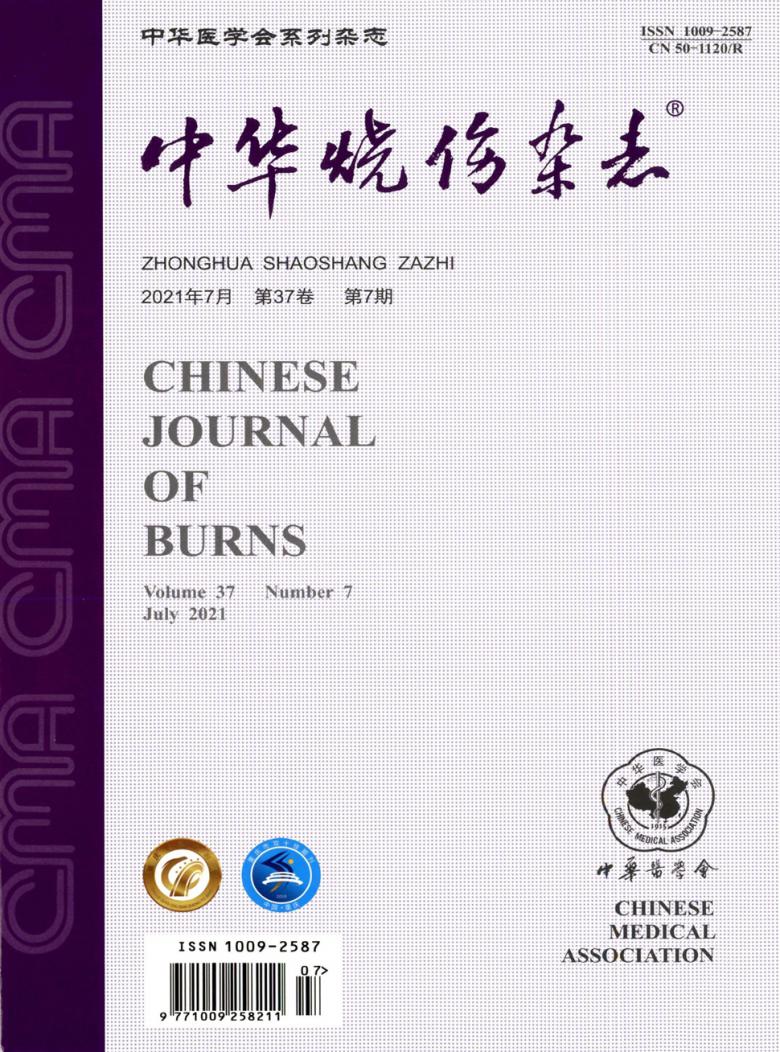
Chinese Journal of Burns

2002 (v1, n1) to Present ISSN: 1671-8925

Articles

About

Year of publication

Save Email

Sort by

Best match
Relevance
PubYear
JournalTitle

DISPLAY OPTIONS

Format:

Per page:

Save citations to file

Selection:

Format:

Create file Cancel

Email citations

To:

Please check your email address first!

Selection:

Format:

Send email Cancel

2653

results

page

of 266

1

Cite

Cite

Copy

Share

Share

Copy

Study on the typing of immunocytes after xenogeneic or allogeneic acellular dermal matrix grafting.

Du-Yin JIANG ; Bi CHEN ; Chi-Yu JIA ; Hong ZHANG

Chinese Journal of Burns.2003;19(2):104-108.

OBJECTIVETo investigate the immunologic reaction difference between xenogeneic and allogeneic acellular dermal matrix (ADM) grafting.

METHODSSplit thick skin samples harvested from healthy piglets and human volunteers who underwent losing-weight operation were processed to be xeno-ADM and allo-ADM. The ADMs overlapped with ultrathin auto-skin were employed to immediately cover the wound after escharectomy in deep burn patients. The patients were correspondingly set to be Xeno (26 cases) and Allo (10 cases) groups. Another 8 cases with deep burn wounds were grafted with only split thick autoskin (TTS) after escharectomy as control group. The tissue samples from grafted area were observed by immunohistochemistry after the grafting. The typing of immune cells in peripheral blood and grafted tissue was determined.

RESULTS(1) The CD4(+), CD45RO(+) and CD4(+)/CD8(+) cell ratios in peripheral blood in Xeno group increased slightly after the skin grafting when comparing to those in control group (P > 0.05). (2) There existed lasting inflammatory and immunological reaction in the local site of grafts in Xeno group. In addition, more than 80% of the inflammatory cells could be found to be CD3(+)/CD4(+), CD45RO(+). But CD8(+), Vs8C(+) plasmocytes and CD57(+) NK cells were found less. Furthermore, eosinophil and CD68(+)/CD4(+) foreign body megalocyte reactions could also be identified, especially in Xeno-ADM before rejection (P < 0.05 - 0.001). There was only mild inflammatory and immunological reaction during early grafting stage (within 8 post-operational weeks) in Allo-group.

CONCLUSIONThe specific immunologic reaction of human host to ADM might be participated by mononuclear cells and macrophages and presented mainly as cellular immune reaction induced by CD4(+) T lymphocytes. Furthermore, the foreign body megalocyte constructed by help T cell and macrophage might play important roles in the reaction.


Animals ; Burns ; immunology ; surgery ; Dermis ; transplantation ; Graft Rejection ; Humans ; Skin Transplantation ; immunology ; methods ; Swine ; Transplantation, Heterologous ; Transplantation, Homologous

Animals ; Burns ; immunology ; surgery ; Dermis ; transplantation ; Graft Rejection ; Humans ; Skin Transplantation ; immunology ; methods ; Swine ; Transplantation, Heterologous ; Transplantation, Homologous

2

Cite

Cite

Copy

Share

Share

Copy

Study on the mechanism of the effects of recombinant rat tumor necrosis factor alpha on the degradation of rat skeletal muscle proteins.

Jia-Ke CHAI ; Chuan-An SHEN

Chinese Journal of Burns.2003;19(2):100-103.

OBJECTIVETo investigate the mechanism and the effects of intravenously injected tumor necrosis factor alpha (TNFalpha) on skeletal muscle protein degradation in rats and its relationship with glucocorticoid.

METHODSForty-five male Wistar rats were randomly divided into 3 groups as A (control), B (TNFalpha injection) and C (TNFalpha and glucocorticoid receptor antagonist injection) groups. TNFalpha in dose of 1x 10(6) units/kg was given to rats in B group intravenously. RU38486, a glucocorticoid receptor antagonist, was given by gavage in C group 2 hours before intravenous injection of TNFalpha in the same dose as in B group. the rat temperature was monitored 12 hours after the administration of the drugs. At the same time, the rat extensor digitorum longus muscles (EDL) were isolated, weighed and cultured under aerobic condition, and than the degradation rates of total and the myofibrillar proteins were determined with HPLC (high performance liquid chromatography), and the expression changes in C2 subunit mRNA and ubiquitin mRNA were detected by Northern blot.

RESULTSTwelve hours after the injection, the temperature of the rats in B and C group was much higher than that in A group (P < 0.01), while the weight of the extensor digitorum longus muscle in B and C groups was evidently lower than that in A group (P < 0.01) whereas that in C was higher than that in B groups (P < 0.05). The degradation rates of total and the myofibrillar proteins in B group were increased by 43% and 112%, respectively, when compared with those in A group (P < 0.01), while the rates in C group was decreased by 16% and 28%, respectively, when compared with those in B group (P < 0.01). In addition, the expressions of ubiquitin mRNA (2.4 kb) and C2 subunit mRNA in B group were increased 4.3 and 3.6 fold compared with those in A group, whereas those in C group were much lower than those in B group.

CONCLUSIONIntravenous injection of recombinant TNFalpha in large dose might enhance the activity of rat skeletal muscle ubiquitin-proteasome system pathway, which led to an increase in the degradation rate of rat total protein, especially the myofibrillar protein. Glucocorticoid was one of the mediating factors of that effect.


Animals ; In Vitro Techniques ; Male ; Muscle Proteins ; metabolism ; Muscle, Skeletal ; drug effects ; Rats ; Rats, Wistar ; Recombinant Proteins ; pharmacology ; Tumor Necrosis Factor-alpha ; pharmacology ; Ubiquitin ; metabolism

Animals ; In Vitro Techniques ; Male ; Muscle Proteins ; metabolism ; Muscle, Skeletal ; drug effects ; Rats ; Rats, Wistar ; Recombinant Proteins ; pharmacology ; Tumor Necrosis Factor-alpha ; pharmacology ; Ubiquitin ; metabolism

3

Cite

Cite

Copy

Share

Share

Copy

An observation of the effects of recombinant human transforming growth factor beta3 on fibroblast.

Luo LU ; Yu-Lin CHEN ; Qing-Guo ZHANG

Chinese Journal of Burns.2003;19(2):97-99.

OBJECTIVETo investigate the role of recombinant human transforming growth factor beta3 (rhTGFbeta3) on fibroblast and its possible mechanism.

METHODSNormal skin fibroblast (NSFb) and hypertrophic scar fibroblast (HSFb) were cultured in vitro, and were processed by different concentrations of rhTGFbeta3. NSFb and HSFb in DMEM solution without rhTGFbeta3 were employed as control. The changes in the protein and mRNA expression of type I and III collagen in NSFb and HSFb were observed.

RESULTS(1) The expression of type I and III procollagen in NSFb was evidently different from that of HSFb (2) The synthesis of type I and III procollagen in all test groups was increased obviously after rhTGFbeta3 process (P < 0.001) while the ratio of type I to III procollagen was decreased when compared with that in control group. (3) The effects of rhTGFbeta3 on the biological behavior exhibited an obvious dose- effects relationship. The contents of type I to III procollagen in HSFb were higher than those in NSFb when the dose of rhTGFbeta3 was same.

CONCLUSIONrhTGFbeta3 could effectively promote the synthesis of type I and III procollagen, especially type III procollagen in fibroblasts. This might be beneficial to the accelerate of wound healing and to inhibit or prevent scar formation.


Cicatrix, Hypertrophic ; metabolism ; Collagen Type I ; biosynthesis ; Collagen Type III ; biosynthesis ; Fibroblasts ; drug effects ; metabolism ; Humans ; In Vitro Techniques ; Recombinant Proteins ; pharmacology ; Transforming Growth Factor beta3 ; pharmacology

Cicatrix, Hypertrophic ; metabolism ; Collagen Type I ; biosynthesis ; Collagen Type III ; biosynthesis ; Fibroblasts ; drug effects ; metabolism ; Humans ; In Vitro Techniques ; Recombinant Proteins ; pharmacology ; Transforming Growth Factor beta3 ; pharmacology

4

Cite

Cite

Copy

Share

Share

Copy

The postburn changes in gastric mucosal blood flow and Na+-K+-ATPase activity and their effects on gastric transmucosal potential difference in severely scalded rats.

Chao ZHANG ; Zong-Cheng YANG

Chinese Journal of Burns.2003;19(2):94-96.

OBJECTIVETo investigate the postburn changes in gastric mucosal blood flow (GMBF) and Na(+)-K(+)-ATPase activity and their effects on gastric transmucosal potential difference (GTPD) in severely scalded rats.

METHODSRats were inflicted with hot water scald on the back. Laser Doppler blood flow meter, electric physiological recorder meter and biochemical method were employed in the study to determine the changes in GMBF, GTPD and gastric mucosal Na(+)-K(+)-ATPase activity in the rats before injury and at 3, 6, 12, 24 and 48 PBHs. Normal rats served as controls, The above indices were also detected at the corresponding time points. All the data was collected and analyzed for their correlation.

RESULTSThe GMBF and Na(+)-K(+)-ATPase activity was at 3 - 24 PBHs were evidently lower in the scalded rats than those in controls (P < 0.05 - 0.01). GTPD was decreased significantly at 6 - 48 PBHs (P < 0.05 - 0.01). was above three indices reached the lowest values at 12 PBH. By correlation analysis the results indicated that the Na(+)-K(+)-ATPase activity The decreased in accordance with a decrease in GMBF (r = 0.527, P < 0.01). The GTPD decrease could both be induced by GMBF decrease and Na(+)-K(+)-ATPase activity decrease (r = 0.453 and 0.527, respectively, P < 0.01).

CONCLUSIONThe decrease in GMBF and Na(+)-K(+)-ATPase activity occurred in severely scalded rats, both changes might be the major cause of postburn gastric mucosal barrier injury.


Animals ; Burns ; metabolism ; physiopathology ; Gastric Mucosa ; blood supply ; metabolism ; physiopathology ; Male ; Membrane Potentials ; Rats ; Rats, Wistar ; Sodium-Potassium-Exchanging ATPase ; metabolism

Animals ; Burns ; metabolism ; physiopathology ; Gastric Mucosa ; blood supply ; metabolism ; physiopathology ; Male ; Membrane Potentials ; Rats ; Rats, Wistar ; Sodium-Potassium-Exchanging ATPase ; metabolism

5

Cite

Cite

Copy

Share

Share

Copy

An experimental study on the prevention and treatment of postburn intestinal injury and bacterial translocation by Sijunzi decoction in scalded rats.

Li GUO ; Nan-Ding DONG ; Ai-Bing XIONG ; Zheng-Yu LIU ; Cheng-Rong LIU ; Xiao-Chuan HE

Chinese Journal of Burns.2003;19(2):89-93.

OBJECTIVETo explore the effects of traditional Chinese herbal medicine Sijunzi decoction on amelioration of postburn intestinal injury in scalded rats.

METHODSOne hundred and eighty Wistar rats were randomly divided into 3 groups, i.e. scald and treatment (T), scald control (S) and normal control (C) groups. The rats in T group were gavaged with the decoction consisting of tangshen, tuckahoe, large head atractylodes rhizome, glycyrrhizic and rhubarb in a dose of 2 ml twice daily, while the rats in C group were just gavaged with the same amount of distilled water. The rats were sacrificed according to the scheduled postburn observation timepoints. The contents of TNF, NO, MDA and ATPase activity in rat plasma and the intestinal mucosa and the S-IgA content in the intestinal mucus were determined respectively. The changes in histopathology of intestinal mucosa were observed. The samples from internal organ tissue and blood were obtained for bacterial culture.

RESULTSThe contents of TNF, NO and MDA in the intestinal mucosa tissue and the rat plasma in scalded rats were lowered significantly by Sijunzi decoction. Furthermore, S-IgA secretion from intestinal mucous cells was maintained by Sijunzi decoction. T cell count was recovered and intestinal mucous barrier injury were lessened, and the bacterial positive rate in the internal organs was decreased.

CONCLUSIONTraditional Chinese herbal medicine Sijunzi decoction might be helpful in alleviation of postburn intestinal injury and in the prevention of intestinal bacterial translocation.


Animals ; Bacterial Translocation ; drug effects ; Burns ; blood ; drug therapy ; Drugs, Chinese Herbal ; therapeutic use ; Female ; Intestinal Mucosa ; metabolism ; pathology ; Intestines ; microbiology ; Male ; Rats ; Rats, Wistar

Animals ; Bacterial Translocation ; drug effects ; Burns ; blood ; drug therapy ; Drugs, Chinese Herbal ; therapeutic use ; Female ; Intestinal Mucosa ; metabolism ; pathology ; Intestines ; microbiology ; Male ; Rats ; Rats, Wistar

6

Cite

Cite

Copy

Share

Share

Copy

The expression and analysis of its activity of anti-bacterial peptide gloverin in COS-7 cells.

Hong ZHOU ; Jiang ZHENG ; Yong-Ling LU ; Xiao-Jian QIN ; Guang-Xia XIAO

Chinese Journal of Burns.2003;19(2):86-88.

OBJECTIVETo investigate the expression and analysis of its activity of anti-bacterial peptide gloverin in COS-7 cells.

METHODSThe appearance frequency of all genetic codes in the cDNA sequence from the same species of protein Attacin A was analyzed, and its cDNA sequence was synthesized by PCR overlapping extension method in conjunction with the designation of the known protein sequence of gloverin. The genes were inserted into pCDSI, an eukaryotic vector, after being identified correctly. As a result, the vector pBZHG was constructed. Thereafter, the liposome FuGENE( trade mark ) 6 was employed as the vector, and the COS-7 cells were transfected with liposome pBZHG and blank vector pCDSI. The normal cells were taken as the control. The supernatant was collected for the detection of its bactericidal activity after 72 PBHs.

RESULTSThe gloverin cDNA sequence designed artificially was expressed in COS-7 cells. The supernatant of the cells transfected by pBZHG exhibited bactericidal activity to E. coli J5 when compared with that from normal cells and in cells transfected with blank vectors.

CONCLUSIONThe designed cDNA sequence of gloverin was proved to be genuine, and it provided the basis for future study of its antibiotic and anti-endotoxin activities.


Animals ; Anti-Bacterial Agents ; pharmacology ; COS Cells ; Cercopithecus aethiops ; Proteins ; genetics ; pharmacology ; Sequence Analysis, DNA ; Transfection

Animals ; Anti-Bacterial Agents ; pharmacology ; COS Cells ; Cercopithecus aethiops ; Proteins ; genetics ; pharmacology ; Sequence Analysis, DNA ; Transfection

7

Cite

Cite

Copy

Share

Share

Copy

The influence of the LPS from Bacteroides fragilis on the secretion of IL-2 and IL-4 from the peripheral blood mononuclear cells of normal volunteers.

Jie ZHOU ; Xiao-Yuan HUANG ; Li-Cheng REN ; Yin TANG

Chinese Journal of Burns.2003;19(2):82-85.

OBJECTIVETo investigate the influence of the LPS of Bacteroides fragilis on the secretion of IL-2 and IL-4 from the peripheral blood mononuclear cells of normal individuals, so as to elucidate the mechanism of the infection by Bacteroides fragilis.

METHODSLPS was obtained from both the strains isolated from patients and from standard NCTC9343. Peripheral blood mononuclear cells (PBMCs) were treated with different concentrations of LPS thus obtained. The supernatants from the cell culture of the PBMCs were harvested at 24 PBHs and were subjected to the determination of the IL-2 and IL-4 contents by ELISA method. RESULTS The IL-2 secretion from the PBMCs of normal volunteers was obviously inhibited by the LPS from Bacteroides fragilis (P < 0.01), and the inhibitory effect was dose-dependent. Nevertheless, the IL-4 secretion from the PBMCs of normal volunteers was significantly stimulated by the LPS from Bacteroides Fragilis (P < 0.05), and it was not concentration dependent. There was no difference between the effects of the LPSs from patients and standard strains (P < 0.05).

CONCLUSIONThe LPS from Bacteroides fragilis was inhibitory to the secretion of IL-2 from PBMCs and was stimulative to that of IL-4 from PBMCs of normal human persons.


Bacteroides fragilis ; metabolism ; Cells, Cultured ; Humans ; Interleukin-2 ; immunology ; secretion ; Interleukin-4 ; immunology ; secretion ; Lipopolysaccharides ; pharmacology ; Monocytes ; drug effects ; immunology

Bacteroides fragilis ; metabolism ; Cells, Cultured ; Humans ; Interleukin-2 ; immunology ; secretion ; Interleukin-4 ; immunology ; secretion ; Lipopolysaccharides ; pharmacology ; Monocytes ; drug effects ; immunology

8

Cite

Cite

Copy

Share

Share

Copy

An experimental study on the role of PGE2 and cAMP on the postburn change of the granulopoiesis in bone marrow in burned mice with endotoxemia.

De-Bing XIANG ; You-Sheng LIU ; Shui-Ming WANG ; Xiao-Dong WANG

Chinese Journal of Burns.2003;19(2):78-81.

OBJECTIVETo investigate the role of PGE(2) and cAMP in the postburn change in granulopoiesis in bone marrow in burned mice with endotoxemia.

METHODSOne hundred and seventy eight mice were randomly divided into burn with LPS administration, simple burn, simple LPS administration and control (injection of normal saline) groups. The COX-2 expression and the contents of PGE(2) and cAMP in myeloid cells in injured mice in all groups were determined by RIA (radioimmuno-assay) within 1 postburn week and immunohistochemistry methods. At the same time the change in granulopoiesis was dynamically observed.

RESULTSThe granulopoiesis was enhanced slightly at the early stage of burn and with endotoxin challenge, followed by suppression. The COX-2 expression in myeloid cells the contents of PGE(2) on supernatant of marrow cells and intracellular cAMP in the myeloid cells was increased at 12 postburn hour (PBH) up to 5 postburn day (PBD). Furthermore, the change in the cAMP was evidently and positively correlated with that of PGE(2) (r = 0.978, P < 0.01), but was negatively correlated with that of CFU-GM (r = -0.971, P < 0.01)

CONCLUSIONPGE(2) might play pivotal roles in the postburn granulopoiesis suppression in bone marrow during endotoxemia. This effect might be accomplished by its ligating to its special receptor and to activate adenylate cyclase so as to increase the intracellular content of cAMP in bone marrows.


Animals ; Bone Marrow Cells ; pathology ; Burns ; complications ; metabolism ; Cyclic AMP ; metabolism ; Cyclooxygenase 2 ; metabolism ; Dinoprostone ; metabolism ; Endotoxemia ; etiology ; metabolism ; Granulocytes ; pathology ; Male ; Mice ; Mice, Inbred Strains

Animals ; Bone Marrow Cells ; pathology ; Burns ; complications ; metabolism ; Cyclic AMP ; metabolism ; Cyclooxygenase 2 ; metabolism ; Dinoprostone ; metabolism ; Endotoxemia ; etiology ; metabolism ; Granulocytes ; pathology ; Male ; Mice ; Mice, Inbred Strains

9

Cite

Cite

Copy

Share

Share

Copy

Clinical evaluation of the postburn retention and the metabolism of Imipenem in the third space.

Xin-Zhou RONG ; Chun-Hua BEI ; Xiao-Hua HUANG ; Qing-Hui LI

Chinese Journal of Burns.2003;19(2):75-77.

OBJECTIVETo explore the half life and retention of Imipenem in the third space.

METHODSEight severely burned patients and eight healthy volunteers were enrolled as the burn group (B) and normal control group (C), respectively. HPLC (high performance liquid chromatography) was employed to determine the contents of Imipenem in the plasma, subeschar tissue fluid (STF) and the changes in its pharmacokinetics. Furthermore, the Imipenem content in the third space was calculated according to the systemic edema degree.

RESULTSThe half life of Imipenem in STF (2.53 h) was longer than that in plasma (1.73 h), P < 0.05). The Imipenem content in STF increased gradually along with the lapse of time after repeated intravenous infusion of Imipenem, and at the same the total content of imipenem was increased significantly in the third space.

CONCLUSIONThere was antibiotic retention in the third space after severe burn injury, and a prolonged action of the drug could be expected when the drug re-entered the blood stream.


Adolescent ; Adult ; Anti-Bacterial Agents ; pharmacokinetics ; therapeutic use ; Burns ; drug therapy ; metabolism ; Case-Control Studies ; Exudates and Transudates ; metabolism ; Female ; Half-Life ; Humans ; Imipenem ; pharmacokinetics ; therapeutic use ; Male ; Young Adult

Adolescent ; Adult ; Anti-Bacterial Agents ; pharmacokinetics ; therapeutic use ; Burns ; drug therapy ; metabolism ; Case-Control Studies ; Exudates and Transudates ; metabolism ; Female ; Half-Life ; Humans ; Imipenem ; pharmacokinetics ; therapeutic use ; Male ; Young Adult

10

Cite

Cite

Copy

Share

Share

Copy

Clinical significance of the predominant bacterial strains on burn wound during early postburn stage.

Tian-Zeng LI ; Lan LUO ; Ying-Bin XU ; Xiao-Xin DENG ; Shen LIU ; Guo-Yin FAN ; Shao-Hai QI

Chinese Journal of Burns.2003;19(2):71-74.

OBJECTIVETo investigate the clinical significance of the predominant bacterial colonization on burn wound in our department during recent years, so as to help select optimal antibiotics in burn patients with severe infections.

METHODSThis bacterial investigation was carried out in 215 cases of severely burned patients. The bacterial culture and the drug susceptibility test were carried out.

RESULTS(1) One hundred and twenty-two strains of bacteria were cultured, in which 28 strains (23%) were Staphylococcus with negative coagulase, 27 (22%) S. aureus, 17 (14%) Pseudomonas aeruginosa, 11 (9%) Escherichia coli, 10 (8%) Enterobacter, 9 (7%), enterococci, 3 (2.5%) fungi, and 17 (14.5) other bacteria. (2) The resistance of S. aureus to ampicillin, oxacillin and amoxicillin/clavulanic acid was 81%, 38% and 31%, respectively. 11% and 16% of Pseudomonas aeruginosa resistant to Imipenem and Ceftazidime, respectively. (3) The sensitivity of G + cocci to vancomycin and norvancomycin, Chloramphenicol, Teicoplanin, Trimethoprim/Sulfamethoxaz, Rifampin was 100%, 100%, 100%, 94% and 88% respectively, and the Gram-negative bacilli to Meropenem, Imipenem, Amikacin, Cefepime, Cefoperazone/Sulbactam, Ceftazidime were 91%, 90%, 81%, 78%, 71% and 70%, respectively. Furthermore, the sensitivity of Pseudomonas aeruginosa to Cefoperazone/Sulbactam, Ceftazidime, Tobramycin, Meropenem, Amikacin, Ciprofloxacin, Amikacin, Cefepime were between 82% and 91%. MRSA was very sensitive to both vancomycin and norvancomycin.

CONCLUSIONThe results suggested that Staphylococcus with negative coagulase and S. aureus were the predominant bacteria and Pseudomonas aeruginosa ranked second. The resistance of these bacteria to antibiotics was on the increase. Moreover, colonization of enterococcus and fungi on burn wound increased recently, which were scarce before. This implied the importance of rational and correct use of antibiotics during early postburn stage.


Adolescent ; Adult ; Aged ; Anti-Bacterial Agents ; therapeutic use ; Burns ; microbiology ; Child ; Child, Preschool ; Drug Resistance, Bacterial ; Female ; Humans ; Infant ; Male ; Microbial Sensitivity Tests ; Middle Aged ; Pseudomonas aeruginosa ; isolation & purification ; Staphylococcus ; isolation & purification ; Young Adult

Adolescent ; Adult ; Aged ; Anti-Bacterial Agents ; therapeutic use ; Burns ; microbiology ; Child ; Child, Preschool ; Drug Resistance, Bacterial ; Female ; Humans ; Infant ; Male ; Microbial Sensitivity Tests ; Middle Aged ; Pseudomonas aeruginosa ; isolation & purification ; Staphylococcus ; isolation & purification ; Young Adult

Country

China

Publisher

中华医学会

ElectronicLinks

http://www.zhsszz.org

Editor-in-chief

E-mail

cmashz@tmmu.edu.cn

Abbreviation

Chinese Journal of Burns

Vernacular Journal Title

中华烧伤杂志

ISSN

1009-2587

EISSN

Year Approved

2009

Current Indexing Status

Currently Indexed

Start Year

1985

Description

历史沿革【现用刊名:中华烧伤杂志;曾用刊名:中华整形烧伤外科杂志;创刊时间:1985】,该刊被以下数据库收录【CA 化学文摘(美)(2009);CBST 科学技术文献速报(日)(2009);Pж(AJ) 文摘杂志(俄)(2009);中国科学引文数据库(CSCD—2008)】,核心期刊【中文核心期刊(2008);中文核心期刊(2004)】。

Related Sites

WHO WPRO GIM

Help Accessibility
DCMS Web Policy
CJSS Privacy Policy

Powered by IMICAMS( 备案号: 11010502037788, 京ICP备10218182号-8)

Successfully copied to clipboard.