Main content 1 Menu 2 Search 3 Footer 4
+A
A
-A
High contrast
HOME JOURNAL CRITERIA NETWORK HELP ABOUT

Current criteria:

Regional:

WPRlM journal selection criteria(2023)

Minimum standards for the suspension and removal of WPRIM approved journals

Countries journal selection criteria:

Philippines

Submit your journal information>

Contact NJSCs>

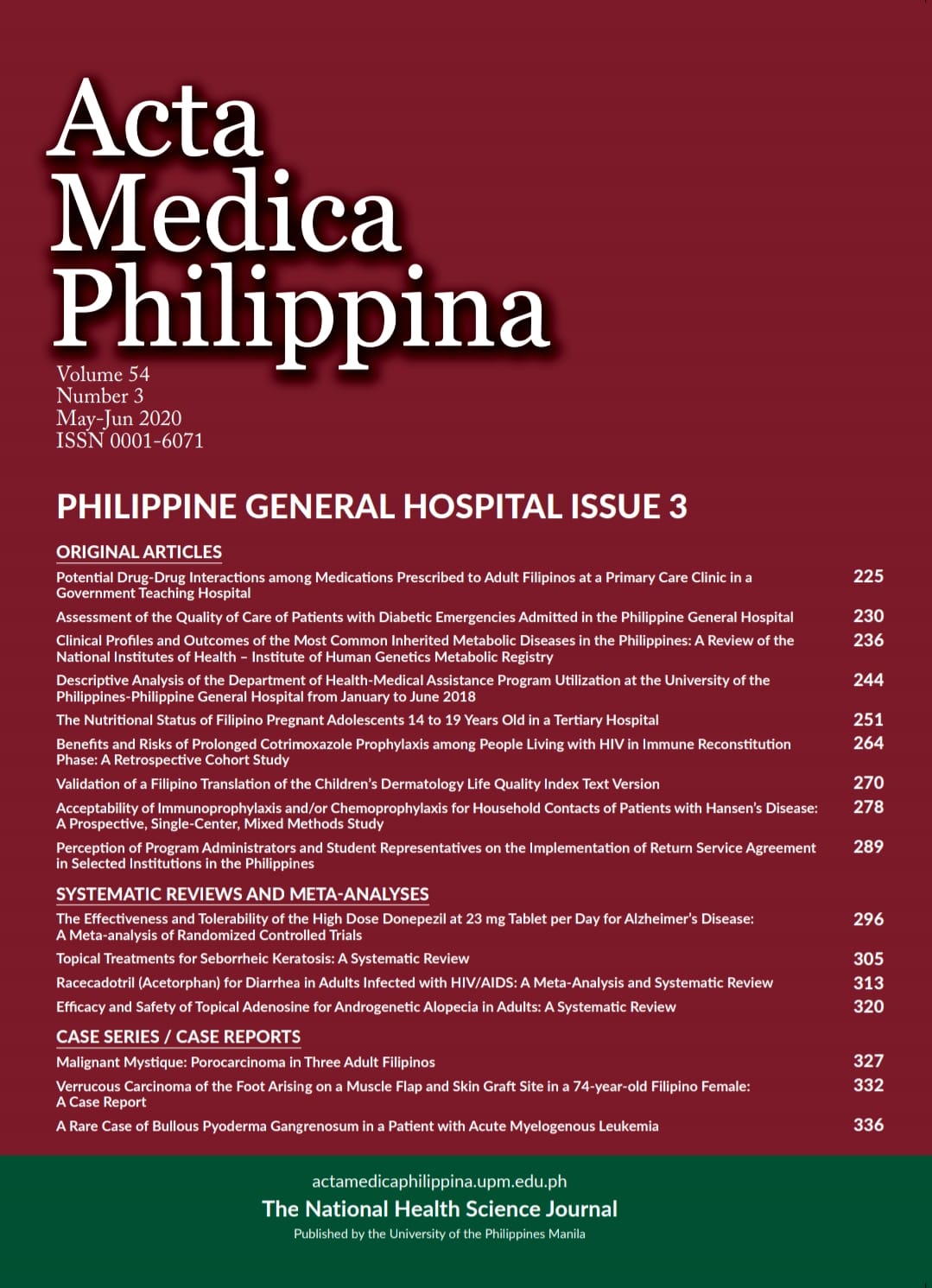
Acta Medica Philippina

1939  to  Present  ISSN: 0001-6071

Articles

About

Year of publication

Save Email

Sort by

Best match
Relevance
PubYear
JournalTitle

DISPLAY OPTIONS

Format:

Per page:

Save citations to file

Selection:

Format:

Create file Cancel

Email citations

To:

Please check your email address first!

Selection:

Format:

Send email Cancel

1970

results

page

of 197

1

Cite

Cite

Copy

Share

Share

Copy

Upper extremity temporospatial parameters and kinematics of Filipino track and field paralympians during wheelchair Propulsion: An analysis using a Kinect-based markerless motion analysis system.

Christopher S. Constantino ; Joycie Eulah H. Abiera ; Carlo Emmanuel J. Sumpaico

Acta Medica Philippina.2017;51(4):284-288. doi:https://doi.org/10.47895/amp.v51i4.5587

OBJECTIVE: The potential of a low-cost, novel Kinect?-based markerless motion analysis system as a tool to measure temporospatial parameters, joint and muscle kinematics, and hand trajectory patterns during the propulsion and recovery phase of wheelchair propulsion (WCP) was determined.

METHODS:Twenty (20) adult male track and field paralympians,(mean age = 36 ± 8.47) propelled themselves on a wheelchair ergometer system while their upper extremity motion was recorded by two Kinect? cameras and processed.

RESULTS: The temporospatial parameters, joint kinematics, and hand trajectory patterns during the propulsion and recovery phase of each participant's WCP cycle were determined and averaged. Average cycle time was 1.45s ± 0.19, average cadence was 0.70 cycles/s ± 0.09, and average speed was 0.76m/s ± 0.32. Average shoulder flexion was 30.99° ± 28.38, average elbow flexion was 24.23° ± 12.25, and average wrist flexion was 12.82° ± 26.78. Eighty five percent (85%) of the participants used a semicircular hand trajectory pattern.

CONCLUSION: The low-cost, novel Kinect?-based markerless motion analysis system had the potential to obtain measurable values during independent wheelchair propu
Biomechanical Phenomena ; Ergometry ; Track and Field ; Para-Athletes

Biomechanical Phenomena ; Ergometry ; Track and Field ; Para-Athletes

2

Cite

Cite

Copy

Share

Share

Copy

Intensive task-oriented training for mobility and balance in a patient with multiple strokes: A case report.

Maribeth Anne P. Gelisanga ; Edward James R. Gorgon

Acta Medica Philippina.2017;51(4):337-341. doi:https://doi.org/10.47895/amp.v51i4.511

Patients with multiple strokes are often excluded from studies due to poor outcomes. This case report described change in mobility and balance in a 54-year-old male with four strokes following intensive physical therapy (PT) based on the Task oriented Approach. Outcome assessment demonstrated clinically meaningful change in balance and mobility, and no adverse events. Intensive task-oriented PT is safe and feasible, and may contribute toward positive outcomes in severe disability related to multiple strokes.


Human ; Male ; Middle Aged ; Physical Therapy Modalities ; Stroke ; Outcome Assessment (health Care) ; Cerebral Infarction

Human ; Male ; Middle Aged ; Physical Therapy Modalities ; Stroke ; Outcome Assessment (health Care) ; Cerebral Infarction

3

Cite

Cite

Copy

Share

Share

Copy

Prevalence, clinical profile, and treatment outcomes of adult patients diagnosed with disseminated tuberculosis seen at University of the Philippines Manila-Philippine General Hospital Tuberculosis Directly Observed Treatment Short Course (TB-DOTS) Clinic.

Chua Jamie R ; Mejia Christina Irene D ; Berba Regina P

Acta Medica Philippina.2017;51(4):300-309.

OBJECTIVE: To determine the prevalence, demographic, clinical profile, diagnostic and treatment outcomes of adult patients diagnosed with disseminated tuberculosis

METHODS: This is a cross sectional study of patients referred to the UP-PGH TB DOTS clinic with a diagnosis of disseminated TB from January 2011 to December 2015.

RESULTS: The prevalence of disseminated tuberculosis was 1.7 %.Mean age at diagnosis was 33.9 years (range 19-64 years) with a male: female ratio of 1:1. The most common comorbidity was HIV (5.8%). The mean duration of symptoms before initial consult was 281 days (SD 510.7). The most common presenting symptoms were abdominal pain (19%), back pain (13%), and abdominal enlargement (11%). The lungs (86%) are still the most commonly involved site, followed by the gastrointestinal tract (22%) and the vertebra (27%). Majority were started with Category I treatment regimen (54%, 37 patients). Of the 68 patients, only 16% (11 patients) continued follow-up at PGH; all had documented treatment completion.

CONCLUSION: Patients with disseminated tuberculosis are young and majority had no comorbid illness. They have long latency of symptoms prior to diagnosis, and usually present with nonpulmonary symptoms despite high evidence of pulmonary involvement. To date, this is the largest local study on disseminated TB known to the authors.


Human ; Male ; Female ; Middle Aged ; Adult ; Comorbidity ; Abdomen ; Treatment Outcome ; Abdominal Pain ; Gastrointestinal Tract ; Tuberculosis ; Back Pain ; Hiv Infections

Human ; Male ; Female ; Middle Aged ; Adult ; Comorbidity ; Abdomen ; Treatment Outcome ; Abdominal Pain ; Gastrointestinal Tract ; Tuberculosis ; Back Pain ; Hiv Infections

4

Cite

Cite

Copy

Share

Share

Copy

Factors and issues on treatment adherence among Filipino patients with epilepsy and their caregivers.

Ranhel C. De Roxas ; Joshua Emmanuel E. Abejero ; Leonor I. Cabral-Lim

Acta Medica Philippina.2017;51(4):310-318. doi:https://doi.org/10.47895/amp.v51i4.499

BACKGROUND: Non-adherence to treatment in epilepsy is considered as a worldwide problem ranging from 30-50% of patients. Despite its striking magnitude, only a few studies tried to explain the factors affecting it. Moreover, a standard method to measure adherence to treatment among patients is still lacking. An in-depth analysis on adherence to treatment of patients with epilepsy, taking into factor their values, beliefs, and culture, is deemed necessary.

OBJECTIVES: The purpose of this qualitative study is to investigate the contributory factors and issues on treatment adherence faced by Filipino patients with epilepsy and their caregivers. This study also aimed to serve as a catalyst to further stimulate local researches on treatment adherence in epilepsy.

METHODS:?Four focus group discussions were conducted with patients and caregivers who voluntarily agreed to participate and share their experiences on dealing with epilepsy. A total of 39 participants were included. The focus group discussions, facilitated by skilled moderators, were composed of an ice breaker and a discussion on the experiences and issues faced by the participants. The discussions were transcribed and analyzed using thematic coding.

RESULTS: Three main content categories were identified from the focus group discussions, namely, 1) accepting a life with epilepsy, 2) dealing with the disease, and 3) ensuring freedom from seizure attacks, which were further sub-categorized. From these, a number of factors affecting treatment adherence were identified and a conceptual framework was developed by the investigators.

CONCLUSION: This study was able to demonstrate that conducting a focus group discussion was an effective means of eliciting the experiences and issues in patients and their caregivers. Several factors affecting treatment adherence such as patient-doctor relationship, financial resources, government support, adverse medication effects, religious belief, trigger avoidance, frequent reminders, and safety precautions were elucidated in this study.


Epilepsy ; Treatment Adherence and Compliance

Epilepsy ; Treatment Adherence and Compliance

5

Cite

Cite

Copy

Share

Share

Copy

Repetitive transcranial magnetic stimulation for post-stroke dysphagia: A meta-analysis.

Nicole A. Bernardo-Aliling ; Adovich S. Rivera ; Paul Matthew D. Pasco

Acta Medica Philippina.2017;51(4):327-333. doi:https://doi.org/10.47895/amp.v51i4.505

BACKGROUND: Dysphagia is common among post-stroke patients,causing disability due to malnutrition and pneumonia. Repetitive transcranial magnetic stimulation (rTMS) is a novel treatment modality to address this complication.

OBJECTIVE: The study aimed to compare real versus sham rTMS in treating post-stroke dysphagia.

METHODS: PubMed, Ovid, ClinicalKey, Herdin, and Google Scholar databases were searched from their earliest record to 31 July 2015 for randomized controlled trials that used rTMS to treat post-stroke dysphagia. The Jadad scale was used to assess the quality of the studies. The weighted mean difference (WMD) between baseline and post-treatment mean for Penetration Aspiration Scores (PAS) measured in the experimental and control groups were extracted for subsequent meta-analyses.

RESULTS: Three studies were analyzed. The WMD in PAS score between rTMS and control using liquid bolus two weeks after treatment in two good quality studies was -1.14 (95% confidence interval (CI) = -1.80 - -0.48, P = 0.001, I2 = 0.0%), and after four weeks was -1.83 (CI = -3.22 - -0.44, P = 0.010, I2 = 0.0%).

CONCLUSION: Treatment of post-stroke dysphagia with rTMS improved PAS on subgroup analyses of studies using liquid bolus after two weeks, and between real and sham treatment after four weeks.?


Human ; Male ; Female ; Aged 80 And Over ; Aged ; Middle Aged ; Adult ; Deglutition Disorders ; Transcranial Magnetic Stimulation ; Stroke ; Pubmed ; Qualitative Research ; Pneumonia ; Malnutrition

Human ; Male ; Female ; Aged 80 And Over ; Aged ; Middle Aged ; Adult ; Deglutition Disorders ; Transcranial Magnetic Stimulation ; Stroke ; Pubmed ; Qualitative Research ; Pneumonia ; Malnutrition

6

Cite

Cite

Copy

Share

Share

Copy

Policy analysis on province-level integration of healthcare system in light of the Universal Health Care Act

Hilton Y. Lam ; Ma-Ann M. Zarsuelo ; Theo Prudencio Juhani Z. Capeding ; Ma. Esmeralda C. Silva ; Michael Antonio F. Mendoza ; Carmencita D. Padilla

Acta Medica Philippina.2020;54(6):650-658. doi:10.47895/amp.v54i6.2608

Background: The enactment of the Universal Healthcare (UHC) Act affirms the commitment of the State to safeguard the health of all Filipinos. One of the objectives of the Act is to integrate the different local health systems at the provincial level in order to minimize fragmentation in the delivery of health services. This significant undertaking needs effective inter-sectoral collaborations of various stakeholders both at the local and national levels. Methods: A systematic review of literature was conducted to generate evidence-based policy tools. A roundtable discussion (RTD) was organized in collaboration with the Department of Health (DOH) to frame the current issues of the devolved health system and the anticipated challenges surrounding the integration to the provincial level. Policy discussion was guided by specific operational concerns put forth by the DOH such as the roles and functions of key local actors, organizational models, and metrics of integration. Results: Inputs in the proposed organogram for the province-level integrated health system and assessment tool for identifying readiness of provinces were discussed and agreed upon. Critical issues in the composition of the members of the Provincial Health Board (PHB) and the line of command among constituents were raised. Conclusion and Recommendations Eight consensus key policy recommendations have been identified. These could be translated into operational guidelines for the DOH, local government units (LGUs), and other related national government agencies (NGAs) in implementing the local health systems integration as prescribed in the UHC Act.
Health Care Reform ; Delivery of Health Care, Integrated ; Policy

Health Care Reform ; Delivery of Health Care, Integrated ; Policy

7

Cite

Cite

Copy

Share

Share

Copy

A call for an evidence-informed criteria selection to guide equitable health investments in the era of Universal Health Care: Policy analysis

Ma. Esmeralda C. Silva ; Ma-Ann M. Zarsuelo ; Marianne Joy N. Naria-Maritana ; Zenith D. Zordilla ; Hilton Y. Lam ; Michael Antonio F. Mendoza ; Ara Karizza G. Buan ; Frances Karen A. Nuestro ; Janvic A. Dela Rosa ; Carmencita D. Padilla

Acta Medica Philippina.2020;54(6):659-667. doi:10.47895/amp.v54i6.2587

Background: The passage of the Universal Health Care (UHC) Act in the Philippines in early 2019 intensified the need to ensure equitable health investments by the government. Exploring the different criteria and indicators that are used to determine areas that are most in need of health services can help local and national health authorities determine priorities for health investments given finite resources. Methods: A systematic review of literature on determinants of health equity and other indicators was conducted as pre-work to generate discussion points to the roundtable discussion participated by all major key stakeholders. Shared insights and expertise were thematically analyzed to produce a policy paper with consensus policy recommendations. Results: Based on the review of the literature and the discussion, indicators (mainly physical inaccessibility and socioeconomic factors) for identifying Geographically Isolated and Disadvantaged Areas (GIDA) in DOH Administrative Order 185, s. 2004 is used to prioritize municipalities for health investments. Review of other policies and guidelines to determine the level of health needs and prioritizing investments yielded to four laddered domains: geographic, population characteristics (e.g., social and cultural determinants of access), health system (e.g., health service delivery), and health status. These domains may provide a more equitable set of metrics for health investment. The Local Investment Plan for Health (LIPH) is the current process used for health-related investments at the local level and may be revised to be more responsive to the requirements set by the UHC Act 2018. Hot spotting to concentrate health services by communities may be a more rapid approach to investment planning for health. Bed capacity as a specific metric in the UHC Act 2018 highlights the need for a review of the Hospital Licensure Act 2004. Conclusion and Recommendations To aid in determining priorities for health investments, a comprehensive integrated analysis of resources, determinants, and indicators should be done to determine the need and the gaps in the available resources. Innovative strategies can also be best implemented such as mathematical models or formulas. Lastly, current strategies in the development, monitoring, and evaluation of investment planning for health at different levels should be strengthened, expanded, and harmonized with other existing development plans.
Universal Health Care ; Health Equity ; Investments

Universal Health Care ; Health Equity ; Investments

8

Cite

Cite

Copy

Share

Share

Copy

Policy analysis on determining hospital bed capacity in light of Universal Health Care

Ma. Esmeralda C. Silva ; Ma-Ann M. Zarsuelo ; Marianne Joy N. Naria-Maritana ; Zenith D. Zordilla ; Hilton Y. Lam ; Michael Antonio F. Mendoza ; Ara Karizza G. Buan ; Frances Karen A. Nuestro ; Janvic A. Dela Rosa ; Carmencita D. Padilla

Acta Medica Philippina.2020;54(6):668-676. doi:10.47895/amp.v54i6.2596

Background: Through the years of improving quality health service delivery, hospital bed capacity in the Philippines has remained to be a persistent challenge. In light of the aim of the Universal Health Care Act to protect and promote the right to health of every Filipino, one metric used to identify areas that are in most need or are under served, is the number of public hospital beds vis a vis the catchment population. Methods: The systematic review of literature was utilized to generate a policy brief presented to the invited stakeholders of the policy issue for the roundtable discussion participated by all key stakeholders of the policy issue. Evidence and insights were thematically analyzed to generate consensus policy recommendations. Results: With the current hospital bed availability and maldistribution, the Philippines still faces compounded issues in addressing healthcare demands. Currently, the request for increasing bed capacity is done through legislation. In context, this request is also parallel in expanding service capacity through the allocation of more funds and personnel. The ratio of private and charity beds must ensure to have equity among all patients of varying segments of the population. Enjoining private hospitals to share bed capacity for public service was also explored given appropriate subsidies. Conclusion and Recommendation To ensure equity in health service delivery, it is imperative to assess, strategize, and conduct prioritization of the needs of government hospitals for increased bed capacity, considering the distribution, socio-demographic profile, and health needs of the catchment population.
Privatization ; Philippines ; Hospital Bed Capacity

Privatization ; Philippines ; Hospital Bed Capacity

9

Cite

Cite

Copy

Share

Share

Copy

Policy analysis on establishing criteria for population versus individual-based health services towards achieving Universal Health Care

Leonardo Jr. R. Estacio ; Ma-Ann M. Zarsuelo ; Christine Mae S. Avila ; Ma. Esmeralda C. Silva ; Michael Antonio F. Mendoza ; Carmencita D. Padilla

Acta Medica Philippina.2020;54(6):677-685.

Background: The enactment of the Universal Health Care Act is anticipated to bring wider coverage and accessibility of quality healthcare services as stipulated in its objectives. With the integration of the healthcare system at the provincial level, determining population- and individual-based services is crucial in mapping the managerial and financial roles. Hence, this study aimed to establish the criteria for identifying population-based and individualbased health services in the Philippines. Methods: A systematic review of literature was conducted to generate evidence for the policy brief and discussion points on the roundtable discussion spearheaded by the UP Manila Health Policy Development Hub in collaboration with the Department of Health. Key stakeholders of the policy issue convened to share expertise and insights in determining criteria for population- and individual-based services, intending to generate consensus policy recommendations. Results: The general scope of individual-based health services stipulated in the Law are to be financed under the benefit packages of PHIC and HMOs. Meanwhile, population-based services are those that address public health issues such as health promotion and disease surveillance. Several services considered as ‘grey areas’ are those that fall in the overlap of the individual- and population-based services. These services may be examined through an outcome-based algorithm that examines fragmentation issues both in the supply and demand side of service delivery. Conclusion and Recommendation Proposed criteria in identifying individual- and population-based services include the number of recipient/s, the effectivity of service delivery and utilization, and source of funding. Health programs that are in the grey areas can be examined through an outcome-based algorithm.
Healthcare Financing ; Health Services Accessibility

Healthcare Financing ; Health Services Accessibility

10

Cite

Cite

Copy

Share

Share

Copy

Policy analysis on financing roles for Population- and Individual-based health services in light of the Universal Health Care Act

Leonardo Jr. R. Estacio ; Christine Mae S. Avila ; Ma-Ann M. Zarsuelo ; Ma. Esmeralda C. Silva ; Michael Antonio F. Mendoza ; Carmencita D. Padilla

Acta Medica Philippina.2020;54(6):686-691.

Objectives: The health financing scheme brought by the Universal Health Care Act has a significant change in the landscape of allocating funds for health services, as well as in the delineation of roles among the key actors. Consistent with the law, the protection from the health financial risks of Filipinos must be guaranteed. This study aimed to determine the roles of the government and other key agencies in financing population-based and individual-based health services in the Philippines. Methods: A systematic review of literature was done to generate evidence for the policy brief and proposed policy alternatives. The UP Manila Health Policy Development Hub organized a roundtable discussion in collaboration with the Department of Health participated by key stakeholders from various sectors involved in the policy issue. Systematic review and insights from the discussion were analyzed to produce consensus policy recommendations. Results: Given the current procurement and financing, the DOH should fund population-based services while PhilHealth, with the assistance of Health Maintenance Organizations (HMO) for premium holders, should fund individual-based services. Health programs with grey areas (i.e. with both individual- and population-based service) need further technical discussions. It is imperative to have clear-cut specific guidelines on the managerial and financial roles of the provincial health board and the scope of financing service delivery. Conclusion Delineating the roles of DOH, PhilHealth, and HMOs in financing health services is not without risks. The utilization of the special health fund at the provincial level should be carefully implemented and monitored to minimize inefficiencies and fraud.
Healthcare Financing ; Universal Health Insurance ; Insurance, Health

Healthcare Financing ; Universal Health Insurance ; Insurance, Health

Country

Philippines

Publisher

University of the Philippines Manila

ElectronicLinks

https://actamedicaphilippina.upm.edu.ph/

Editor-in-chief

Dr. Joven Jeremius Q. Tanchuco

E-mail

jqtanchuco1@up.edu.ph

Abbreviation

Acta Medica Philippina

Vernacular Journal Title

ISSN

0001-6071

EISSN

2094-9278

Year Approved

2007

Current Indexing Status

Currently Indexed

Start Year

1939

Description

Acta Medica Philippina, is an open-access, international peer-reviewed, general medical and health science journal in English language that is published monthly by the University of the Philippines Manila. It is publishing continuously since 1939. It has complete editorial independence from its publisher. The journal publishes original scientific papers in the field of basic and clinical medical or human health-related research. The journal publishes original scientific papers in the field of basic and clinical medical or human health-related research. The journal accepts original papers, case reports, current reviews and commentaries from any author provided submission requirements are met. The journal accepts submissions of single manuscripts or a compilation of several ones for publication together as a single issue. It is indexed in Scopus, Google Scholar, World Health Organization Western Pacific Region Index Medicus (WHO WPRIM), ASEAN Citation Index (ACI), and Herdin Plus. Acta Medica Philippina is a member of CrossRef for the Direct Object Identifier (DOI) of the articles. The journal follows the recommendations of the International Committee of Medical Journal Editors (ICMJE) in its editorial policies.

Related Sites

WHO WPRO GIM

Help Accessibility
DCMS Web Policy
CJSS Privacy Policy

Powered by IMICAMS( 备案号: 11010502037788, 京ICP备10218182号-8)

Successfully copied to clipboard.