

Main content 1 Menu 2 Search 3 Footer 4
+A
A
-A
High contrast
HOME JOURNAL CRITERIA NETWORK HELP ABOUT

Current criteria:

Regional:

WPRlM journal selection criteria(2023)

Minimum standards for the suspension and removal of WPRIM approved journals

Countries journal selection criteria:

Philippines

Submit your journal information>

Contact NJSCs>

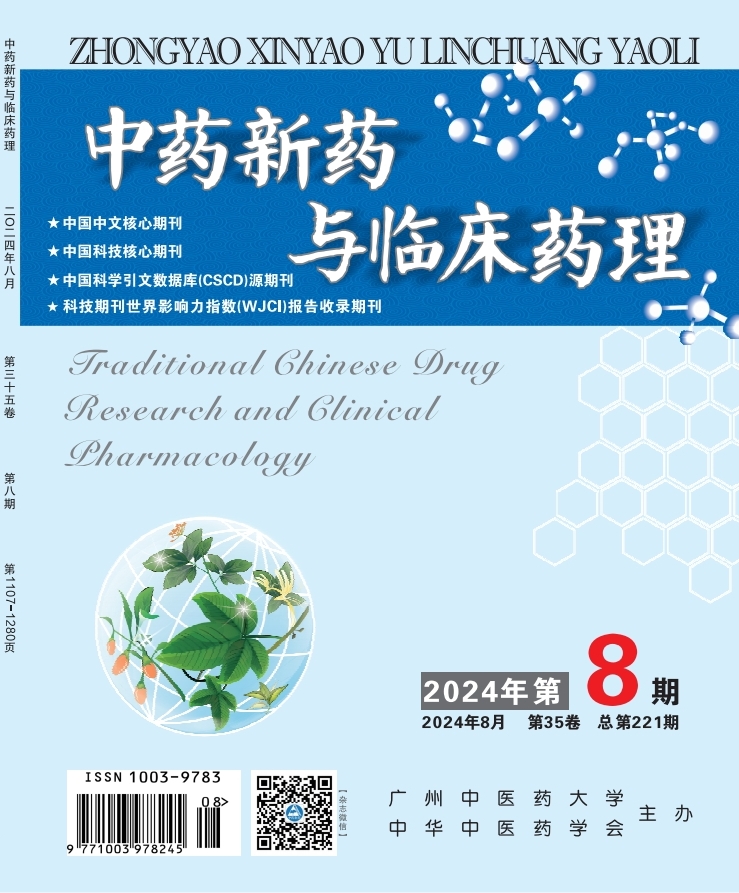
Traditional Chinese Drug Research & Clinical Pharmacology

2002 (v1, n1) to Present ISSN: 1671-8925

Articles

About

Year of publication

Save Email

Sort by

Best match
Relevance
PubYear
JournalTitle

DISPLAY OPTIONS

Format:

Per page:

Save citations to file

Selection:

Format:

Create file Cancel

Email citations

To:

Please check your email address first!

Selection:

Format:

Send email Cancel

186

results

page

of 19

1

Cite

Cite

Copy

Share

Share

Copy

Protective Mechanism of Wenyang Fuyuan Prescription on Nerve Injury in Rats with Cerebral Ischemia-Reperfusion Injury Based on Ferroptosis

Junjun XIANG ; Liqin LI ; Jianzheng LI ; Xueni MO ; Wei CHEN ; Yueqiang HU

Traditional Chinese Drug Research & Clinical Pharmacology.2023;34(12):1649-1657. doi:10.19378/j.issn.1003-9783.2023.12.001

Objective To investigate the protective mechanism of Wenyang Fuyuan Prescription on nerve injury by improving brain iron metabolism in rats with cerebral ischemia-reperfusion injury(CIRI)based on ferroptosis.Methods A total of 72 SD rats were randomly divided into sham-operation group,CIRI model group,Wenyang Fuyuan Prescription group(18.0 g·kg-1,gavage),ferroptosis inducer group(100 mg·kg-1,intraperitoneal injection),Wenyang Fuyuan Prescription(18.0 g·kg-1,gavage)+ ferroptosis inducer group(intraperitoneal injection)and ferroptosis inhibitor group(5 mg·kg-1,intraperitoneal injection),12 rats in each group.All the procedures adopted in the sham group were the same as those in the model group.But nylon thread was inserted into the internal carotid artery at a depth of 9 mm and un-plugged middle cerebral artery.The rest of the groups were used to construct middle cerebral artery occlusion/reperfusion(MCAO/R)model by thread embolism method.Ferroptosis inducer(100 mg·kg-1)and ferroptosis inhibitor(5 mg·kg-1)were administered intraperitoneally to rats according to the grouping 24 hours before modeling.Wenyang Fuyuan Prescription(18.0 g·kg-1)was administered by gavage 2 hours after anesthesia and awakening.All intervention were given once daily for 7 consecutive days.The Longa scoring standard was used to evaluate the neurological deficit on 1,3,and 7 days after MCAO/R surgery,respectively.At the end of the treatment period,brain tissues were taken to observe the morphological changes of rat neurons in each group by hematoxylin eosin staining(HE).The ultrastructural changes of neuron mitochondria in each group were observed by transmission electron microscope.The biochemical kit was used to detect the content of iron ions(Fe2+)and reduced glutathione(GSH)in brain tissue.The protein and mRNA expressions of transferrin receptor 1(TFR1),iron regulatory protein 1(IRP1)and ferroportin(FPN)were detected by real-time quantitative polymerase chain reaction(RT-qPCR)and Western Blot.Results① Compared with sham group,the neurological deficit scores of rats in model group increased at each time point(P<0.01).HE staining showed neurons were sparse and disordered,the nuclei underwent pyknosis,and vacuoles appeared at the edges.Under electron microscopy,it was observed that the number of neuronal mitochondria decreased,the density of mitochondrial membranes increased,massive numbers of mitochondrial membranes ruptured and dissolved,and mitochondrial cristae disappeared.The content of Fe2+,both mRNA and protein expressions of TFR1 were significantly increased(P<0.01),while GSH content,as well as expressions of mRNA and protein for IRP1 and FPN were significantly decreased(P<0.05,P<0.01).② Compared with the model group,the neurological deficit scores of rats in the Wenyang Fuyuan Prescription group decreased at various time points(P<0.05).The number of neurons increased,their arrangement was relatively neat,the morphology of the nucleus is complete and clear,the mitochondrial structure of neurons was relatively complete,the mitochondrial membrane was relatively intact,and the mitochondrial cristae were clear.The content of Fe2+,both mRNA and protein expressions of TFR1 were decreased(P<0.05,P<0.01),while GSH content,as well as expressions of mRNA and protein for IRP1 and FPN increased(P<0.05,P<0.01).③ Compared with the Wenyang Fuyuan Prescription group,the neurological deficit scores of rats in ferroptosis inducer group and the Wenyang Fuyuan Prescription + ferroptosis inducer group increased at all time points(P<0.05).Distribution of neurons was in disorder,the nucleus shrinked,and vacuoles appeared at the edges.The density of mitochondrial membranes increased,some ruptured and dissolved mitochondrial membranes were found.The number of mitochondria decreased and mitochondrial cristae disappeared.The content of Fe2+,both TFR1 mRNA and protein expression increased(P<0.05,P<0.01),while the content of GSH,as well as expressions of mRNA and protein for IRP1 and FPN decreased(P<0.05,P<0.01).However,there was no statistically significant difference in all observed indicators between the ferroptosis inhibitor group and the Wenyang Fuyuan Prescription group(P>0.05).Conclusion Wenyang Fuyuan Prescription can improve the neurological function and pathological damage of CIRI rats.Its mechanism may be related to regulating the expression of IRP1 protein,improving the brain iron metabolism pathway,and inhibiting ferroptosis.
2

Cite

Cite

Copy

Share

Share

Copy

Chaihuang Yishen Granules Improves Renal Fibrosis in Mice with Chronic Kidney Disease by Inhibiting Macrophagic Mincle

Ruizhi TAN ; Yuanxia ZOU ; Peng LIU ; Hongwei SU ; Ping LI ; Li WANG

Traditional Chinese Drug Research & Clinical Pharmacology.2023;34(12):1658-1667. doi:10.19378/j.issn.1003-9783.2023.12.002

Objective To study the effect and potential mechanism of Chaihuang Yishen Granules on renal fibrosis in mice with chronic kidney disease.Methods Thirty-six C57BL/6 male mice were randomly divided into sham group,model group,low-,and high-dose Chaihuang Yishen Granules groups(3.835 g·kg-1 and 7.67 g·kg-1),positive control group and Mincle ligand trehalose-6,6-dibehenate(TDB 10 mg·kg-1)group.Unilateral ureteral obstruction(UUO)was used to establish the model of renal fibrosis in mice.One hour after operation,mice in each drug-treated group were given corresponding drugs by gavage,and sham operation group and model group were given saline by gavage,once a day for 7 consecutive days.The pathological changes and fibrosis in the kidneys of mice in all groups were observed by hematoxylin eosin staining and Sirius red staining.The expressions and secretions of inflammatory factor IL-1β,IL-6 and TNF-α in kidneys of all groups were detected by Real-time PCR and ELISA.Immunohistochemistry and Western Blot were used to detect fibrosis indicators,including α-SMA and Fn protein levels.Immunofluorescence and Western Blot were further used to determine protein levels of Mincle and its downstream signal Syk/NF-κB.The proportion of Mincle positive macrophages was analyzed by flow cytometry.Results Compared with the model group,low-and high-dose Chaihuang Yishen Granules can effectively improve UUO-induced renal injury and fibrosis,and inhibit α-SMA and Fn protein levels in the kidney(P<0.01).Moreover,high-dose Chaihuang Yishen Granules can effectively reduce the expressions and secretions of inflammatory factor IL-1β,IL-6 and TNF-α of kidney in UUO model(P<0.01),as well as inhibit phosphorylation of NF-κB(P<0.01).The mechanism study showed that Chaihuang Yishen Granules could significantly reduce the protein level of Mincle and the activity of its downstream signal Syk in the kidney of UUO mice(P<0.01).After TDB was used to activate Mincle,the effect of Chaihuang Yishen Granules on improving renal injury,inflammatory factor secretion and fibrosis was significantly reduced(P<0.05,P<0.01).Conclusion Chaihuang Yishen Granules can improve UUO-induced renal injury,inflammation and fibrosis,and its mechanism may be related to the down-regulation of Mincle/Syk/NF-κB signaling pathway.

3

Cite

Cite

Copy

Share

Share

Copy

Study on the Effect and Mechanism of Huayu Mingmu Recipe-Containing Serum on Angiogenesis in High Glucose-Induced Functional Disorder Model of HRMECs

Xiaoqiu MA ; Tao ZUO ; Xiande MA ; Lei ZHAO

Traditional Chinese Drug Research & Clinical Pharmacology.2023;34(12):1668-1677. doi:10.19378/j.issn.1003-9783.2023.12.003

Objective To explore the effect and potential mechanism of Huayu Mingmu Recipe(HMR)-containing serum on high glucose-induced angiogenesis of human retinal microvascular endothelial cells(HRMECs).Methods CCK-8 method is used to screen the optimal sugar concentrations,as well as volume fraction of drug-containing serum.A model of high glucose-induced HRMECs dysfunction was established.The HRMECs were divided into 6 groups such as normal control group which was treated with normal ECM culture medium(containing 5.5 mmol·L-1 glucose)and 10%blank serum,the mannitol control group and the high glucose model were given 19.5 mmol·L-1 mannitol and 19.5 mmol·L-1 D-glucose on the basis of the treatment of normal control group,respectively.The low-,medium-,and high-dose groups of HMR were given 10%low-,medium-,and high-dose medicated serum(without blank serum)on the basis of the model group.The colony experiment was used to detect the number of cell colonies.Transwell experiment was used to test the number of cell migration,and tube formation experiment was used to determine the forming of tubes.Immunofluorescence,Western Blot and RT-PCR were used to detect levels of protein and mRNA expression of FactorⅧ,platelet endothelial cell adhesion molecule-1(CD31),cell differentiation factor(CD34),vascular endothelial growth factor A(VEGFA),vascular endothelial growth factor receptor 2(VEGFR2).Results Compared with the normal control group,the model group could promote colony formation of HRMECs(P<0.01),cell migration(P<0.01),and lumen formation(P<0.01).The levels of protein and mRNA expressions of Factor VIII,CD31,CD34,VEGFA,VEGFR2 were significantly increased(P<0.01)in model group.Compared with the model group,low-,medium-and high-dose HMR-containing serum groups could inhibit colony formation of HRMECs(P<0.05,P<0.01),cell migration(P<0.01),and lumen formation(P<0.05,P<0.01).The levels of protein and mRNA expressions of Factor VIII,CD31,CD34,VEGFA,VEGFR2 were significantly reduced(P<0.05,P<0.01)in HMR-containing serum groups.There was no statistically significant difference in results of various tests between the normal control group and the mannitol control group(P>0.05).Conclusion HMR-containing serum can inhibit the proliferation,migration,and tube formation of HRMECs induced by high glucose,and then prevent or reduce angiogenesis.The mechanism may be related to the regulation of VEGFA/VEGFR2 signaling pathway.

4

Cite

Cite

Copy

Share

Share

Copy

Effect of Usnic Acid on Neuronal Necroptosis in Rats with Cerebral Infarction by Regulating the RIPK1/RIPK3/MLKL Signaling Pathway

Kexin SHI ; Zhengyu SONG ; Chuanfen LIU ; Jin HU

Traditional Chinese Drug Research & Clinical Pharmacology.2023;34(12):1678-1684. doi:10.19378/j.issn.1003-9783.2023.12.004

Objective To investigate the impact of usnic acid on neuronal necroptosis in rats with cerebral infarction by regulating the receptor-interacting protein kinase 1(RIPK1)/receptor-interacting protein kinase 3(RIPK3)/mixed lineage kinase domain-like protein(MLKL)signaling pathway.Methods The rat model of cerebral infarction was established by middle cerebral artery occlusion and reperfusion(MCAO/R).The successfully modeled rats were divided into model group,NEC-1(RIP1 inhibitor)group,low-,medium-,and high-dose of usnic acid groups,with 20 rats in each group.Another 20 rats were selected as a sham-operation group.After 3 days of drug intervention,the modified Neurological Severity Scale(mNSS)was applied to evaluate the degree of neurological damage of rats in each group.TTC staining was applied to detect the volume of cerebral infarction.HE staining was selected to observe pathological damage in brain tissue.PI/NeuN staining was selected to observe neuronal necrosis.RT-qPCR was used to detect mRNA levels of RIPK1,RIPK3 and MLKL in rat ischemic brain tissue.Western Blot was used to determine the expressions of RIPK1/RIPK3/MLKL signaling pathway related proteins in rat ischemic brain tissue.Results Compared with the sham-operation group,the neural cells in the model group showed structural damage,cell disrupted,deformation,and nuclear pyknosis,furthermore,the mNSS score,the cerebral infarction volume,proportion of PI-positive neurons were significantly increased(P<0.05).The mRNA levels of RIPK1,RIPK3,MLKL in brain tissue,ratio of p-RIPK1/RIPK1,and the levels of RIPK3 and MLKL proteins were obviously increased(P<0.05).Compared with the model group,the damage degree of neurocyte morphology in the low-,medium-,and high-dose of usnic acid groups was gradually alleviated,the nuclear membrane was gradually became clear,and the cell body was gradually returned to normal.The neurocyte morphology in the NEC-1 group was basically intact,and the nuclear membrane was basically clear.The mNSS score,cerebral infarction volume and proportion of PI-positive neurons in NEC-1 group and usnic acid groups were significantly decreased(P<0.05).The mRNA levels of RIPK1,RIPK3,MLKL,ratio of p-RIPK1/RIPK1,and levels of RIPK3 and MLKL proteins in brain tissue were obviously reduced in usnic acid groups and NEC-1 group.Also,there was dose-dependent decrease in usnic acid groups(P<0.05).No statistically obvious difference was found between the high-dose usnic acid group and the NEC-1 group(P>0.05).Conclusion Usnic acid inhibits neuronal necroptosis in rats with cerebral infarction by inhibiting the RIPK1/RIPK3/MLKL signaling pathway,thereby alleviating brain injury in rats with cerebral infarction.

5

Cite

Cite

Copy

Share

Share

Copy

Sappanone A Plays An Anti-inflammatory Role by Inhibiting the JAK2-STAT3 Signaling Pathway

Chengjie DENG ; Hongxing MA ; Huaxi ZHANG ; Yuezhou HU ; Jing HUANG ; Shiqin SUN ; Ping XIN

Traditional Chinese Drug Research & Clinical Pharmacology.2023;34(12):1685-1690. doi:10.19378/j.issn.1003-9783.2023.12.005

Objective To investigate the anti-inflammatory effect and mechanism of sappanone A(SA)on lipopolysaccharide(LPS)-induced RAW264.7 cell model based on JAK2-STAT3 signaling pathway.Methods MTT assay was used to detect the effects of sappanone A,LPS and AG490 on RAW264.7 cell viability.The LPS-induced inflammatory model in RAW264.7 cells was established,and the secretion level of interleukin-6(IL-6)in the supernatant was detected by ELISA.mRNA expressions of IL-6,Janus kinase 2(JAK2)and signal transducer and activator of transcription 3(STAT3)were tested by RT-PCR.The protein expressions of JAK2,phosphorylated JAK2(p-JAK2),STAT3 and phosphorylated STAT3(p-STAT3)were determined by Western Blot.Results Compared with control group,IL-6 secretion level was significantly increased,mRNA expressions of IL-6,JAK2 and STAT3 were up-regulated,and protein expressions of p-JAK2 and p-STAT3 were increased(all P<0.01)in model group.Compared with model group,high-dosed sappanone A(5 μg·mL-1)was significantly decreased the secretion of IL-6,down-regulated the mRNA expressions of IL-6,JAK2 and STAT3,and inhibited the protein expressions of p-JAK2 and p-STAT3(all P<0.01).Conclusion Sappanone A may play an anti-inflammatory role by inhibiting the JAK2-STAT3 signaling pathway and hence inhibiting the secretion of IL-6.

6

Cite

Cite

Copy

Share

Share

Copy

The Osteoprotective Effect of Gusong Yigu Decoction on Ovariectomized Rats Based on PI3K/Akt Signal Pathway

Xuxia ZHENG ; Shuang CHAI ; Liwei WEI ; Na QIN

Traditional Chinese Drug Research & Clinical Pharmacology.2023;34(12):1691-1699. doi:10.19378/j.issn.1003-9783.2023.12.006

Objective To explore the mechanism of Gusong Yigu Decoction(inchuding Astragali Radix,Codonpsis Radix,Angelicae Sinensis Radix,etc.)in the treatment of postmenopausal osteoporosis(PMOP)based on network pharmacology and animal experiment.Methods The effective ingredients and corresponding targets of Gusong Yigu Decoction were collected by using TCMSP database.GeneCards,TTD,and other databases were used to collect PMOP target proteins.R language was used to obtain the intersection targets and draw Wayne diagram.STRING database was used for the establishment of protein-protein interaction network.At last,GO function enrichment and KEGG pathway enrichment were performed on all common targets.The ovariectomized SD rats were used in the animal experiment.Gusong Yigu Decoction was administered by gavage for 12 weeks.The changes of bone histomorphology were detected by HE staining,the mRNA and protein levels of phosphatidylinositol 3-kinase(PI3K)and protein kinase B(Akt)in bone tissue of proximal tibial were tested by qRT-PCR and Western Blot,respectively.Results A total of 91 effective ingredients of Gusong Yigu Decoction in the treatment of PMOP,70 common targets of drugs-diseases were obtained.GO enrichment analysis mainly included DNA-binding transcription activator activity,RNA polymerase II-specific,ubiquitin protein ligase binding.KEGG pathway enrichment analysis included PI3K/Akt signaling pathway,TNF signaling pathway,and apoptosis.The animal experiment showed that bone histomorphology was significantly improved,meanwhile the mRNA and protein expressions of PI3K and Akt were significantly increased in Gusong Yigu Decoction group(P<0.01).Conclusion Gusong Yigu Decoction may improve bone microstructure through multiple channels and targets.Gusong Yigu Decoction can increase the number and thickness of bone trabeculae and reduce the separation of bone trabeculae by activating PI3K/Akt signaling pathway,and thus play an anti-osteoporosis role in postmenopausal osteoporosis.

7

Cite

Cite

Copy

Share

Share

Copy

Targeted Metabonomics Combined with 16SrRNA Gene Sequencing to Analyze the Effect of Rehmanniae Radix on Intestinal Flora in Rats with Kidney Yin Deficiency Syndrome Before and After Processing

Xueke YE ; Guoshun SHAN ; Yu FU ; Ji SHI ; Yi YU ; Ming LIANG ; Wei YAO

Traditional Chinese Drug Research & Clinical Pharmacology.2023;34(12):1700-1712. doi:10.19378/j.issn.1003-9783.2023.12.007

Objective To investigate the effects of Rehmanniae Radix before and after processing on the intestinal flora of rats with kidney yin deficiency syndrome.Methods SD rats were randomly divided into blank group,model group,probiotic group(0.35 g·kg-1),high-/medium-/low-dose groups of Rehmanniae Radix Praeparata(3.5,1.75,0.875 g·kg-1),and high-/medium-/low-dose groups of Rehmanniae Radix(3.5,1.75,0.875 g·kg-1),with 9 rats in each group.Except for the blank group,rats in each group were injected intramuscularly with Dexamethasone Sodium Phosphate Injection(0.35 mg·kg-1)once a day for 21 days.The drug was administered by gavage once a day on the seventh day of modelling for 14 days.The adrenal histopathological changes were observed by using HE staining;the levels of serum cyclic adenosine monophosphate(cAMP),cyclic guanosine monophosphate(cGMP),corticotropin-releasing hormone(CRH),adrenocorticotropic hormone(ACTH),and corticosterone(CORT)were detected by ELISA;and the levels of short-chain fatty acids in the feces and changes in the diversity of intestinal flora were detected by a targeted metabolomic approach in conjunction with 16SrRNA sequencing in the rats in each group.Results(1)Compared with the blank group,the body mass of rats in the model group was significantly decreased on days 7,14 and 21(P<0.05,P<0.01);serum levels of cAMP,CRH,ACTH,CORT and the cAMP/cGMP ratio were all significantly increased(P<0.01),and the cGMP content was significantly decreased(P<0.01);and the adrenal cortex was thinned,with the boundaries of various layers of the cortex unclear.Compared with the model group,the body mass of rats in the Rehmanniae Radix Praeparata administration group on day 21 were all significantly increased(P<0.05,P<0.01),and the serum content of cAMP,CRH,ACTH,CORT and the cAMP/cGMP ratio were all significantly decreased(P<0.05,P<0.01),and the content of cGMP was significantly increased(P<0.05,P<0.01)in the rats;body mass of rats in the Rehmanniae Radix administration group did not change significantly(P>0.05),CRH and CORT contents in serum of rats in the high-dose group of Rehmanniae Radix were significantly reduced(P<0.01),and ACTH contents in serum of rats in the medium-dose group of Rehmanniae Radix were significantly reduced(P<0.05);the adrenal cortex of rats in all the administration groups were improved,in particular,the thickening of the adrenal cortex layers was obvious in the Rehmanniae Radix Praeparata group,and the improvement effect was superior to that in the Rehmanniae Radix group.(2)Compared with the blank group,the difference of Coverage index was not statistically significant(P>0.05),and the coverage of each group was good;the abundance index(Sobs,Ace,Chao)and diversity index(Shannon)of the model group were significantly increased(P<0.01),and the Simpson index was significantly decreased(P<0.01).Compared with the model group,Sobs index was significantly decreased in the medium-and high-dose groups of Rehmanniae Radix Praeparata(P<0.05),Chao index was significantly decreased in the administered groups of Rehmanniae Radix Praeparata and high-dose group of Rehmanniae Radix(P<0.05,P<0.01),and Simpson index was significantly increased in the high-dose group of Rehmanniae Radix Praeparata(P<0.05).The changes of Rehmanniae Radix on the richness and diversity of intestinal microbial community in kidney yin-deficient rats were small,while Rehmanniae Radix Praeparata could better maintain the stability of the richness and diversity of intestinal microbial community in kidney yin-deficient rats.(3)Compared with the blank group,the abundance of phylum firmicutes in the feces of the model group was significantly decreased,while the abundance of bacteroides and actinomycetes was significantly increased.The abundance of Lactobacillus was significantly decreased(P<0.01),while the abundance of norank_f__Muribaculaceae and Bifidobacterium was significantly increased(P<0.01).Compared with the model group,the trend of recovery of bacterial abundance in the probiotic group and the high-dose group of Rehmanniae Radix Praeparata was more similar to that of the blank group,which showed that it had the best regulating effect on the ratio of bacterial flora;the abundance of lactobacillus in all administered groups was increased,with that of the probiotic group was significantly increased(P<0.01);the abundance of norank__f__Muribaculaceae and Bifidobacterium were all decreased,among which the probiotic group and the medium-and high-dose groups of Rehmanniae Radix Praeparata were significantly decreased(P<0.01),and the effect was significantly superior to that of Rehmanniae Radix.The COG functions of the samples in each group were mainly focused on amino acid transport and metabolism,carbohydrate transport and metabolism,translation,ribosomal structure and biogenesis,replication,recombination and repair,but the abundance information of each function was different between groups,which may be due to the differences caused by dysbiosis of intestinal flora.(4)Compared with the blank group,the levels of acetic acid,butyric acid and propionic acid in the faeces of rats in the model group were significantly decreased(P<0.05,P<0.01),and the level of isobutyric acid was significantly increased(P<0.01).Compared with the model group,the levels of acetic acid,butyric acid and propionic acid in the faeces of rats in the probiotic group and the low-,medium-and high-dose groups of Rehmanniae Radix Praeparata were significantly increased(P<0.05,P<0.01)and the levels of isobutyric acid were significantly decreased(P<0.05,P<0.01);although the above indexes in the Rehmanniae Radix group were improved,the difference was not statistically significant(P>0.05).Conclusion The enhanced therapeutic effect of Rehmanniae Radix after processing on rats with kidney yin deficiency syndrome may be related to its adjusting effect on intestinal flora.

8

Cite

Cite

Copy

Share

Share

Copy

Study on the Effect and Mechanism of Huanglian Jiedu Decoction in Improving Itching Symptoms in 1-chloro-2,4-dinitrobenzene-Induced Atopic Dermatitis Mice

Zengyan ZHANG ; Huiyuan ZHANG ; Jianhua GUAN ; Yunlong CHEN

Traditional Chinese Drug Research & Clinical Pharmacology.2023;34(12):1713-1720. doi:10.19378/j.issn.1003-9783.2023.12.008

Objective To investigate the effect and mechanism of Huanglian Jiedu Decoction in improving the itching symptoms of 1-chloro-2,4-dinitrobenzene(DNCB)-induced atopic dermatitis(AD)in mice.Methods Thirty-six Balb/c mice were randomly divided into normal group,model group,Dexamethasone(positive control,2.5 mg·kg-1)group and Huanglian Jiedu Decoction low-,medium-and high-dose groups(0.4,0.8 and 1.6 g·kg-1),6 mice in each group.After shaving the back of the mice,200 μL of DNCB solution was applied to the back of the mice for sensitisation(1%DNCB for 3 consecutive days)and excitation(1.5%DNCB,starting from the fourteenth day,excitation was performed once every 3 days for a total of 5 times).The stimulation and drug interventions were carried out simultaneously,and each group was administered by gavage at a set dose once daily for 14 days.The severity score of the skin lesions was calculated with reference to the Scoring Atopic Dermatitis(SCORAD),and the number of times the mice scratched within 20 minutes was recorded.The pathological changes of the lesions were observed by HE staining;mast cell infiltration was observed by toluidine blue staining;and the mRNA expression levels of thymic stromal lymphopoietin(TSLP),interleukin(IL)13,histamine H4 receptor(HRH4),and IL-31 in the lesions were detected by RT-qPCR.Results Compared with the normal group,the dorsal skin of the mice in the model group showed obvious erythema,mossification,crusting and epidermal shedding after DNCB excitation,and the severity score of the lesions was significantly increased(P<0.001);the hyperkeratosis of epidermis,the thickness of spinous layer was significantly increased(P<0.001),sponge oedema,and a large number of inflammatory cells infiltration was seen in the dermis;and the number of mast cells was significantly increased(P<0.001);the times of scratches within 20 minutes was significantly increased(P<0.01);and the mRNA expression levels of TSLP,IL-13,HRH4,and IL-31 in the skin lesion tissue were all significantly elevated(P<0.05,P<0.01).Compared with the model group,the skin lesions on the backs of mice in the low-,medium-and high-dose groups of Huanglian Jiedu Decoction were significantly improved,the mossy area was significantly reduced,the severity was significantly reduced,and the severity score of skin lesions was significantly reduced(P<0.001),and the number of mast cells and the mRNA expression levels of IL-13,HRH4,and IL-31 were significantly reduced in the skin lesion tissues(P<0.05,P<0.01,P<0.001);the thickness of the stratum spinosum was significantly reduced in the medium-and high-dose groups of Huanglian Jiedu Decoction(P<0.001),and the number of inflammatory cells in the dermis was significantly reduced;the number of scratching in mice in the high-dose group of Huanglian Jiedu Decoction was significantly reduced within 20 minutes(P<0.01),and the mRNA expression level of TSLP in the lesion tissue was significantly reduced(P<0.05).Conclusion Huanglian Jiedu Decoction can alleviate itching symptoms in AD mice,and its mechanism of action may be related to repairing the skin barrier in AD mice,attenuating the infiltration of inflammatory cells and mast cells,and down-regulating the mRNA expressions of itch-associated factors TSLP,IL-13,IL-31 and HRH4 in skin tissues.

9

Cite

Cite

Copy

Share

Share

Copy

Study on the Effect and Mechanism of Hederagenin on Dextran Sodium Sulfate-Induced Ulcerative Colitis in mice

Zhiming YE ; Bing LIU ; Luyong ZHANG

Traditional Chinese Drug Research & Clinical Pharmacology.2023;34(12):1721-1728. doi:10.19378/j.issn.1003-9783.2023.12.009

Objective To study the effect and its mechanism of hederagenin(hed)on dextran sulfate sodium(DSS)-induced ulcerative colitis(UC)in mice.Methods(1)In vitro experiments:after treating RAW264.7 cells with different concentrations(0,2.5,5,10,20,40 μmol·L-1)of hed for 24 hours,the cell survival rate was detected by MTT assay.RAW264.7 cells were divided into:blank group,lipopolysaccharide(LPS)group(1 μg·L-1),LPS+2.5 μmol·L-1 hed group,LPS+5 μmol·L-1 hed group and LPS+10 μmol·L-1 hed group;an in vitro cellular inflammation model was established using LPS intervention for 24 hours and co-incubated with hed for 24 hours.The levels of interleukin 1β(IL-1β),IL-6 and tumor necrosis factor α(TNF-α)in the cell supernatant were determined by ELISA;the expression levels of TLR4/NF-κB pathway-related proteins in the cells were detected by Western Blot.(2)In vivo experiments:C57BL/6 mice were randomly divided into a blank group,a model group,a Salazosulfapyridine group(200 mg·kg-1),and an hed low-,medium-,and high-dosage groups(12.5,25,and 50 mg·kg-1),with 5 mice in each group.Mice were induced to establish UC model by drinking 3%DSS solution freely for 7 days.The UC model was then established by gavage once a day for 7 days.At the end of the administration,the Disease Activity Index(DAI)was evaluated;pathological changes in the colonic tissues of mice were observed by HE staining;the levels of IL-1β,IL-6,and TNF-α in the colonic tissue were measured by ELISA;and the expression levels of proteins related to the TLR4/NF-κB pathway in the colonic tissue were detected by Western Blot.Results(1)In vitro experiments:compared with the blank group(0 μ mol·L-1 group),there was no significant change in the cell survival rate in the 2.5-10 μmol·L-1 hed group(P>0.05),and there was no significant toxicity effect on RAW264.7 cells.Compared with the blank group,the expression levels of IL-1β,IL-6,and TNF-α in RAW264.7 cells in the LPS group were significantly increased(P<0.01);and the protein expression levels of TLR4 and p-NF-κ B/NF-κ B were significantly increased(P<0.01).Compared with the LPS group,the expression levels of IL-1β and TNF-α in RAW264.7 cells in the hed 2.5,5,and 10 μmol·L-1 concentration groups were significantly decreased(P<0.05,P<0.01),and the protein expression levels of TLR4,p-NF-κB/NF-κB were significantly decreased(P<0.05,P<0.01);the IL-6 expression level of RAW264.7 cells in the hed 5 and 10 μmol·L-1 concentration groups was significantly reduced(P<0.05,P<0.01).(2)In vivo experiments:compared with the blank group,the body mass of mice in the model group was consistently reduced(P<0.01),the DAI score was significantly elevated(P<0.01),and the length of the colon was significantly shortened(P<0.01);the colonic tissue showed obvious epithelial cell damage,and the histopathological scores were significantly elevated(P<0.01);and the expression levels of the pro-inflammatory cytokines IL-1β,IL-6 and TNF-α were significantly increased(P<0.01);protein expression levels of TLR4 and p-NF-κB/NF-κB were significantly increased(P<0.01)in colon tissue.Compared with the model group,the body mass of mice in the low-,medium-and high-dose groups of hed were significantly increased(P<0.05,P<0.01),the DAI score was significantly decreased(P<0.05,P<0.01),the pathological damage of colon tissue improved to different degrees,and the protein expression levels of TLR4,p-NF-κB/NF-κB in the colonic tissue were significantly decreased(P<0.05,P<0.01);the colon length of mice in the medium-and high-dose groups of hed were significantly increased(P<0.05,P<0.01),and the expression levels and histopathological scores of IL-1β,IL-6,and TNF-α in colon tissue were significantly reduced(P<0.05,P<0.01).Conclusion Hed were able to effectively ameliorate colonic histopathological injury and reduce the levels of inflammatory factors in DSS-induced UC mice,and their mechanism of action may be related to the inhibition of the TLR4/NF-κB pathway.

10

Cite

Cite

Copy

Share

Share

Copy

Effect and Mechanism of Puerarin Protects APAP-Induced Acute Liver Injury in Mice Through Inhibition of Ferroptosis

Aiqi ZHONG ; Qi WANG ; Yousheng MO

Traditional Chinese Drug Research & Clinical Pharmacology.2023;34(12):1729-1735. doi:10.19378/j.issn.1003-9783.2023.12.010

Objective To explore the role and mechanism of puerarin in ameliorating acetaminophen(APAP)-induced acute liver injury in mice based on ferroptosis signaling pathway.Methods Twenty-four C57BL/6J mice were randomly divided into normal group,model group,and puerarin low-and high-dose groups(50 and 200 mg·kg-1),6 mice in each group;all the administration groups were given continuous gavage(10 mL·kg-1)once a day pre-dosed for 3 days.One hour after the last dose,APAP(300 mg·kg-1)was intraperitoneally injected into the mice of the model group and the puerarin low-and high-dose groups to replicate the drug-induced liver injury(DILI)mouse model.After 24 hours,the serum levels of alanine transaminase(ALT),aspartate aminotransferase(AST),and lactate dehydrogenase(LDH)were measured by the microplate assay;HE staining was used to observe the histopathological changes in liver tissue;the apoptosis of hepatocytes was observed by the TUNEL staining assay;the levels of malondialdehyde(MDA)were measured by the TBA assay;the mRNA expression levels of reactive oxygen species(ROS),4-hydroxynonenal(4-HNE),glutathione peroxidase 4(GPX4),and solute carrier family 7 member 11(SLC7A11)were detected by immunofluorescence;qRT-PCR was performed to measure the mRNA levels of ferroptosis-related genes GPX4,transferrin receptor(TFRC),and solute carrier family 11 member 2(SLC11A2)in liver tissue.Results Compared with the normal group,the serum ALT,AST,and LDH levels of mice in the model group were significantly elevated(P<0.01);the liver lobules showed obvious damage,with swelling and rupture of hepatocytes,cytoplasmic vacuolisation,fragmentation of nuclei,congestion of the hepatic blood sinusoids and infiltration of inflammatory cells,and an increase in apoptotic cells;the level of MDA in the hepatic tissues was significantly elevated(P<0.05);the red fluorescence(positive expression)of ROS and 4-HNE was significantly enhanced(P<0.05,P<0.01),and the red fluorescence(positive expression)of GPX4 and SLC7A11 was significantly weakened in liver tissue(P<0.01);the mRNA expressions of GPX4 and SLC11A2 in liver tissue were significantly down-regulated(P<0.05),and there was a tendency for the down-regulation of TFRC expression but the difference was not statistically significant(P>0.05).Compared with the model group,the serum AST and LDH levels of mice in the low-and high-dose groups of puerarin were significantly reduced(P<0.05,P<0.01),and there was a decrease in serum ALT,but the difference was not statistically significant(P>0.05);the structure of the liver lobules was clearer,with radial arrangement of hepatic cords,and the area of necrotic liver tissue and apoptotic cells were significantly reduced;the level of MDA in the liver tissue was significantly reduced(P<0.05);the red fluorescence(positive expression)of ROS and 4-HNE in liver tissue were significantly attenuated(P<0.05,P<0.01).The red fluorescence(positive expression)of GPX4 and SLC7A11 in liver tissue of the mice in the puerarin low-dose group were significantly enhanced(P<0.05,P<0.01),and there was a tendency to enhance the red fluorescence(positive expression)of GPX4 and SLC7A11 in the liver tissue of the mice in the puerarin high-dose group,but the difference was not statistically significant(P>0.05).The mRNA expressions of GPX4 and TFRC in liver tissue of mice in low-dose puerarin group was significantly up-regulated(P<0.05),while the mRNA expressions of GPX4 and SLC11A2 in high-dose puerarin group were significantly up-regulated(P<0.05).Conclusion Puerarin had a significant protective effect on APAP-DILI,which may be related to its inhibition of cellular ferroptosis through the SLC7A11/GPX4 pathway.

Country

China

Publisher

广州中医药大学

ElectronicLinks

http://www.zyxy.com.cn

Editor-in-chief

王省良

E-mail

xybj@gzucm.edu.cn

Abbreviation

Traditional Chinese Drug Research & Clinical Pharmacology

Vernacular Journal Title

中药新药与临床药理

ISSN

1003-9783

EISSN

Year Approved

2009

Current Indexing Status

Currently Indexed

Start Year

1990

Description

 《中药新药与临床药理》(Traditional Chinese Drug Research and Clinical Pharmacology)杂志由国家药品监督管理局主管,广州中医药大学、中华中医药学会主办,1990年6月创刊,单月刊,逢单月25日出版,邮局发行,邮发代号:46-210。本刊是一份全面报道中药新药研究与开发的专业刊物,以弘扬中医药事业、促进中药现代化为使命,积极宣传和报道国内外中药新药及临床药理的研究成果和进展,对促进中药新药的研究开发及临床药理研究的学术交流极具引导性和权威性,同时也是中药新药研究领域的核心期刊和学术交流的重要平台。  本刊学科影响指标、影响因子以及学科排序在全国同类期刊中位居前列,并全面进入国内权威的核心期刊评价系统,是中国中文核心期刊、中国科技核心期刊(中国科技论文统计源期刊)、中国科学引文数据库来源期刊(CSCD)及RCCSE中国核心学术期刊,被WHO西太平洋地区医学索引(WPRIM)收录,还是美国《化学文摘》(CA)收录期刊。  荣获2000年第二届全国中医药优秀期刊奖及首届中国学术期刊(光盘版)检索与评价数据规范优秀奖,2007年“以岭杯”第三届全国优秀中医药期刊奖,2008被评为中国精品科技期刊,2010年荣获“第四届广东省优秀期刊”三等奖,2011年被评为“广东省优秀科技期刊一等奖”,2012年获得第四届中国高校优秀科技期刊奖,2014年再次被评为中国精品科技期刊、中国精品科技期刊顶尖学术论文(F5000)来源期刊。  主要栏目有:药效与毒理学研究、药物动力学研究、化学成分研究、质量分析研究、工艺研究、方法学研究、动物模型研究、不良反应与合理用药、专家述评、临床药理研究、中药现代化、中药指纹图谱研究、新技术与新方法、学术探讨、综述等。

Related Sites

WHO WPRO GIM

Help Accessibility
DCMS Web Policy
CJSS Privacy Policy

Powered by IMICAMS( 备案号: 11010502037788, 京ICP备10218182号-8)

Successfully copied to clipboard.