Main content 1 Menu 2 Search 3 Footer 4
+A
A
-A
High contrast
HOME JOURNAL CRITERIA NETWORK HELP ABOUT

Current criteria:

Regional:

WPRlM journal selection criteria(2023)

Minimum standards for the suspension and removal of WPRIM approved journals

Countries journal selection criteria:

Philippines

Submit your journal information>

Contact NJSCs>

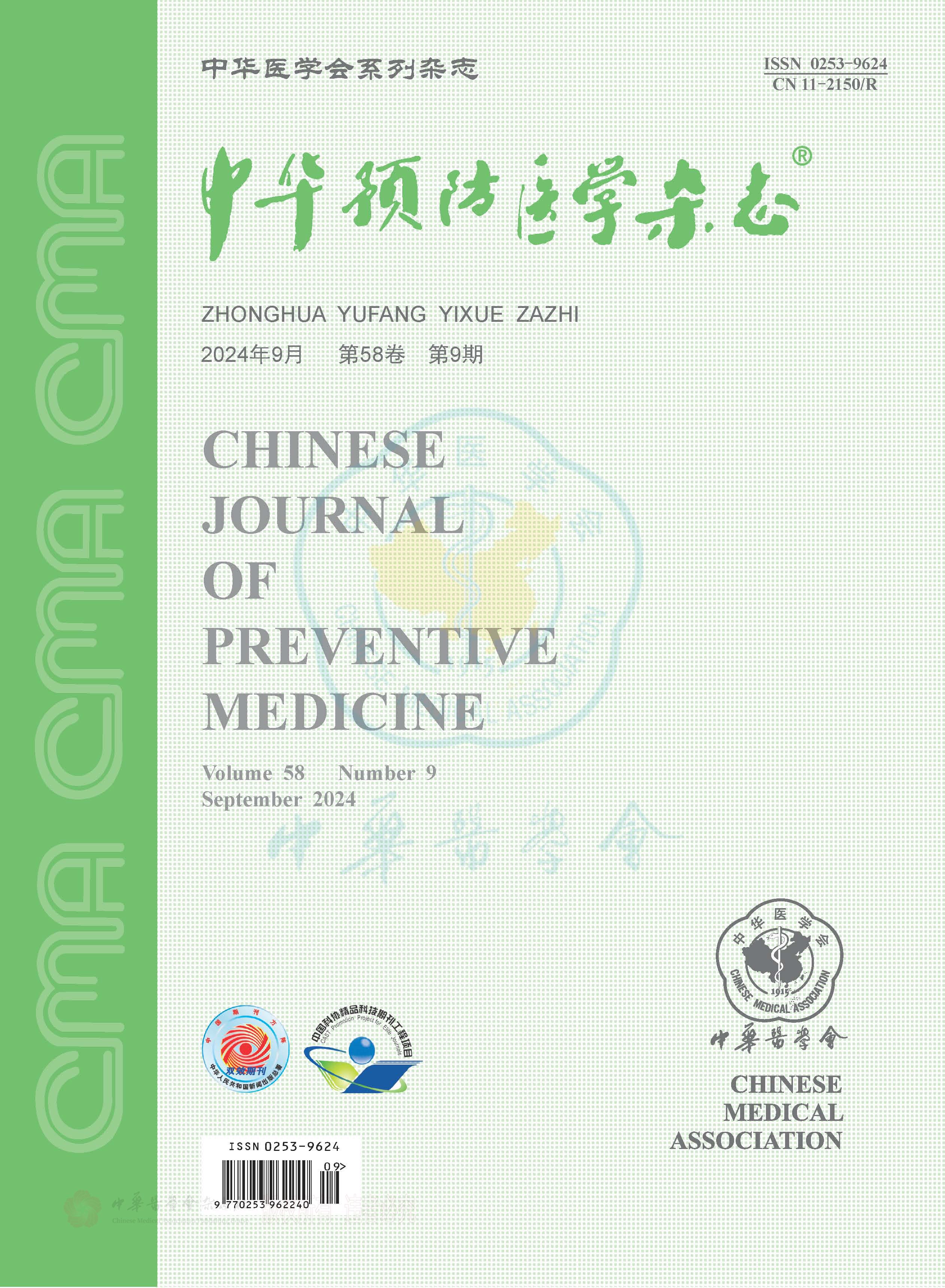
Chinese Journal of Preventive Medicine

1953  to  Present  ISSN: 0253-9624

Articles

About

Year of publication

Save Email

Sort by

Best match
Relevance
PubYear
JournalTitle

DISPLAY OPTIONS

Format:

Per page:

Save citations to file

Selection:

Format:

Create file Cancel

Email citations

To:

Please check your email address first!

Selection:

Format:

Send email Cancel

5747

results

page

of 575

1

Cite

Cite

Copy

Share

Share

Copy

Level and effect factors of superoxide dismutase and malondialchehyche of the old people aged 90 and over in longevity regions, China.

Zhao-Xue YIN ; Xiao-Ming SHI ; Jian-Wei XU ; Yi ZHAI ; Yu-Zhi LIU ; Yi ZENG

Chinese Journal of Preventive Medicine.2010;44(2):123-127.

OBJECTIVETo explore the level and effect factors of superoxide dismutase (SOD) and malondialchelyche (MDA) of the people aged 90 years old and above in longevity regions in China.

METHODSFrom Xiayi county (Henan province), Zhongxiang county (Hubei province), Mayang county (Hunan province), Foshan county Sanshui district (Guangdong province) and Yongfu county (Guangxi province), the people of hundred-year were selected and numbered. The old people aged 90 - 99 according to the age and sex were appointed by the centenarians' code and 496 people were selected in total. Questionnaire investigation was conducted on nationality, education, nutrition, smoking, alcohol drinking, tea drinking and physical activities.436 blood sampling (4 ml Per sampling) were conducted and the level of triglyceride (TG), SOD, MDA, Ca, Mg, and some microelements were determined. Non-conditional logistic regression analysis was conducted to explore the effect factors of SOD and MDA in plasma.

RESULTSAnalysis showed that the activity of plasma SOD was (31.19 +/- 5.51) U/ml, and the content of MDA was (4.68 +/- 1.98) micromol/L. The SOD level of minority people of 90 years old and over was (27.55 +/- 4.97) U/ml, lower than that of Han nationality ((31.73 +/- 5.39) U/ml; t = 5.85, P < 0.01); the MDA level of minority people of 90 years old and over was (5.58 +/- 1.95) micromol/L, higher than that of Han nationality ((4.54 +/- 1.95) micromol/L; t = -3.94, P < 0.01). logistic regression showed, comparing with the Han nationality, the minority had lower level of SOD (OR = 0.493), and higher level of MDA (OR = 5.412, P < 0.05). Beside nationality, the factors significantly affecting the activity of SOD included the intake frequency of meat, intake frequency of eggs and plasma concentration of Se (OR values were 0.388, 2.260 and 1.906, P < 0.05). The factors significantly affecting the level of MDA included the intake frequency of milk, physical activity and the level of TG (OR values were 0.435, 1.850 and 1.647, P < 0.05).

CONCLUSIONThe level of SOD of the oldest-old people aged 90 years old and over is relatively higher than the younger ones, and the level of MDA is relatively lower in longevity region, China. The effect factors of SOD are nationality, meat intake frequency, eggs intake frequency and the level of Se in plasma. The effect factors of MDA are nationality, milk intake frequency, physical activity and the level of TG in plasma.


Aged, 80 and over ; China ; Female ; Humans ; Longevity ; Male ; Malondialdehyde ; blood ; Plasma ; chemistry ; Superoxide Dismutase ; blood

Aged, 80 and over ; China ; Female ; Humans ; Longevity ; Male ; Malondialdehyde ; blood ; Plasma ; chemistry ; Superoxide Dismutase ; blood

2

Cite

Cite

Copy

Share

Share

Copy

Investigation and analysis of plasma trace elements of oldest elderly in longevity areas in China.

Jian-Wei XU ; Xiao-Ming SHI ; Zhao-Xue YIN ; Yu-Zhi LIU ; Yi ZHAI ; Yi ZENG

Chinese Journal of Preventive Medicine.2010;44(2):119-122.

OBJECTIVETo investigate the levels and differences of plasma selenium, manganese, iron, copper, zinc among oldest elderly in longevity areas in China.

METHODS446 oldest elderly including 208 centenarians, 238 aged 90 and over, who lived in Xiayi county of Henan province (110 persons), Zhongxiang city of Hubei province (111 persons), Mayang county of Hunan province (60 persons), Sanshui district of Guangdong province (113 persons), Yongfu county of Guangxi Zhuang autonomous region (52 persons) in China, were selected. The contents of plasma selenium, manganese, iron, copper, zinc were detected and compared among these elderly who were classified into different genders, different regions and different age groups.

RESULTSIn oldest elderly, the median (inter-quartile range) of content of plasma selenium was 1.44 (0.91) micromol/L, content of manganese was 0.54 (0.94) micromol/L, content of iron was 69.17 (102.85) micromol/L, content of copper was 20.19 (8.73) micromol/L, content of zinc was 31.66 (32.51) micromol/L. Contents of plasma selenium of oldest elderly in Xiayi, Zhongxiang, Mayang, Sanshui, Yongfu region were 1.46 (0.66), 1.30 (0.80), 1.06 (0.51), 2.39 (1.53) and 1.35(0.55) micromol/L; contents of plasma manganese were 0.56 (0.51), 1.40 (1.11), 0.35 (0.71), 0.44 (0.55) and 0.15 (0.21) micromol/L; contents of plasma iron were 86.77 (86.87), 141.42 (101.83), 38.88 (36.28), 31.38 (46.19) and 79.64 (75.34) micromol/L; contents of plasma copper were 22.16 (8.11), 19.46 (9.26), 21.36 (12.38), 18.12 (6.74) and 21.47 (7.85) micromol/L; contents of plasma zinc were 36.85 (26.18), 36.59 (35.94), 39.98 (56.91), 25.05 (24.92) and 16.74 (16.81) micromol/L. Contents of plasma trace elements among oldest elderly in different longevity areas were significantly different (F values were 29.76, 38.75, 47.18, 11.51 and 13.47, P values were all less than 0.05). Contents of plasma trace elements in different gender groups (contents of plasma selenium were 1.38 (0.83) micromol/L in male and 1.45 (0.91) micromol/L in female; contents of plasma manganese were 0.52 (0.95) and 0.54 (0.91) micromol/L; contents of plasma iron were 69.23 (104.06) and 69.11 (101.05) micromol/L; contents of plasma copper were 20.28 (8.72) and 20.06 (8.76) micromol/L; contents of plasma zinc were 28.39 (32.58) and 31.85 (34.26) micromol/L) were not significantly different (t(Se) = -1.82, P = 0.07; t(Mn) = 0.64, P = 0.52; t(Fe) = 0.65, P = 0.52; t(Cu) = -1.90, P = 0.06; t(Zn) = -0.96, P = 0.34). The contents of plasma selenium, iron, copper in centenarians were higher than those aged 90 and over (contents of plasma selenium were 1.63 (0.94) micromol/L and 1.30 (0.82) micromol/L, contents of plasma iron were 112.63 (119.78) and 60.13 (58.43) micromol/L, contents of plasma copper were 21.07 (9.03) and 18.81 (8.86) micromol/L, F value were 41.99, 27.32, 24.45, P values were less than 0.01). Content of plasma manganese in centenarians was lower than those aged 90 and over (0.44 (0.76) and 0.64 (0.93) micromol/L, F = 10.76, P < 0.01). No significant differences were detected in plasma zinc between concentration and those aged 90 and over (31.78 (34.06) and 31.11 (33.85) micromol/L; F = 1.32, P = 0.25).

CONCLUSIONThe concentrations of plasma selenium, manganese, iron, copper and zinc were high in oldest elderly in the longevity areas. The contents of plasma selenium, iron, copper increased with age.


Aged, 80 and over ; China ; Copper ; blood ; Female ; Humans ; Iron ; blood ; Longevity ; Male ; Manganese ; blood ; Plasma ; chemistry ; Selenium ; blood ; Trace Elements ; blood ; Zinc ; blood

Aged, 80 and over ; China ; Copper ; blood ; Female ; Humans ; Iron ; blood ; Longevity ; Male ; Manganese ; blood ; Plasma ; chemistry ; Selenium ; blood ; Trace Elements ; blood ; Zinc ; blood

3

Cite

Cite

Copy

Share

Share

Copy

Anemia status and its relevant factors among elderly people aged above 80 years old in longevity areas in China.

Yi ZHAI ; Zhao-Xue YIN ; Jian-Wei XU ; Yi ZENG ; Yu-Zhi LIU ; Xiao-Ming SHI

Chinese Journal of Preventive Medicine.2010;44(2):115-118.

OBJECTIVETo describe the epidemiological characteristics of anemia among elderly people aged 80 years old and above in longevity areas in China and to analyze its relevant factors to the health effects.

METHODSThe data used in this study came from the Chinese Longitudinal Healthy Longevity Survey, including all centenarians in 7 longevity areas, as well as randomly selected population aged 40-, 60-, 80- and 90- in the same 7 areas. A total of 1980 subjects enrolled in the study. The data of general information, eating habits and diseases history was collected by questionnaire survey. Hemoglobin, plasma macro and trace elements were gained by biochemical test. Logistic regression was used to analyze the anemia and its relevant factors.

RESULTSThe prevalence of anemia of elderly people aged 40-, 60-, 80-, 90-, 100- were 16.1% (75/465), 19.1% (82/429), 41.1% (141/343), 46.2% (171/370) and 57.1% (213/373) in 7 longevity areas, which kept on a rise with the increasing of age (z = 14.7, P < 0.05). The prevalence of anemia of male aged 100 years old and above was 66.7% (38/57), which was the highest one among all elderly. Plasma Ca (2.96 mmol/L), Fe (58.22 micromol/L), Zn (28.84 micromol/L) and Cu (19.56 micromol/L) of the elderly people aged 90 years old and above in anemia group, and in control group they were 3.30 mmol/L, 78.26 micromol/L, 33.66 micromol/L, 20.62 micromol/L, respectively. The significant differences were observed between the two groups (z values were -2.95, -3.07, -2.23 and -2.16, P < 0.05). The main risk factors related to anemia were age (OR = 1.675, 95%CI: 1.554 - 1.807), followed by frequency of beans and their products intake (OR = 0.545, 95%CI: 0.435 - 0.682), waist circumference (OR = 0.567, 95%CI: 0.456 - 0.705) and frequency of meat intake (OR = 1.608, 95%CI: 1.303 - 1.983).

CONCLUSIONThe anemia status of oldest old people in longevity areas was severe. Higher frequency of beans and their products intake and maintaining well nutritional condition benefit for the prevention of anemia.


Adult ; Aged ; Aged, 80 and over ; Anemia ; epidemiology ; China ; epidemiology ; Diet Surveys ; Female ; Humans ; Longevity ; Male ; Middle Aged ; Nutritional Status ; Prevalence ; Risk Factors ; Surveys and Questionnaires

Adult ; Aged ; Aged, 80 and over ; Anemia ; epidemiology ; China ; epidemiology ; Diet Surveys ; Female ; Humans ; Longevity ; Male ; Middle Aged ; Nutritional Status ; Prevalence ; Risk Factors ; Surveys and Questionnaires

4

Cite

Cite

Copy

Share

Share

Copy

Main dimensions of health status among the Chinese elderly.

Yi ZENG ; Ke SHEN

Chinese Journal of Preventive Medicine.2010;44(2):108-114.

OBJECTIVETo analyze the dimensions of health status among the Chinese elderly.

METHODSThrough unbalanced sampling method, 16 219 elderly aged above 65 were sampled from 22 provinces of China. The activities of daily living (ADL), physical performance, cognitive function, self-reported health and life satisfaction were investigated. We conducted comparative dimensions of health analysis across age, genders and rural/urban residences.

RESULTSAmong the male elderly aged 65-, 70-, 80-, 90- and 100-, 98.8% (730/739), 95.2% (1445/1518), 89.1% (1913/2147), 76.3% (1447/1897) and 51.6% (329/638) were ADL independent, respectively. The corresponding percentages among the female counterparts were 98.1% (654/667), 94.9% (1291/1361), 87.2% (1851/2124), 70.0% (1888/2699) and 46.8% (1136/2428), respectively (gender difference in ADL: chi(2) = 293.00, P < 0.01). Among the urban elderly aged 65-, 70-, 80-, 90- and 100-, the percentages were 98.0% (561/572), 93.6% (1090/1165), 85.5% (1413/1653), 69.3% (1311/1892) and 37.4% (434/1161) respectively. The corresponding percentages among the rural counterparts were 98.7% (823/834), 96.0% (1646/1714), 89.8% (2351/2618), 74.9% (2024/2704) and 54.1% (1031/1905) respectively (urban/rural difference in ADL: chi(2) = 85.97, P < 0.01). Among the male elderly aged 65-, 70-, 80-, 90- and 100-, 96.5% (713/739), 90.0% (1364/1516), 72.1% (1547/2145), 49.2% (929/1890) and 35.0% (218/623) had good cognitive function. The corresponding percentages among the female counterparts were 94.1% (627/666), 81.9% (1113/1359), 57.2% (1211/2116), 32.4% (870/2688), 17.5% (418/2395) respectively (gender difference in cognitive function: chi(2) = 893.89, P < 0.01). Among the urban elderly aged 65-, 70-, 80-, 90- and 100-, the percentages were 97.0% (555/572), 87.9% (1023/1164), 68.5% (1129/1648), 43.6% (820/1881) and 23.0% (258/1124) respectively. The corresponding percentages among the rural counterparts were 94.2% (785/833), 85.0% (1454/1711), 62.3% (1629/2613), 36.3% (979/2679) and 20.0% (378/1894), respectively (urban/rural difference in cognitive function: chi(2) = 57.92, P < 0.01). Among the male elderly aged 65-, 70-, 80-, 90- and 100-, the self-reported good health were 56.3% (416/739), 50.7% (770/1518), 46.0% (988/2148), 42.7% (809/1897) and 43.1% (175/638). The corresponding percentages among the female counterparts were 48.7% (325/667), 46.1% (627/1361), 43.0% (914/2124), 39.3% (1061/2699) and 34.5% (838/2428). The male elderly of each age group reported better health than the female counterparts (chi(2) = 233.91, P < 0.01). Among the male elderly aged 65-, 70-, 80-, 90- and 100-, 56.2% (415/739), 56.0% (850/1518), 55.7% (1194/2418), 52.9% (1003/1897) and 50.5% (322/638) self-reported satisfied life. The corresponding percentages among the female counterparts were 54.9% (366/667), 55.8% (759/1361), 53.9% (1144/2124), 50.6% (1365/2699) and 43.4% (1054/2428). The elderly aged 65- have no significant gender difference in self-reported life (chi(2) = 0.51, P = 0.916), while the male elderly aged 70 and above reported more satisfied life than the female counterparts (chi(2) = 218.25, P < 0.01).

CONCLUSIONPercentages of good physical performance and normal cognitive function dropped dramatically as age increased, but percentages of reporting good health and satisfied life decreased very slowly as age increased. Rural elderly were significantly more active in daily living than urban elderly. Female elderly were seriously disadvantaged in ADL, physical performance, cognitive function and self-reported health as compared with their male counterparts.


Activities of Daily Living ; Aged ; Aged, 80 and over ; Attitude to Health ; China ; Female ; Health Status ; Humans ; Longevity ; Male ; Quality of Life ; Self-Assessment ; Surveys and Questionnaires

Activities of Daily Living ; Aged ; Aged, 80 and over ; Attitude to Health ; China ; Female ; Health Status ; Humans ; Longevity ; Male ; Quality of Life ; Self-Assessment ; Surveys and Questionnaires

5

Cite

Cite

Copy

Share

Share

Copy

A study on chronic diseases and other related health indicators of centenarians in longevity areas in China.

Xiao-Ming SHI ; Zhao-Xue YIN ; Han-Zhu QIAN ; Yi ZHAI ; Yu-Zhi LIU ; Jian-Wei XU ; Yi ZENG

Chinese Journal of Preventive Medicine.2010;44(2):101-107.

OBJECTIVETo describe chronic diseases and other related health indicators of centenarians, compare these health indicators with other age groups in longevity areas in China.

METHODSResidents who participated in the project of Chinese Longitudinal Healthy Longevity Survey (CLHLS) conducted in 2008 - 2009 were selected from 7 Longevity Areas.2029 people aged 40 and over attended the study from March to June, 2009, including 469 aged 40 and over, 436 aged 60 and over, 346 aged 80 and over, 380 aged 90 and over, 398 centenarians. Information, including socio-demographic, were collected by self-designed questionnaire. Calibrated instruments were used by the clinical personnel who had worked over 3 years to manually check subjects' health. Venous blood and urine samples were collected for blood and urine routine test, plasma macro and trace elements test, plasma biological test, using standard methods such as instrument analysis, atomic absorption spectrometry. Data analysis was conducted using descriptive statistical methods.

RESULTSIn the groups aged 40 and over, 60 and over, 80 and over, 90 and over, 100 and over, the body mass index (BMI) were (23.2 +/- 4.6), (22.1 +/- 3.7), (20.2 +/- 3.4), (20.2 +/- 3.9) and (19.1 +/- 5.0) kg/m(2) in males (F = 22.78, P < 0.01) and (23.3 +/- 4.0), (21.6 +/- 3.5), (19.7 +/- 3.9), (19.0 +/- 4.8), (18.4 +/- 3.8) kg/m(2) in females (F = 51.84, P < 0.01); the prevalence of hypertension were 38.3% (80/209), 60.8% (166/273), 63.5% (106/167), 61.8% (68/110), 54.8% (34/62) in males (chi(2) = 34.26, P < 0.01) and 32.3% (84/260), 60.1% (98/163), 69.8% (125/179), 61.5% (166/270), 58.9% (198/336) in females (chi(2) = 78.45, P < 0.01); the prevalence of diabetes were 10.5% (22/209), 12.5% (34/273), 9.0% (15/167), 18.2% (20/110), 12.9% (8/62) in males (chi(2) = 5.92, P = 0.20) and 4.2% (11/260), 15.3% (25/163), 10.1% (18/179), 12.2% (33/270), 7.4% (25/336) in females (chi(2) = 19.25, P < 0.01). In groups aged 40 and over, 90 and over, 100 and over, the superoxide dismutase (SOD) activity were (29.03 +/- 5.79), (30.93 +/- 5.39), (31.63 +/- 5.92) U/ml in males (F = 4.40, P < 0.05) and (28.27 +/- 6.25), (30.86 +/- 5.72), (31.55 +/- 5.25) U/ml in females (F = 13.13, P < 0.05); levels of plasma calcium were (3.63 +/- 1.08), (3.09 +/- 0.91), (3.34 +/- 1.07) mmol/L in males (F = 5.71, P < 0.01) and (3.84 +/- 1.02), (3.19 +/- 1.16), (3.38 +/- 1.16) mmol/L in females (F = 11.61, P < 0.01); levels of selenium were (1.44 +/- 0.86), (1.28 +/- 0.60), (1.75 +/- 0.57)micromol/L in males (F = 3.79, P < 0.05) and (1.44 +/- 0.80), (1.48 +/- 0.81), (1.78 +/- 0.80) micromol/L in females (F = 8.69, P < 0.01); levels of iron were (63.25 +/- 49.05), (71.86 +/- 54.16), (138.36 +/- 77.60) micromol/L in males (F = 22.78, P < 0.01) and (64.86 +/- 57.72), (74.56 +/- 56.93), (106.56 +/- 74.08) micromol/L in females (F = 17.88, P < 0.01); levels of copper were (23.49 +/- 12.85), (17.96 +/- 7.57), (22.33 +/- 6.89) micromol/L in males (F = 5.18, P < 0.01) and (21.52 +/- 10.63), (19.60 +/- 9.57), (22.99 +/- 8.71) micromol/L in females (F = 5.68, P < 0.01); positive rates of high-sensitivity c-reactive protein (hsCRP) were 5.5% (8/146), 24.0% (18/75), 31.3% (10/32) in males (chi(2) = 22.62, P < 0.01) and 9.8% (12/122), 19.6% (40/204), 25.1% (49/195) in females (chi(2) = 11.24, P < 0.01).

CONCLUSIONThe results indicate that the centenarians have lower chronic diseases risks and higher anti-oxidants activity compared with other age groups, and have a high level of nutritional elements compared with those aged 90 and over. However, it is more common for them suffering from inflammation.


Adult ; Aged ; Aged, 80 and over ; Body Mass Index ; China ; epidemiology ; Chronic Disease ; epidemiology ; Diabetes Mellitus ; epidemiology ; Dyslipidemias ; epidemiology ; Feeding Behavior ; Female ; Health Status Indicators ; Humans ; Hypertension ; epidemiology ; Longevity ; Male ; Middle Aged ; Prevalence ; Smoking

Adult ; Aged ; Aged, 80 and over ; Body Mass Index ; China ; epidemiology ; Chronic Disease ; epidemiology ; Diabetes Mellitus ; epidemiology ; Dyslipidemias ; epidemiology ; Feeding Behavior ; Female ; Health Status Indicators ; Humans ; Hypertension ; epidemiology ; Longevity ; Male ; Middle Aged ; Prevalence ; Smoking

6

Cite

Cite

Copy

Share

Share

Copy

Strengthen study on elderly health, actively respond to population aging.

Xiao-Ming SHI ; Yi ZENG

Chinese Journal of Preventive Medicine.2010;44(2):94-96.


Aged ; Aging ; Health Services for the Aged ; Humans

Aged ; Aging ; Health Services for the Aged ; Humans

7

Cite

Cite

Copy

Share

Share

Copy

A multilevel cross-sectional study of mental disorder in community settings in Zhejiang Province.

Ya-ming GU ; Fang-zhong XU ; Qi-chang SHI ; Ting-zhong YANG ; Lu LI

Chinese Journal of Preventive Medicine.2009;43(12):1105-1108.

OBJECTIVETo investigate the prevalence of mental disorder through the 12-item general health questionnaire (GHQ-12) survey and its related factors in community settings in Zhejiang Province.

METHODSA muti-level model was analyzed using data of 14,632 respondents nested in counties (cities), townships (urban districts), villages (urban neighborhoods) from the epidemiological survey of mental illnesses above 15 years old.

RESULTSThe mean score measured by GHQ-12 was (1.54 +/- 2.15), which was lower than that of samples from four cities of Guangzhou, Chongqing, Taiyuan and Hangzhou (U = 11.08, P < 0.01). The mental disorder clustered within county (city) level, which represented 4.3% (chi(2) = 3.94, P < 0.05) of the total variance including four levels. After controlling for the county level, the mental disorder was associated with age, marital status, residency patterns, education, occupation and household incoming. In particular, it was reported that higher household incoming was significantly associated with better mental disorder among population in community settings.

CONCLUSIONThe prevalence of mental disorder clustered at the county (city) level is relatively lower with vulnerable groups including divorced, widowed, unemployed, retired, lower-income ones in community settings in Zhejiang Province.


Adult ; China ; epidemiology ; Cross-Sectional Studies ; Female ; Humans ; Male ; Mental Disorders ; epidemiology ; Middle Aged ; Population Surveillance ; Prevalence ; Surveys and Questionnaires

Adult ; China ; epidemiology ; Cross-Sectional Studies ; Female ; Humans ; Male ; Mental Disorders ; epidemiology ; Middle Aged ; Population Surveillance ; Prevalence ; Surveys and Questionnaires

8

Cite

Cite

Copy

Share

Share

Copy

Period survival analysis of esophageal cancer in Linzhou city of Henan province.

Ya-ting MA ; Shi-yong LIAN ; Zhi-cai LIU ; Lan-ping CHENG ; Bian-yun LI ; Pei-liang QUAN ; Jian-bang LU ; Xi-bin SUN

Chinese Journal of Preventive Medicine.2009;43(12):1100-1104.

OBJECTIVETo analyze the survival level and variation of esophageal cancer in Linzhou city of Henan province from 1988 to 2004, and evaluate the effects of diagnosis and treatments on esophageal cancer in this area.

METHODSAll incidence and death records for esophageal cancer during 1988 to 2004 were collected from Linzhou Tumor Registry. Cases with duplicate information or death certificate only were excluded. A total of 12,160 cases of esophageal cancer were collected, of which, 6914 cases were male, and 5246 cases were female. The sex-specific and age-specific probabilities of survival in 1992, 1997 and 2002 were calculated and linked to the data of incidence and death on esophageal cancer in this area. Five-year observed survival rate and five-year relative survival rate during 1990 to 1994, 1995 to 1999, 2000 to 2004 were calculated respectively using period survival analysis and cohort survival analysis and Z test.

RESULTSThe 5-year relative survival rates among the three-episode were 28.24%, 35.24% and 40.76% respectively during 1988 to 2004. This showed an increasing trend by periods (Z values were 3.94 and 3.07, P < 0.05). The 5-year observed survival rates in men among the three-episode were 13.67%, 18.08% and 22.46% respectively, the 5-year relative survival rates were 29.94%, 36.96% and 38.40%. The 5-year observed survival rates in women among the three-episode were 15.56%, 19.29% and 28.01% respectively, the 5-year relative survival rates were 26.78%, 33.12% and 43.70%. During the two former periods, there was no significant difference in the 5-year observed survival rate and relative survival rate between men and women (Z values of observed survival rate were 1.48 and 0.88, P > 0.05. Z values of relative survival rate were 1.27 and 1.50, P > 0.05). In the third period, the 5-year observed survival rate and relative survival rate in women was higher than that in men (observed survival rate Z = 3.56, P < 0.05; relative survival rate Z = 2.09, P < 0.05). The relative survival rate that calculated using period method (respectively 35.24% and 40.76%) was higher than that using cohort method (respectively 28.77% and 33.35%) from 1995 to 1999, and from 2000 to 2004.

CONCLUSIONThe survival rate on esophageal cancer in Linzhou city was increasing in the three different periods. This indicated a rising status in the secondary prevention and clinical diagnosis and treatments on esophageal cancer.


China ; epidemiology ; Esophageal Neoplasms ; epidemiology ; mortality ; Female ; Humans ; Life Tables ; Male ; Survival Analysis

China ; epidemiology ; Esophageal Neoplasms ; epidemiology ; mortality ; Female ; Humans ; Life Tables ; Male ; Survival Analysis

9

Cite

Cite

Copy

Share

Share

Copy

Detection of HIV incidence using BED capture enzyme immunoassay at a surveillance sentinel site of injection drug users in Guangxi.

Xiao WEI ; Wei LIU ; Feng LI ; Xia WANG ; Wei-wei ZHENG

Chinese Journal of Preventive Medicine.2009;43(12):1096-1099.

OBJECTIVETo detect recent HIV incidence of injection drug users (IDU) from a surveillance site of IDU in Guangxi and estimate HIV incidence.

METHODS787 Samples from a IDU surveillance sentinel site in Guangxi (2005 - 2007) were collected for ELISA and 168 were HIV-1 positive; then 168 HIV-1 positive samples were detected by BED capture enzyme immunoassay (BED-CEIA) and 17 were positive.

RESULTSA total of 787 samples were tested and 168 were HIV-1 positive and 17 were BED-CEIA positive. The prevalence rates of the IDU surveillance sentinel site were 23.06% (92/399), 21.90% (46/210) and 16.85% (30/178), and the incidence rates were 7.41% (10/135), 6.94% (5/72) and 3.12% (2/64) respectively from 2005 to 2007.

CONCLUSIONThe incidence rate of HIV infections of IDU from a surveillance site of IDU in Guangxi appeared to decline slowly in recent years, and some might have been infected for long time.


Adolescent ; Adult ; China ; epidemiology ; Drug Users ; statistics & numerical data ; Enzyme-Linked Immunosorbent Assay ; methods ; Female ; HIV Infections ; diagnosis ; epidemiology ; Humans ; Incidence ; Male ; Middle Aged ; Sentinel Surveillance ; Young Adult

Adolescent ; Adult ; China ; epidemiology ; Drug Users ; statistics & numerical data ; Enzyme-Linked Immunosorbent Assay ; methods ; Female ; HIV Infections ; diagnosis ; epidemiology ; Humans ; Incidence ; Male ; Middle Aged ; Sentinel Surveillance ; Young Adult

10

Cite

Cite

Copy

Share

Share

Copy

A retrospective cohort study on reduction of AIDS mortality among patients enrolled in national-free antiretroviral treatment programme in two cities in China.

Zhi-hui DOU ; Yan ZHAO ; Yun HE ; Wen-sheng HE ; Guo-ping JI ; Chen XU ; Ye MA ; De-cai ZHAO ; Lan YU ; Fu-jie ZHANG

Chinese Journal of Preventive Medicine.2009;43(12):1091-1095.

OBJECTIVETo determine the effect of national free highly active antiretroviral treatment (HAART) on reduction of mortality and relevant risk factors among adult Acquired immunodeficiency syndrome (AIDS) patients.

METHODSA retrospective cohort study was conducted and all AIDS patients diagnosed before Aug. 30th, 2008 in Zhumadian, Henan province, and Fuyang, Anhui province were enrolled in this study, where HAART initiated in early time. The data and information were collected such as AIDS progress, diagnosis, treatment, death and et al.

RESULTSAmong 10,394 AIDS patients, the mean age was (41.7 +/- 9.3) year-old, 50.3% (5233/10,394) were male, 85.0% (8808/10,394) were married, 95.1% (9880/10,394) were farmers, and 81.2% (8438/10,394) were former plasma donors (FPDs). The coverage of HAART increased from 5.2% in 2002 to 66.5% in 2008. Conversely, the overall mortality declined from 35.4/100 person-years in 2002 to 5.9/100 person-years in 2008. In a multivariate Cox proportional hazards analysis, the greatest risk factor for mortality was non-HAART, with a hazard ratio (HR) 4.3 (95%CI: 4.0 - 4.7). Among treated patients, compared with higher CD(4)(+) T cell counts (> 200 cells/microl), those initiating therapy with lower CD(4)(+) T cell counts, were at greater risk to death (< 50 cells/microl, HR = 7.9; 50 - 199 cells/microl, HR = 2.8). Number of opportunistic infections (OIs) was risk to mortality (HR = 2.1). In addition, other risk factors included male, age (>or= 50 years old), and other infection way except FPDs (HR were 1.4, 1.6 and 1.8).

CONCLUSIONThe national free treatment program has significantly reduced the AIDS mortality rate among HIV-infected FPDs through the use of generic antiretroviral drugs in rural clinical settings. The effective reduction of AIDS mortality could be realized through increased coverage of therapy.


Acquired Immunodeficiency Syndrome ; drug therapy ; economics ; mortality ; Adult ; Anti-HIV Agents ; economics ; therapeutic use ; Antiretroviral Therapy, Highly Active ; economics ; utilization ; China ; Cohort Studies ; Female ; Humans ; Inpatients ; Male ; Middle Aged ; Retrospective Studies ; Survival Rate

Acquired Immunodeficiency Syndrome ; drug therapy ; economics ; mortality ; Adult ; Anti-HIV Agents ; economics ; therapeutic use ; Antiretroviral Therapy, Highly Active ; economics ; utilization ; China ; Cohort Studies ; Female ; Humans ; Inpatients ; Male ; Middle Aged ; Retrospective Studies ; Survival Rate

Country

China

Publisher

中华医学会

ElectronicLinks

https://www.pubhealth.org.cn/

Editor-in-chief

E-mail

cjpm@cma.org.cn

Abbreviation

Chinese Journal of Preventive Medicine

Vernacular Journal Title

中华预防医学杂志

ISSN

0253-9624

EISSN

Year Approved

2008

Current Indexing Status

Currently Indexed

Start Year

1953

Description

历史沿革【现用刊名:中华预防医学杂志;创刊时间:1953】,该刊被以下数据库收录【CA 化学文摘(美)(2009);CBST 科学技术文献速报(日)(2009);Pж(AJ) 文摘杂志(俄)(2009);中国科学引文数据库(CSCD—2008)】,核心期刊【中文核心期刊(2008);中文核心期刊(2004);中文核心期刊(2000);中文核心期刊(1996);中文核心期刊(1992)】,期刊荣誉【中科双效期刊】。

Related Sites

WHO WPRO GIM

Help Accessibility
DCMS Web Policy
CJSS Privacy Policy

Powered by IMICAMS( 备案号: 11010502037788, 京ICP备10218182号-8)

Successfully copied to clipboard.