Main content 1 Menu 2 Search 3 Footer 4
+A
A
-A
High contrast
HOME JOURNAL CRITERIA NETWORK HELP ABOUT

Current criteria:

Regional:

WPRlM journal selection criteria(2023)

Minimum standards for the suspension and removal of WPRIM approved journals

Countries journal selection criteria:

Philippines

Submit your journal information>

Contact NJSCs>

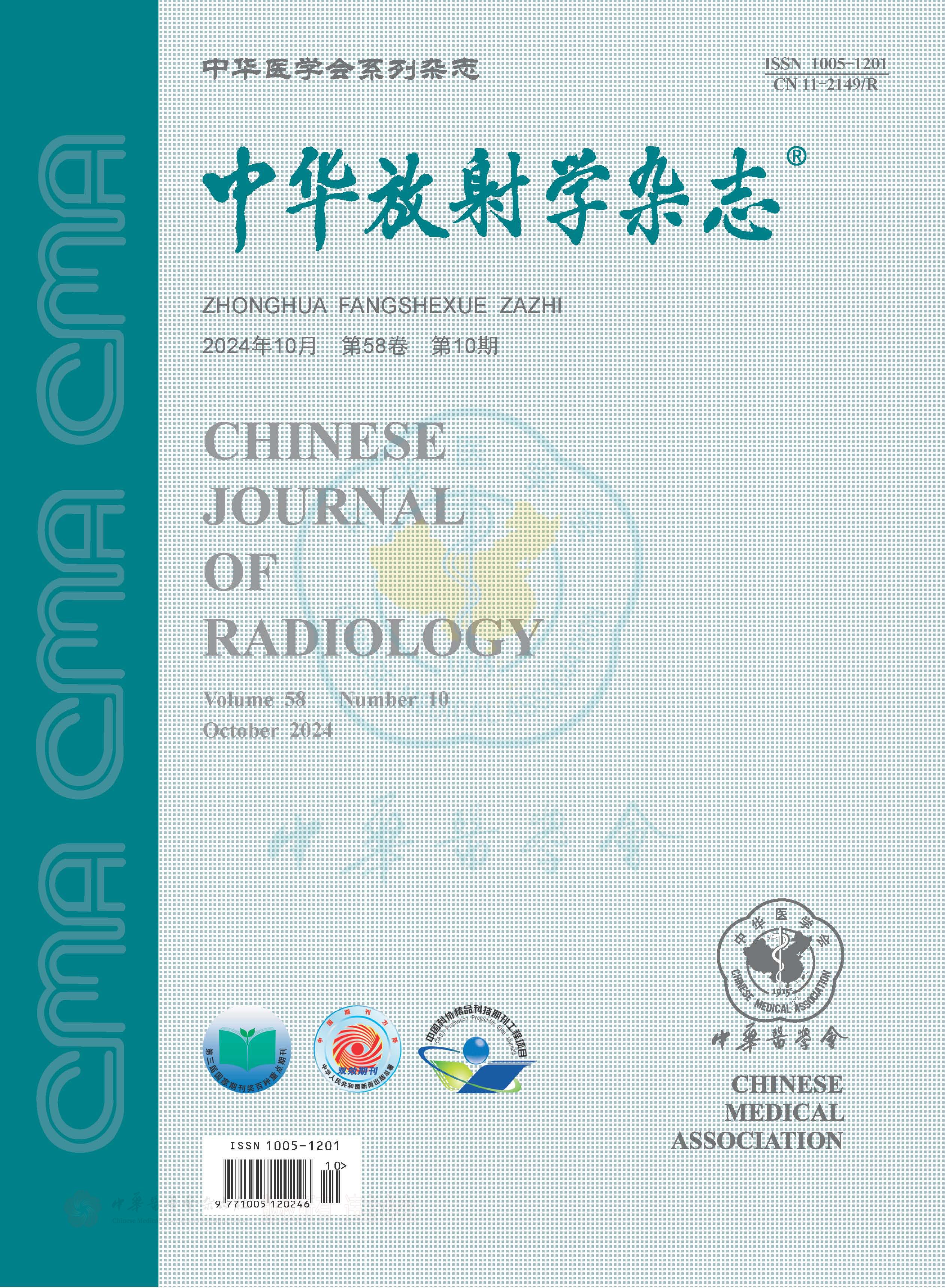
Chinese Journal of Radiology

2002 (v1, n1) to Present ISSN: 1671-8925

Articles

About

Year of publication

Save Email

Sort by

Best match
Relevance
PubYear
JournalTitle

DISPLAY OPTIONS

Format:

Per page:

Save citations to file

Selection:

Format:

Create file Cancel

Email citations

To:

Please check your email address first!

Selection:

Format:

Send email Cancel

3498

results

page

of 350

1

Cite

Cite

Copy

Share

Share

Copy

Application of iterative model reconstruction iterative reconstruction in cardiac CT imaging--an animal experimental study

Jun JIANG ; Meiping HUANG ; Yi LEI ; Changhong LIANG ; Jian ZHUANG ; Jinglei LI ; Hui LIU ; Chun LUO

Chinese Journal of Radiology.2015;(6):473-477. doi:10.3760/cma.j.issn.1005-1201.2015.06.017

Objective To evaluate the value of iterative modal reconstruction (IMR) for reducing radiation dose and controlling image quality in cardiac CT. Methods Ten pigs were included. All pigs were scanned on a 256?slice prospectively ECG?gated cardiac CT utilizing routine dose (group A) and tube current reduced by 30%(group B), 50%(group C) and 70%(group D), respectively. Filtered back projection (FBP), hybrid iterative reconstruction (iDose4) and IMR were used for all data, respectively. Image noise and contrast?to?noise ratio (CNR) of ascending aortic root were measured, while overall image quality and coronary artery image quality was rated (five point scale). All results reconstructed by FBP, iDose 4 and IMR were compared. Objective measurements were compared with one?way analysis of variance, and subjective assessments were compared with Kruskal?Wallis H test andχ2 test. Results Compared with that of FBP and iDose4, image noise of IMR was(15.1 ± 6.1),(18.8 ± 5.5),(22.1 ± 4.8)and(33.0 ± 4.0)HU, respectively in group A, B, C and D with significant reduction (F=82.77, 90.71, 96.59, 95.51 respectively, all P<0.01). Using IMR, groups A, B, C, D had higher CNR (42.0±11.1, 37.2±10.4, 31.4±8.7, 23.7±7.0;F=50.65, 53.55, 76.60, 57.36, all P<0.01) and overall image quality (5.0 ± 0.0, 4.8 ± 0.4, 4.6 ± 0.5, 4.5 ± 0.5;H=20.96, 15.63, 18.66, 23.56, all P<0.01) than FBP and iDose4. Using IMR, group A (100%, 40/40) and group B (100%, 40/40) had no significant difference (P>0.05) in the diagnosis rates of proximal coronary arteries compared with that using FBP and iDose4, while group C (100%, 40/40) and group D(92%, 37/40) had significantly increased diagnosis rates (χ2=20.05, 45.72, both P<0.01). The diagnosis rates of distal coronary arteries of IMR reconstruction which were 100%(50/50), 98%(49/50), 90%(45/50), 78%(39/50), respectively in groups A, B, C, D had significant increase compared with that of FBP and iDose4 reconstruction (χ2=7.39, 16.75, 34.62, 81.33, all P<0.05). Conclusions IMR can significantly reduce image noise, improve CNR and image quality compared with iDose4. Application of IMR can reduce radiation dose but without compromising image quality.

2

Cite

Cite

Copy

Share

Share

Copy

Efficacy and safety of interventional sclerotherapy for intraorbital venous malformation in children

Yizhou JIANG ; Gang SHEN ; Lang LIU ; Shaoyi ZHOU ; Kunshan CHEN ; Haibo LI ; Chuanqiang NIU ; Xiaoyun TAN ; Jing ZHANG

Chinese Journal of Radiology.2015;(6):469-472. doi:10.3760/cma.j.issn.1005-1201.2015.06.016

Objective To evaluate the efficacy and safety of interventional sclerotherapy for intraorbital venous malformation in children. Methods A retrospective analysis of 12 cases with intraorbital venous malformation from March 2007 to July 2013 in our department was made. Twelve lesions including 7 in left eyes and 5 in right eyes were evaluated. Three patients had surgical resection before interventional treatment. Sclerosing agent such as sclerosant foam or pingyangmycin was injected into the lesions guided by DSA. Interventional sclerotherapy was performed once every month until no blood return was observed. Then MRI was used to detect the lesions 1 month after operation. If there were residual lesions in MRI images, then repeat treatment was performed. Postoperative observation included patients' general situation and adverse reactions of eye after each treatment. Results Interventional sclerotherapy were performed to all patients for a total of 42 times (mean time 3.5 ± 1.0 per patient). After a follow?up of 24months, 7 cases were cured, 3 cases improved significantly and 2 cases with partial remission. Postoperative adverse reactions: transient exophthalmos in 39 case?times , peri?orbital and maxillofacial tissue swelling in 32 case?times. No severe complications were observed. Conclusion Interventional sclerotherapy is an easy, safe and effective method for treatment of intraorbital venous malformation.

3

Cite

Cite

Copy

Share

Share

Copy

Imaging manifestations of hepatic epithelioid hemangioendothelioma

Ruiping CHANG ; Lu GAN ; Zhanbo WANG ; Guo YU ; Li YANG

Chinese Journal of Radiology.2015;(6):449-453. doi:10.3760/cma.j.issn.1005-1201.2015.06.012

Objective To explore imaging manifestations of hepatic epithelioid hemangioendothelioma (HEH). Methods CT and MR images in 14 patients with HEH proven by histopathology were retrospectively analyzed. Plain and two-phase contrast-enhanced CT scan were performed in 5 cases, non-contrast and multiphase contrast-enhanced MR scan were performed in 7 cases, CT and MRI were both performed in 2 cases. Characteristics of CT and MR T2WI images were classified and analyzed. All lesions were classified into three types:multiple, diffuse and solitary form. Results (1) Multiple form of HEH:228 lesions were found in 11 patients, including 178 lesions on MRI and 50 lesions on CT. On T2WI, three or two layered-target-signs with hyperintensity core were found in 79.2% (141/178) of the lesions. Three layer-target-sign included hyperintensity core, hypointensity rim and slightly high signal halo from the inside out. Two layer-target-sign included hyperintensity core and slightly high signal halo from the inside out. Characteristics of dynamic contrast-enhanced scan included peripheral two or three layered-rim-like enhancement in 66.3%( 118/178) of the lesions;peripheral, gradual rim-like enhancement with enhanced core in 27.0%( 48/178) of the lesions;heterogeneously mild enhancement in 2.2%( 4/178) of the lesions;centripetal enhancement in 4.5%( 8/178) of the lesions. Fifty lesions were found in CT, which showed low density nodules or masses with clear margins. Two-layered-black-target sign were found in 42 lesions in contrast-enhanced images, white-target sign were found in 3 cases, and centripetal enhancement was found in 5 cases. (2) Diffuse form of HEH:in one of the two cases of this type, the lesions could not be separated from normal liver parenchyma, gradual enhancements were found along with the vessels in the center of the lesions. (3) Solitary form of HEH: one case, the lesion showed heterogeneous density in non-contrast CT images and gradual enhancement in contrast-enhanced images. Conclusions We found some imaging characteristics of HEH. Two or three layered-target-sign on T2WI and black-target sign, white-target sign on contrast-enhanced images were unique imaging features of HEH.

4

Cite

Cite

Copy

Share

Share

Copy

Value of high resolution MRI in the evaluation of small intralabyrinthine lesions with the symptom of vertigo

Menglong ZHAO ; Yan SHA ; Yushu CHENG ; Fang ZHANG ; Rujian HONG

Chinese Journal of Radiology.2015;(6):440-444. doi:10.3760/cma.j.issn.1005-1201.2015.06.010

Objective To discuss the value of high resolution MRI in the evaluation of small intralabyrinthine lesions with the symptom of vertigo. Methods We retrospectively analyzed the imaging examination techniques and imaging finding of 13 cases of labyrinthine hemorrhage or exudate and 6 cases of intralabyrinthine schwannoma (ILS) with the symptom of vertigo. Two cases of labyrinthine hemorrhage or exudate and 3 cases of ILS underwent temporal bone high resolution CT(HRCT) scan and all the 19 patients received highresolution MR examination. Patients of labyrinthine hemorrhage or exudate received fluid?attenuated inversion recovery (FLAIR)T2WI in addition to routine pre?contrast temporal bone MR. Pre?and post?contrast MR of the temporal bone were performed on the ILS patients. In particular, 3 ILS cases received three?dimensional sampling perfection with application?optimized contrasts by using different flip angle evolutions (3D?SPACE) sequence. Results There was no abnormal finding on HRCT of the inner ear of the 2 labyrinthine hemorrhage cases. On T1WI, regions of mild increased signal intensity of the labyrinth of affected side could be spotted in 7 patients whereas no abnormal signal intensity was found in the other 6 patients. On T2WI, all the 13 labyrinthine hemorrhage or exudate cases had no abnormal finding in the inner ear. On FLAIR T2WI sequence, regions of increased signal intensity of the labyrinth of affected side could be found in all the 13 cases. Thress ILS patients that received HRCT scan showed no valuable finding. On T1WI, no abnormal signal intensity was found in the labyrinth of the 6 patients. On T2WI, regions of decreased signal intensity of the labyrinth could be found in only 3 patients. All the 3 cases that received 3D?SPACE sequence appeared as a filling defect in the high?signal labyrinth clearly while 2 of the 3 lesions could not be found on T2WI. After Gadolinium administration, all the 6 ILSs were obviously enhancing. Conclusions High resolution MRI is valuable in the diagnosis of labyrinthine hemorrhage or exudate and ILS. The use of FLAIR T2WI sequence can help us to find labyrinthine hemorrhage or exudate more sensitively. The use of 3D?SPACE sequence can help us to detect and diagnose small intralabyrinthine lesions.

5

Cite

Cite

Copy

Share

Share

Copy

Diagnostic value of cardiovascular magnetic resonance in children with myocarditis

Binghua CHEN ; Yumin ZHONG ; Aimin SUN ; Qian WANG ; Ming ZHU ; Jinglei WANG ; Wei GAO ; Meirong HUANG ; Guilong WANG

Chinese Journal of Radiology.2015;(6):435-439. doi:10.3760/cma.j.issn.1005-1201.2015.06.009

Objective To determine the diagnostic value of cardiovascular magnetic resonance (CMR) in children with myocarditis. Methods A total of 27 children with myocarditis were examined with cardiac MRI, including 16 new?onset cases and 11 chronic cases, as well as 14 cases with non?myocarditis. Sequences included SSFP in axial, two chamber, four chamber and short axis, T2?weighted triple inversion recovery, T1?weighted spin echo before and after gadolinium injection, and inversion recovery?gradient echo after gadolinium injection(late gadolinium enhancement, LGE) in axial and short axis. Qualitative and quantitative image analysis was performed to obtain focal T2 signal intensity and early enhancement signal intensity(SI) ratio of myocardium to skeletal muscleon EGE and LGE.The sensitivity, specificity and accuracy were calculated. Mann?Whitney and χ2 test were used for statistical comparison. Results The median value of EF was 60.20%(44.40%,70.20%), median value of T2W SI ratio was 2.50(2.04, 3.79),and there were 13 cases with LGE positive findings in myocarditis group. The median value of EF was 73.60%(65.40%,75.85%), the median value of T2WI SI ratio was 1.85(1.77, 2.15), and one case presented LGE positive sign in non?myocarditis group. There were significant statistical differences between the two groups (Z=-2.94,-2.52 ,χ2=5.19 ,P<0.05). The sensitivities for T2WI, EGE, LGE were 81.5%(22/27), 14.8%(4/27) and 48.1%(13/27) respectively. The specificities for T2WI, EGE, LGE were 57.1%(8/14), 100.0%(14/14)and 92.9%(13/14) respectively. The diagnostic accuracies for T2WI, EGE, LGE were 73.2%(30/41), 43.9%(18/41) and 63.4%(26/41) respectively. The best diagnostic performance was obtained when“any?two”of the three sequences were positive in the same patient, yielding a 51.9%(14/27)sensitivity, 92.9%(13/14) specificity, and 65.9%(27/41) diagnostic accuracy.Conclusions The combined CMR approach using T2?weighted imaging, early and late gadolinium enhancement, provides a high diagnostic accuracy and is a useful tool in the diagnosis and assessment of children with myocarditis.

6

Cite

Cite

Copy

Share

Share

Copy

Value of targeted MR molecular imaging in evaluating the early efficacy of anti-angiogenesis drugs

Shuang DING ; Jing WANG ; Yonghua XU ; Wenxiao JIA ; Lixia YANG ; Zili HUANG ; Xiaodong PAN

Chinese Journal of Radiology.2015;(6):419-424. doi:10.3760/cma.j.issn.1005-1201.2015.06.006

Objective To assess the value of noninvasive MR imaging biomarkers in evaluating the early efficacy of anti?angiogenesis drugs. Methods Subcutaneous colon cancer xenograft models in thirty nude mice were established. The mice were randomly divided into three groups (n=10 for each): avastin injection group (dose 10 mg/kg), fluorouracil group (dose 150 mg/kg), physiological saline group (dose 20 mg/kg). Dynamic contrast?enhanced (DCE?MRI) and multiple b value diffusion weighted imaging (muti?b?value DWI) were acquired before or 1 h, 24 h and 48 h after the treatment. The parameters of contrast transfer coefficient (Ktrans), reflux constant (Kep), plasma volume fraction (Vp), extravascular extracellular volume fraction (Ve) and various apparent diffusion coefficients (ADCs) (ADC10b, ADChigh and ADCperf) were measured. Forty eight hours after the treatment, the mice were sacrificed following MRI. Aimmunohistochemical examination determined microvessel density (MVD) and proliferating cell nuclear antigen (PCNA) score. A repeated measures analysis of variance was used to compare the difference between the quantitative parameters among the three groups. A multivariate variance analysis was performed to compare the difference between the parameters at the same time point among the three groups. The correlation between MRI quantitative parameters with MVD and PCNA score were analyzed by Pearson and Spearman correlation analysis respectively. Factor analysis method summarized MRI quantitative parameters. Results One hour after the treatment, the parameters of Ktrans, Kep, ADC10b, ADChigh and ADCperf value immediately changed, they were(0.009 ± 0.005)/s,(0.042 ± 0.031)/s,(0.043 ± 0.002)× 10?3 mm2/s,(0.031 ± 0.005)× 10?3 mm2/s,(0.089 ± 0.006)× 10?3 mm2/s, Ktrans, Kep, ADC10b and ADChigh values all had significant differences in the three groups (F=42.058, 25.979, 9.870 and 8.511, respectively, all P<0.05). There were also statistical difference in the change trend of the above parameters among the three groups (F=22.108, 7.280, 65.698 and 19.900, respectively, all P<0.05). The change trend of ADCperf showed significant difference among the three groups (F=38.780, P<0.01). Ktrans, Kep and ADCperf positively correlated with the MVD count and PCNA score (r values were 0.421 to 0.811, both P<0.01), while ADC10b showed a negative correlation (r=-0.656 and-0.560, both P<0.01), ADChigh had negative correlation with the PCNA score (r=-0.568, P<0.05). Ktrans, Vp, Kep and ADCperf were classified as tumor microcirculation factor, whereas ADC10b and ADChigh were normalized for cell metabolism factor through the factor analysis. Conclusions Combination of DCE?MRI and muti?b?value DWI can reflect the early changes of drug therapy from the aspects of tumor microcirculation and cell metabolism. Ktrans, Kep, ADCperf, ADC10b and ADChigh can be taken as noninvasive imaging biomarkers to quantify the early efficacy of anti?angiogenesis drugs.

7

Cite

Cite

Copy

Share

Share

Copy

Treatment of symptomatic basilar artery atheronatous ischemic disease with Wingspan stent system

Ziliang WANG ; Dongyang CAI ; Bin XU ; Tianxiao LI

Chinese Journal of Radiology.2015;(6):464-468. doi:10.3760/cma.j.issn.1005-1201.2015.06.015

Objective To explore the safety and efficacy of the Wingspan stenting of basilar artery atherosclerosis stenosis though the analysis of single center massive clinical data. Methods Ninety one consecutive patients received Wingspan stenting because of basilar artery stenosis in our center from July 2007 to April 2013. The patients were classified into three groups:early term (n=30), middle term (n=30), and late term (n=31) according to the operation time in our center. The basic clinical data and the factors which may affect the ischemic events were retrospectively analysed, t test and Chi?Square test were used to analyze the factors related to the periprocedural ischemic complications. Results All of patients were stented successfully and the technical success rate was 100%(91/91). The mean stenosis was reduced from (82.2 ± 5.8)% to (15.9 ± 5.7)%; strokes or death happened in 13 cases within 30 days, including perforator stroke in 8 patients(8.8%, 8/91), thrombosis in 4 patients(4.4%, 4/91), subarachnoid hemo rrhage in 1 patient(1.1%, 1/91), 2 patients with disabling or fatal strokes. Lesions involving in the middle segment of basal artery (P=0.049), long?segment disease (P=0.002), severe stenosis (P=0.001) may be a risk factor affecting perioperative ischemic stroke, and the surgeons' surgical technique was not risk factors for ischemic complications (P=1.000). Seventy seven patients (84.6%, 77/91) had the clinical follow?up and the mean follow?up period was (31.3±15.1) months. Four patients suffered from posterior circulation strokes during the clinical follow?up , one of them (1.3%, 1/77) had disabling stroke, another 3 patients (3.9%, 3/77) suffered from TIA. The 2?year accumulate probability of stroke (any stroke or death within 30 days and stroke in the territory of the qualifying artery beyond 30 days)was 16%(95%CI, 8.2%to 23.8%). Forty six patients had the imaging follow?up and the mean follow?up period was(9.5±8.3)months, 6 patients(13.0%,6/46) had in?stent restenosis (ISR) and 2/6 patient had the symptomatic ISR. Conclusions The stroke or death rate of symptomatic basilar atherosclerosis Wingspan stenting within 30 days is high, but the disabling or fatal stroke rate is low. The middle segment of basilar artery involved, the long stenosis, the severe atherosclerosis may be the factors related to the periprocedural ischemic strokes. The incidence of disabling or fatal strokes was low following Wingspan stenting.

8

Cite

Cite

Copy

Share

Share

Copy

Clinical and imaging features of Gorham disease:a report of eleven cases and review of literature

Yuqing LI ; Zekun ZHANG ; Jicun LIU ; Jingpin ZHAO ; Wenjuan WU ; Jianping DING

Chinese Journal of Radiology.2015;(6):458-463. doi:10.3760/cma.j.issn.1005-1201.2015.06.014

Objective To evaluate the clinical and radiological features of Gorham disease. Methods Clinical and radiological features of Gorham disease were retrospectively analyzed by reviewing the eleven cases from our hospital and the cases reported in the domestic literature in the past fifty years. The diagnoses of all these 11 patients were in accordance with the diagnostic criteria established by Wells and Gray et al. All patients had X?ray plain film, four had CT scan and five had MR examination, with one had additional contrast?enhanced MR examination. Results There were 7 males and 4 females, age ranged from 16 to 66 years with a median age of 32 years. There were six cases involving hand, one involving ulnar and radial bones, one involving acetabulum and three involving jaw bones. The main clinical manifestations were pain, swelling, limited activity, and focal muscular atrophy occurred in 7 cases. On X?ray plain films, the affected bone became thin and the cortexes were not smooth and became coarse in 6 cases. Local lucent area was seen in 5 cases and massive bone absorption was seen in 6 cases. The residual bones showed a tapering appearance in 1 case. Pathological fracture occurred in 1 case. On CT scans, the affected bone became thin and the cortexes became coarse in 4 cases. Local lucent area was seen in 1 case. Massive bone absorption was seen in 3 cases. The adjacent muscular atrophy and widened intermuscular fat space occurred in 2 cases (atrophic bone absorption). On MRI, normal signal intensity of bone marrow disappeared and demonstrated low signal on T1WI and high signal on T2WI. The signal could be homogeneous or heterogeneous. There were widespread strip and patchy high signal areas in the soft tissue around the absorption areas in 4 cases, which resembled the edema?like signal. In 1 case, there was irregular widespread soft tissue mass around the absorption areas with heterogeneous high signal on T2WI. The adjacent muscle showed atrophy, and the intermuscular fat space became wide. There were a total of 92 cases reported cases in the literature including our 11 cases. There were 63 males and 29 females. The onset age ranged from 10 to 40 years in 66/92(72%)cases. The lesion affected one bone in 24 cases, affected two or more bones in 68 cases, out of which 9 cases had single center distribution, 59 cases had multiple centers distribution. Pectoral girdle, pelvis, maxillofacial bones, and hand were the most common sites of involvement in decreasing order. Forty three cases had muscle atrophy and 8 cases had soft tissue mass. Conclusion Gorham disease should be considered when atrophic bone absorption in one bone or continuous bones occurs that does not match clinical symptoms, with soft tissue atrophy but no bone sclerosis or periosteal reaction in the osteolytic areas.

9

Cite

Cite

Copy

Share

Share

Copy

Imaging findings of giant cell tumor of tendon sheath

Bin LI ; Chao WANG ; Minming ZHANG

Chinese Journal of Radiology.2015;(6):454-457. doi:10.3760/cma.j.issn.1005-1201.2015.06.013

Objective To explore the imaging features of giant cell tumor of tendon sheath(GCTTS) so as to improve the accuracy of imaging diagnosis. Methods Thirty?nine cases of GCTTS confirmed by pathological examination were retrospectively analyzed.Of the 39 cases, 32 were diffuse form and 7 were localized form.Seventeen patients underwent X?ray examination,18 had CT pain examination,37 had pain MR imaging and 17 had contrast?enhanced MR imaging.Results X?ray showed local soft tissue masswith slightly high density, and the adjacent bones were shown destruction or erosion tovarious degrees(10/17). No obvious calcification and periosteal reaction were shown.CT scans could provide images better than X?ray films.CT showed local soft tissue masses in the peri?articular muscle gaps. Some tumors were lobulated with cross?jointed growth(8/18),and the adjacent bones were shown destruction or erosion tovarious degrees(11/18).No obvious calcification and periosteal reaction were shown. On MRI,most cases were isointense on T1WI(32/37),and hyperintense on T2WI(27/37). Most cases tended to be heterogeneously enhanced following Gd?DTPA administration(14/17).The lesions were typically located adjacent to a tendon or partially/completely encasing it. Conclusions The imaging findings of GCTTS have some certain characteristics. MRI is able to depict the characteristic internal signal of GCTT and its relationship with adjacent tissues, which is valuable for diagnosis, treatment and follow?up.

10

Cite

Cite

Copy

Share

Share

Copy

Imaging features of seminomas and nonseminomatous germ cell tumors

Ziyuan LI ; Min GUAN ; Ligang SHI ; Shaocheng ZHU ; Dapeng SHI

Chinese Journal of Radiology.2015;(6):445-448. doi:10.3760/cma.j.issn.1005-1201.2015.06.011

Objective To explore the imaging characteristics of seminomas and nonseminomatous germ cell tumors (NSGCT) and its pathological foundation. Methods CT and MR imaging manifestations in 25 cases of testicular germ cell tumors proved by pathological examinations were analyzed retrospectively. All tumors were divided into seminomas group (12 cases) and NSGCT group (13 cases). In the seminomas group, 5 cases were examined by CT and 4 of those also had contrast enhanced CT. Seven cases had MRI and 4 of those had dynamic enhanced MRI. In the NSGCT group, 5 were examined by plain CT in which two were by contrast enhanced CT, eight were by MRI in which 4 were by dynamic enhanced MRI. CT or MRI characteristics (morphology, density or intensity, enhancement) in both groups were analyzed by Fisher test. Results Histological examination revealed 25 intratesticular lesions. In 12 seminomas, 10 showed a nodular/lobulated shape, 5 showed a mixed density or intensity. In 13 NSGCT, only one lesion showed a lobular shape, 11 showed a mixed density or intensity. Seven seminomas showed a low signal on T2WI on MRI while only two NSGCT showed this sign. In four lesions underwent dynamic MRI scanning, 3 showed fibrous septum enhancement while no lesions in NSGCT showed this sign. The occurrence rate of the above imaging characteristics in both group was significantly different (P<0.05). Conclusion Seminomas and NSGCT may have their own CT and MRI characteristics, which may be of great value for differential diagnosis .

Country

China

Publisher

中华医学会

ElectronicLinks

https://www.cjrjournal.org/

Editor-in-chief

E-mail

cjr@cma.org.cn

Abbreviation

Chinese Journal of Radiology

Vernacular Journal Title

中华放射学杂志

ISSN

1005-1201

EISSN

Year Approved

2008

Current Indexing Status

Currently Indexed

Start Year

1953

Description

历史沿革【现用刊名:中华放射学杂志;创刊时间:1953】,该刊被以下数据库收录【CA 化学文摘(美)(2009);CBST 科学技术文献速报(日)(2009);Pж(AJ) 文摘杂志(俄)(2009);中国科学引文数据库(CSCD—2008)】,核心期刊【中文核心期刊(2008);中文核心期刊(2004);中文核心期刊(2000);中文核心期刊(1996);中文核心期刊(1992)】,期刊荣誉【百种重点期刊;中科双效期刊】。

Related Sites

WHO WPRO GIM

Help Accessibility
DCMS Web Policy
CJSS Privacy Policy

Powered by IMICAMS( 备案号: 11010502037788, 京ICP备10218182号-8)

Successfully copied to clipboard.