Main content 1 Menu 2 Search 3 Footer 4
+A
A
-A
High contrast
HOME JOURNAL CRITERIA NETWORK HELP ABOUT

Current criteria:

Regional:

WPRlM journal selection criteria(2023)

Minimum standards for the suspension and removal of WPRIM approved journals

Countries journal selection criteria:

Philippines

Submit your journal information>

Contact NJSCs>

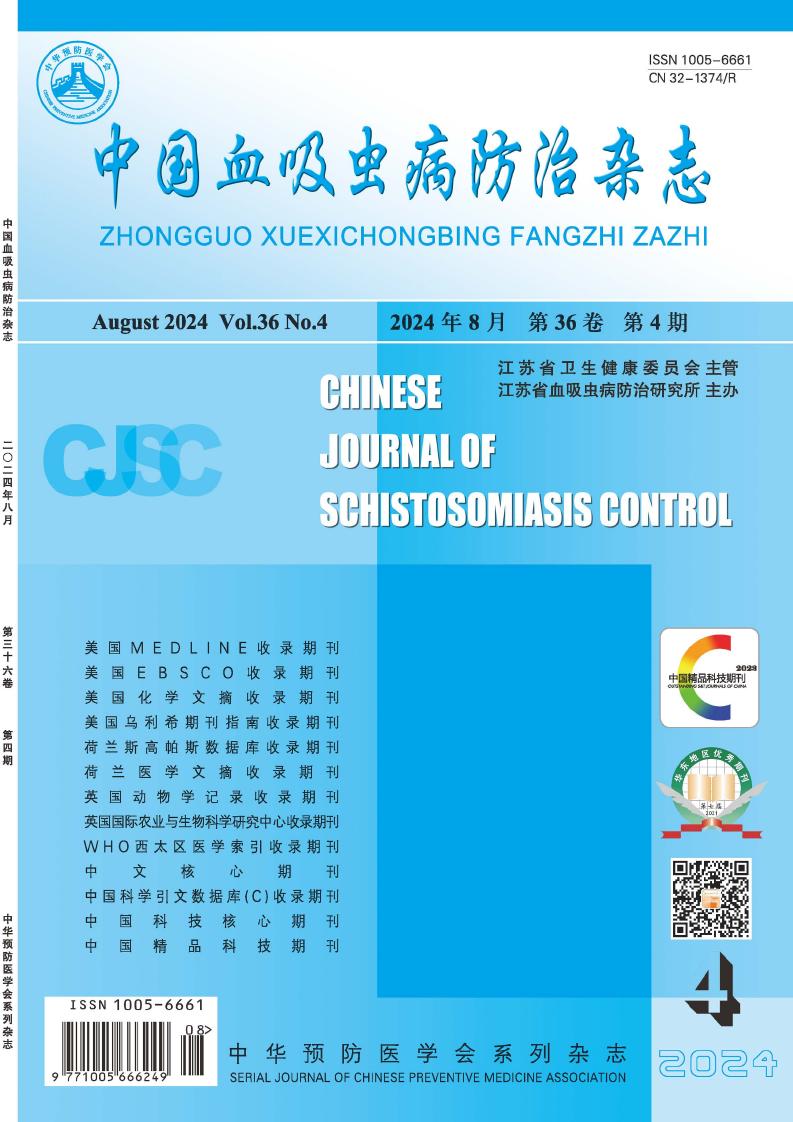
Chinese Journal of Schistosomiasis Control

1989  to  Present  ISSN: 1005-6661

Articles

About

Year of publication

Save Email

Sort by

Best match
Relevance
PubYear
JournalTitle

DISPLAY OPTIONS

Format:

Per page:

Save citations to file

Selection:

Format:

Create file Cancel

Email citations

To:

Please check your email address first!

Selection:

Format:

Send email Cancel

2015

results

page

of 202

1

Cite

Cite

Copy

Share

Share

Copy

Immunomodulatory effects of Treg and Th17 cells in parasitic infections and hygiene hypothesis

Yingying Yang ; Junqi Yang

Chinese Journal of Schistosomiasis Control.2017;29(1):116-121. doi:10.16250/j.32.1374.2016139

The parasitic infection is still a severe public health problem in developing countries,which threatens people’s health and social development. With the advances of molecular biology and immunology,more and more insights have been reached on the immunity and immunopathogenesis to parasitic infections. CD4+ T cells play a central role in the host’s immuno⁃ surveillance and immunoregulation. Traditionally,naive CD4+ T cells are considered to be able to differentiate into Th1 and Th2 cell subsets both in vivo and in vitro. These Th1 and Th2 cells secret diverse cytokine profiles to exert different functions. Later,two new subsets of CD4+ T cells,Th17 and Treg cells,have been discovered. They are completely different from traditional Th1 and Th2 cells with independent differentiation and regulation mechanism. Ample studies suggest that Treg and Th17 cells play a key role in a variety of parasitic diseases. Furthermore,Treg and Th17 cells have been got increasing attention for their involve⁃ment in the hygiene hypothesis. Based on the current advances of researches of Treg and Th17 cells,we make a brief review about immunomodulatory effects of these two subsets in parasitic infections as well as the hygiene hypothesis.

2

Cite

Cite

Copy

Share

Share

Copy

Epidemiological characteristics of canine Echinococcus infection in Qinghai⁃ Tibet Plateau of China

Hui LIU ; Ning XIAO ; Shijie YANG ; Dong WANG ; Jia PENG

Chinese Journal of Schistosomiasis Control.2017;29(2):129-138. doi:10.16250/j.32.1374.2017004

The Qinghai⁃Tibet Plateau is known as one of the highest endemic areas of echinococcosis However,the dog infection rates of Echinococcus granulosus in the plateau regions were similar to other non⁃Tibetan areas with the high endemic,and most of the rates were below 40%. The infected dogs with E. multilocularis were ubiquitous in Ganzi Prefecture of Sichuan Province and Qinghai Province where many survey data were done and available,which was much different from those in non⁃Ti⁃betan areas where the geographical distribution of dogs infected with E. multilocularis was sporadic. The total infection rates of Echinococcus in dogs kept stable from 1983 to 2009 in Ganzi Prefecture of Sichuan Province and did not show much variation from 2000 to 2014 in Qinghai Province as well. Since 2006,the national comprehensive prevention and control strategy and mea⁃ sures against echinococcosis have been launched in China,and significant progress has been made. In the endemic Tibetan area of Sichuan,the general Echinococcus infection rates in dogs were 28.10%,15.87%,19.22%,3.28% and 1.11% from 2009 to 2013,respectively,and the Echinococcus coproantigen⁃positive rate in Gannan Prefecture of Gansu Province and parts of Qing⁃ hai Province also decreased. This paper reviews the literature on the characteristics of dog infections in the Qinghai⁃Tibetan Plateau,so as to provide useful information to support echinococcosis control and prevention there.

3

Cite

Cite

Copy

Share

Share

Copy

Endemic situation trend of schistosomiasis in Guichi District of Chizhou City,Anhui Province,1991-2011

Congcong XIA ; Zonggui HE ; Gengxin CHEN ; Tiejun ZHANG ; Suiheng LIN ; Yi HU ; Zhijie ZHANG

Chinese Journal of Schistosomiasis Control.2017;29(2):139-142. doi:10.16250/j.32.1374.2016131

Objective To understand the epidemical patterns of schistosomiasis in Guichi District of Chizhou City,Anhui Province,in order to provide the reference for schistosomiasis control. Methods The annual data of schistosomiasis endemic situation in Guichi District from 1991 to 2011 were collected. The descriptive analysis was first conducted to describe the changes of schistosomiasis in local residents and the status of Oncomelania hupensis. An autoregressive integrated moving average (ARIMA)model was applied to fit and predict the tendency of schistosomiasis incidence in this region. Results The humanmorbidity increased with the increasing of the areas with snail habitats(P < 0.05),and four peaks(in 1992,1995,2005,2008)were detected. The difference of the area with snails among different types of snail habitats was statistically significant(F = 256.79,P < 0.05). ARIMA(1,1,1)was determined to be the optimal model for analyzing the morbidity of schistosomiasis,and the short⁃term forecast of the morbidity in Guichi District from 2012 to 2015 showed that the predicted values were 0.017%,0.007%,0.012%,and 0.010%,respectively. Conclusions The endemic situation of schistosomiasis in Guichi District is controlled relatively well in the past two decades. However,the surveillance in the lake and marshland regions should be strengthened continuously to prevent the rebounding of the schistosomiasis endemic situation.

4

Cite

Cite

Copy

Share

Share

Copy

Investigation on malaria knowledge and demands on related training for CDC staff in Qinghai Province,China

Shaosen ZHANG ; Huixia CAI ; Hong TU ; He YAN ; Na LIU ; Junying MA

Chinese Journal of Schistosomiasis Control.2017;29(2):169-173,181. doi:10.16250/j.32.1374.2016232

Objective To investigate the malaria knowledge of CDC staff and their demands on related training in malaria non⁃endemic areas,so as to provide the reference for planning the appropriate curriculum. Methods All the participants who were the staff of county CDCs all over Qinghai Province and attended the provincial training workshop were surveyed. A self⁃administered questionnaire survey was carried out and the data was statistically analyzed. Results A total of 115 participants were involved in this survey. They were mostly(85.21%)from county CDCs. The general knowledge of malaria among the respondents was well,and the average rate of correct answers was 70.35%. However,the answers to the general knowledge of malaria and anti⁃malaria treatment were not well enough. The rates of correct answers were 61.96% and 48.99% respectively. The differences among the groups of job title ranking,department of working and level of CDC were not significant(F = 0.13-2.02,all P > 0.05). The number of correct answers was significantly increased after the training course. The average score after the training was 79.20±15.16 while the pre⁃training score was 70.34±17.46(t = 3.86,P < 0.05),especially in the answers to general malaria knowledge and malaria surveillance and response(t = 4.30,4.97,both P < 0.05). The general knowledge of malaria was considered as the most need of training as 80% of the respondents voted“Yes”,according to the demand analysis. There was no significant difference among the different groups(F = 0.61-3.11,both P > 0.05). Conclusion The malaria knowledge is well mastered by the staff of CDCs in Qinghai Province,and the further training courses are requested and addressed in the target areas such as general malaria knowledge,anti⁃malaria treatment,malaria surveillance and response.

5

Cite

Cite

Copy

Share

Share

Copy

Evaluation on human resource allocation in certain national institute of par⁃ asitic diseases in ten years

Yan KUI ; Chunli CAO ; Shen TIAN ; Biying TAO ; Shizhu LI ; Xiaonong ZHOU

Chinese Journal of Schistosomiasis Control.2017;29(2):197-201. doi:10.16250/j.32.1374.2017033

Objective To evaluate the human resource in a national institute of parasitic diseases from 2007 to 2016,so as to provide a reference for the construction of a well⁃crafted human resource of national parasitic diseases control and prevention. Methods The basic information of the staff in the national institute of parasitic diseases was investigated and a related database was established to analyze the quantity and structure of the human resource allocation in 10 years through the annual statistics each year. Results The number of staff in the institute increased by 6.25% in 2016 compared with that in 2007,and 43.32% of the staff were under 35 years old. In 2016,59.36% of the staff had a master degree or a higher level degree,and 37.97% of the staff had senior technical titles. The difference value of the inflows and outflows was 3.21%. Conclusions The change of the structure and quality of human resource in this institute has a good tendency in the past ten years. The organization should optimize the human resource allocation and improve its capacity in disease control and prevention to broaden the methods of talent introduction and control the brain drain problem.

6

Cite

Cite

Copy

Share

Share

Copy

Analysis of academic impact of publications from National Institute of Para⁃ sitic Diseases,Chinese Center for Disease Control and Prevention based on SCIE database in recent five years

Zhen LI ; Bin ZHEN

Chinese Journal of Schistosomiasis Control.2017;29(2):235-240,245. doi:10.16250/j.32.1374.2016214

Objective To describe the academic impact of publications from National Institute of Parasitic Diseases (NIPD),Chinese Center for Disease Control and Prevention,so as to give the quantity evidence for scientific research decision making. Methods The SCIE papers of NIPD published from 2011-2015 were searched and statistically analyzed. The number of published papers,citation frequencies,h⁃index,and funding resources were analyzed. The academic impact of the institute was assessed according to these data. Result A total of 361 papers were published by NIPD,and the quantity increased year by year. The majority type is original articles. The total citations were 1 641 times,the average citation per paper was 5.19 and h⁃index was 17. The majority of these papers were published in foreign professional periodicals,whose impact factors were between 1.194 and 6.751. The major resources of NIPD were from China,and NIPD also had good collaborations with institutions in US and Switzerland. In China and Asia,NIPD led the research in the field of parasitology and tropical medicine. Conclusion The quantity and quality of annual published papers of NIPD are on the rise. However,NIPD lagged behind the leading institutions in the world.

7

Cite

Cite

Copy

Share

Share

Copy

Research progress of control techniques on Oncomelania hupensis

Wei GUAN ; Qingbiao HONG ; Shan LV ; Jing XU ; Shizhu LI

Chinese Journal of Schistosomiasis Control.2017;29(2):246-251. doi:10.16250/j.32.1374.2016177

Oncomelania hupensis is the only intermediate host of Schistosoma japonicum. The elimination of Oncomelania snails is the key technique step for schistosomiasis control. This paper summarizes the progress of the techniques of snail control,including the methods of ecology engineering,biology,molluscicides and the study on novel molluscicides,and reviews their features. In addition,this paper explores the appropriate approach to control the snails.

8

Cite

Cite

Copy

Share

Share

Copy

Research progress of Babesia rhoptry associated proteins

Chunli YANG ; Yuchun CAI ; Jiaxu CHEN

Chinese Journal of Schistosomiasis Control.2017;29(2):252-256.

Babesia parasites are obligate intracellular apicomplexan protozoa and important pathogens causing babesiosis of humans and animals. They have conserved subcellular structures and invasion mechanism. Rhoptry⁃associated proteins,which are released into the host cell,are considered to be the key molecules of invasion and replication of parasites in the host cell and are immunosuppressive factors of the host cell mediated immunity in the stage of parasitophorous vacuole(PV)formation. The knowledge about rhoptry⁃associated proteins has made a great progress with the development of genomics and proteomics,so we review the research progress in rhoptry⁃associated proteins of different Babesia including Babesia bovis,B. ovine,B. gibsoni,B. bigemina and B. orientalis,etc.

9

Cite

Cite

Copy

Share

Share

Copy

Risk assessment of secondary transmission induced by imported malaria in Jiangxi Province

Lei LEI ; Zhigui XIA ; Zhihong LI ; Shang XIA ; Yanfeng GONG ; Ning XIAO

Chinese Journal of Schistosomiasis Control.2017;29(2):182-187. doi:10.16250/j.32.1374.2016268

Objective To assess the risk of secondary transmission induced by imported malaria in Jiangxi Province,so as to provide the evidence for adjustment of malaria surveillance strategies in the key groups and areas. Methods The Delphi method was used to establish the secondary transmission risk indicator system and the weight of each index was obtained. The data of malaria prevalence,vector distribution and intervention capacity were collected in 100 counties of Jiangxi Province from 2012 to 2015. The transmission potential index(TPI),intervention capacity index(ICI),and malaria risk index(MRI)were calculated for each county. The risk map was drawn with GIS software. Results The top ten counties with highly potential risk indicators were Linchuan District(2.131),Xinzhou District(1.609),Jiujiang County(1.404),Zhanggong District(1.365), Fengcheng City(1.225),Qingshanhu District(1.184),Yudu County(1.171),Dingnan County(1.018),Xunyang District(1.015)and Zhushan District(1.006). The high risk areas were mainly distributed in the regions of the capitals of their prefectures and in counties with more floating population. Conclusions There are the risk of the secondary transmission induced by imported malaria in Jiangxi Province. The high risk of the secondary transmission is shown in the areas with more floating population and weaker intervention capacity.

10

Cite

Cite

Copy

Share

Share

Copy

Upholding Chinese spirit on schistosomiasis control in the new era to accelerate the progress towards schistosomiasis elimination in China

Shi-Zhu LI ; Jing XU ; Tian-Ping WANG ; Li-Yong WEN ; Kun YANG ; Wei WANG ; Shan LÜ ; Chun-Li CAO ; Xiao-Nong ZHOU

Chinese Journal of Schistosomiasis Control.2019;31(1):1-13. doi:10.16250/j.32.1374.2019043

China is one of the schistosomiasis-endemic countries with the highest burden of disease across the world. Following the control efforts for over 60 years, great successes have been achieved in schistosomiasis control in the country, and the control program is moving towards transmission interruption and elimination. To commemorate the 60th anniversary of publishing Chairman Mao Zedong’s two poems entitled “Farewell to the God of Plague”, a series of activities that disseminate schistosomiasis control achievements have been conducted in China throughout 2018, including the development of Chinese spirit on schistosomiasis control in the new era. After extensive discussion, collection and screening, and “Integration of all efforts, scientific control, willingness to dedication and swearing to wipe out the 'God of Plague' “ was proposed as Chinese spirit on schistosomiasis control in the new era. Integration of all efforts is a summary of administrative policy-making and population participation in Chinese schistosomiasis control programs; scientific control is the refinement of the Chinese national schistosmiasis control strategy that is developed and implemented tailoring to time and circumstances; willingness to dedication is a valuable spiritual wealth and inexhaustible source of power for Chinese schistosomiasis control professionals in the new era; and swearing to wipe out the “God of Plague” is a sacred mission assigned to Chinese professionals participating in the national schistosomiasis control program in the new era. Chinese spirit on schistosomiasis control in the new era will further strengthen our belief in achieving the goal of schistosomiasis elimination in China eventually.

Country

China

Publisher

中华预防医学会;江苏省血吸虫病防治研究所

ElectronicLinks

http://www.zgxfzz.com

Editor-in-chief

E-mail

xfbjb@yahoo.com.cn

Abbreviation

Chinese Journal of Schistosomiasis Control

Vernacular Journal Title

中国血吸虫病防治杂志

ISSN

1005-6661

EISSN

Year Approved

2008

Current Indexing Status

Currently Indexed

Start Year

1989

Description

历史沿革【现用刊名:中国血吸虫病防治杂志;创刊时间:1989】,该刊被以下数据库收录【CA 化学文摘(美)(2009)】,核心期刊【中文核心期刊(2008)】,期刊荣誉【Caj-cd规范获奖期刊;第三届(2005)国家期刊提名奖期刊】。

Related Sites

WHO WPRO GIM

Help Accessibility
DCMS Web Policy
CJSS Privacy Policy

Powered by IMICAMS( 备案号: 11010502037788, 京ICP备10218182号-8)

Successfully copied to clipboard.