Main content 1 Menu 2 Search 3 Footer 4
+A
A
-A
High contrast
HOME JOURNAL CRITERIA NETWORK HELP ABOUT

Current criteria:

Regional:

WPRlM journal selection criteria(2023)

Minimum standards for the suspension and removal of WPRIM approved journals

Countries journal selection criteria:

Philippines

Submit your journal information>

Contact NJSCs>

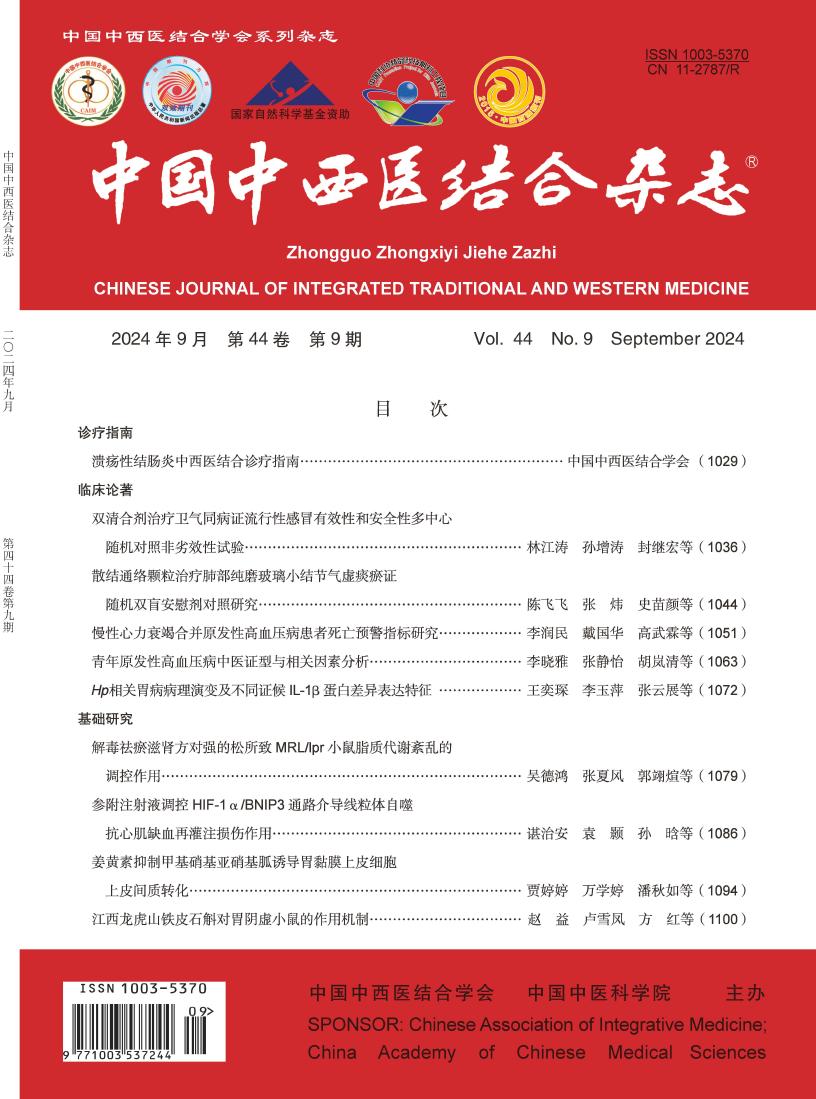
Chinese Journal of Integrated Traditional and Western Medicine

2002 (v1, n1) to Present ISSN: 1671-8925

Articles

About

Year of publication

Save Email

Sort by

Best match
Relevance
PubYear
JournalTitle

DISPLAY OPTIONS

Format:

Per page:

Save citations to file

Selection:

Format:

Create file Cancel

Email citations

To:

Please check your email address first!

Selection:

Format:

Send email Cancel

4257

results

page

of 426

1

Cite

Cite

Copy

Share

Share

Copy

Experimental study of ginsenoside Rb1 on herpes simplex virus-1 infection for protecting nerves.

Yuan-Yuan LIANG ; Bin WANG ; Ling LI

Chinese Journal of Integrated Traditional and Western Medicine.2012;32(7):975-979.

OBJECTIVETo explore the action mechanism of ginsenoside Rb1 (GRb1) on protecting herpes simplex virus-1 (HSV-1) infected nerves by studying its inhibitory effects on abnormal changes of apoptosis and nerve growth factor (NGF) mRNA expression in HSV-1 infected human glioma cells U251.

METHODSThe inhibitory effects of GRb1 on HSV-1 induced abnormal apoptosis of U251 cells were detected using MTT colorimetry and flow cytometry. The NGF mRNA expressions in different treatment groups were detected using semiquantitative RT-PCR.

RESULTS(1) In 400 microg/mL GRb1 + HSV-1 group, MTT value was higher than HSV-1 group at 24, 36, and 48 h after infection (P < 0.05). (2) Cytopathic effects (CPE) were observed in HSV-1 group at 36 h after infection. In 400 microg/mL GRb1 + HSV-1 group merges increased at 36 h after infection, but most cells were in normal shapes. (3) Results of flow cytometry showed that the cell apoptosis rate was lower in 400 microg/mL GRb1 + HSV-1 group than in the HSV-1 group at24 and 36 h after infection (P < 0.05). (4) Results of RT-PCR showed that in 400 microg/mL GRb1 + HSV-1 group, NGF mRNA expressions decreased at 6-12 h after infection (P < 0.05), but it increased at 24, 36, and 48 h after infection, and was obviously higher than that in the HSV-1 group (P < 0.05).

CONCLUSIONSGRb1 at an appropriate concentration could inhibit abnormal cell apoptosis and changes of NGF mRNA expressions in HSV-1 infection. Therefore, we inferred that GRb1 could protect nerves possibly through up-regulating NGF mRNA expressions and inhibiting apoptosis.


Apoptosis ; drug effects ; Cell Line, Tumor ; Ginsenosides ; pharmacology ; Herpes Simplex ; metabolism ; Herpesvirus 1, Human ; Humans ; Nerve Growth Factor ; metabolism

Apoptosis ; drug effects ; Cell Line, Tumor ; Ginsenosides ; pharmacology ; Herpes Simplex ; metabolism ; Herpesvirus 1, Human ; Humans ; Nerve Growth Factor ; metabolism

2

Cite

Cite

Copy

Share

Share

Copy

Anti-angiogenic effects of zengmian YiIiu granule on ovarian carcinoma xenograft.

Xin-Xin HU ; Qin-Hua ZHANG ; Cong QI

Chinese Journal of Integrated Traditional and Western Medicine.2012;32(7):970-974.

OBJECTIVETo investigate the anti-angiogenic effects and mechanisms of Zengmian Yiliu Granule (ZMYLG) on ovarian carcinoma xenograft.

METHODSThe SKOV3 ovarian carcinoma bearing mouse model was established. The tumor-bearing mice were randomly divided into the control group, the paclitaxel group, the high, medium, and low dose ZMYLG group, 8 in each group. The medication was lasted for ten days. The microvessel density (MVD) in the xenograft was calculated by the method of using cell membrane differentiation antigen 34 (CD34) antibody marking new vascular endothelial cells. The protein and mRNA expressions of vascular endothelial growth factor (VEGF) and its receptor fetal liver kinase-1 (FLK-1), hypoxia inducible factor-1alpha (HIF-1alpha) in the tumor were determined using immunohistochemical assay and RT-PCR.

RESULTSThe MVD of ovarian carcinoma xenografts in the paclitaxel group, the high, medium, and low dose ZMYLG group obviously decreased, showing statistical difference when compared with the control group (P < 0.01, P < 0.05). Each ZMYLG dose group could down-regulate the protein and mRNA expressions of VEGF, FLK-1, and HIF-1alpha (P < 0.01, P < 0.05).

CONCLUSIONSZMYLG could inhibit neogenesis of tumor vessels. Its mechanisms might be associated with down-regulating the expression of HIF-1alpha, modifying the hypoxic state, inhibiting the expressions of VEGF and FLK-1, and exerting its anti-angiogenic effects.


Angiogenesis Inhibitors ; pharmacology ; Animals ; Cell Line, Tumor ; Drugs, Chinese Herbal ; pharmacology ; Female ; Humans ; Hypoxia-Inducible Factor 1, alpha Subunit ; metabolism ; Mice ; Mice, Inbred BALB C ; Neoplasms, Glandular and Epithelial ; blood supply ; drug therapy ; Neovascularization, Pathologic ; prevention & control ; Ovarian Neoplasms ; blood supply ; drug therapy ; Vascular Endothelial Growth Factor A ; metabolism ; Vascular Endothelial Growth Factor Receptor-2 ; metabolism ; Xenograft Model Antitumor Assays

Angiogenesis Inhibitors ; pharmacology ; Animals ; Cell Line, Tumor ; Drugs, Chinese Herbal ; pharmacology ; Female ; Humans ; Hypoxia-Inducible Factor 1, alpha Subunit ; metabolism ; Mice ; Mice, Inbred BALB C ; Neoplasms, Glandular and Epithelial ; blood supply ; drug therapy ; Neovascularization, Pathologic ; prevention & control ; Ovarian Neoplasms ; blood supply ; drug therapy ; Vascular Endothelial Growth Factor A ; metabolism ; Vascular Endothelial Growth Factor Receptor-2 ; metabolism ; Xenograft Model Antitumor Assays

3

Cite

Cite

Copy

Share

Share

Copy

Effects of tanshinone IIA on Wnt/beta-catenin signaling pathway of high glucose induced renal tubular epithelial cell transdifferentiation.

Bao-Ying HUANG ; Luo-Yuan CAO ; Xian-Guo FU

Chinese Journal of Integrated Traditional and Western Medicine.2012;32(7):965-969.

OBJECTIVETo observe the expressions of Wnt/beta-catenin and the effects of tanshinone IIA (TII A) on Wnt/beta-catenin signaling pathway in high glucose induced renal tubular epithelial cell transdifferentiation.

METHODSHuman kidney proximal tubular epithelial cells (HK-2) were divided into three groups, i. e., the normal glucose group, the high glucose group, and the high glucose plus tanshinone IIA group. The expression of beta-catenin was observed using immunocytochemical staining. The protein expression of beta-catenin, E-cadherin, and alpha-smooth muscle actin (alpha-SMA) were detected by Western blot. The mRNA levels of beta-catenin and E-cadherin were detected by RT-PCR.

RESULTSCompared with the normal glucose group, both the protein and the mRNA expressions of beta-catenin were significantly enhanced (P < 0.01), the expression of E-cadherin significantly decreased (P < 0.01), the expression of beta-catenin increased in the cytoplasm and nucleus in the high glucose group. TIIA at the final concentration of 100 micromol/L significantly reduced the ectopic expression of beta-catenin. At that concentration, the protein and mRNA expressions of beta-catenin in the nucleus significantly decreased, while the protein and mRNA expressions of E-cadherin were up-regulated. Meanwhile, the expression of alpha-SMA obviously decreased.

CONCLUSIONSWnt/beta-catenin signaling pathway participated in the high glucose induced renal tubular epithelial cell transdifferentiation. TIIA inhibited the transdifferentiation process possibly through down-regulating the activities of Wnt/beta-catenin signaling pathway, thus further playing a role in renal protection.


Cadherins ; metabolism ; Cell Line ; Cell Transdifferentiation ; drug effects ; Diterpenes, Abietane ; pharmacology ; Epithelial Cells ; cytology ; drug effects ; metabolism ; Glucose ; adverse effects ; Humans ; Kidney Tubules, Proximal ; cytology ; drug effects ; metabolism ; Wnt Signaling Pathway ; drug effects ; beta Catenin ; metabolism

Cadherins ; metabolism ; Cell Line ; Cell Transdifferentiation ; drug effects ; Diterpenes, Abietane ; pharmacology ; Epithelial Cells ; cytology ; drug effects ; metabolism ; Glucose ; adverse effects ; Humans ; Kidney Tubules, Proximal ; cytology ; drug effects ; metabolism ; Wnt Signaling Pathway ; drug effects ; beta Catenin ; metabolism

4

Cite

Cite

Copy

Share

Share

Copy

Effects of Chinese materia medica of qi benefiting, yin nourishing, stasis removing, and collaterals dredging and their dissembled recipes on nephrin of diabetes mellitus model rats.

Li-Li LI ; Zhi-Qiang CHEN ; Yue-Hua WANG

Chinese Journal of Integrated Traditional and Western Medicine.2012;32(7):960-964.

OBJECTIVETo observe the effects of Chinese materia medica (CMM) of qi benefiting, yin nourishing, stasis removing, and collaterals dredging (QBYNSRCD) and their dissembled recipes on nephrin of diabetes mellitus (DM) model rats.

METHODSThe DM model was induced by high fat diet combined with low dose STZ. Rats in the normal control group (abbreviated as Group N) and the model group (abbreviated as Group M) were administered with ultrapure water at corresponding volume by gastrogavage. Rats in the CMM of QBYNSRCD treatment group (abbreviated as Group YHT) were administered with CMM of QBYNSRCD, composed of milkvetch root, rehmannia root, danshen root, chuanxiong (2 packages each), solomonseal, earth worm, leech, and scorpion (1 package each), which was administered at 1.0 g/kg. Rats in the CMM of qi benefiting, yin nourishing, and stasis removing (QBYNSR) treatment group (abbreviated as Group YT) were administered with CMM of QBYNSR, composed of milkvetch root, rehmannia root, danshen root, chuanxiong (2 packages each), and solomonseal (1 package each), which was administered at 0. 92 g/kg. Rats in the CMM of qi benefiting, yin nourishing, and collaterals dredging (QBYNCD) treatment group (abbreviated as Group YT) were administered with CMM of QBYNCD, composed of milkvetch root, rehmannia root (2 packages each), solomonseal, earth worm, leech, and scorpion (1 package each), which was administered at 0.79 g/kg. The volume was set to 1 mL/100 g, once daily by gastrogavage, for total 32 weeks. Rats' body weight was measured. By the end of medication, urinary creatinine (UCr), 24-h urinary albumin (U-alb), and urinary nephrin (U-nephrin), fasting blood glucose (FBG), glycosylated hemoglobin (HbA1c), serum creatinine (SCr), and nephrin of kidney tissues homogenate (K-nephrin) were detected. The renal tissue sections were stained with Masson. The pathomorphological changes were observed.

RESULTSThe body weight of rats in Group N increased gradually. After modeling, the body weight of rats in Group M and all medicated groups obviously decreased. Compared with Group M, the decreased body weight was not obvious in all medicated groups, still showing statistical difference (P < 0.01). Compared with Group N, U-alb and U-nephrin in Group M significantly increased (P < 0.01) in a positive linear correlation (r = 0.941, P = 0.017). K-nephrin significantly decreased, and K-nephrin had a negative linear correlation with U-alb (r = -0. 987, P = 0.002). FBG, CCr, and HbA1c significantly increased (P < 0.01). Glomeruli were obviously enlarged under light microscope, with obviously increased extracellular matrix accumulation. Compared with Group M, corresponding indices were obviously improved ( P < 0.01) except FBG and HbA1c in Group YT. As for inter-group comparison among all medicated groups, the improvement of CCr was the best in Group YHT with statistical difference shown (P < 0.01). There was no statistical difference for the rest indices (P > 0.05). When compared with Group M, the hypertrophy of glomerulus was not so obvious in all medicated groups. Neither was extracellular matrix accumulation.

CONCLUSIONSCMM of QBYNSRCD and dissembled recipes showed renal protection on DM model rats. One of its action pathways might be reducing the loss of nephrin, thus reducing U-alb.


Animals ; Diabetes Mellitus, Experimental ; metabolism ; Drugs, Chinese Herbal ; pharmacology ; Male ; Membrane Proteins ; metabolism ; Rats ; Rats, Sprague-Dawley

Animals ; Diabetes Mellitus, Experimental ; metabolism ; Drugs, Chinese Herbal ; pharmacology ; Male ; Membrane Proteins ; metabolism ; Rats ; Rats, Sprague-Dawley

5

Cite

Cite

Copy

Share

Share

Copy

Effects of huatan jiangqi capsule on the levels of multi-drug resistance-associated protein 1 in the bronchial epithelial cells of model rats with chronic obstructive pulmonary disease.

Dian-Lei WANG ; Xian ZHANG ; Xiu-Hua TAO

Chinese Journal of Integrated Traditional and Western Medicine.2012;32(7):955-959.

OBJECTIVETo observe the effects of huatan jiangqi capsule (HJC) on the expression levels and functions of multi-drug resistance-associated protein 1 (MRP1) in the bronchial epithelial cells of chronic obstructive pulmonary disease (COPD) model rats, and to explore the mechanism of HJC for treating COPD.

METHODSTwenty-four male wistar rats were randomly divided into the normal control group, the model group, and HJC group. Except the normal control group, the COPD rat model was established in the rest groups using quantitative stimulation with tobacco, SO2, and caroid aerosol rebreathing method. The indices of the post-treatment lung functions, the cell counts of bronchoalveolar lavage fluid (BALF), the pathological features of the lung tissue were observed. The concentration of LTC, in lung tissues was also examined by ELISA. The expression of MRP1 of the pulmonary tracheal epithelium was detected using immunohistochemical assay.

RESULTS(1) The pulmonary compliance, the forced expiratory volume at 0. 3 second (FEV 0.3%)/the forced vital capacity (FVC), the peak expiratory flow, the maximum mid expiratory flow decreased more significantly in the model group than in the normal control group (P < 0.05). The aforesaid pulmonary function indices obviously increased in the HJC group when compared with the model group (P < 0.05). (2) The air inflammation was aggravated with obvious emphysema in the model group. The inflammation and emphysema occurred in the HJC group in a milder degree. (3) Compared with the normal control group, the levels of LTC4 significantly increased in the lung tissue of the model group and HJC group (P < 0.01). Compared with the model group, the levels of LTC4 significantly decreased in the lung tissues of the HJC group (P < 0.05). (4) Compared with the normal control group, the protein expression of the bronchial epithelial MRP1 significantly decreased in the model group (P < 0.01). Compared with the model group, the protein expression of the bronchial epithelial MRP1 were significantly enhanced in the HJC group (P < 0.05).

CONCLUSIONHJC could effectively alleviate the lung inflammation, postpone the occurrence and development of COPD possibly through effecting the functions and expressions of MRP1 in COPD rats.


Animals ; Bronchi ; cytology ; Disease Models, Animal ; Drugs, Chinese Herbal ; pharmacology ; Epithelial Cells ; metabolism ; Male ; Multidrug Resistance-Associated Proteins ; metabolism ; Pulmonary Disease, Chronic Obstructive ; drug therapy ; metabolism ; Rats ; Rats, Wistar

Animals ; Bronchi ; cytology ; Disease Models, Animal ; Drugs, Chinese Herbal ; pharmacology ; Epithelial Cells ; metabolism ; Male ; Multidrug Resistance-Associated Proteins ; metabolism ; Pulmonary Disease, Chronic Obstructive ; drug therapy ; metabolism ; Rats ; Rats, Wistar

6

Cite

Cite

Copy

Share

Share

Copy

Protective effects of Ginkgo biloba extract on the lung injury of dogs undergoing hypothermic cardiopulmonary bypass.

Qi DENG ; Yun-Kun DENG ; Yu-Wen AN

Chinese Journal of Integrated Traditional and Western Medicine.2012;32(7):951-954.

OBJECTIVETo study the protective effects of Ginkgo biloba extract (EGb) on the lung injury of dogs undergoing hypothermic cardiopulmonary bypass (CPB).

METHODSFourteen healthy hybrid dogs were randomly divided into the control group and the EGb group, 7 in each group. EGb (8 mg/kg) was intravenously dripped to dogs in the EGb group before thoracotomy after anesthesia, while equal volume of normal saline was intravenously dripped to those in the control group. The lung tissue was collected after 60-min CPB and 120-min recovery of heart beat. The lung tissues were collected to detect the wet weight-dry weight ratio and the permeability. The contents of malondialdehyde (MDA), the activities of myeloperoxidase (MPO) and total superoxide dismutase (T-SOD) in the lung tissues were detected by biochemical assay. The levels of IL-1beta, IL-8, tumor necrosis factor alpha (TNF-alpha), platelet activating factor (PAF) in the lung tissue were detected by enzyme linked immunosorbent assay (ELISA).

RESULTSCompared with the control group, the wet weight-dry weight ratio was reduced and the permeability of the lung tissue decreased (P < 0.05), the MDA content was reduced, the activity of MPO decreased, and the activity of T-SOD increased (P < 0.05), and the levels of IL-1beta, IL-8, and PAF obviously decreased (P < 0.05).

CONCLUSIONSEGb showed better protective effects on the lung injury of dogs undergoing hypothermic CPB. Its possible mechanisms might be associated with alleviating ischemia-reperfusion injury of in vitro circulation and systemic inflammatory response.


Animals ; Cardiopulmonary Bypass ; adverse effects ; methods ; Dogs ; Ginkgo biloba ; Lung Injury ; etiology ; prevention & control ; Plant Extracts ; pharmacology

Animals ; Cardiopulmonary Bypass ; adverse effects ; methods ; Dogs ; Ginkgo biloba ; Lung Injury ; etiology ; prevention & control ; Plant Extracts ; pharmacology

7

Cite

Cite

Copy

Share

Share

Copy

Study on improving the speed and quality of making rat myocardial infarction model by coronary artery ligation.

Yi-Kui LI ; Le ZHAO ; Ping HE

Chinese Journal of Integrated Traditional and Western Medicine.2012;32(7):948-950.

OBJECTIVETo establish the methods for improving the speed and quality of making rat myocardial infarction model by coronary artery ligation.

METHODSWith the precondition of having no effect on rat myocardial infarction size: (1) To compare the thoracotomy time, the ligation time of the way of coronary artery ligation by tying one knot with the way by tying two knots. (2) To compare the survival rate of making model, the onset time of anesthesia, the awakening time, the effect on myocardial infarction size between using hydration chlorine aldehyde and using sodium pentobarbital.

RESULTSIn case of having no significant effect on the myocardial infarction size (P > 0.05), the way of tying one knot could significantly shorten the thoracotomy time and the ligation time (P < 0.01). There was no statistical difference in the onset time of anesthesia or the myocardial infarction size between the model made by sodium pentobarbital and that made by hydration chlorine aldehyde (P > 0.05). But the awakening time of the model made by sodium pentobarbital was obviously shortened (P < 0.01). The clarity rate of myocardial infarction size was improved.

CONCLUSIONSThe way of tying one knot could improve the speed of model making. Sodium pentobarbital as the anesthetic for in vivo rat myocardial infarction model could improve the clarity rate of myocardial infarction area.


Animals ; Coronary Vessels ; surgery ; Disease Models, Animal ; Ligation ; methods ; Male ; Myocardial Infarction ; Rats ; Rats, Wistar

Animals ; Coronary Vessels ; surgery ; Disease Models, Animal ; Ligation ; methods ; Male ; Myocardial Infarction ; Rats ; Rats, Wistar

8

Cite

Cite

Copy

Share

Share

Copy

Effects of glycyrrhetinic acid on sodium ion channel currents of rats' ventricular myocardial cells.

Ji-Yuan YANG ; Hong-Jin WU ; De-Lin WU

Chinese Journal of Integrated Traditional and Western Medicine.2012;32(7):944-947.

OBJECTIVETo study the effects of glycyrrhetinic acid (GA) on the sodium ion channel currents (I(Na)) of rats' ventricular myocardial cells, and to explore its anti-arrhythmic mechanisms at the ion channel level.

METHODSSingle ventricular myocardial cells was isolated from SD rats. The whole cell patch clamp was used to record the effects of GA on I(Na) of rats' ventricular myocardial cells.

RESULTSGA could inhibit I(Na) of rats' ventricular myocardial cells dose-dependently. GA at 1, 5, and 10 micromol/L decreased I(Na) of rats' ventricular myocardial cells from (-4.26 +/- 0.15) nA to (-3.54 +/- 0.10) nA, (-2.19 +/- 0.09) nA, and (-1.25 +/- 0.08) nA, respectively. GA at 1, 5, and 10 micromol/L inhibited I(Na) by 16.08% +/- 2.3%, 50.82% +/- 3.56%, and 75.98% +/- 5.12%, showing statistical difference when compared with the control group (P < 0.05). GA at 10 micromol/L shifted I(Na) current-voltage curve more positively, but the activation potential and the peak potential were not changed.

CONCLUSIONGA inhibited the I(Na) of rats' ventricular myocardial cells dose-dependently, which was possibly associated with its antiarrhythmia effects.


Animals ; Glycyrrhetinic Acid ; pharmacology ; Heart Ventricles ; cytology ; metabolism ; Male ; Myocytes, Cardiac ; drug effects ; physiology ; Patch-Clamp Techniques ; Rats ; Rats, Sprague-Dawley ; Sodium Channels ; drug effects ; physiology

Animals ; Glycyrrhetinic Acid ; pharmacology ; Heart Ventricles ; cytology ; metabolism ; Male ; Myocytes, Cardiac ; drug effects ; physiology ; Patch-Clamp Techniques ; Rats ; Rats, Sprague-Dawley ; Sodium Channels ; drug effects ; physiology

9

Cite

Cite

Copy

Share

Share

Copy

Experimental study on attenuating ischemic injury of acute myocardial infarction rats by Huoxue Anxin Recipe.

Yun ZHANG ; Jie WANG ; Li-Li GUO

Chinese Journal of Integrated Traditional and Western Medicine.2012;32(7):939-943.

OBJECTIVETo study the protection effects and the mechanisms of Huoxue Anxin Recipe (HAR) on acute myocardial infarction (AMI) rats.

METHODSThe AMI Wistar rat model was prepared by ligating the left anterior descending coronary artery. By taking elantan long as the positive control drug, HAR was extracted from Chinese herbs by modern pharmacological methods and composed according to theories of Chinese medicine (CM). The medication time started from the day of modeling to the 21st day of the modeling. The heart function, the morphological changes of the heart, changes in the mRNA and protein levels of toll like receptor 4 nuclear factor kappa B tumor necrosis factor alpha (TLR4-NFkappaB-TNFalpha) pathway were observed.

RESULTSCompared with the sham-operation group, the ejection fraction (EF) and left ventricular fractional shortening (FS) significantly decreased (P < 0.01), the left ventricular intemal dimension end-diastolic (LVIDd) and left ventricular internal dimension end-systolic (LVIDs) significantly increased (P < 0.01), the mRNA and protein levels of TLR4-NFkappaB-TNFalpha channel significantly increased in the model group (P < 0.01). The infarction in the front wall of the left ventricle was obviously seen, accompanied with severe inflammatory cell infiltration and collagen deposition in model group. Compared with the model group, the EF and FS significantly increased, LVIDd and LVIDs significantly decreased in the positive control group, the high and low dose HAR groups (P < 0.05, P < 0.01). The infracted area of the front wall of the left ventricle was obviously contracted. The inflammatory cell infiltration and collagen deposition were obviously alleviated. In the high and low dose HAR groups, the mRNA and protein expression levels of TLR4-NFkappaB-TNFalpha significantly decreased (P < 0.05, P < 0.01), but no inhibition was found in the positive control group.

CONCLUSIONSHAR could significantly improve the morphological structures and functional abnormality induced by myocardial ischemia in AMI rats. Its effects was correlated with inhibiting TLR4-NFkappaB-TNFalpha pathway.


Animals ; Drugs, Chinese Herbal ; pharmacology ; therapeutic use ; Male ; Myocardial Infarction ; drug therapy ; metabolism ; Myocardial Ischemia ; metabolism ; prevention & control ; NF-kappa B ; metabolism ; Rats ; Rats, Wistar ; Toll-Like Receptor 4 ; metabolism ; Tumor Necrosis Factor-alpha ; metabolism

Animals ; Drugs, Chinese Herbal ; pharmacology ; therapeutic use ; Male ; Myocardial Infarction ; drug therapy ; metabolism ; Myocardial Ischemia ; metabolism ; prevention & control ; NF-kappa B ; metabolism ; Rats ; Rats, Wistar ; Toll-Like Receptor 4 ; metabolism ; Tumor Necrosis Factor-alpha ; metabolism

10

Cite

Cite

Copy

Share

Share

Copy

Effects of Sini decoction on the expressions of Smad2 and Smad7 in isoproterenol induced myocardial fibrosis rats.

Huo-Cheng LIAO ; Yong LIU ; Bin ZHOU

Chinese Journal of Integrated Traditional and Western Medicine.2012;32(7):934-938.

OBJECTIVETo explore the effects of Sini Decoction (SD) on the expressions of Samd2 and Smad7 isoproterenol (Iso) induced myocardial fibrosis rats.

METHODSTotally 19 Wistar rats were randomly divided into 3 groups, i.e., the control group, the model group, and the SD group. Iso was injected to rats in the model group and the SD group, while normal saline was injected to rats in the control group. SD was given to rats in the SD group by gastrogavage, while normal saline was administered to rats in the control group and the model group by gastrogavage. Four weeks later Masson staining and electron microscopic analysis were performed in each group. The protein and mRNA expressions of Smad2 and Smad7 were detected using immunohistochemical assay and RT-PCR.

RESULTSMasson staining showed the IOD value of the myocardial collagen fiber was 9 303 in the model group, 2 459 in the SD group, and 4 224 in the control group, indicating the myocardial fibrosis was more obvious in the model group than in the SD group and the control group. The IOD value of Smad2 protein was 20 275 and the mRNA IOD of Smad2 protein was 0. 919 in the model group, while they were respectively 9 949 and 0. 561 in the SD group, indicating the protein and mRNA expressions of Smad2 were obviously higher in the model group than in the SD group (P < 0.05). The IOD value of Smad7 protein was 25 667 and the mRNA IOD of Smad7 protein was 0.222 in the model group, while they were respectively 93 147 and 0. 412 in the SD group, indicating the protein and mRNA expressions of Smad7 was obviously lower in the model group than in the SD group (P < 0.05).

CONCLUSIONSD could effectively inhibit Iso induced myocardial fibrosis, and its mechanism may be associated with down-regulating the expression of Smad2 and up-regulating the expression of Smad7.


Animals ; Cardiomyopathies ; metabolism ; pathology ; Drugs, Chinese Herbal ; pharmacology ; Fibrosis ; Isoproterenol ; adverse effects ; Male ; Myocardium ; metabolism ; pathology ; Rats ; Rats, Wistar ; Smad2 Protein ; metabolism ; Smad7 Protein ; metabolism

Animals ; Cardiomyopathies ; metabolism ; pathology ; Drugs, Chinese Herbal ; pharmacology ; Fibrosis ; Isoproterenol ; adverse effects ; Male ; Myocardium ; metabolism ; pathology ; Rats ; Rats, Wistar ; Smad2 Protein ; metabolism ; Smad7 Protein ; metabolism

Country

China

Publisher

中国中西医结合学会;中国中医研究院

ElectronicLinks

http://www.cjim.cn/zxyjhcn/zxyjhcn/ch/index.aspx

Editor-in-chief

E-mail

cjim@cjim.cn

Abbreviation

Chinese Journal of Integrated Traditional and Western Medicine

Vernacular Journal Title

中国中西医结合杂志

ISSN

1003-5370

EISSN

Year Approved

2007

Current Indexing Status

Currently Indexed

Start Year

1981

Description

历史沿革【现用刊名:中国中西医结合杂志;创刊时间:1981】,该刊被以下数据库收录【CA 化学文摘(美)(2009);CBST 科学技术文献速报(日)(2009);Pж(AJ) 文摘杂志(俄)(2009);中国科学引文数据库(CSCD—2008)】,核心期刊【中文核心期刊(2008);中文核心期刊(2004);中文核心期刊(2000);中文核心期刊(1996);中文核心期刊(1992)】,期刊荣誉【中科双效期刊】。

Related Sites

WHO WPRO GIM

Help Accessibility
DCMS Web Policy
CJSS Privacy Policy

Powered by IMICAMS( 备案号: 11010502037788, 京ICP备10218182号-8)

Successfully copied to clipboard.