Main content 1 Menu 2 Search 3 Footer 4
+A
A
-A
High contrast
HOME JOURNAL CRITERIA NETWORK HELP ABOUT

Current criteria:

Regional:

WPRlM journal selection criteria(2023)

Minimum standards for the suspension and removal of WPRIM approved journals

Countries journal selection criteria:

Philippines

Submit your journal information>

Contact NJSCs>

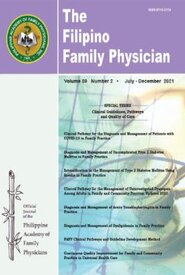
The Filipino Family Physician

2002 (v1, n1) to Present ISSN: 1671-8925

Articles

About

Year of publication

Save Email

Sort by

Best match
Relevance
PubYear
JournalTitle

DISPLAY OPTIONS

Format:

Per page:

Save citations to file

Selection:

Format:

Create file Cancel

Email citations

To:

Please check your email address first!

Selection:

Format:

Send email Cancel

383

results

page

of 39

1

Cite

Cite

Copy

Share

Share

Copy

The perceived incidence rate and patient safety attitudes of health care professionals at Davao Medical School Foundation Hospital.

Copino-Castro Ritchelle B. ; Sorrosa Rojim J. ; Abasolo-Lao Evelyn ; Sermon Gladys O.

The Filipino Family Physician.2016;54(3):95-104.

Safety culture is term used to determine the commitment, style and proficiency of an organization's health safety management. Medical errors increase morbidity, causes significant complications, increase hospital costs and prolongs hospital stays for the patient.
OBJECTIVE: The aim of this study was to determine the perceived incidence rate and the patient safety attitudes of health care professionals at the Davao Medical School Foundation Hospital (DMSFH)
METHODOLOGY: The study involved the health care professionals of DMSFH. The safety Attitudes Questionnaire (SAQ)was used and measured on a 5-point Likert scale for the following domains, Teamwork, Safety Climate, Job Satisfaction, Stress Recognition, Perceptions of Management, Working Conditions, Collaboration and Communication. The last part of the survey questionnaire determines the perceived incidence rate. It is composed of three items: accidents, near-misses and errors and were rated on a 6-point Likert scale.
RESULTS: Among the 145 respondents, 88.96% were nurses, 1.38% doctors and 9.66% pharmacists. The overall patient safety climate at the DMSFH was good with a mean rate of 3.5 ± 0.42. Perception of management has the lowest perceived rates with a mean of only 3.06 ±  0.21. In terms of mean perceived incident rates, errors had the highest mean rates of 3.27 ± 1.09. Overall, perceived incidence rates are negatively, albeit weakly, correlated with the DMSFH safety climate.
CONCLUSION: The perceived incidence rates are significantly affected by the patient safety measures that are practiced by the health care professionals.


Human ; Male ; Female ; Middle Aged ; Adult ; Young Adult ; Adolescent ; Patients ; Attitude ; Hospital Costs ; Incidence ; Length Of Stay ; Medical Errors ; Nurses ; Organizational Culture ; Patient Safety ; Pharmacists ; Philippines ; Safety Management ; Schools, Medical ; Surveys And Questionnaires

Human ; Male ; Female ; Middle Aged ; Adult ; Young Adult ; Adolescent ; Patients ; Attitude ; Hospital Costs ; Incidence ; Length Of Stay ; Medical Errors ; Nurses ; Organizational Culture ; Patient Safety ; Pharmacists ; Philippines ; Safety Management ; Schools, Medical ; Surveys And Questionnaires

2

Cite

Cite

Copy

Share

Share

Copy

The health related quality of life of non-insulin dependent diabetes mellitus patients admitted at Brokenshire Integrated Health Ministries, Incorporated.

Victolero Joanna P. ; Feliciano Laricelle B.

The Filipino Family Physician.2016;54(3):105-117.

OBJECTIVE: The purpose of this study was to determine the quality of life of type 2 diabetic patients admitted at a private tertiary hospital in Davao City using the Ferrans and Powers Quality of Life Index
DESIGN: This study is a descriptive, cross-sectional examination to determine self-rated quality of life among diabetic patients admitted at a private tertiary hospital in Davao City using the Ferrans and Powers Quality of Life Index.
RESULTS: The cross sectional study involved 37 respondents of a private tertiary hospital in Davao City. Most belong to ages 50 years and above (91.9%), are females (59.5%) and married (89.2%). All have some form of formal schooling and 51.4% are employed. Most do not adhere to recommended diet (59.5%), exercise (64.9%), have no history of smoking (56.8%) and have higher BMI however 54% had controlled glucose (54%). Majority have been diagnosed with diabetes for 5-10 years (43.2%), have complications (59%) and are under combination therapy. The mean overall quality of life and QOL subscales of patients were good. Most sociodemographic, lifestyle and medical factors did not show any statistical significance (p value >0.05). Age had positive association with overall quality of life, health and function and socioeconomic subscales. Maintenance medication and civil status had positive association with the socioeconomic and family subscales respectively.
CONCLUSION: The mean overall quality of life and QOL subscales of patients were good. Older age, marriage and combination therapy were associated with high quality of life and specific subscales. Other factors showed no significant association thus further studies are recommended. Assessment of Quality of life and management of modifiable risk factors of diabetes are also recommended.


Human ; Male ; Female ; Aged ; Middle Aged ; Adult ; Diabetes Mellitus ; Patients ; Body Mass Index ; Cross-sectional Studies ; Diabetes Mellitus, Type 2 ; Diet ; Exercise ; Glucose ; Life Style ; Philippines ; Quality Of Life ; Risk Factors ; Surveys And Questionnaires ; Tertiary Care Centers

Human ; Male ; Female ; Aged ; Middle Aged ; Adult ; Diabetes Mellitus ; Patients ; Body Mass Index ; Cross-sectional Studies ; Diabetes Mellitus, Type 2 ; Diet ; Exercise ; Glucose ; Life Style ; Philippines ; Quality Of Life ; Risk Factors ; Surveys And Questionnaires ; Tertiary Care Centers

3

Cite

Cite

Copy

Share

Share

Copy

Willingness to quit smoking and the factors associated with successful smoking cessation among employees of Brokenshire Integrated Health Ministries, Incorporated.

Alpuerto-Cahilog Zyrelle T. ; Sorrosa Rojim J.

The Filipino Family Physician.2016;54(3):118-132.

OBJECTIVE: As with every institution lay a cigarette smoker, in fact, most of them already desired of quitting the habit. Hence, identifying the factors associated with successful smoking cessation is of utmost importance and needed to be addressed. This study aimed to determine the prevalence of cigarette smokers among employees of BIHMI in Davao City, assess their willingness to quit, and identify the factors which could affect successful smoking cessation.
METHODS: This study was a descriptive cross-sectional study carried out among the employees of Brokenshire Integrated Health Ministries, Inc. in Davao City. Th authors compared 39 successful quitters wit 70 current smokers by conducting a research assisted question and answer using a semi-structured questionnaire. They examined the relationship of sociodemographic, behavioral characteristics, presence of comorbid medical conditions, and environmental factors to successful smoking cessation.
RESULTS: Religious belief, higher level of educational attainment. higher socioeconomic status (higher income), fewer number of cigarette sticks smoked per day, presence of comorbid medical condition, no concomitant alcohol use, and having a nonsmoking spouse or cohabitant have been identified as factors of successful smoking cessation.
CONCLUSION: This study suggests that the identified factors that affect successful smoking cessation among the employees be looked into, and appropriate strategies be carried out. Putting up a smoking cessation clinic can help not only the smoking population of the institution who desired of quitting the habit to attain long-lasting abstinence but ideally extending beyond the walls of the institution. As wellness advocates, it is our calling to address these factors.


Human ; Male ; Female ; Smoking ; Alcohol Drinking ; Alcohols ; Cross-sectional Studies ; Habits ; Motivation ; Philippines ; Prevalence ; Smoke ; Smoking Cessation ; Surveys And Questionnaires ; Tobacco Products

Human ; Male ; Female ; Smoking ; Alcohol Drinking ; Alcohols ; Cross-sectional Studies ; Habits ; Motivation ; Philippines ; Prevalence ; Smoke ; Smoking Cessation ; Surveys And Questionnaires ; Tobacco Products

4

Cite

Cite

Copy

Share

Share

Copy

A randomized, open-label study to evaluate the effectiveness and safety of betahistine dihydrochloride in beta-cyclodextrin versus betahistine dihydrochloride in the treatment of vertigo.

Acuin Jose M.

The Filipino Family Physician.2016;54(3):133-141.

OBJECTIVE: To compare the effectiveness and safety of Betahistine dihydrochloride (in beta cyclodextrin) with Betahistine dihydrochloride in treating patients with vertigo.
DESIGN/METHODS: This was a randomized, open label study enrolling 68 patients, ages 18 to 65 years old, diagnosed clinically with vertigo.
RESULTS: Sixty two patients completed the study. EEV scores of both groups continuously decreased to similar levels. EEV scores significantly deceased from baseline to week 4. In group A patients, EEV scores decreased from 9.81+/- 3.73 at baseline to 2.39 +/- 3.46, p<.001; similarly, in group B patients, EEV scores fell from 12.32 +/- 3.61 to 2.32 +/- 2.32 +/- .48, p
Group A patients reported 2.6 +\- 2.9 side effects while Group B patients reported 2.7 +/- 2.5 side effects (p=0.92). There were more patients who experienced vomiting, abdominal pain, nausea, vomiting and/ or diarrhea in Group B patients (8/32 in Group A vs 16/30 in Group B, p=0.022).
CONCLUSION: Betahistine dihydrochloride with beta cyclodextrin and Betahistine dihydrochloride alone are both effective in reducing the symptoms of dizziness from vertiginous syndromes. Betahistine dihydrochloride with beta cyclodextrin appears to have less gastrointestinal side effects than Betahistine dihydrochloride alone.


Human ; Male ; Female ; Aged ; Middle Aged ; Adult ; Young Adult ; Vertigo ; Safety ; Betahistine ; Dizziness ; Nausea ; Syndrome ; Vertigo ; Vomiting ; Beta-cyclodextrins

Human ; Male ; Female ; Aged ; Middle Aged ; Adult ; Young Adult ; Vertigo ; Safety ; Betahistine ; Dizziness ; Nausea ; Syndrome ; Vertigo ; Vomiting ; Beta-cyclodextrins

5

Cite

Cite

Copy

Share

Share

Copy

The impact of dialysis-requiring kidney disease on family quality of life: A descriptive study.

Moreno Hananeel Asiel P.

The Filipino Family Physician.2016;54(3):142-150.

BACKGROUND: The alarming increase in prevalence of dialysis-requiring kidney disease is a major health concern in the country. With more patients undergoing dialysis, more families are also exposed to the stresses of caregiving. The aim of this study was to investigate the impact of dialysis-requiring kidney disease on the quality of life of the patient's family. Information on the magnitude and areas of impact is essential in developing strategies to support the family.
METHODS: Data were obtained from pre-tested, structured, close ended questionnaires completed by 60 family members of kidney disease patients on dialysis at Holy Child Hospital from October 16 to November 30, 2015. Analysis was carried out using the GNU PSPP software.
RESULTS: Most family members were female (77%), the spouse of the patient (34%) or the child (30%), and living with the patient (70%). Eighty-nine percent were directly involved in patient care; 55% held the role of the main caregiver. Ten key themes were investigated and the areas of negative impact by magnitude are: Emotional Impact (100%) citing worry, stress, and frustration; Financial Impact (100%) citing medical bills as the most burdensome; Family Relationships (82%) citing increased stress and tension; Sleep & Health (64%) citing sleep loss from having to wake to assist the patient; Daily Activities (63%) seeing caregiving as a burden; Social Life (58%) citing guilt feeling as a hindrance to socialization; Time Planning (57%) with the unpredictability of the patient's symptoms being the main cause of not being able to make plans; Holidays (48%) blaming appointments for not being able to go on vacation; Work & Study (43%) citing lack of focus; and Support & Medical Care (42%) citing lack of support from other family members. Positive effects were also identified with 90% reporting strengthened personal relationship with the family, 83% having more awareness of their diet, 80% having strengthened faith, and 77% noting a closer family as a result. Relationships between these themes were discussed.
CONCLUSION: As revealed, dialysis-requiring kidney disease has several negative impacts on the quality of life of involved families. If left neglected, the family, instead of being a resource in patient care, may become a barrier. Strategies to employ the positive effects as enablers in managing the areas of negative impact must be developed to provide appropriate support for the patient and the family unit.


Human ; Male ; Female ; Middle Aged ; Young Adult ; Kidney ; Dialysis ; Caregivers ; Emotions ; Family ; Family Relations ; Frustration ; Guilt ; Kidney Diseases ; Patient Care ; Prevalence ; Quality Of Life ; Renal Dialysis ; Socialization ; Spouses ; Surveys And Questionnaires

Human ; Male ; Female ; Middle Aged ; Young Adult ; Kidney ; Dialysis ; Caregivers ; Emotions ; Family ; Family Relations ; Frustration ; Guilt ; Kidney Diseases ; Patient Care ; Prevalence ; Quality Of Life ; Renal Dialysis ; Socialization ; Spouses ; Surveys And Questionnaires

6

Cite

Cite

Copy

Share

Share

Copy

Randomized open-label study comparing the effect of Abelmoschus esculentus water vs placebo in postprandial blood glucose on normal human subjects.

Magbitang Malta Aiko ; Samaniego Isabelita M.

The Filipino Family Physician.2016;54(4):151-159.

Diabetes mellitus is a progressive metabolic disease and if left untreated, it is associated with failure of various organs. The search of safer antidiabetic agents leads to research of traditional medicinal plants.
OBJECTIVE: This study aimed to determine the effect of Abelmoschus esculentus water on the postprandial blood sugar among healthy normal human subjects.
METHOD: Randomized Open-Label Study. Normal healthy volunteers 20-60 years of age were recruited at Ospital ng Maynila Medical Center. After an overnight fast, FBS measurements were recorded. The were then randomized to Okra water and placebo. Both groups were also fed a standard meal in addition to the water of their respective groups. Capillary blood glucose was measured. after 2 hours and 4 hours. The difference in in the blood glucose of both groups was compared.
RESULTS: The mean random blood sugar of the subjects after intake of standard meal 2 hour postprandial in okra water group (109.92 ± 9.45 mg/dl) is greater than in the placebo group (108.35 ± 9.93 mg/dl), but not statistically significant (p>0.05). Also, the mean RBS 4 hours postprandial is less in okra water group than in placebo group (95.23 ± 6.99 versus 96.40 ± 9.13 mg/dl) but is also not statistically significant (p>0.05). Overall, the mean blood sugar of the okra water group from baseline to postprandial has no significant difference as compared to placebo.
CONCLUSION: Contrary to the previous animal studies, this present study, which used human subjects, showed no significant difference n the postprandial blood sugar level on subjects given with A. esculentus water as compared to placebo.


Human ; Animal ; Male ; Female ; Middle Aged ; Adult ; Young Adult ; Blood Glucose ; Water ; Abelmoschus ; Diabetes Mellitus ; Healthy Volunteers ; Hypoglycemic Agents ; Metabolic Diseases ; Plants, Medicinal ; Postprandial Period

Human ; Animal ; Male ; Female ; Middle Aged ; Adult ; Young Adult ; Blood Glucose ; Water ; Abelmoschus ; Diabetes Mellitus ; Healthy Volunteers ; Hypoglycemic Agents ; Metabolic Diseases ; Plants, Medicinal ; Postprandial Period

7

Cite

Cite

Copy

Share

Share

Copy

Pain assessment and management for solid tumors in Brokenshire Integrated Health Ministries, Inc.

Quianzon Maria Fatima L. ; Sorrosa Rojim J.

The Filipino Family Physician.2016;54(4):160-168.

OBJECTIVE: Advanced cancer pain is associated with pain in two-thirds of patients impairing quality of life. Poor control is often attributed to poor assessment and classification. This study aimed to determine current pain assessment and management for solid tumors in a private tertiary hospital in Davao City.
METHODS: The study utilized a retrospective descriptive cross-sectional study wherein 298 charts with diagnoses of solid tumor were included.
RESULTS: Clinical outcomes of this study include that 28% and 32% died and did not improve due to these solid tumors. This data therefore reflect that 60% of these patients, when combined, may have have advanced diseases. Of these, 19% experienced moderate to severe pain either as a chief complaint or as part of the medical history and review of systems, while 78% have no record or evidence of pain assessment. Only nine percent received opioid therapy while 13%  were given non-opioids. Approximately six percent of these patients' pain responses were monitored or followed-up by medical service versus none of the nursery service after initiation of pharmacotherapy.
CONCLUSION: The present study showed a very big gap as far as pain assessment and management are concerned. These deficiencies may be attributed to non-adherence to the WHO guidelines for pain which includes inadequate pain assessment, recording, management and monitoring. Information dissemination regarding pain assessment and management is of paramount importance as to giving optimal pain management in cancer patients experiencing pain. 


Human ; Male ; Female ; Analgesia ; Quality Of Life ; Analgesics, Opioid ; Cancer Pain ; Cross-sectional Studies ; Death ; Neoplasms ; Pain ; Pain Management ; Pain Measurement ; Philippines ; Retrospective Studies

Human ; Male ; Female ; Analgesia ; Quality Of Life ; Analgesics, Opioid ; Cancer Pain ; Cross-sectional Studies ; Death ; Neoplasms ; Pain ; Pain Management ; Pain Measurement ; Philippines ; Retrospective Studies

8

Cite

Cite

Copy

Share

Share

Copy

Family function and level of caregiver strain among diabetic patients at the outpatient clinic of Ospital ng Maynila Medical Center.

Castañeda-Mercado Joyce Ann

The Filipino Family Physician.2016;54(4):169-175.

Diabetes Mellitus is a chronic illness that needs to be addressed holistically to prevent the development of complications among diabetic patients. Hence, factors that can help in the management of diabetic patients to prevent further damage to their organs must be dealt with. One of these factors involves the relationship of the patient to its family members. Caregivers, on the other hand also play significant role in patients with chronic illnesses, thus were also emphasized in this study. Thus relationship of patients and caregivers with their families was measured through the Family APGAR 1, while the level of caregiver strain was measured through the Modified Caregiver Strain Index. A total of 79 diabetic patients and their respective caregivers took part in the study. The average age of diabetic patients was 63 years old. The average number of years having diabetes was 11.61 years. Majority of the patients were female (60.76%), had co-morbidities (67.09%) and were both on oral medication and insulin injection (60.76%). On the other hand, the average age of caregivers, attending to the diabetic patients was 50 years. The average number of years as caregivers attending to the diabetic patients was 8.3 years. Majority of the caregivers were female (82.28%). Almost half of them were the spouses of the patients. Caregivers o had some elementary education or had completed (40.51%) it and those who had some high school education or had completed it (40.51%). Forty three percent of the caregivers provided the patient oral medication alone and 31.65% gave both oral medication and insulin injection. Based on the results of the Family APGAR 1 of the diabetic patients, 10.13% of them were moderately dysfunctional and 89.87% were highly functional. No patient earned an APGAR score equivalent to the 'Severely Dysfunctional'. More than half of the caregivers (68.35%) had highly functional relationship with their families; 29.11% were moderately dysfunctional, and only 2.53% were severely dysfunctional. In terms of the level of caregiver strain it was illustrated that approximately 95% of the caregivers scored low on the Modified Caregiver Strain Index which implies that majority of the caregivers were still far from suffering from caregiver strain. 


Human ; Male ; Female ; Aged 80 And Over ; Aged ; Middle Aged ; Adult ; Young Adult ; Diabetes Mellitus ; Caregivers ; Patients ; Family ; Apgar Score ; Chronic Disease ; Comorbidity ; Disease Management ; Infant, Newborn ; Insulin

Human ; Male ; Female ; Aged 80 And Over ; Aged ; Middle Aged ; Adult ; Young Adult ; Diabetes Mellitus ; Caregivers ; Patients ; Family ; Apgar Score ; Chronic Disease ; Comorbidity ; Disease Management ; Infant, Newborn ; Insulin

9

Cite

Cite

Copy

Share

Share

Copy

The association of the demographic and clinical profiles with the psychosocial needs of cancer patients.

Israel Kristine C. ; Baruiz Cinderela P. ; Solis Suzette H.

The Filipino Family Physician.2016;54(4):176-188.

Cancer causes eventful deterioration of an individual's health. The latest data on cancer show a significant rise on new cases and deaths on cancer. Patients face the risk of enduring disability, incapacity to perform daily activities, and psychosocial problems that can result from its sequelae.
OBJECTIVE: The study aimed to determine the demographic, clinical profile and psychosocial needs of cancer patients and the association of demographic and clinical profile with psychosocial needs.
METHODS: Descriptive cross-sectional survey was utilized in this study which involved 116 cancer patients who were admitted or out-patient in Davao Regional Medical Center (DRMC) Tagum City. Data were obtained at DRMC premises on October 15, 2014 to October 1, 2015 using a psychosocial needs inventory (PNI) questionnaire. Categorical variables expressed as proportions (n,%) were analyzed using chi-square statistics. On the other hand, continuous data (x, + SD) were analyzed using the t-test. In measuring the degree of association of two nominal data, bivariate correlational analysis (Pearson Correlation) was utilized.
RESULTS: The results in this study show a significant association of the demographic and clinical profile of the patients to their psychosocial needs in the aspect of mental, social, emotional/spiritual, and practical, as reflected in the p-values and r-values revealed in the analysis. On the other hand, it was also revealed that there seem to be important unmet needs that were also expressed by the cancer patients.
CONCLUSION: Patients with cancer have health needs that are not only limited to medical, but also with psychosocial needs. However, what these psychosocial needs are, and their hierarchy among cancer patients with different demographic and clinical features has not been fully explored. This study revealed that the demographic and clinical profiles of cancer patients enrolled in this study are significantly associated with psychosocial needs in terms of mental, social, emotional/spiritual, and practical needs. The outcome of this study suggests that an exemplary model of health care for cancer patients should not focus only on medical and clinical aspect, but also taking into account the psychosocial needs of the patients. Hence, health care providers should confine to the full course of psychosocial needs in a holistic approach both medical and non-medical aspects to improve the quality of life of patient battling with cancer.  


Human ; Male ; Female ; Aged 80 And Over ; Aged ; Middle Aged ; Adult ; Neoplasms ; Patients ; Family ; Cross-sectional Studies ; Demography ; Outpatients ; Philippines ; Quality Of Life ; Surveys And Questionnaires

Human ; Male ; Female ; Aged 80 And Over ; Aged ; Middle Aged ; Adult ; Neoplasms ; Patients ; Family ; Cross-sectional Studies ; Demography ; Outpatients ; Philippines ; Quality Of Life ; Surveys And Questionnaires

10

Cite

Cite

Copy

Share

Share

Copy

Factors influencing the choice of attending physicians among patients admitted at the Visayas Community Medical Center from 2015 to August 2015.

Arche Ma. Rhona A.

The Filipino Family Physician.2016;54(4):189-198.

One of the first decisions that patients must make; that is, the choice of a primary care doctor (PCD). What factors influence patient decision? Moreover is the patient's first contact observation a contributing factor in the patient's choice of this attending physician, hence this study.
METHODOLOGY: Using a pre-validated standardized survey questionnaire, this study involved purposively selected 400 patients admitted in Visayas Community Medical Center from March 2015 to August 2015. After informed consents were secured from the respondents, a face-to-face survey approach was conducted to ensure that the question included in the survey reflected the reality of patients' perception and their experience of choice. The respondents were interviewed in emergency room/ in the patient's room which may last between 10 and 15 minutes.
RESULTS: The respondents choice of physicians was greatly influenced by family members (50%). They highly rated the physicians' respect to patients (mean = 10.00), with good communication skills (mean = 10.00), friendly clinic staff (mean = 10.00), rapport (mean = 9.98), quality of care (mean = 9.98), and compassion (mean = 9.02). In terms of qualifications, the respondents would prefer doctors who are Board-certified (mean = 8.95) and achievers (mean = 7.50). Lastly, hospital or clinical factors were anchored on organization of clinic (mean = 10.00), ease of access (mean = 10.00), duration of waiting time (mean = 9.07), and practice open after 5pm (mean = 9.01).
CONCLUSION: The common factors identified by respondents in choosing their primary physicians were; respect to patients, good communication skills, friendliness of physicians staff, rapport with the patients, quality of care, and compassion. They focused on the doctors having board certificate, organization of clinic, ease of access, duration of waiting time, and clinical practice beyond 5pm. Lastly, they would prefer doctors who were referred by family members or friends.   


Human ; Male ; Female ; Aged 80 And Over ; Aged ; Middle Aged ; Adult ; Young Adult ; Adolescent ; Physicians ; Patients ; Quality Of Life ; Ambulatory Care Facilities ; Choice Behavior ; Emergency Service, Hospital ; Informed Consent ; Patients' Rooms ; Philippines ; Primary Health Care ; Surveys And Questionnaires

Human ; Male ; Female ; Aged 80 And Over ; Aged ; Middle Aged ; Adult ; Young Adult ; Adolescent ; Physicians ; Patients ; Quality Of Life ; Ambulatory Care Facilities ; Choice Behavior ; Emergency Service, Hospital ; Informed Consent ; Patients' Rooms ; Philippines ; Primary Health Care ; Surveys And Questionnaires

Country

Philippines

Publisher

Philippine Academy of Family Physicians, Inc.

ElectronicLinks

https://thepafp.org/journal/

Editor-in-chief

Dr. Noel Espallardo

E-mail

secretariat@thepafp.org

Abbreviation

FFP

Vernacular Journal Title

ISSN

0115-2114

EISSN

Year Approved

2007

Current Indexing Status

Currently Indexed

Start Year

1960

Description

The Filipino Family Physician (FFP) is a semi-annual scientific journal publication of the Philippine Academy of Family Physicians, Inc. It aims to promote, share and discuss scientific information related to the practice of family and community medicine and primary care. We encourage research, systematic reviews and guidelines that are relevant to health policy and clinical practice. The journal accepts submission for publications that can be classified under the following sections, 1) Special Themes, 2) Family and Community Health, 3) Clinical Updates, 4) Education and Training, 5) Quality Improvement and 6) Family and Clinical Case Reports. The journal does not charge fees for publication, but we prioritize submissions authored by PAFP members. All submissions undergo standard editorial evaluation and peer review before acceptance for publication. The journal is registered with the National Library with International Standard Serial Number 0115-2114 and is listed in the Western Pacific Region Index Medicus.

Related Sites

WHO WPRO GIM

Help Accessibility
DCMS Web Policy
CJSS Privacy Policy

Powered by IMICAMS( 备案号: 11010502037788, 京ICP备10218182号-8)

Successfully copied to clipboard.