

Main content 1 Menu 2 Search 3 Footer 4
+A
A
-A
High contrast
HOME JOURNAL JOURNAL SELECTION NETWORK HELP ABOUT

Journal Selection Criteria and Standards

WPRIM Journal Selection Criteria (August 2023)

NJSC Philippines Selection Criteria (for Philippine-based journals only)

Minimum standards for the suspension and removal of WPRIM approved journals

Application and Indexing Process

Application and Submission Process for WPRIM Indexing

Journal Content Management

Candidate Journal Selection and Data Creation and Management System

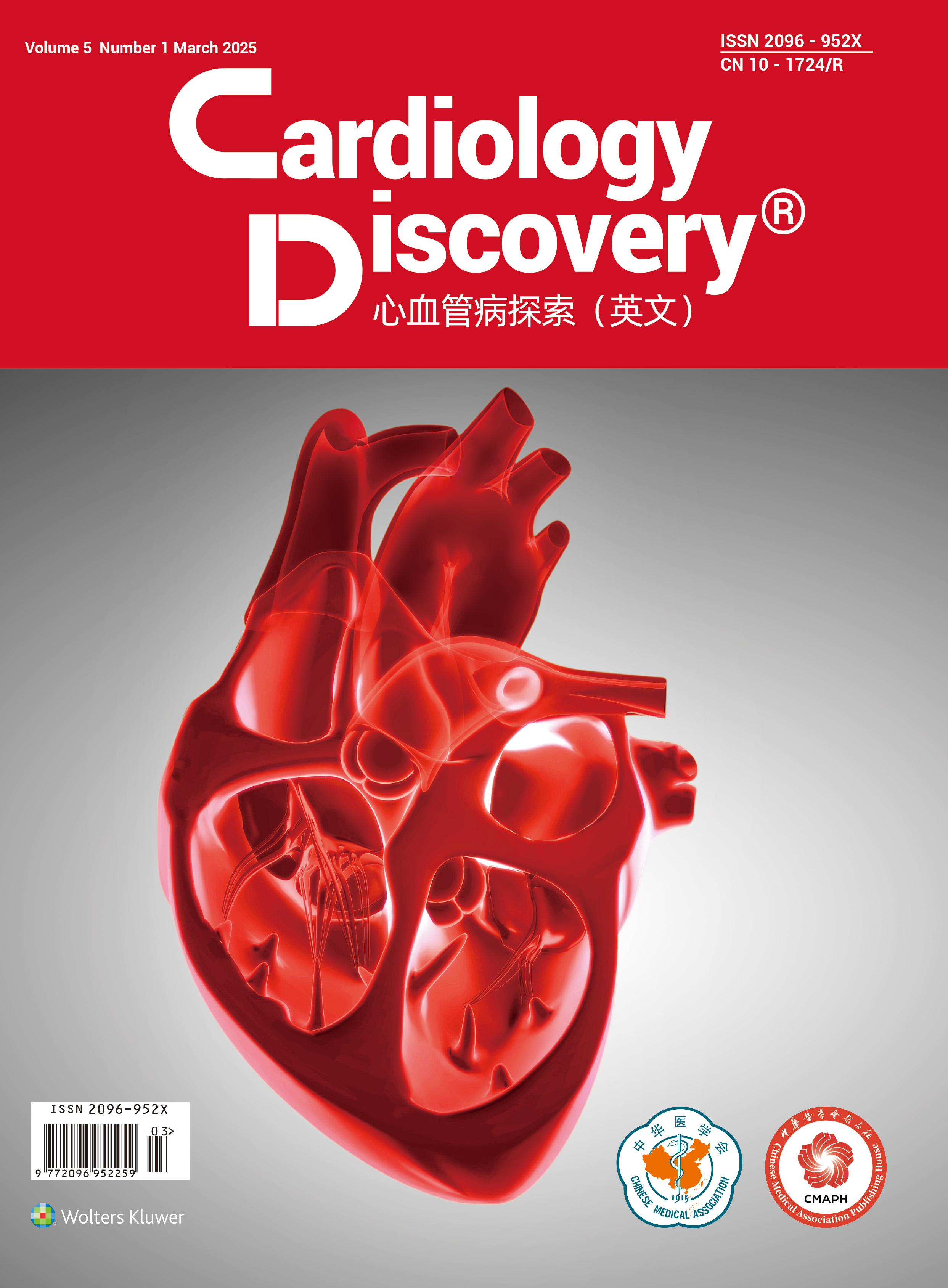
Cardiology Discovery

2021  (1,  1)  to  Present  ISSN: 2096-952X

Articles

About

Save Email

Sort by

Best match
Relevance
PubYear
JournalTitle

DISPLAY OPTIONS

Format:

Per page:

Save citations to file

Selection:

Format:

Create file Cancel

Email citations

To:

Please check your email address first!

Selection:

Format:

Send email Cancel

264

results

page

of 27

1

Cite

Cite

Copy

Share

Share

Copy

A Review of Double Kissing Crush Stenting in Coronary Bifurcation Lesions

Kwan Tak W. ; Patricia LIN

Cardiology Discovery.2022;02(3):174-181. doi:10.1097/CD9.0000000000000058

Double kissing (DK) crush stenting for coronary bifurcation lesions has gain popularity worldwide because of its superior randomized studies data and excellent clinical outcomes. This review evaluates all DK crush clinical trials and studies. It also reveals the contemporary technique steps by steps as well as the trouble shooting with illustrated clinical scenarios. Among all the available evidence, the DK crush technique is superior when compared to the provisional stenting technique for complex bifurcation lesion. DK crush stenting provides the best evidence-based approach to complex bifurcation lesions especially the left main coronary artery bifurcation lesions. Future direction of how to make this DK crush technique better is also proposed.
2

Cite

Cite

Copy

Share

Share

Copy

New Insights into Intravascular Imaging of Coronary Bifurcation Lesions and Left Main Stenosis: What Have We Accomplished?

Leesar Massoud A. ; Hani JNEID

Cardiology Discovery.2022;02(3):182-190. doi:10.1097/CD9.0000000000000069

Coronary bifurcation lesions (CBL) are one of the most challenging lesions to treat in interventional cardiology. Intravascular imaging including intravascular ultrasound (IVUS) and optical coherence tomography (OCT) is paramount for the assessment of lesion characteristics and suboptimal stent results and to improve the outcome of percutaneous coronary intervention (PCI). After upgrading the use of IVUS and OCT by the American College of Cardiology/American Heart Association guidelines, their use has increased. Likewise, there has been significant improvement in image quality and the profile of system (ie, IVUS catheter size). The main indication for the use of IVUS includes: assessment of lesion characteristics, optimization of stent deployment, optimal stent expansion, exclusion of plaque burden >50%, and edge dissection. Intravascular imaging plays a significant role in the assessment and treatment of left main (LM) coronary artery stenosis and CBL. In particular, the use of intravascular imaging for alleviating mechanical issues during stenting and managing stent thrombosis has significantly increased. Overall, a compelling body of evidence has shown that the use of IVUS or OCT during PCI leads to optimal stenting results and mitigates the risk of adverse cardiac events. However, to date, the American College of Cardiology/American Heart Association Guidelines have assigned a Class IIb recommendation for IVUS or OCT, while the European Society of Cardiology Guidelines upgraded it to the Class IIa recommendation. This review summarized the role of IVUS and OCT for the assessment of stenosis and stent optimization in patients with CBL and LM stenosis. In addition, we discuss new insights into the role of IVUS- and OCT-guided stenting in patients with CBL and LM stenosis provided by the ongoing randomized trials.

3

Cite

Cite

Copy

Share

Share

Copy

Provisional Stenting: A Contemporary Relook at the Strategy and Lingering Issues

Gim-Hooi CHOO ; Kumara GURUPPARAN

Cardiology Discovery.2022;02(3):191-196. doi:10.1097/CD9.0000000000000064

Bifurcation lesions are encountered and treated in up to 1 in 5 cases of percutaneous coronary intervention (PCI). Such lesions pose a technical challenge to PCI, leading to lower procedural success and a higher rate of long-term adverse events. However, each bifurcation is unique in terms of anatomy and pathological presentation. There is no "one size fits all" strategy for coronary bifurcation PCI. Nevertheless, in most scenarios, provisional stenting is the preferred technique. This method is easy to apply and involves a logical stepwise escalation approach that is highly successful and safe.

4

Cite

Cite

Copy

Share

Share

Copy

Antiviral Abidol is Associated with the Reduction of In-Hospital Mortality in COVID-19 Patients

Hesong ZENG ; Xingwei HE ; Wanjun LIU ; Jing KAN ; Liqun HE ; Jinhe ZHAO ; Cynthia CHEN ; Junjie ZHANG ; Shaoliang CHEN

Cardiology Discovery.2021;01(1):37-43. doi:10.1097/CD9.0000000000000014

Objective::Coronavirus disease 2019 (COVID-19) is a global public health crisis. There are no specific antiviral agents for the treatment of SARS-CoV-2. Information regarding the effect of Abidol on in-hospital mortality is scarce. The present study aimed to evaluate the treatment effect of Abidol for patients with COVID-19 before and after propensity score matching (PSM).Methods::This retrospective cohort study analyzed 1019 patients with confirmed COVID-19 in China from December 22, 2019 to March 13, 2020. Patients were divided to Abidol (200 mg, tid, 5-7 days, n = 788, 77.3%) and No-Abidol ( n = 231, 22.7%) groups. The primary outcome was the mortality during hospitalization. Results::Among 1019 COVID-19 patients, the age was (60.4 ± 14.5) years. Abidol-treated patients, compared with No-Abidol-treated patients, had a shorter duration from onset of symptoms to admission, less frequent renal dysfunction, lower white blood cell counts (lymphocytes <0.8) and erythrocyte sending rate, lower interleukin-6, higher platelet counts and plasma IgG and oxygen saturation, and less frequent myocardial injury. The mortality during hospitalization before PSM was 17.9% in Abidol group and 34.6% in No-Abidol (hazard ratio (HR) = 2.610, 95% confident interval (CI): 1.980-3.440), all seen in severe and critical patients. After PSM, the in-hospital death was 13.6% in Abidol and 28.6% in No-Abidol group (HR= 2.728, 95% CI: 1.598-4.659).Conclusions::Abidol-treatment results in less in-hospital death for severe and critical patients with COVID-19. Further randomized study is warranted to confirm the findings from this study.

5

Cite

Cite

Copy

Share

Share

Copy

Adenosine Monophosphate-Activated Protein Kinase, Oxidative Stress, and Diabetic Endothelial Dysfunction

Ming-Hui ZOU ; Shengnan WU

Cardiology Discovery.2021;01(1):44-57. doi:10.1097/CD9.0000000000000009

Endothelial dysfunction characterized by impaired endothelium-dependent vaso-relaxation is one of the earliest detectable pathological events in smoking, diabetes, and many cardiovascular diseases including hypertension, atherosclerosis. Overwhelming data from human and animals demonstrate that the endothelial dysfunction associated with diabetes is due to the local formation of oxidants and free radicals. However, the mechanisms by which diabetes instigates oxidative stress, and those by which oxidative stress perpetuates endothelial dysfunction are the subjects of intensive research in the last 3 decades. The studies from us and others have demonstrated that adenosine monophosphate-activated protein kinase (AMPK), a well-characterized energy sensor and modulator, serves as a highly efficient sensor as AMPK can be activated by very low levels of reactive oxygen species (ROS) and reactive nitrogen species (RNS) generated by physiological, pharmacological, and pathologic stimuli (redox sensor). Interestingly, oxidants-activated AMPK feedback lowers the levels of ROS by either suppressing ROS/RNS from reduced nicotinamide adenine dinucleotide phosphate (NADPH) oxidase and mitochondria or by increasing the levels of antioxidant enzymes (redox modulator). Further, our studies demonstrate that AMPK’s functions as a redox sensor and modulator are vital to maintain endothelial cell function under physiological conditions. Finally, we discover that under chronic oxidative stress or large influx of ROS, AMPK is particularly susceptible to inhibition by ROS. We conclude that oxidative inactivation of AMPK in diabetes perpetuates oxidative stress and accelerates atherosclerosis in diabetes.

6

Cite

Cite

Copy

Share

Share

Copy

Mild Renal Dysfunction and Risk of Thromboembolism and Bleeding in Patients with Atrial Fibrillation: The Chinese Atrial Fibrillation Registry Study

Jingye LI ; Sitong LI ; Chao JIANG ; Jing DU ; Xueyuan GUO ; Songnan LI ; Chenxi JIANG ; Ribo TANG ; Caihua SANG ; Deyong LONG ; Xin DU ; Jianzeng DONG ; Changsheng MA

Cardiology Discovery.2021;01(1):29-36. doi:10.1097/CD9.0000000000000013

Objective::Previous studies indicated that patients with atrial fibrillation (AF) and moderate-to-severe chronic kidney disease (CKD) are at a higher risk of thromboembolism and bleeding during anticoagulation. Whether mild CKD is associated with an increased risk of thromboembolism and bleeding in AF patients remains unknown. This study aimed to evaluate the impact of mild CKD on thromboembolism and major bleeding among patients with AF.Methods::Baseline serum creatinine was available in 17,559 of 25,512 patients enrolled in the China-AF study between August 2011 and December 2018. After excluding those who underwent AF ablation or with moderate-to-severe CKD, 7191 non-valvular AF patients (2059 with mild CKD and 5132 with normal renal function) with regular follow-up for at least 6 months were included. Primary outcomes were the time to the first occurrence of thromboembolic and major bleeding events.Results::Over a mean follow-up of (44.4 ± 23.4) months, 639 thromboembolism and 231 major bleeding events occurred. The crude incidence rates of thromboembolism were higher in the mild CKD group than that of the normal renal function group (3.0/100 person-years vs. 2.2/100 person-years, P < 0.0001), while the crude incidence rates of major bleeding were comparable between the two groups (1.0/100 person-years vs. 0.8/100 person-years, P= 0.076). After multivariate analyses, mild CKD was not associated with an increased risk of thromboembolism (HR = 1.05, 95% CI: 0.89-1.25, P= 0.547) or major bleeding (HR = 1.11, 95% CI: 0.84-1.47, P= 0.476). Conclusions::Mild CKD was not an independent risk factor of thromboembolism or major bleeding in patients with AF.

7

Cite

Cite

Copy

Share

Share

Copy

Upregulation of Cartilage Oligomeric Matrix Protein and Bone Morphogenetic Protein-2 May Associate with Calcific Aortic Valve Disease

Yueyue XU ; Yide CAO ; Yafeng LIU ; Jingsong WANG ; Ganyi CHEN ; Zhonghao TAO ; Yiwei YAO ; Yuchen CAI ; Yunzhang WU ; Wen CHEN ; Xin CHEN

Cardiology Discovery.2021;01(2):105-111. doi:10.1097/CD9.0000000000000015

Objective::Calcific aortic valve disease (CAVD) affects millions of elderly people, and there is currently no effective way to stop or slow down its progression. Therefore, exploring the pathogenesis of CAVD is very important for prevention and treatment. Cartilage oligomeric matrix protein (COMP) have important role in cell phenotype change. This study is aimed to confirm whether COMP participate in CAVD and try to find the possible mechanisms.Methods::Human aortic valve tissues from Nanjing First Hospital (CAVD group, n=20; control group, n=11) were harvested. The expression level of COMP was tested by western blot and immunohistochemistry. Dual immunofluorescence staining was used for locating COMP. Bone morphogenetic protein-2 (BMP2) signalling were tested by western blot. The animal model was also used to detect COMP level by immunohistochemistry. Results::The results showed that the expression level of COMP was significantly increased in the calcific valve samples when compared with that of the control valve ( P<0.05); COMP was expressed near the calcific nodules and co-localized with α-smooth muscle actin (α-SMA). The protein levels of BMP2 and p-Smads 1/5/9 were markedly more highly expressed in the CAVD group than the control group ( P<0.05). Furthermore, immunofluorescence detection showed that COMP and BMP2 were co-located in calcific valves. Conclusions::The above results suggested that upregulation of COMP and BMP2 may be associated with aortic valve calcification and that COMP may become a potential therapeutic target in human CAVD.

8

Cite

Cite

Copy

Share

Share

Copy

Device-Based Treatment in Hypertension: At the Forefront of Renal Denervation

Kazuomi KARIO ; Hettrick Douglas A. ; Esler Murray D.

Cardiology Discovery.2021;01(2):112-127. doi:10.1097/CD9.0000000000000018

Percutaneous renal denervation is a novel device therapy that modifies the circulatory regulatory system and has received considerable attention recently. This treatment partially blocks the renal sympathetic nervous system, which is an organ-connecting pathway between the brain and the kidney. Denervation techniques currently under clinical investigation include radiofrequency, ultrasonic, and chemical ablation with alcohol, all of which are executed through transcatheter access to the renal artery. All recently published randomized sham-controlled trials have shown a clear antihypertensive effect of renal denervation over 24 hours, including during the nighttime and early morning. This treatment has promise in the management of poorly controlled hypertension as well as in the prevention of the development or aggravation of arrhythmias and heart failure.

9

Cite

Cite

Copy

Share

Share

Copy

Macrophages in Ischemic Heart Failure: Yesterday, Today, and Tomorrow

Demin LIU ; Wenjun YAN ; Jinwen HUANG ; Jianli ZHAO ; Houston KILBY ; Christopher Theodore A. ; Bernard LOPEZ ; Ling TAO ; Xinliang MA ; Guoqiang GU ; Yajing WANG

Cardiology Discovery.2021;01(2):128-134. doi:10.1097/CD9.0000000000000010

With continually improving reperfusion strategies and patient care, the overall mortality of acute myocardial infarction (AMI) has been significantly reduced during the past two decades. However, this success is a double-edged sword, as many patients surviving an AMI will progress towards ischemic heart failure (HF) over time. The pathologic causes of ischemic HF are undoubtedly multifactorial. However, the inflammatory response is considered one of the most important causes of pathological remodeling because it spans the whole process of HF development. The macrophage-mediated inflammatory response was once considered a purely harmful factor leading to pathological remodeling and HF. However, growing evidence demonstrates that multiple subgroups of macrophage exist and contribute differently to ischemic HF development. Understanding macrophage populations and how they contribute to post-MI remodeling and consequent ischemic HF is, therefore, critical to understanding and treating the disease. This review focuses on different macrophage populations that regulate post-MI cardiac injury and how immunoregulation therapy may benefit patients with ischemic HF.

10

Cite

Cite

Copy

Share

Share

Copy

Surgical Treatment of Left Atrial Dissection and Severe Mitral Valve Obstruction

Antian CHEN ; Guotao MA ; Deyan YANG ; Chenyu WANG ; Yingxian LIU

Cardiology Discovery.2021;01(2):135-137. doi:10.1097/CD9.0000000000000022

Left atrial dissection is a rare complication of mitral valve replacement surgery. Here, a case of left atrial dissection followed by mitral valvular obstruction was presented. It is suspected that the dissection was caused by trematodiases infection. Cardiac surgery was finally performed, which not only confirmed the diagnosis but also acted as an effective treatment. Especially, surgery is of essential value to confirm the perforation locating at the basal posterior wall of the left ventricle, to repair the atrial dissection, and to relieve the mitral valvular obstruction.

Country

China

Publisher

Chinese Medical Association Publishing House

ElectronicLinks

https://journals.lww.com/CD/pages/default.aspx

Editor-in-chief

Yaling Han

E-mail

CD@cmaph.org

Abbreviation

Cardiol Discov

Vernacular Journal Title

心血管病探索(英文)

ISSN

2096-952X

EISSN

2693-8499

Year Approved

2025

Current Indexing Status

Currently Indexed

Start Year

2021

Description

Cardiology Discovery (CD) is the official journal of the Chinese Society of Cardiology (CSC) of Chinese Medical Association (CMA). It is an English language, peer-reviewed journal aims to publish high-quality materials on all aspects of cardiovascular medicine and surgery, including original clinical, epidemiological, basic and translational research, health services and outcomes studies, state-of-the-art reviews, technical evaluations, case reports, editorial, perspective, consensus and guideline papers. CD has a international outlook, that is to create a platform of international collaboration and exchange of cutting-edge information on cardiovascular research and education. Articles are published quarterly. The journal is available both in print and online. The journal is indexed with, or included in, the following: ESCI, Scopus, DOAJ, Embase, CSTPCD (Chinese Scientific and Technical Papers and Citations Database 中国科技核心期刊), ASCI.

Related Sites

WHO WPRO GIM

Help Accessibility
DCMS Web Policy
CJSS Privacy Policy

Powered by IMICAMS( 备案号: 11010502037788, 京ICP备10218182号-8)

Successfully copied to clipboard.