Main content 1 Menu 2 Search 3 Footer 4
+A
A
-A
High contrast
HOME JOURNAL JOURNAL SELECTION NETWORK HELP ABOUT

Journal Selection Criteria and Standards

WPRIM Journal Selection Criteria (August 2023)

NJSC Philippines Selection Criteria (for Philippine-based journals only)

Minimum standards for the suspension and removal of WPRIM approved journals

Application and Indexing Process

Application and Submission Process for WPRIM Indexing

Journal Content Management

Candidate Journal Selection and Data Creation and Management System

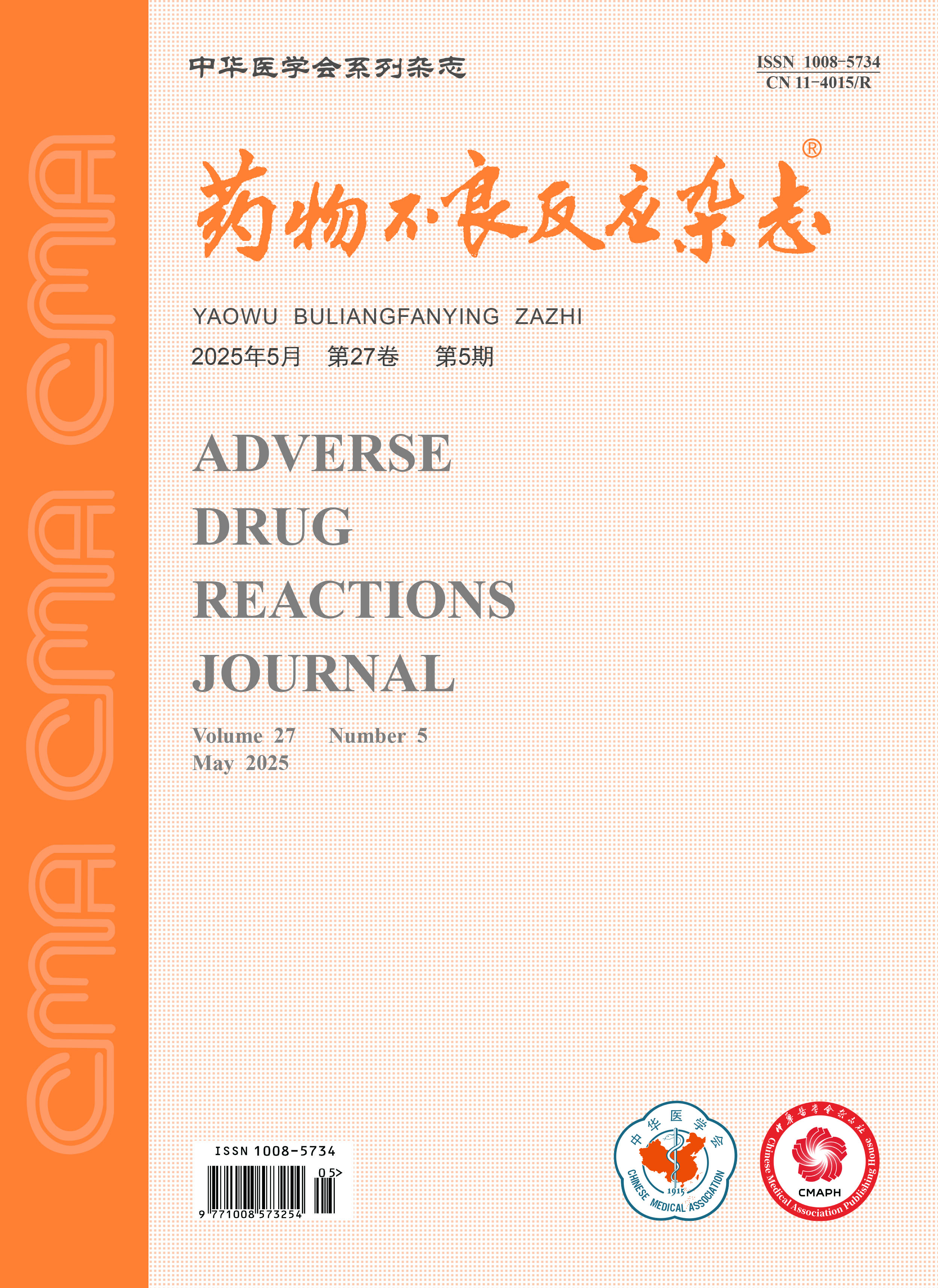
Adverse Drug Reactions Journal

1999  (1,  1)  to  Present  ISSN: 1008-5734

Articles

About

Save Email

Sort by

Best match
Relevance
PubYear
JournalTitle

DISPLAY OPTIONS

Format:

Per page:

Save citations to file

Selection:

Format:

Create file Cancel

Email citations

To:

Please check your email address first!

Selection:

Format:

Send email Cancel

3314

results

page

of 332

1

Cite

Cite

Copy

Share

Share

Copy

ECG of 260 cases by clozapine treatment

Jinhe ZHAO ; Zhihong QIU

Adverse Drug Reactions Journal.2000;2(3):164-166. doi:10.3760/j.issn.1008-5734.2000.03.006

Objective:To determine the effect of clozapine on ECG of patients.Methods:260 clozapine-treated inpatients were randomly enrolled for ECG analysis.Results:Abnormal changes of ECG were observed in 162 cases (62.31%) and 94.12% of the renarkable changes could be returned to normal after a decrease or stop of clozapine taken.Conclusion:Clozapine could lead to abnormal ECG to a high degree.Most of the cases would be back to normal state of ECG when the above-mentioned step was started.

2

Cite

Cite

Copy

Share

Share

Copy

Examination of antibacterials in clinical use

Yueling LI ; Zuojun HUANG ; Yuanshan WU ; Qikun ZHENG

Adverse Drug Reactions Journal.2000;2(3):159-164. doi:10.3760/j.issn.1008-5734.2000.03.005

Objective:To check if antibacterials were rational in clinical use.Methods:143 inpatients between June and December 1998 were enrolled for retrospective analysis of drug administration.Results:132 cases took an tibacterial drugs accounting for 92.3%,among them 69 cases (52.3%) for treatment and 63 cases (47.7%) for preventive purposes.From the said patients only 16 samples were collected and sent for bacterial culture,its positive rate being 31.5 %.Antibacterials taken covered 43 kinds of 10 categories,altogether 1573 drug-days.The rate of the unreasonable application was 39.4 % (52/132 cases) or 42.5 % (668/1573 drug-days).Medication for wrong indications or for a longer period than neccessity could be the main problem.Conclusion:In order to upgrade the diagnostic and therapeutic level,medical professionals should have knowledge of and be familiar with antibacterials and use them in a reasonable way in combination with bacterial culture and drug sensitivity test,if possible.

3

Cite

Cite

Copy

Share

Share

Copy

Analysis of allergic shock in 131 cases induced by traditional Chinese medicines

Jianli MA ; Liang ZHOU ; Shiling WANG

Adverse Drug Reactions Journal.2000;2(3):166-168. doi:10.3760/j.issn.1008-5734.2000.03.007

Objective:To analyse the cases with allergic shock induced by traditional Chinese medicines for rational use of the drugs.Methods:Reports of 131 cases with allergic shock published at home during 1989-1999 were collected and the way of drug administration,dosage forms and some other aspects were sorted out and investigated.Results:Injection came first in order of the cause of allergic shock (72.52 %) followed by per os (16.03 %),preparation for external use only (2.29%) and others (9.16%).Conclusion:The rational use of the drugs with a close attention during its continuation was recommended.

4

Cite

Cite

Copy

Share

Share

Copy

Acute myocardial infarction induced by ultravist solution caused anaphylactoid reaction

Zeyu JIANG ; Shanglang CAI

Adverse Drug Reactions Journal.2017;19(6):471-472. doi:10.3760/cma.j.issn.1008-5734.2017.06.017

A 67-year-old female patient underwent the hypersensitivity test of ultravist solution before doing adrenal enhancement CT. Fifteen minutes after intravenous injection of 2 ml of ultravist solution,the patient developed palpitation,chest pain,vomiting,weakness,and hyperhidrosis. Her blood pressure was 90 / 60 mmHg. She was considered to have contrast agent anaphylactic shock. The patient received intravenous injection of dexamethasone 5 mg and IV infusion of 0. 9% sodium chloride injection 500 ml immediately. Two minutes later,her blood pressure elevated to 145 / 90 mmHg,but the chest pain was not relieved. The results of electrocardiogram showed tilted elevation on ST segment in II,III,aVF leads and declivous depression on ST segment in leads I and aVL. She was diagnosed as acute myocardial infarction. The patient immediately received aspirin enteric-coated tablet 300 mg and clopidogrel hydrogen sulfate 300 mg by chewing,hypodermic injection of low-molecular-weight heparin calcium injection 4100 U, and continuous intravenous pumping of isosorbide dinitrate injection 50 mg at speed of 2 mg/ h. One hour later, the patient′s thoracalgia was remission. She received the treatments of anti-coagulation,stable plaque,anti-hypertension,and expanding coronary artery sequentially. Thirteen days later,the hypersensitive test of ultravist solution was underwent again,the patient did not show any obvious discomfort for 24 hours. It was indicated that the patient′ s acute myocardial infarction appeared in the first hypersensitive test was the anaphylactoid reaction induced by ultravist solution.

5

Cite

Cite

Copy

Share

Share

Copy

Fanconi syndrome and pathological femoral neck fracture induced by adefovir dipivoxil

Yong XU ; Zhiliang LI ; Jihong FENG ; Zhenwang NIE

Adverse Drug Reactions Journal.2017;19(6):461-463. doi:10.3760/cma.j.issn.1008-5734.2017.06.012

A 63-year-old female patient received oral adefovir dipivoxil 10 mg once daily for chronic hepatitis B. She developed right knee and left shoulder pain at the 7th year of the treatment,followed by right hip pain and bilateral pain in the ribs,hips,knees and heels. Osteodynia progressed to the lower back and weakness and limited mobility in the 8th year. Laboratory tests showed the following values:serum phosphorus 0. 48 mmol/ L,calcium 2. 28 mmol/ L,uric acid 77 μmol/ L,urine glucose (+),urinary protein (++),urinary occult blood test (+),urinary β2-microglobulin 2. 5 mg/ L. Bone mineral density examination revealed osteopenia. Pelvic X-ray examination showed the osteoporosis of the hip and right femoral neck fracture. The patient was diagnosed as adefovir dipivoxil-induced Fanconi syndrome and pathological femoral neck fracture. Adefovir dipivoxil was stopped and her therapy was changed to entecavir 0. 5 mg once daily. She was given IV infusion of fructose diphosphate 10 g once daily and 5% sodium bicarbonate injection 125 ml once daily,oral calcium carbonate 1500 mg once daily and alfacalcidol soft capsules 0. 25 μg thrice daily. One week later,the right femoral head replacement combined with the right femoral shaft fracture plate fixation was performed. The above-mentioned drugs were continued. After 5 weeks of adefovir dipivoxil discontinuation,serum phosphorus was 0. 72 mmol/ L,uric acid was 136 μmol/ L, urinary protein (+)and the osteodynia was significantly alleviated. After 5 months of adefovir dipivoxil withdrawal,laboratory tests showed the following values:serum phosphate 0. 87 mmol/ L,uric acid 215μmol/ L,urine glucose (-),urinary protein (-). Four months later,the serum phosphate was 1. 02 mmol/ L,the patient could walk normally.

6

Cite

Cite

Copy

Share

Share

Copy

Calcineurin inhibitors induced severe delirium in an allogeneic hematopoietic stem cell transplanted patient

Rongrong HU ; Junling ZHUANG

Adverse Drug Reactions Journal.2017;19(6):459-461. doi:10.3760/cma.j.issn.1008-5734.2017.06.011

A 41-year-old male patient with acute myelogenous leukemia and past history of Behcet′s disease received allogenic hematopoietic stem cell transplantation. Tacrolimus 2. 5-3. 0 mg/ 24 h was administered through continuous intravenous pump and the serum level was 10. 0-15. 0 ng/ ml. On day 30, the patient experienced severe delirium manifesting as anxiety,color vision defects,irrelevant answer,and losing the ability to calculate and hypoorientation. On day 33,serum tacrolimus level was maintained at 6. 0-7. 5 ng/ ml,but the patient′s mental symptoms was not improved. The next day,tacrolimus was stopped,the delirium was relieved. On day 35,he switched to oral tacrolimus (the initial dose 1 mg twice daily,on day 7,the dose was adjusted to 2 mg twice daily). On day 10 of oral tacrolimus,he developed consciousness disorder again with refusing to eat. Therefore oral tacrolimus was stopped,an IV infusion of cyclosporine 125 mg twice daily was given. On day 2,the symptom of delirium appeared again,accompanied by self harming behavior. On day 5,cyclosporine was withdrawn and he returned to normal consciousness. After that, rapamycin 1 mg twice daily was orally administered. The delirium did not recur.

7

Cite

Cite

Copy

Share

Share

Copy

Rhabdomyolysis and acute kidney injury induced by atorvastatin calcium

Zhiyan LIU ; Rongsheng ZHAO

Adverse Drug Reactions Journal.2017;19(6):477-478. doi:10.3760/cma.j.issn.1008-5734.2017.06.020

An 82-year-old male patient with atrial fibrillation took atorvastatin calcium (20 mg/ d) by himself following advise of other person. About one month later,he developed muscular soreness, weakness,and brown urine. The results of laboratory tests showed myoglobin (Mb)> 3000 μg/ L,creatine kinase (CK) > 16000 U/ L,urea nitrogen 16. 0 mmol/ L,serum creatinine (Scr)347 μmol/ L,creatinine clearance 15 ml/ min. The patient was diagnosed as rhabdomyolysis and acute kidney injury which related to atorvastatin calcium. After the withdrawal of atorvastatin calcium and 13 days of treatments with fluid infusion,alkalizing urine,and diuretic,the patient′s muscular soreness and weakness were improved. The results of laboratory test showed Mb 2340 μg/ L,CK 61 U/ L,urea nitrogen 7. 1 mmol/ L,were Scr 189μmol/ L,and creatinine clearance 30 ml/ min. Urine test showed no abnormal results.

8

Cite

Cite

Copy

Share

Share

Copy

Acute generalized exanthematous pustulosis caused by Xuesaitong for injection(注射用血塞通)

Haifei WANG ; Guoping SUN

Adverse Drug Reactions Journal.2017;19(6):475-477. doi:10.3760/cma.j.issn.1008-5734.2017.06.019

A 61-year-old female patient received an IV infusion of Xuesaitong for injection 400 mg once daily for 6 days after the resection of left popliteal cyst. The next day after the drug withdrawal,She developed systemic rashes with itching and IV infusion of dexamethasone 10 mg once daily and oral chlorpheniramine 4 mg thrice daily were given. The symptoms were not improved after 7 days of treatments. On day 8,dexamethasone and chlorpheniramine were stopped,IV infusion of methylprednisolone 55 mg once daily and oral levocetirizine,cimetidine,potassium chloride sustained-release tablets were given. On day 10,the patient developed new eruption on the back,diffuse edematous erythema on the trunk and limbs,with light yellow pustules on erythema and part of pustules merging into sheet. According to the result of histopathological examination on the rash of the abdomen skin,acute generalized exanthematous pustulosis was considered. After that,the patient′s condition was improved,glucocorticoids was used continuously and the dosage was reduced gradually,while stomach-protective drugs and external use of skin treatment were given at the same time. On day 18,the dose of intravenous infusion of methylprednisolone was reduced to 20 mg once daily and oral methylprednisolone 12 mg once daily was given. On day 32, oral methylprednisolone was stopped. On day 37,new eruption appeared on the patient′s back,intramuscular injection of compound betamethasone injection 1 mg was given at one time,oral compound glycyrrhizin 80 mg and tripterygium glycosides 20 mg were given thrice daily. On day 50,the skin rashes darkened, pustules disappeared basically,no edema and new rash appeared. Methylprednisolone sodium succinate was stopped and changed to oral methylprednisolone tablets 20 mg once daily. Oral methylprednisolone was gradually reduced to 2 mg once daily and about 4. 5 months later,the rashes subsided completely, methylprednisolone was stopped.

9

Cite

Cite

Copy

Share

Share

Copy

Methimazole caused liver damage,rash and arthritis syndrome

Li LI ; Rui SHI ; Shan LU ; Dan PAN

Adverse Drug Reactions Journal.2017;19(6):473-474. doi:10.3760/cma.j.issn.1008-5734.2017.06.018

A 29-year-old female patient with hyperthyroidism received methimazole 20 mg once daily according to the doctor′s advice. Her liver function was normal before drug administration. Fourteen days after medication,the results of laboratory test showed that ALT was 122 U/ L,AST 87 U/ L. Methimazole was stopped and liver protection treatment was given. Nine days later,her ALT and AST were 42 U/ L and 35 U/ L,respectively. She received methimazole 10 mg once daily again. On day 9 of remedication,the patient developed rash with pruritus,pain and limitation of activity on the right elbow joint,pain on the bilateral shoulder joints and the knee joints,and laboratory test showed ALT 134 U/ L,and AST 109 U/ L. She was diagnosed as drug induced liver injury,drug rash,and drug related arthritis syndrome. Methimazole was stopped again. The patient received the treatments of antianaphylaxis,liver protection and analgesic. Ten days later,her rash mostly disappeared. Laboratory test showed ALT 36 U/ L and AST 24 U/ L. Her arthralgia was improved slightly,could move intentionally,but activity was limitated occasionally.

10

Cite

Cite

Copy

Share

Share

Copy

Anaphylactic shock and erythra induced by pemetrexed disodium injection

Xiaoying JI ; Xuliang JIN

Adverse Drug Reactions Journal.2017;19(6):466-467. doi:10.3760/cma.j.issn.1008-5734.2017.06.014

A 68-year-old male patient with lung cancer received the treatment of combination of pemetrexed disodium and bevacizumab. About 20 minutes after finishing the IV infusion of pemetrexed disodium injection,the patient suddenly developed suppression in the chest,dyspnea,hyperhidrosis,pale, and cyanosis of lips. His heart rate was 98 beats/ min,breathing rate was 24 / min,and blood pressure was 70 / 40 mmHg. He was diagnosed as anaphylactic shock due to pemetrexed disodium. The patient was given nasal catheter oxygen inhalation and ECG monitoring,intravenous injection of adrenalin (1 mg)and dexamethasone (20 mg),immediately. Thirty minutes later,his symptoms were relieved. About 2 hours after the end of IV infusion of pemetrexed disodium,skin rashes occurred on the patient′s chest. He received intramuscular injection of phenergan 12. 5 mg,immediately. Twenty-six minutes later,the rashes disappeared. About 20 minutes after the subsiding of the rashes,he received IV infusion of bevacizumab. The patient did not develop any symptoms.

Country

China

Publisher

Chinese Medical Journals Publishing House Co., Ltd.

ElectronicLinks

http://www.cadrj.com/EN/home

Editor-in-chief

Li Lin

E-mail

cadrj@sina.com

Abbreviation

ADRJ

Vernacular Journal Title

药物不良反应杂志

ISSN

1008-5734

EISSN

Year Approved

2025

Current Indexing Status

Currently Indexed

Start Year

1999

Description

Adverse Drug Reactions Journal (药物不良反应杂志, ADRJ) is an academic journal issued domestically and internationally, which is sponsored by Chinese Medical Association and supervised by China Association for Science and Technology. It was founded in 1999 and published monthly, ISSN was 1008-5734. Its founder was professor Cheng Jinghua (程经华), who was the major pioneer and initiator of the monitoring work on adverse drug reactions in China. The idea of the journal is to run its own characteristics, make its best products, strive for its fame, and go to the world. Professor Li Lin, the current editor-in-chief, is the chief expert of the Pharmaceutical Department of Xuanwu Hospital, Capital Medical University, the vice president of the Chinese Pharmacological Association, the president of the Beijing Pharmacological Association, etc. He has served as the vice president of Xuanwu Hospital of Capital Medical University, the director of the Pharmaceutical Research Office, the deputy director of the National Clinical Research Institute of Drugs, the executive deputy director of the Key Laboratory of Neurodegenerative Diseases of the Ministry of Education, and the director of the Beijing Neuropharmaceutical Engineering and Technology Research Center. The journal has a sound editorial committee with consultants such as academician of Chinese Academy of Sciences, professor Chen Keji (陈可翼), and academician of Chinese Academy of Engineering, professor Gao Runlin (高润霖), Ning Guang (宁光), and Zhong Nanshan (钟南山). Editorial members come from 28 provinces, autonomous regions, municipalities directly under the Central Government, the United States and Singapore, covering clinical medicine (cardiovascular, respiratory, gastroenterology, nephrology, neurology, psychiatry. endocrinology, rheumatology, hematology, infectious diseases, oncology, allergy, dermatology, ophthalmology, etc.), pharmacology (clinical pharmacy, clinical pharmacology, pharmaceutics, pharmacoeconomics, pharmacy administration, etc.), nursing, clinical toxicology, pharmaceutical epidemiology, evidence-based medicine, statistics, and other disciplines. ADRJ focuses on the release of academic achievements in adverse drug events (adverse drug reactions, medication errors and drug quality defects), drug-induced diseases, and medication safety. The aims of the journal are to promote communication of drug safety information through reporting adverse drug reactions and their occurrence rules, improve clinical safe drug use level, protect public drug use safety and serve public health. The main columns include editorial, forum, original article, review, practice and research on clinical medication safety, pharmacist case record, case report, poisoning treatment, adverse reaction of traditional Chinese medicine, and historical story of drug accident, etc. Referring to the Reactions Weekly, ADRJ takes timely reporting new and serious adverse drug events as its feature. Among the reported adverse drug reactions, there is the first case reported globally or nationally. For example, the rhabdomyolysis induced by telbivudine published in 2009, which is the first case in the world, and the infliximab-induced aplastic anemia published in 2012, which is the first case in China and the second case in the world. ADRJ is a peer-reviewed journal and insists on the quality first of the manuscript. The journal follows relevant national standards and Recommendations for the Conduct, Reporting, Editing and Publication of Scholarly Work in Medical Journals. At present, ADRJ is the statistical source journal of “Chinese Science and Technology Paper Citation Database (CSTPCD)”, the source journal of “Chinese Science Citation Database (CSCD)” and is indexed by Ulrich's Periodicals Directory and International Pharmaceutical Abstract. In January 2020, ADRJ was officially included in Scopus, which is owned by Elsevier B.V. and is the largest peer-reviewed literature abstract and citation database in the world. The Scopus Content Selection & Advisory Board (CSAB) evaluate the journal as follows: Timely and accurate drug reaction reporting has global significance. The Chinese experience in this field is thus hugely important, particularly given the scale of the Chinese population and the reach of the Chinese pharmaceutical industry. It raises the journal directly from national to global importance. The journal has been recognized by the important international retrieval system, and the internationalization process of the journal has made great progress. Because the contents inosculate closely to the clinic with strong technicality and practicability, the issue of the journal not only covers in 34 provinces, autonomous regions and municipalities across the country, including Hong Kong, Macao and Taiwan, but also in the United States, the United Kingdom, Germany, France, Australia, New Zealand, Japan, South Korea, Singapore, Malaysia, and other countries. The fruitful work since its inception has established its academic status in the field of adverse drug reaction monitoring and medication safety in China. In September 2012, the National Health and Family Planning Commission decided to set up a clinical medication safety group under the INRUD China Central Group and establish a clinical medication safety monitoring network. The relevant work was entrusted to adverse drug reactions Journal Agency. To better implement the aims of the journal, various forms of academic activities were also held, including the China Forum on Drug-induced Diseases and Medication Safety, the hot topic discussion on medication safety, the difficult case discussion, the special academic seminar, the adverse drug reaction monitoring training course, etc. The China Forum on Drug-induced Diseases and Medication Safety has become an important distinguished academic meeting about clinical drug safety application, which has been held annually since 2009. The Adverse Drug Reaction Journal will, as always, adhere to the aims of running the magazine, never forget the original intention and forge ahead! Address: Room 1089, Teaching Building, Xuanwu Hospital, Capital Medical University, Donghuajinzuo, No.118, Guang’anmennei Street, Xicheng District, Beijing 100053, China Post code: 100053 Website: www.cadrj.com

Related Sites

WHO WPRO GIM

Help Accessibility
DCMS Web Policy
CJSS Privacy Policy

Powered by IMICAMS( 备案号: 11010502037788, 京ICP备10218182号-8)

Successfully copied to clipboard.