Main content 1 Menu 2 Search 3 Footer 4
+A
A
-A
High contrast
HOME JOURNAL JOURNAL SELECTION NETWORK HELP ABOUT

Journal Selection Criteria and Standards

WPRIM Journal Selection Criteria (August 2023)

NJSC Philippines Selection Criteria (for Philippine-based journals only)

Minimum standards for the suspension and removal of WPRIM approved journals

Application and Indexing Process

Application and Submission Process for WPRIM Indexing

Journal Content Management

Candidate Journal Selection and Data Creation and Management System

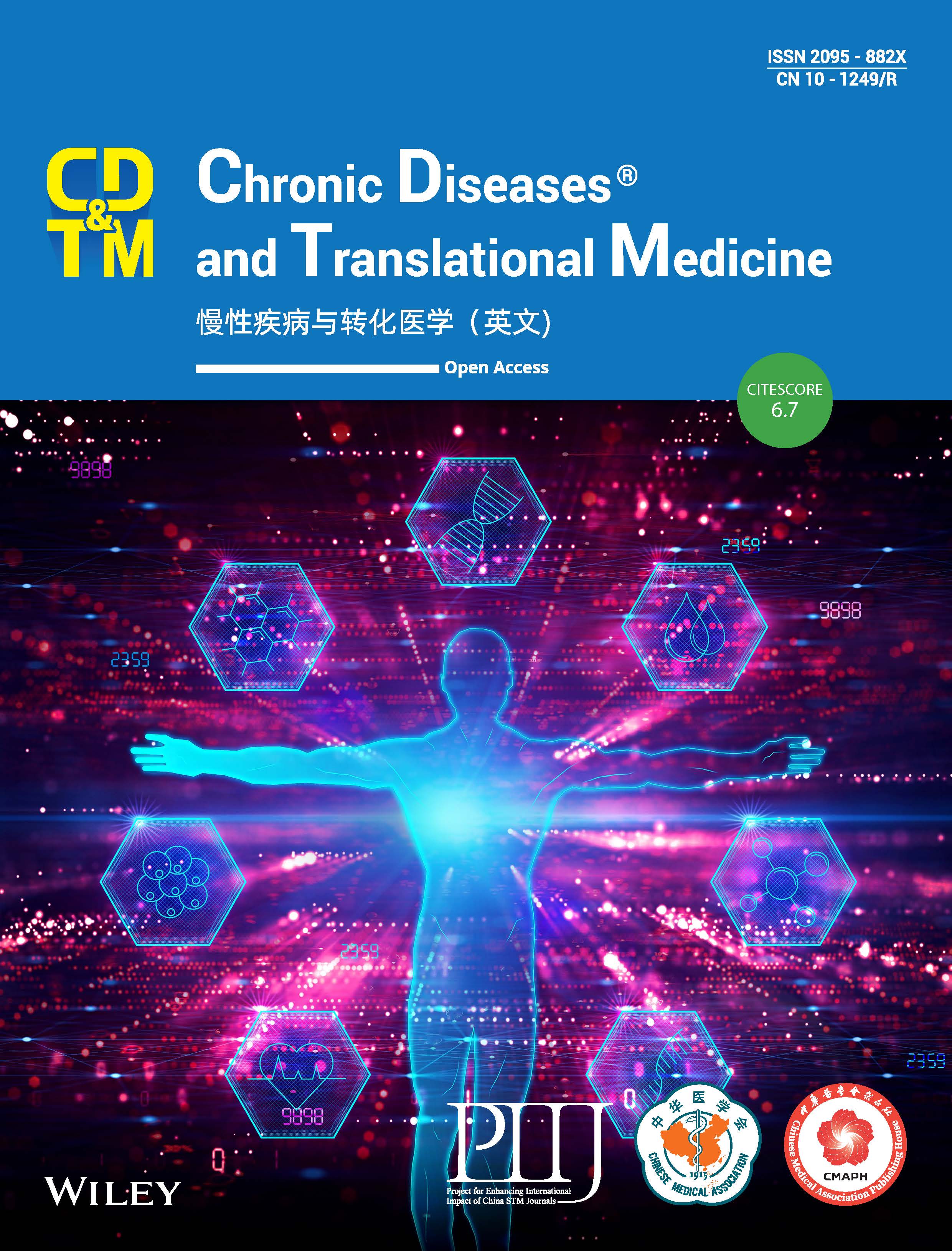
Chronic Diseases and Translational Medicine

2015  (1,  1)  to  Present  ISSN: 2095-882X

Articles

About

Save Email

Sort by

Best match
Relevance
PubYear
JournalTitle

DISPLAY OPTIONS

Format:

Per page:

Save citations to file

Selection:

Format:

Create file Cancel

Email citations

To:

Please check your email address first!

Selection:

Format:

Send email Cancel

488

results

page

of 49

1

Cite

Cite

Copy

Share

Share

Copy

Main air pollutants and ventricular arrhythmias in patients with implantable cardioverter-defibrillators: A systematic review and meta-analysis

Yang HONG-JIE ; Liu XIN ; Qu CHUAN ; Shi SHAO-BO ; Liang JIN-JUN ; Yang BO

Chronic Diseases and Translational Medicine.2017;3(4):242-251.

Objective: Previous studies of ambient air pollutants and ventricular arrhythmias in patients with implantable cardioverter-defibrillator (ICD) have yielded mixed results, and the association between air pollution and ventricular arrhythmias in these patients remains unclear. This study aimed to assess and quantify the association between exposure to major air pollutants [CO, inhalable particles (PM10), SO2, fine particulate matter (PM2.5), O3, and NO2] and the presence of ventricular arrhythmia in patients with ICD. Methods: The Medline, PubMed, Web of Science, Global Health Library, Virtual Health Library, Population Information Online (POPLINE), and New York Academy of Medicine Grey Literature Report databases were searched to identify studies analyzing the association between ventricular arrhythmias in patients with ICD and the abovementioned main air pollutants. Pooled estimates were generated using a random-effects model or fixed-effects model, according to the value of heterogeneity. Heterogeneity within studies was assessed using Cochran's Q and I2 statistics. Funnel plots, Egger's regression test, and Begg's rank correlation method were used to evaluate publication bias. Sensitivity analyses were also conducted to evaluate the potential sources of heterogeneity. Results: After a detailed screening of 167 studies, seven separate studies were identified. Ventricular arrhythmias in patients with ICD were found to be positively, but not significantly, associated with CO, PM10, SO2, PM2.5, and NO2, with a pooled estimate [odds ratio (OR) associated with each 10 μg/m3 increase in pollutant concentration, except for CO, which was associated with each 1 mg/m3 increase in concentration] of 1.03 [95% confidence interval (CI): 0.92-1.17, P = 0.59] for CO, 1.01 (95%CI: 0.97-1.05, P = 0.55) for PM10, 1.09 (95%CI: 0.95-1.24, P = 0.22) for SO2, 1.07 (95%CI: 0.95-1.21, P = 0.25) for PM2.5, and 1.06 (95%CI:0.98-1.14, P = 0.16) for NO2. No increased risk of ventricular arrhythmias in patients with ICD was found to be associated with O3 (OR = 1.00; 95%CI: 0.98-1.01, P = 0.56). Conclusions: The results of this study provide little evidence that ambient air pollutants affect the risk of ICD discharges for treating ventricular arrhythmias.

2

Cite

Cite

Copy

Share

Share

Copy

Ethnic differences in the association between angiotensin-converting enzyme gene insertion/deletion polymorphism and peripheral vascular disease: A meta-analysis

Han CHAO ; Han XI-KUN ; Liu FANG-CHAO ; Huang JIAN-FENG

Chronic Diseases and Translational Medicine.2017;3(4):230-241.

Background: Several studies have investigated the association of angiotensin-converting enzyme (ACE) gene insertion/deletion (I/D) polymorphism with peripheral vascular disease (PVD); however, the results remain controversial. Therefore, we conducted the current meta-analysis to evaluate this relationship in the general population of different ethnicities. Methods: We searched PubMed, Embase, Web of Science, Wanfang Database, and CNKI to identify eligible studies. Random-effect models were applied to estimate the pooled odds ratio (OR) with a 95% confidence interval (CI), regardless of between-study heterogeneity. Results: A total of 13 studies with 1966 cases and 6129 controls were included in this meta-analysis. The pooled ORs for the association between ACE I/D polymorphism and PVD risk were not statistically significant in the overall population under all genetic models. In further ethnicity-stratified analyses, we found a statistically significant association of ACE I/D polymorphism with PVD susceptibility in Asians under most models. However, the association among Caucasians did not reach statistical significance. Conclusion: ACE I/D polymorphism might be associated with susceptibility to PVD in the Asian population, but there was no clear evidence indicating a similar significant relationship among Caucasians.

3

Cite

Cite

Copy

Share

Share

Copy

Current advances in circulating inflammatory biomarkers in atherosclerosis and related cardio-cerebrovascular diseases

Lv JUN-XUAN ; Kong QI ; Ma XIN

Chronic Diseases and Translational Medicine.2017;3(4):207-212.

Atherosclerosis (AS) is a systemic chronic disease affecting both the coronary and cerebral arteries. Inflammation plays a key role in the initiation and progression of AS, and numerous inflammatory factors have been proposed as potential biomarkers. This article reviews recent research in studies on major circulating inflammatory biomarkers to identify surrogates that may reflect processes associated with AS development and the risk of AS-related vascular events, such as Von Willebrand factor, lectin-like oxidized low-density-lipoprotein receptor-1, soluble urokinase plasminogen activator receptor, regulated upon activation, normal T-cell expressed and secreted, and microparticles, which may provide new perspectives for clinical AS evaluation and risk stratification.

4

Cite

Cite

Copy

Share

Share

Copy

Intracranial artery stenosis: Current status of evaluation and treatment in China

Cai BIN ; Peng BIN

Chronic Diseases and Translational Medicine.2017;3(4):197-206.

Intracranial artery stenosis (ICAS), a common cause of ischemic stroke, is a growing cause of concern in China. Recently, many epidemiological, etiological, pathophysiological, therapy, and diagnostic imaging studies have focused on ICAS, and guidelines and consensus on the diagnosis and treatment of ICAS have been published and updated by domestic experts. Such work is pivotal to our enhanced comprehension, diagnosis, and treatment of ICAS. In this review, we summarize the latest progress in the eval-uation and treatment of ICAS in China.

5

Cite

Cite

Copy

Share

Share

Copy

Correlation between the clinicopathological features and prognosis in patients with extranodal natural killer/T cell lymphoma

Zeng LIN-SHU ; Huang WEN-TING ; Qiu TIAN ; Shan LING ; Guo LEI ; Ying JIAN-MING ; Lyu NING ; Feng XIAO-LI

Chronic Diseases and Translational Medicine.2017;3(4):252-259.

Objective: To investigate the correlation between the clinicopathological features and prognosis in patients with extranodal natural killer (NK)/T-cell lymphoma (ENKTCL). Methods: One hundred and four patients diagnosed with ENKTCL at the Department of Pathology, Cancer Hospital, Chinese Academy of Medical Sciences, Beijing, China from November 1991 to September 2011 were included in the study. The clini-copathological features and their correlations with disease prognosis were evaluated in these patients. Results: The number of effective follow-up cases was 56 (53.8%) by the end of last follow-up in October 2015. Univariate survival analysisshowedthatgranzymeB,perforin,andBcl-2expressionwassignificantlyassociatedwithapoorprognosisinENKTCL(P= 0.033, 0.004, and 0.034, respectively), whereas platelet-derived growth factor receptor-alpha (PDGFRA) expression was significantly associated withabetterprognosis(P= 0.034).Ki-67overexpression(≥50%)wassignificantlyassociatedwithapoorprognosis(P= 0.017).Different treatment approaches were also associated with prognosis (P = 0.014); specifically, the efficacies of combination treatments including chemotherapy and radiotherapy, and autologous hematopoietic stem cell transplantation were significantly better than those involving radiotherapy and chemotherapy alone. Patient gender, age, tumor location, staging, the presence of B symptoms, pretreatment lactate dehydrogenase levels, and β2-microglobulin levels were not associated with the prognosis of ENKTCL (P > 0.05). However, multivariate analyses showed that the treatment approach and all the immune markers were not independent prognostic factors for ENKTCL. Conclusion: Granzyme B, perforin, and Bcl-2 expression and Ki-67 overexpression (≥50%) might be adverse prognostic factors for ENKTCL, whereas PDGFRA-positivity suggested a better disease prognosis. In addition, different treatment approaches might be closely related to patient prognosis.

6

Cite

Cite

Copy

Share

Share

Copy

Current progress and outcomes of clinical trials on using epidermal growth factor receptor-tyrosine kinase inhibitor therapy in non-small cell lung cancer patients with brain metastases

Kong LING-LING ; Wang LIN-LIN ; Xing LI-GANG ; Yu JIN-MING

Chronic Diseases and Translational Medicine.2017;3(4):221-229.

Non-small cell lung cancer (NSCLC) continues to be one of the major causes of cancer-related deaths worldwide, and brain metastases are the major cause of death in NSCLC patients. With recent advances in understanding the underlying molecular mechanism of NSCLC development and progression, mutations in epidermal growth factor receptor (EGFR) have been recognized as a key predictor of therapeutic sensitivity to EGFR tyrosine kinase inhibitors (TKIs). Using EGFR-TKI alone or in combination with standard treatments such as whole-brain radiotherapy and surgery has been an effective strategy for the management of brain metastasis. Particularly, a newer generation of EGFR-TKIs, including osimertinib and AZD3759, has been developed. These new EGFR-TKIs can cross the blood-brain barrier and potentially treat EGFR-TKI resistance and improve prognosis. In this article,current progress and outcomes of clinical trials on the use of EGFR-TKIs for treating NSCLC patients with brain metastasis will be reviewed.

7

Cite

Cite

Copy

Share

Share

Copy

Are statins beneficial for the treatment of pulmonary hypertension?

Wang LEI ; Yang TING ; Wang CHEN

Chronic Diseases and Translational Medicine.2017;3(4):213-220.

Pulmonary hypertension (PH) is a condition characterized by vasoconstriction and vascular remodeling with a poor prognosis. The current medical treatments available are supportive care therapy and pulmonary vascular-targeted therapy. Targeted treatments for PH include prostacyclin analogs, endothelin receptor antagonists, and phosphodiesterase type 5 inhibitors; however, these treatments cannot reverse pulmonary vascular remodeling. Recently, many novel treatment options involving drugs such as statins have been emerging. In this review, we attempt to summarize the current knowledge of the role of statins in PH treatment and their potential clinical effects. Many basic researches have proved that statins can be helpful for the treatment of PH both in vitro and in experimental models. The main mechanisms underlying the effects of statins are restoration of endothelial function, attenuation of pulmonary vascular remodeling, regulation of gene expression, regulation of intracellular signaling processes involved in PH, anti-inflammatory responses, and synergy with other targeted drugs. Nevertheless, clinical researches, especially randomized controlled trials for PH are rare. The current clinical researches show contrasting results on the clinical effects of statins in patients with PH. Carefully designed randomized, controlled trials are needed to test the safety and efficacy of statins for PH treatment.

8

Cite

Cite

Copy

Share

Share

Copy

Progress in targeted therapy for breast cancer

Ju JIE ; Zhu AN-JIE ; Yuan PENG

Chronic Diseases and Translational Medicine.2018;4(3):164-175.

Breast cancer is a multistep, multifactorial, and heterogeneous disease. Significant transformations have occurred in the sys-temic management of breast cancer in the past decade. Due to the further understanding of pathogenesis, scientists have found plenty of signaling pathways and correspondingly therapeutic targets in breast cancer, such as hormone receptor, human epidermal growth factor receptor 2 (HER2), epidermal growth factor receptor (EGFR), vascular endothelial growth factor (VEGF), phos-phoinositide-3-kinase (PI3K), v-akt murine thymoma viral oncogene homolog (AKT), mechanistic target of rapamycin (mTOR), cyclin-dependent kinase 4/6 (CDK4/6), poly (adenosine diphosphate-ribose) polymerase (PARP), and programmed death-1 (PD-1). Targeted therapy, which optimizes the accuracy of antitumor activity and minimizes toxicity to normal tissues, plays a crucial role in breast cancer treatment in the era of precision medicine. In this review, we aimed to summarize the latest developments in targeted therapy for breast cancer and discuss the existing problems.

9

Cite

Cite

Copy

Share

Share

Copy

Usefulness of upright T wave in lead aVR for predicting short-term prognosis of patients with ischemic stroke

Yang HONG-JIE ; Liu XIN ; Qu CHUAN ; Shi SHAO-BO ; Yang BO

Chronic Diseases and Translational Medicine.2018;4(3):192-198.

Background: Upright T wave in lead aVR (TaVR) has recently been reported to be associated with cardiovascular death and mortality in general population and in patients with prior cardiovascular disease (CVD). However, the evidence for the predictive ability of TaVR in patients with ischemic stroke (IS) is lacking. Methods: A total of 625 consecutive patients with IS (mean age:66 ± 12 years;379 male) were enrolled in this study between January 2013 and December 2014. Patients were divided into upright TaVR (≥0 mV; n = 201) and negative TaVR (<0 mV;n=424) groups. All patients were evaluated with respect to clinical features and in-hospital clinical results. Results: Overall, the prevalence of upright TaVR was 32.2%at baseline. Patients with an upright TaVR were older, had a higher percentage of CVD and hypertension, higher level of MB isoenzyme of creatine kinase (CKMB), faster heart rate, higher rate of QT prolongation>450 ms, higher rate of negative T in lead II, higher rate of negative T in lead V6, higher rate of ST depression, and longer QTc duration. During the mean follow-up period of 20.0 ± 5.8 months, 29 (4.6%) patients experienced all-cause death and 12 (1.9%) patients experienced cardiovascular death, the primary end point. Concomitantly, 94 (15%) patients experienced recurrence of IS, the secondary end point. After adjusting for clinical covariates, upright TaVR was independently associated with all-cause death [hazard ratio (HR): 2.88, 95%confidence intervals (CI): 1.07-7.73], cardiovascular death (HR: 3.04, 95% CI:1.07-8.64), and IS recurrence (HR:1.86, 95%CI:1.08-3.20). Conclusions: Upright TaVR in patients with IS is associated with increased mortality and recurrence of IS.

10

Cite

Cite

Copy

Share

Share

Copy

Antineutrophil cytoplasmic antibodies-associated glomerulonephritis:From bench to bedside

Chen YONG-XI ; Chen XIAO-NONG

Chronic Diseases and Translational Medicine.2018;4(3):187-191.

Antineutrophil cytoplasmic antibodies (ANCA)-associated vasculitis (AAV) is a group of autoimmune disorders that pre-dominantly affects small vessels. The onset of the disease is closely associated with ANCA. Renal involvement, also known as ANCA-associated glomerulonephritis (AGN), is one of the most common manifestations of AAV. In this mini-review, we described the clinical and pathological features of AGN. We then focused on recent studies on the mechanism of acute kidney lesions, including fibrinoid necrosis and crescent formation. Following the basic aspects of kidney injury in AGN, we demonstrated the clinical importance of kidney injury in determining the outcome of patients with AGN. The prognostic value of the 2010 Histopathological Classification of AGN and validating studies were summarized. Finally, treatment and novel therapeutic strategies were introduced addressing the importance of optimizing management of this patient population.

Country

China

Publisher

Chinese Medical Association Publishing House and Wiley

ElectronicLinks

https://onlinelibrary.wiley.com/journal/25890514

Editor-in-chief

Jun Wang

E-mail

cdtm@cmaph.org

Abbreviation

Chronic Dis Transl Med

Vernacular Journal Title

慢性疾病与转化医学(英文)

ISSN

2095-882X

EISSN

2589-0514

Year Approved

2025

Current Indexing Status

Currently Indexed

Start Year

2015

Description

Chronic Diseases and Translational Medicine (CDTM) (CN 10-1249/R) is a peer-reviewed, open-access quarterly journal established in 2015. It is jointly published by the Chinese Medical Association Publishing House and Wiley. The journal operates under the administration of the China Association for Science and Technology (CAST). This journal is focused on chronic diseases including oncological, cardiovascular, respiratory, endocrine, renal and immune diseases, and related translational medicine for these diseases. We strive to build an international platform to enable local and international researchers to publish articles on the latest research findings and cutting-edge advances in chronic diseases and translational medicine, and push the boundary of science through academic exchanges. The academic quality of CDTM has been widely recognized by authoritative international and local databases. It has been indexed in Scopus, PubMed, PubMed Central, Embase, CAS, DOAJ, Chinese Science and Technology Paper and Citation Database (CSTPCD), Chinese Science Citation Database (CSCD) core database, COAJ, Google Scholar, and Ulrich’s Periodicals Directory. CDTM achieved a Scopus CiteScore of 4.6 in 2024 and has ranked among the top 20% of journals worldwide in the General Medicine category for four consecutive years. What’s more, this journal has been consecutively honored as an " China's Outstanding Academic Journal With International Influence " for several years and was included in the World Journal Citation Index (WJCI) Report. In December 2024, it was selected for the Chinese Science and Technology Journal Excellence Action. CDTM is grounded in a commitment to open, rigorous, and ethical scholarship. As a fully open-access journal operating under CC BY, CC BY-NC, or CC BY-NC-ND licenses, CDTM removes subscription barriers to ensure that researchers, clinicians, and policy-makers worldwide can freely access and reuse its content. Every submission undergoes a double-anonymous peer review overseen by an international editorial board, balancing scientific rigor with clinical relevance. By maintaining an average submission-to-publication timeframe of roughly 14 weeks, the journal strikes a careful balance between thorough evaluation and the rapid dissemination of new findings. In addressing the global challenge of chronic diseases—which now account for more than 70 percent of all deaths worldwide—CDTM plays a vital role in bridging gaps between molecular discoveries, clinical practice, public health policy, and patient outcomes. Its open-access model democratizes knowledge, making state-of-the-art research available to practitioners and scientists in low- and middle-income settings who might otherwise face paywalls. Through broad international indexing and a multidisciplinary scope, CDTM fosters cross-border collaboration, accelerates innovation in prevention, diagnosis, and treatment, and informs evidence-based guidelines and health strategies that can be adapted to diverse healthcare systems around the world.

Related Sites

WHO WPRO GIM

Help Accessibility
DCMS Web Policy
CJSS Privacy Policy

Powered by IMICAMS( 备案号: 11010502037788, 京ICP备10218182号-8)

Successfully copied to clipboard.